Ethyl chloroacetate
データを補完しています。しばらくしてからページを更新すると最新の内容を表示できます
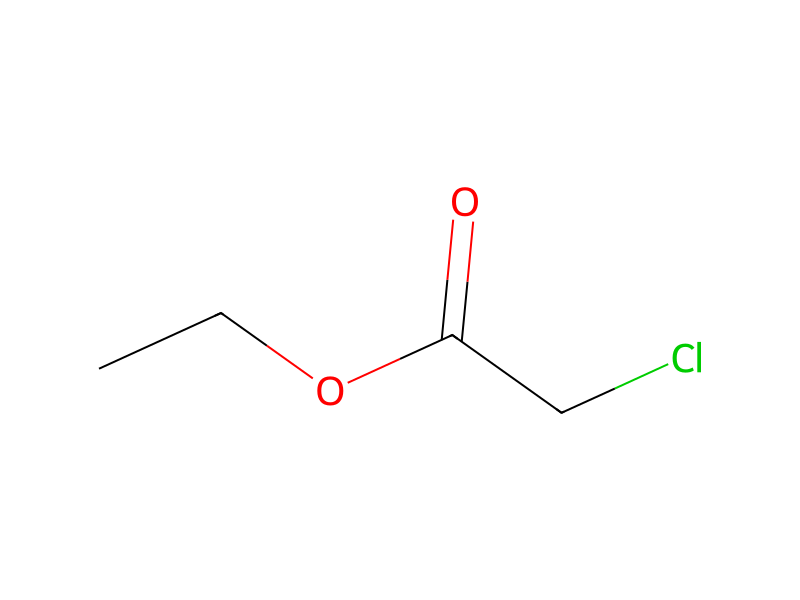
105-39-5CCOC(=O)CClVEUUMBGHMNQHGO-UHFFFAOYSA-NEthyl chloroacetate appears as a clear colorless liquid with a pungent odor. Flash point 100 °F. Denser than water and insoluble in water. Vapors heavier than air.
105-39-5DTXSID4026715CHEMBL3186148Other Classes -> Chloroacetic Acid Derivatives
Flammable agents - 2nd degree
log Kow = 0.94
(calculated)
Fruity pungent odor
Pungent odor
1.15 at 68 °F (USCG, 1999) - Denser than water; will sink
1.1498 @ 20 °C/4 °C
1.15 g/cm³
Relative density of the vapour/air-mixture at 20 °C (air = 1): 1.01
1.145 @25 °C
Water-white mobile liq
Liquid
Insol in water; miscible with alc, ether
Sol in benzene
Insoluble in water, miscible in ethanol, acetone and ethyl ether
Miscible in oxygenated solvents
Solubility in water, g/100ml at 20 °C: 1.23
安全情報は参考情報です。供給元の安全データシート(SDS)、適用法令、専門家による評価に代わるものではありません。
Danger
H301: Toxic if swallowed [Danger Acute toxicity, oral]
P261, P262, P264, P270, P271, P273, P280, P301+P316, P302+P352, P304+P340, P316, P321, P330, P361+P364, P391, P403+P233, P405, and P501 (click each P-code to see the statement)
Danger
H226 (80%): Flammable liquid and vapor [Warning Flammable liquids]
P210, P233, P240, P241, P242, P243, P261, P262, P264, P264+P265, P270, P271, P272, P273, P280, P301+P316, P302+P352, P303+P361+P353, P304+P340, P305+P354+P338, P316, P317, P321, P330, P332+P317, P333+P317, P361+P364, P362+P364, P370+P378, P391, P403+P233, P403+P235, P405, and P501 (click each P-code to see the statement)
Chemical: Acetic acid, chloro-, ethyl ester
Acetic acid, 2-chloro-, ethyl ester is listed on the EPA's Chemical Data Reporting (CDR) system. Manufacturers and importers of Acetic acid, 2-chloro-, ethyl ester are required to report information about their production and use of this chemical to the EPA under the Toxic Substances Control Act (TSCA). (40 eCFR Part 711)
Status: Active Update: 24-03-2021 https://echa.europa.eu/registration-dossier/-/registered-dossier/16030
Acetic acid, chloro-, ethyl ester: HSNO Approval: HSR001147 Approved with controls
The New Jersey Worker and Community Right to Know Act requires public and private employers to provide information about hazardous substances at their workplaces. (N.J.S.A. 34:5A-1 et. seq.)
Special Hazards of Combustion Products: Irritating, toxic hydrogen chloride and phosgene may be generated in fires. (USCG, 1999)
· HIGHLY FLAMMABLE: Will be easily ignited by heat, sparks or flames.
Flammable. Gives off irritating or toxic fumes (or gases) in a fire. Above 53 °C explosive vapour/air mixtures may be formed.
Used as a solvent, military poison, and to make other organic chemicals; [Hawley]
Solvent, organic synthesis, military poison, vat dyestuffs.
CHEM INT FOR SODIUM FLUOROACETATE, A RODENTICIDE & OTHER DERIVATIVES, EG, DL-ASPARTIC ACID; CHEM INT FOR BENAZOLIN, AN HERBICIDE (NON-U.S. USE)
2023: 1,000,000 - <5,000,000 lb
(1977) AT LEAST 4.99X10+7 G
(1982) PROBABLY GREATER THAN 2.27X10+6 G
Prepn: Vogel, J Chem Soc 1948, 644.
(1) action of chloroacetyl chloride on alcohol; (2) by treating chloroacetic acid with alcohol and sulfuric acid
REACTION OF CHLOROACETIC ACID WITH ETHYL ALCOHOL USING SULFURIC ACID CATALYST
Ethanol and chloroacetic acid (esterification)
CBI
Acetic acid, 2-chloro-, ethyl ester: ACTIVE
用途溶剤、有機合成原料、ブロムおよびヨード酢酸エチルの原料として重要である。
医薬、香料、農薬、接着剤、界面活性剤原料
読み込み中…
100 °F (USCG, 1999)
53 °C
147 °F (64 °C) (OPEN CUP)
53 °C c.c.
289 °F at 760 mmHg (USCG, 1999)
144-146 °C
144.2 °C
144 °C @760 [mm Hg]
-15 °F (USCG, 1999)
-26 °C
-26 °C
-27 °C
化学的特性Ethyl chloroacetate is a colourless liquid with a pungent, fruity odor.Ethyl chloroacetate has a vapor pressure of 10mmHg at 38 °C (Lewis, 1997). It is insoluble in water, but miscible with alcohol, ether, and acetone (Lide, 1998); it is soluble in benzene (Lewis, 1997). Ethyl chloroacetate readily decomposes in hot water and alkalis (Lewis, 1997).
Inhalation causes irritation of mucous membrane, headache, and nausea. Contact with liquid causes extreme eye irritation and conjunctivitis; irritates skin if not removed at once. Ingestion causes irritation of mouth and stomach. (USCG, 1999)
· TOXIC and/or CORROSIVE; inhalation, ingestion or contact (skin, eyes) with vapors, dusts or substance may cause severe injury, burns or death.
A skin, eye, and respiratory tract irritant; May cause skin sensitization; [ICSC] Toxic by inhalation, skin absorption, and ingestion; [ESIS] May cause pulmonary edema; Strong lachrymator; [HSDB] No sensitizing effects known; Causes lacrimation; [MSDSonline]
ETHYL CHLOROACETATE is a chlorinated ester. Esters react with acids to liberate heat along with alcohols and acids. Strong oxidizing acids may cause a vigorous reaction that is sufficiently exothermic to ignite the reaction products. Heat is also generated by the interaction of esters with caustic solutions. Flammable hydrogen is generated by mixing esters with alkali metals and hydrides.
Excerpt from ERG Guide 155 [Substances - Toxic and/or Corrosive (Flammable / Water-Sensitive)]:
Use water spray, dry powder, alcohol-resistant foam, carbon dioxide. In case of fire: keep drums, etc., cool by spraying with water. NO direct contact with water.
Fresh air, rest. Refer for medical attention.
Remove contaminated clothes. Rinse skin with plenty of water or shower. Refer for medical attention .
First rinse with plenty of water for several minutes (remove contact lenses if easily possible), then refer for medical attention.
Give one or two glasses of water to drink. Refer for medical attention .
· CALL 911. Then call emergency response telephone number on shipping paper. If shipping paper not available or no answer, refer to appropriate telephone number listed on the inside back cover.
· ELIMINATE all ignition sources (no smoking, flares, sparks or flames) from immediate area.
INHALATION: remove patient to fresh air; get medical attention.
General First Aid:
To fight fire, use water, foam, carbon dioxide, dry chemical.
If material on fire or involved in fire: Do not extinguish fire unless flow can be stopped or safely confined. Use water in flooding quantities as fog. Solid streams of water may be ineffective. Cool all affected containers with flooding quantities of water. Apply water form as far a distance as possible. Use foam, dry chemical, or carbon dioxide.
SRP: At the time of review, criteria for land treatment or burial (sanitary landfill) disposal practices are subject to significant revision. Prior to implementing land disposal of waste residue (including waste sludge), consult with environmental regulatory agencies for guidance on acceptable disposal practices.
Remove all ignition sources. Personal protection: chemical protection suit including self-contained breathing apparatus. Collect leaking and spilled liquid in covered plastic containers as far as possible. Absorb remaining liquid in dry sand or inert absorbent. Then store and dispose of according to local regulations.
If material not on fire and not involved in fire: Keep sparks, flames, and other sources of ignition away. Keep material out of water sources and sewers. Build dikes to contain flow as necessary. Use water spray to knock-down vapors.
Personnel protection: Avoid breathing vapors. Keep upwind. ... Do not handle broken packages unless wearing appropriate personal protective equipment. Wash away any material which may have contacted the body with copious amounts of water or soap and water. ...
SRP: The scientific literature for the use of contact lenses in industry is conflicting. The benefit or detrimental effects of wearing contact lenses depend not only upon the substance, but also on factors including the form of the substance, characteristics and duration of the exposure, the uses of other eye protection equipment, and the hygiene of the lenses. However, there may be individual substances whose irritating or corrosive properties are such that the wearing of contact lenses would be harmful to the eye. In those specific cases, contact lenses should not be worn. In any event, the usual eye protection equipment should be worn even when contact lenses are in place.
Excerpt from ERG Guide 155 [Substances - Toxic and/or Corrosive (Flammable / Water-Sensitive)]:
Immediate precautionary measure
TERRESTRIAL FATE: Based on a classification scheme(1), an estimated Koc value of 12(SRC), determined from a log Kow of 0.94(2) and a regression-derived equation(3), indicates that ethyl chloroacetate is expected to have very high mobility in soil(SRC). Volatilization of ethyl chloroacetate from moist soil surfaces is expected to be an important fate process(SRC) given an estimated Henry's Law constant of 8.20X10⁻⁵ atm-cu m/mole(SRC), using a fragment constant estimation method(4). The potential for volatilization of ethyl chloroacetate from dry soil surfaces may exist(SRC) based upon a vapor pressure of 4.87 mm Hg(5). Ethyl chloroacetate is subject to hydrolysis under acidic and alkaline conditions. Acid hydrolysis products could include ethyl alcohol and chloroacetic acid, both very soluble in water. Alkaline hydrolysis of the ester would yield products similar to acid hydrolysates except the chloroacetic acid would be in salt form. In addition, alkaline hydrolysis could result in the substitution of an OH group for the chlorine atom resulting in the production of glycolic acid in its salt form. Glycolic acid is water soluble as well as being susceptible to biodegradation(6).
AQUATIC FATE: Based on a classification scheme(1), an estimated Koc value of 12(SRC), determined from a log Kow of 0.94(2) and a regression-derived equation(3), indicates that ethyl chloroacetate is not expected to adsorb to suspended solids and sediment in water(SRC). Volatilization from water surfaces is expected(3) based upon an estimated Henry's Law constant of 8.20X10⁻⁵ atm-cu m/mole(SRC), developed using a fragment constant estimation method(4). Using this Henry's Law constant and an estimation method(3), volatilization half-lives for a model river and model lake are 15 hr and 11 days, respectively(SRC). Ethyl chloroacetate is subject to hydrolysis under acidic and alkaline conditions. Acid hydrolysis products could include ethyl alcohol and chloroacetic acid, both very soluble in water. Alkaline hydrolysis of the ester would yield products similar to acid hydrolysates except the chloroacetic acid would be in salt form. In addition, alkaline hydrolysis could result in the substitution of an OH group for the chlorine atom resulting in the production of glycolic acid in its salt form. Glycolic acid is water soluble as well as being susceptible to biodegradation(7). According to a classification scheme(5), an estimated BCF of 3(SRC), from its log Kow(2) and a regression-derived equation(6), suggests the potential for bioconcentration in aquatic organisms is low.
ATMOSPHERIC FATE: According to a model of gas/particle partitioning of semivolatile organic compounds in the atmosphere(1), ethyl chloroacetate, which has a vapor pressure of 4.87 mm Hg at 25 °C(2), is expected to exist solely as a vapor in the ambient atmosphere. Vapor-phase ethyl chloroacetate is degraded in the atmosphere by reaction with photochemically-produced hydroxyl radicals(SRC); the half-life for this reaction in air is estimated to be 13 days(SRC), calculated from its rate constant of 1.2X10⁻¹² cu cm/molecule-sec at 25 °C(SRC), determined using a structure estimation method(3).
Cough. Sore throat.
MAY BE ABSORBED! Redness. Pain.
Watering of the eyes. Redness. Pain.
Burning sensation of the tongue. Nausea. Abdominal pain. Vomiting.
Ethyl chloroacetate (CAS# 105-39-5) was evaluated for acute inhalation toxicity in male and female rats at dose levels of 2.20, 3.81, 5.84, and 4.44 mg/L for one-hour. Mortality ratios were 0/5 M, 0/5 F; 1/5 M, 3/5 F; 2/5 M, 3/5 F; and 5/5 M, 5/5 F, respectively. The estimated LC50 value was 4.65 mg/L (927 ppm).
.../ETHYL CHLOROACETATE IS AMONG HALOGENATED ACID ESTERS WHICH HAVE/ POTENTIAL FOR PRODUCING PULMONARY EDEMA.
...POTENT LACRIMATOR.
SUMMARY TOXICITY STATEMENT /ACUTE/ MODERATE IRRITATION VIA ORAL & INHALATION ROUTES. MODERATE= MAY CAUSE REVERSIBLE OR IRREVERSIBLE CHANGES TO EXPOSED TISSUE, NOT PERMANENT INJURY OR DEATH; CAN CAUSE CONSIDERABLE DISCOMFORT.
An estimated BCF of 3 was calculated for ethyl chloroacetate(SRC), using a log Kow of 0.94(1) and a regression-derived equation(2). According to a classification scheme(3), this BCF suggests the potential for bioconcentration in aquatic organisms is low.
The Henry's Law constant for ethyl chloroacetate is estimated as 8.20X10⁻⁵ atm-cu m/mole(SRC) using a fragment constant estimation method(1). This Henry's Law constant indicates that ethyl chloroacetate is expected to volatilize from water surfaces(2). Based on this Henry's Law constant, the volatilization half-life from a model river (1 m deep, flowing 1 m/sec, wind velocity of 3 m/sec)(2) is estimated as 15 hours(SRC). The volatilization half-life from a model lake (1 m deep, flowing 0.05 m/sec, wind velocity of 0.5 m/sec)(2) is estimated as 11 days(SRC). Ethyl chloroacetate's estimated Henry's Law constant(1) indicates that volatilization from moist soil surfaces may occur(SRC). The potential for volatilization of ethyl chloroacetate from dry soil surfaces may exist(SRC) based upon a vapor pressure of 4.87 mm Hg(3).
IT IS MODERATELY STRONG IRRITANT TO GUINEA PIG SKIN...
.../ETHYL CHLOROACETATE/ TESTED BY DROP APPLICATION TO RABBIT EYES CAUSED SEVERE DAMAGE SIMILAR TO THAT CAUSED BY AMMONIA, GRADED 9 ON SCALE OF 1 TO 10 AFTER 24 HR... RATED ACCORDING TO DEGREE OF INJURY...PAYING PARTICULAR ATTENTION TO CONDITION OF CORNEA. MOST SEVERE INJURIES HAVE BEEN RATED 10.
IN STRAIN A MICE, ETHYL CHLOROACETATE WAS CONSIDERED BORDERLINE TUMORIGENIC COMPD, PRODUCING ELEVATED LUNG TUMOR RESPONSE WHICH WAS SIGNIFICANT BY ONLY 1 STATISTICAL TEST USED.
This action promulgates standards of performance for equipment leaks of Volatile Organic Compounds (VOC) in the Synthetic Organic Chemical Manufacturing Industry (SOCMI). The intended effect of these standards is to require all newly constructed, modified, and reconstructed SOCMI process units to use the best demonstrated system of continuous emission reduction for equipment leaks of VOC, considering costs, non air quality health and environmental impact and energy requirements. Ethyl chloroacetate is produced, as an intermediate or a final product, by process units covered under this subpart.
使用Ethyl chloroacetate is a reagent used in the preparation of 5 member heterocycles. It is used as pharmaceutical and organic intermediate. It is used as a solvent for organic synthesis and the production of pesticides (such as sodium fluoroacetate).
一般的な説明A clear colorless liquid with a pungent odor. Flash point 100°F. Denser than water and insoluble in water. Vapors heavier than air.
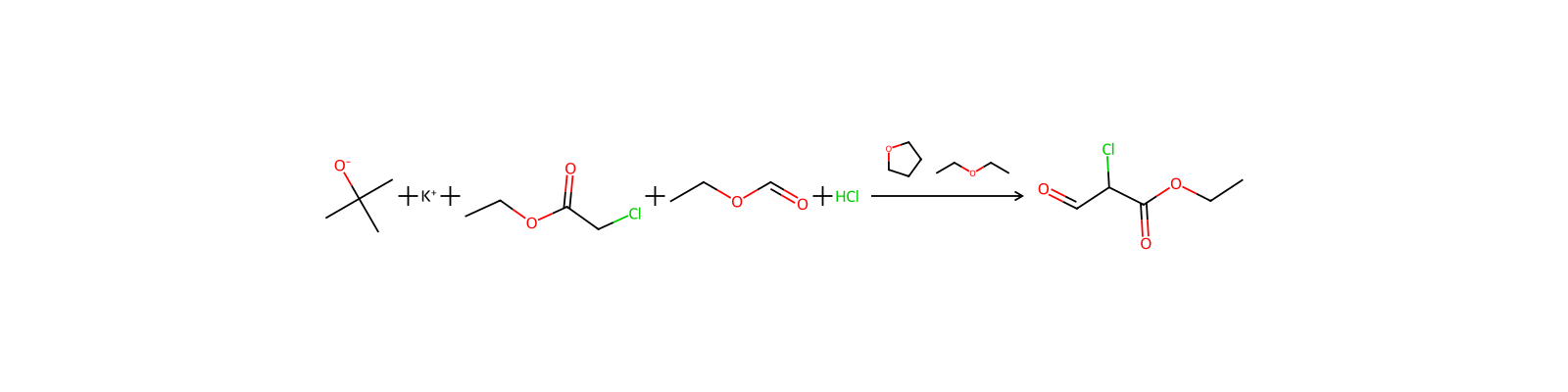
製造方法Ethyl chloroacetate is synthesized by esterification of chloroacetic acid and ethanol under the catalysis of sulfuric acid. The reaction equation is as follows:ClCH2COOH+C2H5OH[H2SO4]→ClCH2COOC2H5+H2OReaction: Add chloroacetic acid, ethanol and benzene into the esterification pot, turn on the stirrer, slowly add sulfuric acid, heat to reflux, continuously steam out the benzene-water azeotrope, and de-esterify the water generated by condensation and separator layering, Benzene is refluxed into the esterification pot, cooled and discharged when there is no more water to steam out, the crude ester is washed with saturated sodium bicarbonate solution and water to neutrality, dried with anhydrous calcium chloride, distilled, and collected The fraction at 144-146°C is the finished product of ethyl chloroacetate, the content is ≥99.0%, and the yield is 85%.
純化方法Shake the ester with satutated aqueous Na2CO3 (three times), aqueous 50% CaCl2 (three times) and saturated aqueous NaCl (twice). Dry it with Na2SO4 or MgSO4 and distil it. [Beilstein 2 IV 481.] LACHRYMATORY.