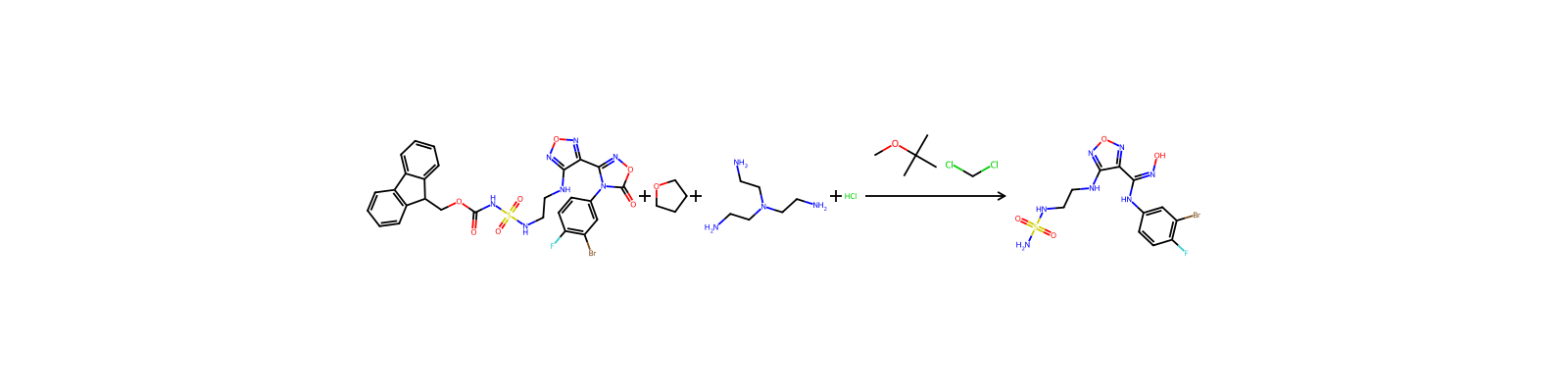
HRID 98055反応物として
Tris(2-aminoethyl)amine

14350-52-8NCCN(CCN)CCNMBYLVOKEDDQJDY-UHFFFAOYSA-NTris(2-aminoethyl)amine is a tetramine.
14350-52-8、4097-89-6DTXSID4063296CHEMBL19823CHEBI:30631安全情報は参考情報です。供給元の安全データシート(SDS)、適用法令、専門家による評価に代わるものではありません。
This chemical does not meet GHS hazard criteria for 5.6% (37 of 655) of reports.
Danger
H301 (77.9%): Toxic if swallowed [Danger Acute toxicity, oral]
P260, P262, P264, P264+P265, P270, P280, P301+P316, P301+P317, P301+P330+P331, P302+P352, P302+P361+P354, P304+P340, P305+P354+P338, P308+P316, P316, P317, P321, P330, P361+P364, P363, P405, and P501 (click each P-code to see the statement)
Aggregated GHS information provided per 655 reports by companies from 12 notifications to the ECHA C&L Inventory. Each notification may be associated with multiple companies.
Chemical: 1,2-Ethanediamine, N,N-bis(2-aminoethyl)-
1,2-Ethanediamine, N,N-bis(2-aminoethyl)-: Does not have an individual approval but may be used under an appropriate group standard
Causes ataxia, respiratory depression, and diarrhea in oral lethal-dose studies of mice; [RTECS] Causes burns; Inhalation may cause corrosive injuries to upper respiratory tract; Toxic by ingestion; Highly toxic by skin absorption; [Sigma-Aldrich MSDS]
0.74 [mg/m3]
8.1 [mg/m3]
49 [mg/m3]
純化方法Crystallise the salt several times by dissolving it in the minimum of hot water and precipitating it with excess of cold EtOH. The precipitate is washed with acetone, then diethyl ether and dried in a vacuum desiccator. [Beilstein 4 H 256, 4 II 695, 4 III 545, 4 IV 1250.]