ホームMCPワークベンチSkills
ホームワークベンチ通知マイページ
llms.txt · MCPガイドプライバシーポリシー · 利用規約 · サポートv1.8.0
  1. ホーム
  2. /化合物

CB3715673

Citronellal

HCID 7794
ノートを作成反応を作成見積依頼を出す
印刷プレビュー

データを補完しています。しばらくしてからページを更新すると最新の内容を表示できます

基本情報概要名称と識別子物性安全と法規制化学と産業関連反応化合物ノート
部分構造検索類似構造を探す

基本情報

CAS
106-23-0
標準SMILES
CC(C)=CCCC(C)CC=O
InChIKey
NEHNMFOYXAPHSD-UHFFFAOYSA-N
分子式
C10H18O
平均分子量
154.25 g/mol
単同位体質量
154.13576519

概要

Citronellal is a monoterpenoid, the main component of citronella oil which gives it its distinctive lemon aroma. It has a role as a metabolite and an antifungal agent. It is an aldehyde and a monoterpenoid.

名称と識別子

優先名称
Citronellal
IUPAC
3,7-dimethyloct-6-enal
現地名
CB3715673
英語名
Citronellal
分子式
C10H18O
分子量
154.25

名称と別名

CITRONELLAL106-23-03,7-Dimethyloct-6-enal3,7-Dimethyl-6-octenal6-Octenal, 3,7-dimethyl-2,3-DihydrocitralCitronellaCitronellelbeta-Citronellal3,7-Dimethyl-6-octen-1-alFEMA No. 2307DTXSID3041790
名称をさらに表示
dl-シトロネラール3,7-ジメチル-6-オクテン-1-アール(±)-シトロネラールrac-(R*)-3,7-ジメチル-6-オクテナール3,7-ジメチル-6-オクテナールシトロネラールシトロネラ-ル(+/-)-シトロネラール(^+)-シトロネラールRAC-シトロネラール(^+)-シトロネラール, 96%CB37156733,7-dimethyl-6-octenaLevo-citronellalCITRONELLAL NATURAL
QB99VZZ7GZNSC-46106CHEBI:47856DTXCID1021790RefChem:32709203-376-6Rhodinal(+/-)-Citronellal

データベース識別子

CAS
106-23-0
PubChem CID
7794
DTXSID
DTXSID3041790
ChEMBL
CHEMBL1081721、CHEMBL447944
ChEBI
CHEBI:47856
UNII
QB99VZZ7GZ
EC Number
203-376-6
Nikkaji
J3.239E

物性

構造計算による物性補完中

XLogP
3
極性表面積
17.1 Ų
水素結合供与体数
0
水素結合受容体数
1
回転可能結合数
5
重原子数
11
形式電荷
0
複雑度
132

実験および物理化学的性質

Chemical ClassesBiological Agents -> Plant Oils and Extracts
CosmeticsMasking
FragrancesFragrance Ingredient (Citronellal) -> IFRA transparency List
OdorIntense lemon-citronella-rose odor
Food AdditivesFLAVORING AGENT OR ADJUVANT -> FDA Substance added to food
Density · 2 件

0.853 g/cu cm at 20 °C

0.850-0.860

Flavoring AgentsEU Flavoring substances
Color/Form · 2 件

Needles or orthorhombic crystals

Colorless to slightly yellow liquid

Solubility · 4 件

Slightly soluble in water

Soluble in ethanol

Insoluble in water, glycerol; slightly soluble in propylene glycol; soluble in fixed oils

soluble (in ethanol)

Flash Point165 °F (74 °C) (CLOSED CUP)
Boiling Point

安全と法規制

安全情報は参考情報です。供給元の安全データシート(SDS)、適用法令、専門家による評価に代わるものではありません。

GHS分類

GHS Classification · 6 件

This chemical does not meet GHS hazard criteria for < 0.1% (1 of 2050) of reports.

Warning

H315 (> 99.9%): Causes skin irritation [Warning Skin corrosion/irritation]

P261, P264, P264+P265, P272, P273, P280, P302+P352, P305+P351+P338, P321, P332+P317, P333+P317, P337+P317, P362+P364, P391, and P501 (click each P-code to see the statement)

Aggregated GHS information provided per 2050 reports by companies from 17 notifications to the ECHA C&L Inventory. Each notification may be associated with multiple companies.

Warning

危険有害性情報

Regulatory Information · 5 件

Chemical: 6-Octenal, 3,7-dimethyl-

Regulation (EC) No 1831/2003 (amended)

6-Octenal, 3,7-dimethyl- is listed on the EPA's Chemical Data Reporting (CDR) system. Manufacturers and importers of 6-Octenal, 3,7-dimethyl- are required to report information about their production and use of this chemical to the EPA under the Toxic Substances Control Act (TSCA). (40 eCFR Part 711)

REACH registered substance: Citronellal (EC: 203-376-6)

6-Octenal, 3,7-dimethyl-: Does not have an individual approval but may be used under an appropriate group standard

Hazards Summary · 1 件

A mild irritant; Emergency treatment: Lemon grass oil; Citral, the main component, causes liver injury in high-dose animal experiments; Citral in concentrations >8% can cause irritation or allergic dermatitis; [HSDB] Causes somnolence in intraperitoneal lethal-dose studies of mice; [RTECS] Safe when used as a flavoring agent in food; [JECFA] An irritant; May be harmful after ingestion, inhalation, or skin absorption; [Aldrich MSDS] See Citral.

FDA Requirements · 1 件

Citronellal is a food additive permitted for direct addition to food for human consumption as a synthetic flavoring substance and adjuvant in accordance with the following conditions: 1) the quantity added to food does not exceed the amount reasonably required to accomplish its intended physical, nutritive, or other technical effect in food, and 2) when intended for use in or on food it is of appropriate food grade and is prepared and handled as a food ingredient.

化学と産業

薬理情報

Metabolism/Metabolites · 5 件

A bacterium capable of utilizing citronellal or citral as the sole source of carbon and energy has been isolated from soil by the enrichment culture technique. It metabolizes citronellal to citronellic acid (65%), citronellol (0.6%), dihydrocitronellol (0.6%), menthol (0.75%), and 3,7-dimethyl-1,7-octane diol (1.7%). The metabolites of citral were geranic acid (62%), 6-methyl-5-heptanoic acid (0.5%), 3-methyl-2-butenoic acid (1%), and 1-hydroxy-3, 7-dimethyl-6-octen-2-one (0.75%).

The cytochrome p450-catalyzed formation of olefinic products from a series of xenobiotic aldehydes has been demonstrated. Citronellal, a beta-branched aldehyde, was found to undergo the oxidative deformylation reaction to yield 2,6-dimethyl-1,5-heptadiene but only with p450 2B4.

Feeding 50 g citronellal to rabbits followed by isolation of 13 g of a cysralline glucoronide, which proved to be p-menthane-3,8-diol-D-glucoronide. The citronellal appeared to have been /nonenzymatically/ cyclized and the glucoronide obtained was identical with that obtaind on feeding p-menthane-3,8-diol (menthoglycol).

Citronellal was transformed by Solanum aviculare suspension cultures to menthane-3,8-diols. cis-Menthane-3,8-diol dominated over the trans-isomer (39% and 15%, respectively). Absolute configurations of menthane-3,8-diols were assigned by critical analysis of 1H and 19F NMR spectra of prepared esters with 2-methoxy-2-phenyl-3,3,3-trifluoropropanoic acid. Citronellol and isopulegol were other products of the transformation (23% and 17%, respectively). The reaction course was identical for both citronellal enantiomers.

For more Metabolism/Metabolites (Complete) data for CITRONELLAL (6 total), please visit the HSDB record page.

Cellular LocationsExtracellular

用途と製造

Uses · 6 件

Main component of citronella oil; Present in many other volatile oils; [Merck Index] Used as flavoring agent, insect repellent, fragrance (soaps, detergents, creams, lotions, and perfumes), and chemical intermediate for citronellol and hydroxycitronellal; [HSDB]

In soap perfumes; insect repellant.

Citronellal is used in small amounts for scenting soaps and detergents. Its principal application is in the preparation of isopulegol, citronellol, and hydroxycitronellal.

関連反応

121 件
反応記録を作成
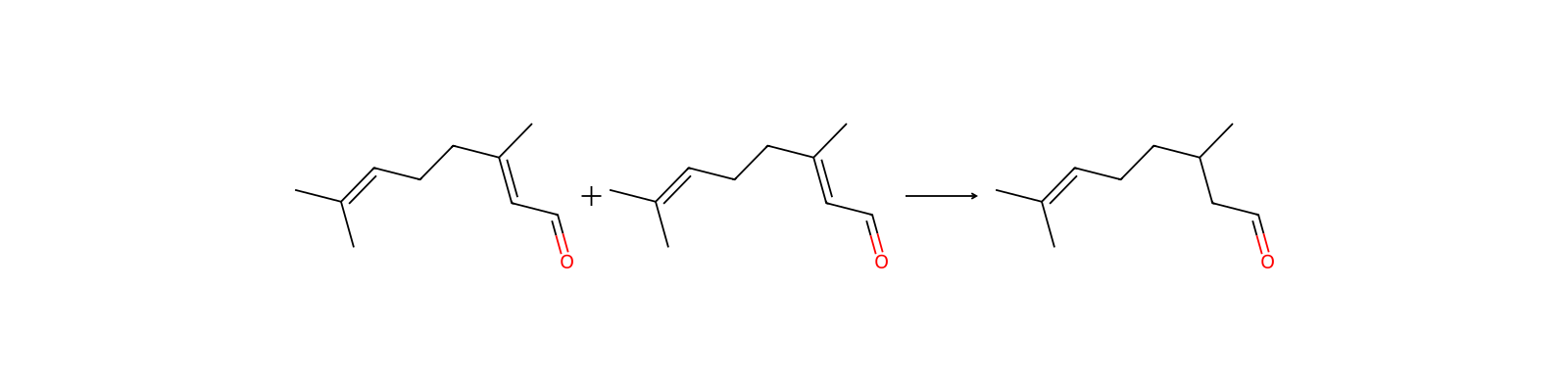
HRID 26780 の反応式
HRID 26780反応物としてuspto-grants-1979_04
HRID 104915 の反応式
HRID 104915反応物としてTraining data from https://doi.org/10.1039/C8SC04228D (2/10)
HRID 116754 の反応式
HRID 116754生成物としてTraining data from https://doi.org/10.1039/C8SC04228D (2/10)
HRID 137740 の反応式
HRID 137740反応物としてTraining data from https://doi.org/10.1039/C8SC04228D (9/10)
HRID 160319 の反応式
HRID 160319反応物としてTraining data from https://doi.org/10.1039/C8SC04228D (9/10)
HRID 187884 の反応式
HRID 187884反応物としてTraining data from https://doi.org/10.1039/C8SC04228D (6/10)
HRID 199728 の反応式
HRID 199728反応物としてTraining data from https://doi.org/10.1039/C8SC04228D (6/10)
HRID 280063 の反応式
HRID 280063反応物としてuspto-grants-1986_05
1 / 16 ページ

化合物ノート

読み込み中…

このページの内容基本情報概要名称と識別子物性安全と法規制化学と産業関連反応化合物ノート
その他の操作
ノートを作成反応を作成見積依頼を出す
· 3 件

205 °C

206.00 to 207.00 °C. @ 760.00 mm Hg

206 °C

Melting Point147 °C

物理化学的性質

融点
-16 °C · -16°C (estimate)
比旋光度
25 · D25 +11.50°
沸点
207 °C · 207 °C(lit.)
比重(密度)
0.857 g/mL · 0.857 g/mL at 25 °C(lit.)
蒸気圧
14 hPa · 14 hPa (88 °C)
屈折率
20 · n20/D 1.451(lit.)
FEMA
2307 · 2307 | CITRONELLAL
闪点
169 °F · 169 °F
貯蔵温度
30 °C · Store below +30°C.
溶解性
Chloroform (Soluble), Methanol (Sparingly)
外見
液体
比重
0.858 · 0.858 (20/4℃)
色
クリアライトイエロー
PH
7 · 7 (H2O)
臭い (Odor)
10 %。スイート · ジプロピレングリコール中10.00%。スイート ドライ フローラル ハーブ ワックス状 アルデヒド シトラス
においのタイプ
花柄
由来生物
synthetic
爆発限界(explosive limit)
1.2 · 1.2-4.5%(V)
水溶解度
水およびエタノールとわずかに混和する。
Merck
14 · 14,2329
JECFA Number
1220 · 1220
BRN
1720789 · 1720789
Henry's Law Constant
2.5 · 2.5×10-2 mol/(m3Pa) at 25℃, Roon et al. (2005)
安定性
Hygroscopic
主な用途
洗浄剤化粧品フレーバーそして香料食品および飲料パーソナルケア
化粧品成分の機能
香料
InChI
1S/C10H18O/c1-9(2)5-4-6-10(3)7-8-11/h5,8,10H,4,6-7H2,1-3H3
InChIKey
NEHNMFOYXAPHSD-UHFFFAOYSA-N
SMILES
CC(CC\C=C(\C)C)CC=O
LogP
3.62 at · 3.62 at 25℃
CAS データベース
106 · 106-23-0(CAS DataBase Reference)
NISTの化学物質情報
6 · 6-Octenal, 3,7-dimethyl-(106-23-0)
EPAの化学物質情報
Citronellal (106-23-0)
化学的性質 · 2 件

化学的特性()-Citronellal occurs in Java citronella oil at a concentration of 35%. Racemic citronellal is the main constituent of E. citriodora oil with a content of up to 85%. Pure citronellal is a colorless liquid with a refreshing odor, reminiscent of lemon balm. Upon catalytic hydrogenation, citronellal yields dihydrocitronellal, citronellol, or dihydrocitronellol, depending on the reaction conditions. Protection of the aldehyde group, followed by addition of water to the double bond in the presence of mineral acids or ion-exchange resins results in the formation of 3,7-dimethyl-7-hydroxy-octan-l-al (hydroxydihydrocitronellal). Acid-catalyzed cyclization to isopulegol is an important step in the synthesis of ()-menthol.

化学性质サンザシ様

Special Reports · 1 件

Opdyke DL; Monographs on Fragrance Raw Materials. Citronellal; Food Cosmet Toxicol 13 (suppl): 755 (1979). The natural occurrence & isolation, cosmetic & perfume uses, legal status of use in food, & metab. & toxicol. of citronnellal are reviewed.

TSCA Requirements · 2 件

Section 8(a) of TSCA requires manufacturers of this chemical substance to report preliminary assessment information concerned with production, exposure, and use to EPA as cited in the preamble in 51 FR 41329. Effective date: 9/30/91; Reporting date: 11/27/91.

Pursuant to section 8(d) of TSCA, EPA promulgated a model Health and Safety Data Reporting Rule. The section 8(d) model rule requires manufacturers, importers, and processors of listed chemical substances and mixtures to submit to EPA copies and lists of unpublished health and safety studies. 6-Octenal, 3,7-dimethyl- is included on this list. Effective date: 9/30/91; Sunset date: 6/30/98.

NFPA Hazard Classification · 3 件

0 - Materials that, under emergency conditions, would offer no hazard beyond that of ordinary combustible materials.

2 - Materials that must be moderately heated or exposed to relatively high ambient temperatures before ignition can occur. Materials would not under normal conditions form hazardous atmospheres with air, but under high ambient temperatures or under moderate heating could release vapor in sufficient quantities to produce hazardous atmospheres with air.

0 - Materials that in themselves are normally stable, even under fire conditions.

Other Hazardous ReactionsHeat, flames and sparks.
Toxic Combustion ProductsCarbon oxides
Hazard Classes and Categories · 2 件

Skin Irrit. 2 (> 99.9%)

Flammable liquids - Category 4

Skin, Eye, and Respiratory IrritationsCitronellal ... was moderately irritating /to skin/.
Hazardous Reactivities and IncompatibilitiesStrong oxidizing agents, Strong acids, Strong bases

安全と保護具

Fire Fighting Procedures · 3 件

Wear self-contained breathing apparatus for firefighting if necessary. Use water spray to cool unopened containers.

Use water spray, alcohol-resistant foam, dry chemical or carbon dioxide.

Alcohol foam.

Storage ConditionsKeep container tightly closed in a dry and well-ventilated place. Containers which are opened must be carefully resealed and kept upright to prevent leakage. Light sensitive. Storage class (TRGS 510): Combustible liquids
Cleanup Methods · 1 件

ACCIDENTAL RELEASE MEASURES: Personal precautions, protective equipment and emergency procedures Use personal protective equipment. Avoid breathing vapors, mist or gas. Ensure adequate ventilation. Remove all sources of ignition. Evacuate personnel to safe areas. Beware of vapors accumulating to form explosive concentrations. Vapors can accumulate in low areas. For personal protection see section Environmental precautions Prevent further leakage or spillage if safe to do so. Do not let product enter drains. Discharge into the environment must be avoided. Methods and materials for containment and cleaning up. Contain spillage, and then collect with an electrically protected vacuum cleaner or by wet-brushing and place in container for disposal according to local regulations. Keep in suitable, closed containers for disposal.

Disposal Methods · 2 件

SRP: Recycle any unused portion of the material for its approved use or return it to the manufacturer or supplier. Ultimate disposal of the chemical must consider: the material's impact on air quality; potential migration in air, soil or water; effects on animal, aquatic and plant life; and conformance with environmental and public health regulations. If it is possible or reasonable use an alternative chemical product with less inherent propensity for occupational harm/injury/toxicity or environmental contamination.

Product: This combustible material may be burned in a chemical incinerator equipped with an afterburner and scrubber. Offer surplus and non-recyclable solutions to a licensed disposal company. Contaminated packaging: Dispose of as unused product.

Preventive Measures · 3 件

Gloves must be inspected prior to use. Use proper glove removal technique (without touching glove's outer surface) to avoid skin contact with this product. Dispose of contaminated gloves after use in accordance with applicable laws and good laboratory practices. Wash and dry hands.

Handle in accordance with good industrial hygiene and safety practice. Wash hands before breaks and at the end of workday.

Avoid contact with skin and eyes. Avoid inhalation of vapor or mist. Keep away from sources of ignition - No smoking. Take measures to prevent the build up of electrostatic charge.

Personal Protective Equipment (PPE) · 4 件

Respiratory protection: Where risk assessment shows air-purifying respirators are appropriate use a full-face respirator with multipurpose combination (US) or type ABEK (EN 14387) respirator cartridges as a backup to engineering controls. If the respirator is the sole means of protection, use a full-face supplied air respirator. Use respirators and components tested and approved under appropriate government standards such as NIOSH (US) or CEN (EU).

Body Protection: Complete suit protecting against chemicals. The type of protective equipment must be selected according to the concentration and amount of the dangerous substance at the specific workplace.

Skin protection: Handle with gloves.

Eye/face protection: Face shield and safety glasses. Use equipment for eye protection tested and approved under appropriate government standards such as NIOSH (US) or EN 166(EU).

毒性情報

Interactions · 2 件

Citronellal is a monoterpene present in the oil of many species, including Cymbopogon winterianus Jowitt (Poaceae). The present study investigated the effect of citronellal on inflammatory nociception induced by different stimuli and examined the involvement of the NO-cGMP-ATP-sensitive K+ channel pathway. This study used male Swiss mice (n=6 per group) that were treated intraperitoneally with citronellal(25, 50 or 100 mg/kg) 0.5 hr after the subplantar injection of 20 uL of carrageenan (CG; 30 ug/paw), tumor necrosis factor-alpha (TNF-a; 100 pg/paw), prostaglandin E2 (PGE2; 100 ng/paw) or dopamine (DA; 30 ug/paw). The mechanical nociception was evaluated at 0.5, 1, 2 and 3 hr after the injection of the agents, using a digital analgesimeter (von Frey). The effects of citronellal were also evaluated in the presence of L-NAME (30 mg/kg) or glibenclamide (5 mg/kg). At all times, citronellal in all doses inhibited the development of mechanical nociception induced by CG (p<0.001 and p<0.01) and TNF-a (p<0.001, p<0.01, and p<0.05). The citronellal was able to increase the pain threshold in the DA test (p<0.001, p<0.01, and p<0.05) and in the PGE2 test at all times (p<0.001 and p<0.05). L-NAME and glibenclamide reversed the antinociceptive effects of the citronellal at higher doses in the PGE2 test. These data suggest that citronellal attenuated mechanical nociception, mediated in part by the NO-cGMP-ATP-sensitive K+ channel pathway.

Complementary and alternative medicines can be applied concomitantly with conventional medicines; however, little drug information is available on these interactions. Previously, we reported on the inhibitory effects of an extract and monoterpenoids (e.g., (R)-(+)-citronellal) contained in citrus herbs on P-glycoprotein (P-gp) using P-gp-overexpressed LLC-PK1 cells. The objective of the present study was to investigate the effects of (R)-(+)-citronellal on P-gp-mediated transport in the intestinal absorption process in vitro and in vivo. Transcellular transport of [(3)H]digoxin across Caco-2 cell monolayers was measured in the presence or absence of (R)-(+)-citronellal. (R)-(+)-citronellal reduced the basolateral-to-apical transport and efflux ratio for [(3)H]digoxin significantly. Serum concentration-time profiles and pharmacokinetic parameters of digoxin after intravenous and oral administration were analyzed in rats pretreated with oral (R)-(+)-citronellal. The bioavailability of digoxin after oral administration decreased significantly to 75.8% of that after intravenous administration at the same dose. (R)-(+)-citronellal increased the bioavailability of oral digoxin to 99.9% but had no effects on total body clearance, volume of distribution, or elimination rate. These findings suggest that (R)-(+)-citronellal can increase the bioavailability of oral digoxin based on the blockade of P-gp-mediated efflux of digoxin from intestinal epithelia to the lumen in the absorption process.

Environmental Fate · 3 件

TERRESTRIAL FATE: Based on a classification scheme(1), an estimated Koc value of 650(SRC), determined from a log Kow of 3.83(2) and a regression-derived equation(3), indicates that citronellal is expected to have low mobility in soil(SRC). Volatilization of citronellal from moist soil surfaces may be an important fate process(SRC) given an estimated Henry's Law constant of 2.62X10⁻⁴ atm-cu m/mole(SRC), using a fragment constant estimation method(4). Even though the vapor pressure is low environmentally at standard temperature and pressure, estimated as 0.25 mm Hg at 25 °C(SRC), determined from a fragment constant method(3), there is a detectable odor; therefore, citronellal may volatilize from dry soil. Utilizing a Modified Sturm test, 83% biodegradation occurred in 4 weeks(5) suggesting that biodegradation is an important environmental fate process in soil(SRC).

AQUATIC FATE: Based on a classification scheme(1), an estimated Koc value of 650(SRC), determined from a log Kow of 3.83(2) and a regression-derived equation(3), indicates that citronellal may adsorb to suspended solids and sediment(SRC). Volatilization from water surfaces is expected(4) based upon an estimated Henry's Law constant of 2.62X10⁻⁴ atm-cu m/mole(SRC), developed using a fragment constant estimation method(5). Using this Henry's Law constant and an estimation method(4), volatilization half-lives for a model river and model lake are 8 hours and 6 days, respectively(SRC). According to a classification scheme(6), an estimated BCF of 160(SRC), from its log Kow(2) and a regression-derived equation(3), suggests the potential for bioconcentration in aquatic organisms is high(SRC). Utilizing a Modified Sturm test, 83% biodegradation occurred in 4 weeks(7) suggesting that biodegradation is an important environmental fate process in water(SRC).

ATMOSPHERIC FATE: According to a model of gas/particle partitioning of semivolatile organic compounds in the atmosphere(1), citronellal, which has an estimated vapor pressure of 0.25 mm Hg at 25 °C(SRC), determined from a fragment constant method(2), is expected to exist solely as a vapor in the ambient atmosphere. Vapor-phase citronellal is degraded in the atmosphere by reaction with photochemically-produced hydroxyl radicals(SRC); the half-life for this reaction in air is estimated to be 3 hours(SRC), calculated from its rate constant of 1.2X10⁻¹⁰ cu cm/molecule-sec at 25 °C(SRC) that was derived using a structure estimation method(3). The rate constant for the vapor-phase reaction of citronellal with ozone has been estimated as 4.3X10⁻¹⁶ cu cm/molecule-sec at 25 °C(SRC) that was derived using a structure estimation method(3). This corresponds to an atmospheric half-life of about 40 minutes at an atmospheric concentration of 7X10+11 ozone molecules per cu cm(4). Citronellal contains chromophores that absorb at wavelengths >290 nm(5) and, therefore, may be susceptible to direct photolysis by sunlight(SRC).

Food Survey Values · 1 件

Citronellal has been found in two commercial samples of cold-pressed oils from the following Florida citrus fruits (in wt %): Valencia orange 0.09 and 0.094; midseason orange (mixture of pineapple and other citrus cultivars) 0.06 and 0.055; tangerine 0.1 and 0.08; and grapefruit 0.091 and 0.077. Two commercial samples of cold-pressed oils from California navel oranges contained citronellal at 0.081 and 0.064%(1).

Adverse EffectsSkin Sensitizer - An agent that can induce an allergic reaction in the skin.
Toxicity Summary · 1 件

IDENTIFICATION AND USE: Citronellal is a colorless to slightly yellow liquid with an intense lemon odor. It is used as a flavoring agent and insect repellant. It has been tested as a medication. HUMAN EXPOSURE AND TOXICITY: A maximization test was carried out on 25 volunteers. The material was tested at a concentration of 4% in petrolatum and produced no sensitization reactions. Three cases of eczematous contact-type hypersensitivity to oils of citronella have been recorded. In two instances detailed patch-test studies were made with the ingredients of oil of citronella and some related substances. The essential allergen in oil of citronella was reported to be citronellal. ANIMAL STUDIES: Citronellal applied full strength to intact or abraded rabbit skin for 24 hr under occlusion was moderately irritating. Citronellal injected into white leghorn embryos caused dose-dependent teratogenesis. Morphological malformation occurred mainly in the craniofacial area. Citronellal produced antinociceptive effects in mice and was a strong skin sensitizer in guinea pigs. Mutagenicity was evaluated by the Salmonella/microsome assay (TA97a, TA98, TA100 and TA102 tester strains), without and with metabolic activation. Citronellal was not mutagenic in this test. ECOTOXICITY STUDIES: Citronellal inhibited embryonic development of yellow fever mosquito A aegypti eggs deposited on water. Citronellal causes a severe phytotoxicity on weeds.

Ecotoxicity Excerpts · 5 件

/OTHER TERRESTRIAL SPECIES/ Plants produce insect repellents, such as citronellal, which is the main component of citronellal oil. However, the molecular pathways through which insects sense botanical repellents are unknown. Here, we show that Drosophila use two pathways for direct avoidance of citronellal. The olfactory coreceptor OR83b contributes to citronellal repulsion and is essential for citronellal-evoked action potentials. Mutations affecting the Ca(2+)-permeable cation channel TRPA1 result in a comparable defect in avoiding citronellal vapor. The TRPA1-dependent aversion to citronellal relies on a G protein (Gq)/phospholipase C (PLC) signaling cascade rather than direct detection of citronellal by TRPA1. Loss of TRPA1, Gq, or PLC causes an increase in the frequency of citronellal-evoked action potentials in olfactory receptor neurons. Absence of the Ca(2+)-activated K(+) channel (BK channel) Slowpoke results in a similar impairment in citronellal avoidance and an increase in the frequency of action potentials.

/OTHER TERRESTRIAL SPECIES/ Citronellal inhibited embryonic development of yellow fever mosquito A aegypti eggs deposited on water.

/OTHER TERRESTRIAL SPECIES/ We evaluated the acute toxicities and the physiological effects of plant monoterpenoids (eugenol, pulegone, citronellal and alpha-terpineol) and neuroactive insecticides (malathion, dieldrin and RH3421) on flight muscle impulses (FMI) and wing beat signals (WBS) of the blow fly (Phaenicia sericata). Topically-applied eugenol, pulegone, citronellal, and alpha-terpineol produced neurotoxic symptoms, but were less toxic than malathion, dieldrin, or RH3421. Topical application of eugenol, pulegone, andcitronellal reduced spike amplitude in one of the two banks of blow fly dorsolongitudinal flight muscles within 6-8 min, but with citronellal, the amplitude of FMIs reverted to a normal pattern within 1 hr. In contrast to pulegone and citronellal, where impulse frequency remained relatively constant, eugenol caused a gradual increase, then a decline in the frequency of spikes in each muscle bank. Wing beating was blocked permanently within 6-7 min of administering pulegone or citronellal and within 16 mins with eugenol. alpha-Terpineol-treated blow flies could not beat their wings despite normal FMI patterns. The actions of these monoterpenoids on blow fly flight motor patterns are discussed and compared with those of dieldrin, malathion, RH3421, and a variety of other neuroactive substances we have previously investigated in this system. Eugenol, pulegone and citronellal readily penetrate blow fly cuticle and interfere with flight muscle and/or central nervous function. Although there were differences in the effects of these compounds, they mainly depressed flight-associated responses, and acted similarly to compounds that block sodium channels and facilitate GABA action.

/OTHER TERRESTRIAL SPECIES/ The changes of the host-seeking and blood-feeding behavior of Aedes albopictus (Skuse) (Diptera: Culicidae) surviving in a space containing vapors of the spatial repellents geraniol, eugenol, citral, anisaldehyde, or citronellal were evaluated using an arm-in-cage test and a bioassay of bloodmeals on a shaved mouse. The mosquitoes surviving concentrations of geraniol, citral, eugenol, or anisaldehyde at 0.013, 0.025, 0.050, 0.100, and 0.250 ug/cu cm for 24 and 48 hr all showed different degrees of reduction in host-seeking ability. After 48 hr of exposure to 0.250 ug/cu cm geraniol, almost 100% of the mosquitoes lost their host-seeking ability. The next most potent spatial repellent, anisaldehyde, stopped host seeking by > 85.5%. Citronellal did not result in a significant reduction in the host-seeking ability at any concentration level after either 24 or 48 hr of treatment. We also found that reduction of host-seeking ability recovered after various times. The longest recovery time (144 hr) was observed for geraniol after 24 hr at 0.250 ug/cu cm. In the study, geraniol, eugenol, and citral all significantly affected the activation and orientation stages of the blood-feeding behavior. However, only anisaldehyde significantly interrupted the normal blood-feeding of mosquitoes in all stages of behavior. These initial laboratory results clearly showed that anisaldehyde and geraniol could be promising spatial repellents against A. albopictus that they could play a major role in new repellent technology.

Plant ConcentrationsCitronellal detections in various plants(1).[Table#1695]
Ongoing Test Status · 1 件

EPA has released the first beta version (version 0.5) of the Interactive Chemical Safety for Sustainability (iCSS) Dashboard. The beta version of the iCSS Dashboard provides an interactive tool to explore rapid, automated (or in vitro high-throughput) chemical screening data generated by the Toxicity Forecaster (ToxCast) project and the federal Toxicity Testing in the 21st century (Tox21) collaboration. /The title compound was tested by ToxCast and/or Tox21 assays; Click on the "Chemical Explorer" button on the tool bar to see the data./[USEPA; ICSS Dashboard Application; Available from, as of April 22, 2015: http://actor.epa.gov/dashboard/]

Soil Adsorption/Mobility · 1 件

The Koc of citronellal is estimated as 650(SRC), using a log Kow of 3.83(1) and a regression-derived equation(2). According to a classification scheme(3), this estimated Koc value suggests that citronellal is expected to have low mobility in soil(SRC).

Natural Pollution Sources · 2 件

Citronellal has been found in cold-pressed oils from Valencia orange, midseason orange (mixture of pineapple and other citrus cultivars), Calfornia navel orange, tangerine, and grapefruit(1). Citronellal has been reported as a chief constituent in citronella oil(2). It is also found in many other volatile oils, such as lemon, lemon grass, and melissa(2). Citronellal has been found in various tissues and essential oils of numerous plant species including Juniper, Bee balm, Lemon balm, Ginger, Lime, and Lavener(3).

Citronellal occurs in a number of essential oils. The richest sources are Eucalyptus citriodora (up to 85% citronellal content), some chemotypes of Litsea cubeba and citronella (Cymbopogon nardus) [typically 30-40% of the (+)-enantiomer]. Swangi Leaf Oil (Citrus hystrix) is rich in (-)-citronellal, as it accounts for 60-80% of the oil obtained from the leaves. Backhousia citriodora contains up to 80% of the (-)-enantiomer. Natural grades of citronellal are commercially available from Eucalyptus citriodora and E. citronella(1).

Human Toxicity Excerpts · 5 件

/HUMAN EXPOSURE STUDIES/ A maximization test was carried out on 25 volunteers. The material was tested at a concentration of 4% in petrolatum and produced no sensitization reactions.

/CASE REPORTS/ Three cases of eczematous contact-type hypersensitivity to oils of citronella are recorded. In two instances detailed patch-test studies were made with the ingredients of oil of citronella and some related substances. The essential allergen in oil of citronella was reported to be citronellal.

/ALTERNATIVE and IN VITRO TESTS/ Citrus (rutaceous) herbs are often used in traditional medicine and Japanese cuisine and can be taken concomitantly with conventional medicine. In this study, the effect of various citrus-herb extracts on P-glycoprotein (P-gp)-mediated transport was examined in vitro to investigate a possible interaction with P-gp substrates. Component monoterpenoids of the essential oil in Zanthoxyli fructus was screened to find novel P-gp inhibitors. LLC-GA5-COL150 cells transfected with human MDR1 cDNA encoding P-gp were used. Cellular accumulation of [(3)H]digoxin was measured in the presence or absence of P-gp inhibitors or test samples. Aurantii fructus, Evodiae fructus, Aurantii fructus immaturus, Aurantii nobilis pericarpium, Phellodendri cortex, and Zanthoxyli fructus were extracted with hot water (decocted) and then fractionated with ethyl acetate. The cell to medium ratio of [3H]digoxin accumulation increased significantly in the presence of the decoction of Evodiae fructus, Aurantii nobilis pericarpium, and Zanthoxyli fructus, and the ethyl acetate fraction of all citrus herbs used. The ethyl acetate fraction of Zanthoxyli fructus exhibited the strongest inhibition of P-gp among tested samples with an IC50 value of 166 ug/mL. Then its component monoterpenoids, geraniol, geranyl acetate, (R)-(+)-limonene, (R)-(+)-linalool, citronellal, (R)-(+)-citronellal, DL-citronellol, (S)-(-)-beta-citronellol, and cineole, were screened. (R)-(+)-citronellal and (S)-(-)-beta-citronellol inhibited P-gp with IC50 values of 167 uM and 504 uM, respectively. These findings suggest that Zanthoxyli fructus may interact with P-gp substrates and that some monoterpenoids with the relatively lower molecular weight of about 150 such as (R)-(+)-citronellal can be potent inhibitors of P-gp.

/IMMUNOTOXICITY/ Contact hypersensitivity is a major public health concern in most industrial countries, which is why predictive tests which could identify potential allergens are needed. We have established an in vitro approach for the detection of primary immune response. This model uses Langerhans-like dendritic cells (LLDC) derived from cord blood progenitors and autologous T lymphocytes, isolated from the same blood sample. Treatment of day 12-14 LLDC, with strong haptens trinitrobenzene sulfonic acid (TNP), fluorescein isothiocyanate (FITC) or Bandrowski's base (BB), results in the proliferation of T lymphocytes, whereas weak allergens and irritants, such as sodium dodecyl sulfate (SDS) are ineffective. The use of immature (day 8) LLDC and the addition of a 48 hr stage of incubation after hapten contact, result in phenotypic maturation of LLDC in addition to lymphocyte activation in all the cultures with strong haptens. The 48 hr stage of incubation, results in sensitization and in some cases the induction of T cell proliferation to citronellal (1/8), coumarine (1/8) and to a prohapten p-phenylenediamine (pPDA; 2/8). The phenotype of DC after 48 hr of contact with a strong hapten, becomes that of mature DC (CD83(+), CD86(+) and HLA-DR(++)). With fragrance molecules, weak haptens and prohaptens, a comparable phenotype is observed only when T lymphocytes are activated. These data suggest that the unresponsiveness observed with weak haptens, may be the consequence on an incomplete maturation of LLDC.

Artificial Pollution Sources · 1 件

Citronellal's production and use as a food flavoring ingredient(1) may result in its release to the environment through various waste streams(SRC). It's use as a soap perfume and insect repellent(2) will result in its direct release to the environment(SRC).

法規制情報

FDA Requirements · 1 件

Citronellal is a food additive permitted for direct addition to food for human consumption as a synthetic flavoring substance and adjuvant in accordance with the following conditions: 1) the quantity added to food does not exceed the amount reasonably required to accomplish its intended physical, nutritive, or other technical effect in food, and 2) when intended for use in or on food it is of appropriate food grade and is prepared and handled as a food ingredient.

TSCA Requirements · 2 件

Section 8(a) of TSCA requires manufacturers of this chemical substance to report preliminary assessment information concerned with production, exposure, and use to EPA as cited in the preamble in 51 FR 41329. Effective date: 9/30/91; Reporting date: 11/27/91.

Pursuant to section 8(d) of TSCA, EPA promulgated a model Health and Safety Data Reporting Rule. The section 8(d) model rule requires manufacturers, importers, and processors of listed chemical substances and mixtures to submit to EPA copies and lists of unpublished health and safety studies. 6-Octenal, 3,7-dimethyl- is included on this list. Effective date: 9/30/91; Sunset date: 6/30/98.

安全データ

F
8
wgk
3
tsca
TSCA listed
rtecs
RH2140000
ridadr
UN 3082 9/PG 3
毒性
LD50 orally in Rabbit: 2420 mg/kg LD50 dermal Rabbit > 2500 mg/kg
hs_code
29121900
risk_code
38-43-51/53-36/37/38-22
消防法
危-4-3-III
hazard_code
Xn,Xi,N
safety_code
36/37-61-37/39-26-36
自然発火温度
202 °C
Hazard Classifications
Eye Irrit. 2Skin Irrit. 2Skin Sens. 1B
ストレージクラス
10 - Combustible liquids
有毒物質データの
106-23-0(Hazardous Substances Data)

Among the plant families with promising essential oils used as repellents, Cymbopogon spp., Ocimum spp. and Eucalyptus spp. are the most cited. Individual compounds present in these mixtures with high repellent activity include alpha-pinene, limonene, citronellol, citronellal, camphor and thymol. Finally, although from an economical point of view synthetic chemicals are still more frequently used as repellents than essential oils, these natural products have the potential to provide efficient, and safer repellents for humans and the environment.

MEDICATION

Reported uses (ppm):

U.S. Production · 3 件

2023: <50,000 lb

(1975) 2.85X10+8 GRAMS

(1976) 3.28X10+8 GRAMS

Consumption PatternsAPPROXIMATELY 1.8X10+6 GRAMS AS A FRAGRANCE INGREDIENT (1975)
Consumer UsesFragrance
Industry UsesFragrance
IFRA Fragrance Standards · 6 件

Citronellal

106-23-0:; 2,3-Dihydrocitral; 3,7-Dimethyl-6-octenal; 3,7-Dimethyloct-6-enal; 6-Octenal, 3,7-dimethyl-; Citronellal Extra (Commercial name); Rhodinal (Commercial name); 5949-05-3:; 6-Octenal, 3,7-dimethyl-, (3S)-; I-Citronellal

IFRA_STD_206.pdf

49

IFRA 51st Amendment - Guidance for the use of IFRA Standards

Restriction: This material should be used only in the limited quantity as stated in the Standard

Methods of Manufacturing · 5 件

DEHYDROGENATION OF BETA-CITRONELLOL OR BY CATALYTIC HYDROGENATION OF CITRAL; SYNTHETIC D,L-CITRONELLAL BY CATALYTIC REARRANGEMENT OF SYNTHETIC GERANIOL/NEROL

(+)-Citronellal is obtained from citronella oils by fractional distillation. (+,-)-Citronellal is isolated from Eucalyptus citriodora oil; when necessary, it is purified by using an addition compound, e.g., the bisulfite derivative.

(+,-)-Citronellal can be obtained by vapor-phase rearrangement of geraniol or nerol in the presence of, e.g., a barium-containing copper-chromium oxide catalyst.

(+,-)-Citronellal can also be obtained by dehydrogenation of citronellol under reduced pressure with a copper chromite catalyst.

For more Methods of Manufacturing (Complete) data for CITRONELLAL (8 total), please visit the HSDB record page.

Formulations/PreparationsCitronella (natural)
Household ProductsInformation on 29 consumer products that contain Citronellal in the following categories is provided:
Use Classification · 6 件

Fragrance Ingredients

Flavouring Agent -> FLAVOURING_AGENT -> JECFA Functional Classes

Flavoring Agents -> JECFA Flavorings Index

Flavouring Agent -> FLAVOURING_AGENT -> JECFA Functional Classes

Flavouring Agent -> FLAVOURING_AGENT -> JECFA Functional Classes

Flavouring Agent -> FLAVOURING_AGENT -> JECFA Functional Classes

General Manufacturing Information · 3 件

Soap, Cleaning Compound, and Toilet Preparation Manufacturing

6-Octenal, 3,7-dimethyl-: ACTIVE

Citronellal is one of the main components of oil of citronella, a naturally occurring insect and animal repellent distilled from two varieties of grass

Restriction Limits in the Finished Product (%) · 6 件

0.41 [Products applied to the lips]

0.16 [Products applied to the axillae]

0.026 [Products applied to the face/body using fingertips]

0.49 [Products related to fine fragrances]

0.33 [Products applied to the body using the hands (palms), primarily leave-on (Body lotion)]

0.051 [Products applied to the face using the hands (palms), primarily leave-on (Face moisturizer)]

応用分野 · 5 件

解説シトロネラール,シトロネラ油には,(R)-(+)-シトロネラールが含まれている.還元すればシトロネロールを生じる.沸点47 ℃(0.13 kPa).[α]D+11.5°.森北出版「化学辞典(第2版)

用途柑橘様香気を有する食品、化粧品香料に使用するが、アルカリ、空気、光に対する不安定さのために、単品として使われることは少ない。

天然物の起源The d-form of citronellal has been reported in the oil of citronella (Ceylon, Jammus, Kaschmis), in the oil from leaves of Barosma pulchella, in the oil from roots of Phebalium nudum and in the oils of Eucalyptus citriodora, Leptospermum citratum and Baeckea citriodora. The /-form is present in the oils of Backhousia citriodora var. A, E. citriodora, Litsea cubeba (fruits) and lemongrass. Citronellal is generally present also in the oils of lemon, mandarin, Lavandula delphinensis, Ocimum canum f. citrata and many others (Fenarolis Handbook of Flavor Ingredients, 1971).

使用rac-Citronellal is a monoterpenoid and the major isolate in citronella oil. Citronella oil is an essential oil bearing insecticidal properties. rac-Citronellal is also often used as a fragrance ingred ient.

一般的な説明(±)-Citronellal was studied for its fumigant antifungal activity against Pyricularia (Magnaporthe) grisea.

調製方法 · 1 件

製造方法Citronellal is still isolated from essential oils in considerable quantities; it is also produced synthetically. 1) Isolation from essential oils:(+)-Citronellal is obtained from citronella oils by fractional distillation. Racemic citronellal is isolated from E. citriodora oil; when necessary, it is purified by using an addition compound, for example, the bisulfite derivative. 2) Synthesis from geraniol or nerol: Racemic citronellal can be obtained by vaporphase rearrangement of geraniol or nerol in the presence of, for example, a barium-containing copper–chromium oxide catalyst. 3) Synthesis from citronellol: Racemic citronellal can also be obtained by dehydrogenation of citronellol under reduced pressure with a copper chromite catalyst. 4) Synthesis from citral: Selective hydrogenation of citral to citronellal can be accomplished in the presence of a palladium catalyst in an alkaline alcoholic reaction medium. A continuously operating process for the hydrogenation on a palladium catalyst in the presence of trimethylamine has been developed. 5) Synthesis from myrcene: (+)- and ()-Citronellal are available from myrcene via geranyldiethylamine, which is enantioselectively isomerized to (+)- or ()-citronellalenamine. Hydrolysis yields pure (+)- or ()-citronellal; see monograph menthol.

上流・下流製品情報

上流原料

β-シトロネロール(1S,5S)-2α,6,6-トリメチルビシクロ[3.1.1]ヘプタンゲラニオールシトロネラ油1,7-オクタジエン二ぎ酸ニッケル(II)亜硫酸水素ナトリウムシトラール (cis-, trans-混合物)ユーカリ油アルミニウム オキシド炭酸ナトリウム

下流製品

β-シトロネロールイソプレゴール[R,(+)]-7-ヒドロキシ-3,7-ジメチルオクタナール(-)-メントールisodecanal

補足説明

定義本品は、次の化学式で表されるテルペンアルデヒドである。

定義ChEBI: A monoterpenoid, the main component of citronella oil which gives it its distinctive lemon aroma.

/PLANTS/ A study was undertaken to assess the phytotoxicity of citronellal, an oxygenated monoterpenoid with an aldehyde group, towards some weedy species [Ageratum conyzoides L., Chenopodium album L., Parthenium hysterophorus L., Malvastrum coromandelianum (L.), Garcke, Cassia occidentalis L. and Phalaris minor Retz.]. A significant effect on weed emergence and early seedling growth was observed in a dose-response based laboratory bioassay in a sand culture. Emergence of all test weeds was completely inhibited at 100 micro/g sand content of citronellal. Seeds of A. conyzoides and P. hysterophorus failed to emerge even at 50 microg/g content. Root length was inhibited more compared to shoot length. The failure of root growth was attributed to the effect of citronellal on the mitotic activity of growing root tips cells as ascertained by the onion root tip bioassay. At 2.5 mM treatment of citronellal, mitosis was completely suppressed and at higher concentrations cells showed various degrees of distortion and were even enucleated. The post-emergent application of citronellal also caused visible injury in the form of chlorosis and necrosis, leading to wilting and even death of test weeds. Among the test weeds, the effect was severe on C. album and P. hysterophorus. There was loss of chlorophyll pigment and reduction in cellular respiration uponcitronellal treatment indicating the impairment of photosynthetic and respiratory metabolism. Scanning electron microscopic studies in C. occidentalis leaves upon treatment of citronellal revealed disruption of cuticular wax, clogging of stomata and shrinkage of epidermal cells at many places. There was a rapid electrolyte leakage in the leaf tissue upon exposure tocitronellal during the initial few hours. In P. minor electrolyte leakage in response to 2 mM citronellal was closer to the maximum leakage that was obtained upon boiling the tissue. The rapid ion leakage is indicative of the severe effect of citronellalon the membrane structure and loss of membrane integrity. In all, the study concludes that citronellal causes a severe phytotoxicity on the weeds.

/IMMUNOTOXICITY/ ... The ability of a range of contact allergens to induce in vitro primary sensitization of autologous T cells /has been evaluated/. T-cell proliferation induced by haptens using 2-day cultured human Langerhans cells as antigen-presenting cell was assessed by (3)H thymidine incorporation. Antigen specific stimulation was calculated as stimulation indexes. Strong allergens induced in vitro a primary T-cell response in all (trinitrophenyl, TNP: 13/13) or in the majority (fluorescein isothiocyanate, FITC: 7/10) of experiments. An irritant, sodium dodecyl sulfate (SDS), failed to generate a significant T-cell proliferation in any of the experiments (0/10). We obtained a significant lymphoproliferative response to weak sensitizers only in a limited number of experiments: (coumarin: 1/12, citronellal: 0/10, hydroxycitronellal: 2/8). p-Phenylenediamine (PPDA), a prohapten and highly sensitizing chemical in vivo, generated primary sensitization in vitro in only one of six experiments, while Bandrowski's base (BB), a metabolization product of PPDA induced a significant T-cell response in all six experiments. The present in vitro model allows discrimination between two groups of substances: strong contact sensitizers (TNP, FITC, BB) on the one hand and weak sensitizers (coumarin, citronellal and hydroxycitronellal) and irritants (SDS) on the other hand. It could be used as a screening in vitro assay to eliminate strong contact allergens before further predictive animal tests have to be performed.