ホームMCPワークベンチSkills
ホームワークベンチ通知マイページ
llms.txt · MCPガイドプライバシーポリシー · 利用規約 · サポートv1.8.0
  1. ホーム
  2. /化合物

アリルグリシジルエーテル

Allyl glycidyl ether

HCID 7838
ノートを作成反応を作成見積依頼を出す
印刷プレビュー
基本情報概要名称と識別子物性安全と法規制化学と産業関連反応化合物ノート
部分構造検索類似構造を探す

基本情報

CAS
106-92-3
標準SMILES
C=CCOCC1CO1
InChIKey
LSWYGACWGAICNM-UHFFFAOYSA-N
分子式
C6H10O2
平均分子量
114.14 g/mol
単同位体質量
114.06807956

概要

Allyl glycidyl ether appears as a colorless liquid with a pleasant odor. Slightly less dense than water and insoluble in water. Hence floats on water. Poisonous by ingestion and mildly toxic by inhalation and skin contact. Very irritating to skin and eyes. Used to make other chemicals.

名称と識別子

優先名称
Allyl glycidyl ether
IUPAC
2-(prop-2-enoxymethyl)oxirane
現地名
アリルグリシジルエーテル
英語名
Allyl glycidyl ether
分子式
C6H10O2
分子量
114.14

名称と別名

ALLYL GLYCIDYL ETHER106-92-3Glycidyl allyl etherAllyl 2,3-epoxypropyl etherAllylglycidaetherAllil-glicidil-etere1-Allyloxy-2,3-epoxypropane1,2-Epoxy-3-allyloxypropaneDenacol EX 111Propane, 1-(allyloxy)-2,3-epoxy-1-Allyloxy-2,3-epoxypropanEther, allyl 2,3-epoxypropyl
名称をさらに表示
アリルグリシジルエーテル2-プロペニル(オキシラニルメチル)エーテル(アリルオキシメチル)オキシラングリシジルアリルエーテル2-(アリルオキシメチル)オキシランアリル2,3-エポキシプロピルエーテル3-(オキシラニルメトキシ)-1-プロペン(オキシラニルメチル)2-プロペニルエーテルグリシジル(2-プロペニル)エーテル[(アリルオキシ)メチル]オキシランアリル(オキシラニルメチル)エーテル1-アリルオキシ-2,3-エポキシプロパン2-(2-プロペニルオキシメチル)オキシラン[[(2-プロペニル)オキシ]メチル]オキシラン1-(アリルオキシ)-2,3-エポキシプロパン(2-プロペニル)(オキシラニルメチル)エーテル2-[(2-プロペニルオキシ)メチル]オキシラン[(2-プロペニルオキシ)メチル]オキシラン2-プロペニルオキシメチルオキシラン2-[(アリルオキシ)メチル]オキシランAGEallylAllylglycide etherAlly glycidyl etherM 560Ageflex AGESipomer AGEALLYLGLYCIDOLETHER
1-(Allyloxy)-2,3-epoxypropaneOxyde d'allyle et de glycidyle1-Allilossi-2,3 epossipropano1-Allyloxy-2,3-epoxy-propaanNCI-C56666DTXSID9039232[(2-Propenyloxy)methyl]oxiraneNSC-631

データベース識別子

CAS
106-92-3
PubChem CID
7838
DTXSID
DTXSID9039232
ChEMBL
CHEMBL1528174
UNII
HDC0791894
EC Number
203-442-4
Nikkaji
J34.520B

物性

構造計算による物性

XLogP
0.4
極性表面積
21.8 Ų
水素結合供与体数
0
水素結合受容体数
2
回転可能結合数
4
重原子数
8
形式電荷
0
複雑度
80.6

実験および物理化学的性質

Chemical ClassesFlammable agents - 2nd degree
PolymersPlastics & Rubber -> Glycidyl Ethers
LogP · 2 件

0.46 (estimated)

0.46

Odor · 2 件

CHARACTERISTIC, NOT UNPLEASANT ODOR

... Pleasant odor.

Density · 5 件

0.969 at 68 °F (NTP, 1992) - Less dense than water; will float

SP GR: 0.9698 AT 20 °C/40 °C

Relative density (water = 1): 0.97

0.97

0.97

Color/Form · 2 件

COLORLESS LIQUID

Colorless liquid ...

Solubility · 4 件

greater than or equal to 100 mg/mL at 65.3 °F (NTP, 1992)

14.1% IN WATER; MISCIBLE WITH ACETONE, TOLUENE, & OCTANE

Solubility in water, g/100ml: 14 (freely soluble)

14%

Flash Point · 6 件

135 °F (NTP, 1992)

57 °C

135 °F (OPEN CUP)

45 °C c.c.

135 °F

135 °F

Boiling Point · 5 件

安全と法規制

安全情報は参考情報です。供給元の安全データシート(SDS)、適用法令、専門家による評価に代わるものではありません。

GHS分類

GHS Classification · 6 件

Danger

H226: Flammable liquid and vapor [Warning Flammable liquids]

P203, P210, P233, P240, P241, P242, P243, P261, P264, P264+P265, P270, P271, P272, P273, P280, P301+P317, P302+P352, P303+P361+P353, P304+P340, P305+P354+P338, P317, P318, P319, P321, P330, P332+P317, P333+P317, P362+P364, P370+P378, P403+P233, P403+P235, P405, and P501 (click each P-code to see the statement)

Danger

H226 (100%): Flammable liquid and vapor [Warning Flammable liquids]

P203, P210, P233, P240, P241, P242, P243, P261, P264, P264+P265, P270, P271, P272, P273, P280, P301+P317, P302+P352, P303+P361+P353, P304+P340, P305+P354+P338, P316, P317, P318, P319, P321, P330, P332+P317, P333+P317, P362+P364, P370+P378, P403+P233, P403+P235, P405, and P501 (click each P-code to see the statement)

危険有害性情報

Regulatory Information · 6 件

Chemical: Oxirane, [(2-propenyloxy)methyl]-

Oxirane, 2-[(2-propen-1-yloxy)methyl]- is listed on the EPA's Chemical Data Reporting (CDR) system. Manufacturers and importers of Oxirane, 2-[(2-propen-1-yloxy)methyl]- are required to report information about their production and use of this chemical to the EPA under the Toxic Substances Control Act (TSCA). (40 eCFR Part 711)

TP - indicates a substance that is the subject of a proposed TSCA section 4 test rule.

REACH registered substance: Allyl 2,3-epoxypropyl ether (EC: 203-442-4)

Allyl 2,3-epoxypropyl ether: Does not have an individual approval but may be used under an appropriate group standard

The New Jersey Worker and Community Right to Know Act requires public and private employers to provide information about hazardous substances at their workplaces. (N.J.S.A. 34:5A-1 et. seq.)

Other Safety InformationIMAP assessments - Aliphatic and allyl glycidyl ethers: Human health tier II assessment
DOT LabelFlammable Liquid
Fire Hazards · 3 件

化学と産業

用途と製造

Uses · 3 件

Used as a reactive diluent and intermediate in the production of resins; [ACGIH]

Plastic Composites Manufacturing [Category: Industry]

STABILIZER OF CHLORINATED COMPOUNDS, VINYL RESINS, RUBBER; RESIN INTERMEDIATE

U.S. Production2023: 2,500,000 - <4,000,000 lb
Consumer UsesMonomers
Industry UsesIntermediate
Methods of Manufacturing... MANUFACTURED THROUGH THE CONDENSATION OF ALLYL ALCOHOL & EPICHLOROHYDRIN WITH SUBSEQUENT DEHYDROCHLORINATION WITH CAUSTIC TO FORM THE EPOXY RING.
General Manufacturing Information · 3 件

Utilities

Oxirane, 2-[(2-propen-1-yloxy)methyl]-: ACTIVE

IT IS NOT CLASSIFIED AS DANGEROUS ARTICLE AND IS NOT REGULATED BY THE BUREAU OF EXPLOSIVES.

応用分野 · 2 件

用途シランカップリング剤の原料、アクリルゴムのコモノマー、アクリル繊維や羊毛の改質、接着材、塗料用樹脂、ポリウレタンゴゴムの耐寒、耐油化、ポリエーテルゴムのコモノマー等 。

一般的な説明A colorless liquid with a pleasant odor. Flash point 135°F. Slightly less dense than water and insoluble in water. Hence floats on water. Poisonous by ingestion and mildly toxic by inhalation and skin contact. Very irritating to skin and eyes. Used to make other chemicals.

調製方法

AGE is manufactured through the condensation of allyl alcohol and epichlorohydrin with subsequent dehydrochlorination with caustic to form the epoxy ring.

上流・下流製品情報

下流製品

関連反応

55 件
反応記録を作成
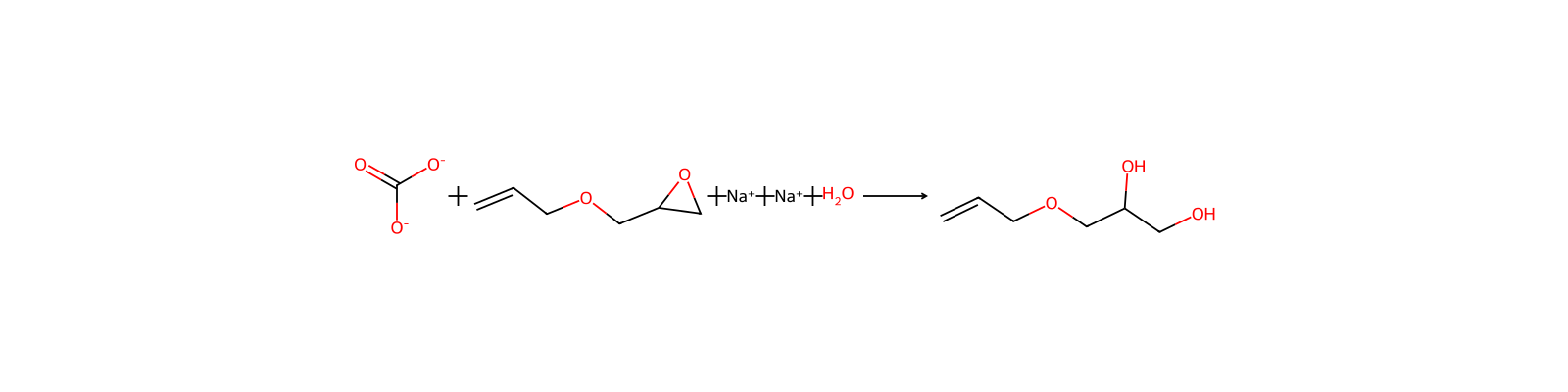
HRID 37604 の反応式
HRID 37604反応物としてuspto-grants-1995_05
HRID 49661 の反応式
HRID 49661反応物としてuspto-grants-2004_03
HRID 96876 の反応式
HRID 96876反応物としてTraining data from https://doi.org/10.1039/C8SC04228D (2/10)
HRID 118991 の反応式
HRID 118991反応物としてTraining data from https://doi.org/10.1039/C8SC04228D (2/10)
HRID 122637 の反応式
HRID 122637反応物としてTraining data from https://doi.org/10.1039/C8SC04228D (2/10)
HRID 154807 の反応式
HRID 154807反応物としてTraining data from https://doi.org/10.1039/C8SC04228D (9/10)
HRID 259869 の反応式
HRID 259869反応物としてuspto-grants-1996_06
HRID 283944 の反応式
HRID 283944反応物としてTraining data from https://doi.org/10.1039/C8SC04228D (8/10)
1 / 7 ページ

化合物ノート

読み込み中…

このページの内容基本情報概要名称と識別子物性安全と法規制化学と産業関連反応化合物ノート
その他の操作
ノートを作成反応を作成見積依頼を出す

309 °F at 760 mmHg (NTP, 1992)

153.9 °C AT 760 MM HG

154 °C

309 °F

309 °F

Melting Point · 5 件

-148 °F (NTP, 1992)

FREEZING POINT: FORMS GLASS @ -100 °C

-100 °C

-148 °F [forms glass]

-148 °F [forms glass]

Vapor Density · 4 件

3.94 (NTP, 1992) - Heavier than air; will sink (Relative to Air)

3.32 @ 25 °C (AIR= 1)

Relative vapor density (air = 1): 3.9

3.94

Odor Threshold · 2 件

Odor Threshold Low: 9.4 [ppm]

44 mg/cu m odor low; 44 mg/cu m odor high.

物理化学的性質

融点
-100 °C · -100 °C
沸点
154 °C · 154 °C(lit.)
比重(密度)
0.962 g/mL · 0.962 g/mL at 25 °C(lit.)
蒸気密度
3.9 · 3.9 (vs air)
蒸気圧
4.7 mm · 4.7 mm Hg ( 25 °C)
屈折率
20 · n20/D 1.433(lit.)
闪点
135 °F · 135 °F
貯蔵温度
20 °C · Store at <= 20°C.
溶解性
50 g/L · 50g/L(20℃)
外見
液体
比重
0.962 · 0.962
色
無色透明
水溶解度
50 g/L · 50g/L(20℃)
凝固点
-100 · -100
BRN
105871 · 105871
Henry's Law Constant
(x 10-6 atmm3/mol): 3.83 at 20 °C (approximate - calculated from water solubility and vapor pressure)
安定性
安定。可燃性。強力な酸化剤、酸、塩基とは相容れない。空気と接触すると、貯蔵中に過酸化物が形成されることがあります。
InChI
1S/C6H10O2/c1-2-3-7-4-6-5-8-6/h2,6H,1,3-5H2
InChIKey
LSWYGACWGAICNM-UHFFFAOYSA-N
SMILES
C=CCOCC1OC1
LogP
0.45 at · 0.45 at 25℃
CAS データベース
106 · 106-92-3(CAS DataBase Reference)
NISTの化学物質情報
Oxirane, [(2-propenyloxy)methyl]-(106-92-3)
EPAの化学物質情報
Allyl glycidyl ether (106-92-3)

化学的性質

化学的特性Allyl glycidyl ether is a stable, colorless, flammable liquid with a pleasant odor. It is incompatible with strong oxidizers agents, acids, and bases. It may form peroxides in storage if in contact with air.

Excerpt from ERG Guide 129 [Flammable Liquids (Water-Miscible / Noxious)]:

· HIGHLY FLAMMABLE: Will be easily ignited by heat, sparks or flames.

Flammable. Above 48 °C explosive vapour/air mixtures may be formed.

Health Hazards · 2 件

Excerpt from ERG Guide 129 [Flammable Liquids (Water-Miscible / Noxious)]:

· May cause toxic effects if inhaled or absorbed through skin.

Hazards SummarySecond degree skin burns and sensitization have been reported; [ACGIH] Pulmonary edema may result from inhalation of high concentrations. [Reference #1]
DOT ID and Guide · 2 件

2219 129

2219 129

Reactive GroupEthers
EC ClassificationSymbol: Xn; R: 10-20/22-37/38-40-41-43-52/53-62-68; S: (2)-24/25-26-36/37/39-61
UN ClassificationUN Hazard Class: 3; UN Pack Group: III
Special ReportsDHHS/NTP; Toxicology & Carcinogenesis Studies of Allyl glycidyl ether in Osborne-Mendel Rats and B6C3F1 Mice (Inhalation Studies) Technical Report Series No. 376 (1990) NIH Publication No. 90-2831
TSCA Requirements · 2 件

Pursuant to section 8(d) of TSCA, EPA promulgated a model Health and Safety Data Reporting Rule. The section 8(d) model rule requires manufacturers, importers, and processors of listed chemical substances and mixtures to submit to EPA copies and lists of unpublished health and safety studies. Oxirane, ((2-propenyloxy)methyl)- is included on this list.

Section 8(a) of TSCA requires manufacturers of this chemical substance to report preliminary assessment information concerned with production, use, and exposure to EPA as cited in the preamble of the 51 FR 41329.

安全と保護具

Fire Fighting · 2 件

Excerpt from ERG Guide 129 [Flammable Liquids (Water-Miscible / Noxious)]:

Use powder, foam, carbon dioxide, water. In case of fire: keep drums, etc., cool by spraying with water.

First Aid Measures · 4 件

Fresh air, rest. Artificial respiration may be needed. Refer immediately for medical attention.

Remove contaminated clothes. Rinse and then wash skin with water and soap. Refer for medical attention .

First rinse with plenty of water for several minutes (remove contact lenses if easily possible), then refer for medical attention.

Rinse mouth. Give one or two glasses of water to drink. Refer immediately for medical attention.

Accidental Release Measures · 2 件

· CALL 911. Then call emergency response telephone number on shipping paper. If shipping paper not available or no answer, refer to appropriate telephone number listed on the inside back cover.

· ELIMINATE all ignition sources (no smoking, flares, sparks or flames) from immediate area.

First Aid · 3 件

EYES: First check the victim for contact lenses and remove if present. Flush victim's eyes with water or normal saline solution for 20 to 30 minutes while simultaneously calling a hospital or poison control center. Do not put any ointments, oils, or medication in the victim's eyes without specific instructions from a physician. IMMEDIATELY transport the victim after flushing eyes to a hospital even if no symptoms (such as redness or irritation) develop.

General First Aid:

(General first aid procedures)

Safe StorageFireproof. Separated from strong oxidants, strong bases and strong acids. Cool. Keep in the dark.
Exposure Control and Personal Protection· Wear positive pressure self-contained breathing apparatus (SCBA).
Nonfire Spill ResponseExcerpt from ERG Guide 129 [Flammable Liquids (Water-Miscible / Noxious)]:
Spillage Disposal · 1 件

Personal protection: filter respirator for organic gases and vapours adapted to the airborne concentration of the substance. Ventilation. Collect leaking and spilled liquid in sealable containers as far as possible. Absorb remaining liquid in inert absorbent. Wash away remainder with plenty of water. Store and dispose of according to local regulations. Do NOT let this chemical enter the environment.

Preventive Measures · 5 件

SRP: The scientific literature for the use of contact lenses in industry is conflicting. The benefit or detrimental effects of wearing contact lenses depend not only upon the substance, but also on factors including the form of the substance, characteristics and duration of the exposure, the uses of other eye protection equipment, and the hygiene of the lenses. However, there may be individual substances whose irritating or corrosive properties are such that the wearing of contact lenses would be harmful to the eye. In those specific cases, contact lenses should not be worn. In any event, the usual eye protection equipment should be worn even when contact lenses are in place.

Clothing which becomes contaminated with allyl glycidyl ether should removed immediately and placed in closed containers for storage until it can be discarded or until provision is made for removal of alllyl glycidyl ether from clothing. If the clothing is to be laundered or cleaned, the person performing the operation should be informed of allyl glycidyl ether's hazardous properties.

Where there is any possibility of a worker's eyes being exposed to AGE, an eye-wash fountain should be provided within the immediate work area for emergency use. ...

Where there is any possibility of a worker's body being exposed to AGE, facilities for quick drenching of the body should be provided within the immediate work area for emergency use. ...

For more Preventive Measures (Complete) data for ALLYL GLYCIDYL ETHER (6 total), please visit the HSDB record page.

Isolation and Evacuation · 2 件

Excerpt from ERG Guide 129 [Flammable Liquids (Water-Miscible / Noxious)]:

Immediate precautionary measure

Eye PreventionWear face shield, safety goggles or eye protection in combination with breathing protection.
Fire PreventionNO open flames, NO sparks and NO smoking. Above 48 °C use a closed system, ventilation and explosion-proof electrical equipment.

毒性情報

Target OrgansEyes, skin, respiratory system, blood, reproductive system
Ecotoxicity Values · 2 件

LD50 Goldfish 78 mg/l/24 hr /Conditions of bioassay not specified/

LD50 Goldfish 30 mg/l/96 hr /Conditions of bioassay not specified/

Adverse EffectsDermatotoxin - Skin burns.
Exposure Routes · 2 件

The substance can be absorbed into the body by inhalation, through the skin and by ingestion.

inhalation, skin absorption, ingestion, skin and/or eye contact

Signs and Symptoms · 5 件

Cough. Sore throat. Burning sensation. Drowsiness. Lethargy.

MAY BE ABSORBED! Dry skin. Redness. Pain. Blisters.

Redness. Pain. Blurred vision. Severe deep burns.

Burning sensation. Headache. Dullness. Drowsiness. Nausea. Vomiting.

irritation eyes, skin, nose, respiratory system; dermatitis; pulmonary edema; narcosis; possible hematopoietic, reproductive effects

Ongoing Test Status · 1 件

The following link will take the user to the National Toxicology Program (NTP) Test Agent Search Results page, which tabulates all of the "Standard Toxicology & Carcinogenesis Studies", "Developmental Studies", and "Genetic Toxicity Studies" performed with this chemical. Clicking on the "Testing Status" link will take the user to the status (i.e., in review, in progress, in preparation, on test, completed, etc.) and results of all the studies that the NTP has done on this chemical. [http://ntp-apps.niehs.nih.gov/ntp_tox/index.cfm?fuseaction=ntpsearch.searchresults&searchterm=106-92-3]

ICSC Environmental DataThe substance is harmful to aquatic organisms.
TSCA Test Submissions · 3 件

The mutagenicity of allyl glycidyl ether (AGE) was evaluated in Salmonella tester strains TA98 and TA1535, both in the presence and absence of added metabolic activation by either Aroclor-induced or phenobarbitol-induced rat liver S9 fraction. AGE was tested for mutagenicity at concentrations of 0.5, 1.0 and 2.0 micromoles/plate using the plate incorporation method. AGE caused a positive response in tester strain 1535 at 2.0 micromoles/plate in the presence of metabolic activation by Aroclor-induced rat liver S9 fraction.

The effect of allyl glycidyl ether was examined in the DNA repair assay. Human mononucleated white cells in G-0 phase were exposed to 1, 10, 100 or 500 ppm test article (dissolved in DMSO) for 5 hours. Exposure at any concentration did not statistically significantly (Duncan's LSD test, p > 0.05) increase the number of grains per nucleus counted on autoradiographs, or increase the intracellular incorporation of tritiated thymidine measured by liquid scintillation counting. In a preliminary range finding test, toxicity was reported at the upper dose levels used in the definitive test.

The mutagenicity of allyl glycidyl ether (AGE) was evaluated in male B6D2F1 mice (at least 10) dermally exposed to GBE at a dose level of 1.5 g/kg three times/week for a minimum of 8 weeks. Following the treatment period, the male mice were mated with 3 untreated, virgin female B6D2F1f mice for one week and mated with 3 fresh females for a second week. Significant differences were observed between treated and control mice in the following: proportion of deaths/pregnancy (decreased throughout the study). Significant differences were observed between treated mice over time in the following: number of implants/pregnancy (decreased versus controls in 1st week post-treatment, decreased versus controls in 2nd week post-treatment). There were no differences between treated and control mice or in treated mice over time with respect to percent pregnancy.

Human Toxicity Excerpts · 4 件

SEVERAL CASES OF DERMATITIS AND 1 CASE OF EYE IRRITATION CONSTITUTE THE HUMAN DATA.

Allyl glycidyl ether is a CNS depressant and also causes acute pulmonary edema. It is classified as slightly toxic after oral administration and percutaneous application, appreciably irritating and injurious to the eyes and skin, capable of causing skin sensitization in human subjects ... .

Short-term (acute): Exposure to AGE can cause moderate irritation of the skin and severe irritation of the eyes and respiratory tract. Long-term (chronic): Exposure to AGE can cause dermatitis with itching, swelling, and blisters. Skin sensitization to AGE and cross sensitization with other epoxy agents can also occur.

Dermal contact is the usual mode of exposure, but droplets in mist can also attack the eyes and respiratory tract. Glycidyl & diglycidyl ethers tend to be irritants and sensitizing agents. /Glycidyl & diglycidyl ethers/

Carcinogen Classification · 6 件

Allyl Glycidyl Ether

TR-376: Toxicology and Carcinogenesis Studies of Allyl Glycidyl Ether (CASRN 106-92-3) in Osborne-Mendel Rats and B6C3F1 Mice (Inhalation Studies) (1990 )

06/27/89

Equivocal Evidence

No Evidence

Some Evidence

Non-Human Toxicity Excerpts · 5 件

... CLASSIFIED AS A MODERATE PRIMARY SKIN IRRITANT AND SEVERE EYE IRRITANT. ... SYSTEMIC TOXICITY TO RATS WAS OBSERVED AFTER 50 DAILY, 7 HOUR EXPOSURES AT 260, 400 AND 900 PPM, MANIFESTED BY INCREASED WEIGHT GAIN AT 260 PPM, AND HIGH MORTALITY AT 600 AND 900 PPM.

KIDNEYS OF ... /RATS/ EXPOSED TO 400 PPM /50 DAYS/ ... EXCESSIVE KIDNEY-BODY WT RATIOS. 260 PPM ... VERY SLIGHT IRRITATION OF EYES & SLIGHT RESPIRATORY DISTRESS. AT HIGHER LEVELS CORNEAL OPACITIES ... & SEVERE RESPIRATORY DIFFICULTIES. ... AUTOPSY SHOWED BRONCHOPNEUMONIA, EMPHYSEMA, BRONCHIECTASIS, PNEUMONITIS & HEMORRHAGE.

/AT LEVELS HIGHER THAN 260 PPM AUTOPSY OF RATS EXPOSED 50 DAYS REVEALED/ ... MOTTLED DISCOLORATION OF THE LIVER & ENLARGED ADRENAL GLANDS. 2 ANIMALS EXPOSED TO 900 PPM HAD NECROTIC SPLEENS. ... PREDOMINANT TOXICOLOGIC ACTIVITY WAS DEPRESSION OF CNS AFTER INTRAGASTRIC ADMINISTRATION.

ADMIN TO MICE & RATS ORALLY PRODUCED MODERATE DEPRESSION & DYSPNEA WITHIN 15-19 MIN. DEATH OCCURRED IN 4 HR TO 5 DAYS. ... @ AUTOPSY HYPOTONICITY OF ENTERIC TRACT & EXTENSIVE ADHESIONS OF STOMACH WALLS TO ADJACENT TISSUES WERE NOTED. NO CHARACTERISTIC MICROSCOPIC PATHOLOGY OCCURRED ... .

For more Non-Human Toxicity Excerpts (Complete) data for ALLYL GLYCIDYL ETHER (12 total), please visit the HSDB record page.

Evidence for CarcinogenicityA4; Not classifiable as a human carcinogen.

法規制情報

TSCA Requirements · 2 件

Pursuant to section 8(d) of TSCA, EPA promulgated a model Health and Safety Data Reporting Rule. The section 8(d) model rule requires manufacturers, importers, and processors of listed chemical substances and mixtures to submit to EPA copies and lists of unpublished health and safety studies. Oxirane, ((2-propenyloxy)methyl)- is included on this list.

Section 8(a) of TSCA requires manufacturers of this chemical substance to report preliminary assessment information concerned with production, use, and exposure to EPA as cited in the preamble of the 51 FR 41329.

安全データ

OEB
A
OEL
TWA: 5 ppm (22 mg/m3), STEL: 10 ppm (44 mg/m3) [skin]
wgk
3
IDLA
50 ppm
tsca
TSCA listed
rtecs
RR0875000
ridadr
UN 2219
毒性
LD50 orally in Rabbit: 922 mg/kg LD50 dermal Rabbit 2550 mg/kg
PRTR法
第一種指定化学物質
hs_code
29109000
risk_code
10-20/22-37/38-40-41-43-52/53-62-68
化審法
(2)-393
安衛法
変異原性物質
消防法
危-5-II
hazard_code
Xn
safety_code
24/25-26-36/37/39-61
hazard_class
3
packing_group
III
自然発火温度
264 °C
環境リスク評価
1-アリルオキシ-2,3-エポキシプロパン(106-92-3)
Hazard Classifications
Acute Tox. 3 InhalationAcute Tox. 4 OralAquatic Chronic 3Carc. 2Eye Dam. 1Flam. Liq. 3Muta. 2Repr. 2Skin Irrit. 2Skin Sens. 1STOT SE 3
ストレージクラス
3 - Flammable liquids
有毒物質データの
106-92-3(Hazardous Substances Data)
Unsaturated polyester resin
2,2'-[オキシビス(メチレン)]ビス(オキシラン)
3-グリシジルオキシプロピルトリメトキシシラン