ホームMCPワークベンチSkills
ホームワークベンチ通知マイページ
llms.txt · MCPガイドプライバシーポリシー · 利用規約 · サポートv1.8.0
  1. ホーム
  2. /化合物

4-メチル-2-ペンタノール

4-Methyl-2-Pentanol

HCID 7910
ノートを作成反応を作成見積依頼を出す
印刷プレビュー
基本情報概要名称と識別子物性安全と法規制化学と産業関連反応化合物ノート
部分構造検索類似構造を探す

基本情報

CAS
108-11-2
標準SMILES
CC(C)CC(C)O
InChIKey
WVYWICLMDOOCFB-UHFFFAOYSA-N
分子式
C6H14O
平均分子量
102.17 g/mol
単同位体質量
102.10446507

概要

Methyl isobutyl carbinol appears as a clear colorless liquid. Flash point 120 °F. Less dense than water. Vapors heavier than air.

名称と識別子

優先名称
4-Methyl-2-Pentanol
IUPAC
4-methylpentan-2-ol
現地名
4-メチル-2-ペンタノール
英語名
4-Methyl-2-pentanol
分子式
C6H14O
分子量
102.17

名称と別名

4-METHYL-2-PENTANOL4-Methylpentan-2-ol108-11-2IsobutylmethylcarbinolMethyl isobutyl carbinol2-Pentanol, 4-methyl-2-Methyl-4-pentanolMethylisobutylcarbinolMIBCIsobutylmethylmethanol1,3-Dimethylbutanol3-MIC
名称をさらに表示
4-メチル-2-ペンタノール1-イソプロピル-2-プロパノールメチルイソブチルカルビノール4-メチルペンタン-2-オール1-イソブチル-1-メチルメチルアルコールイソブチルメチルカルビノール1,3-ジメチルブタン-1-オールsec-ヘキシルアルコール4-メチル-2-ペンタノ-ルメチルイソブチルカルビノル4-メチル-2-ペンタノール(sec-ヘキシルアルコール)4-メチル-2-ペンタノ?ル4‐メチル‐2‐ペンタノール(^+)-4-メチル-2-ペンタノール(^+)-4-メチル-2-ペンタノール, 99%4-methyl-2-pentanoFEMA 3351METHYL AMYL ALCOHOL1,3-Dimethyl-1-butanolISOBUTYL METHYL CARBINOL
4-Methylpentanol-2MAOHMetilamil alcoholMethylisobutyl carbinoldl-Methylisobutylcarbinol4-Methyl-2-amyl alcoholAlcool methyl amylique4-Methyl-2-pentyl alcohol

データベース識別子

CAS
108-11-2
PubChem CID
7910
DTXSID
DTXSID2026781
ChEMBL
CHEMBL448896
UNII
8U34XJK0R0
EC Number
203-551-7
Nikkaji
J2.414G

物性

構造計算による物性

XLogP
1.7
極性表面積
20.2 Ų
水素結合供与体数
1
水素結合受容体数
1
回転可能結合数
2
重原子数
7
形式電荷
0
複雑度
41.4

実験および物理化学的性質

Chemical Classes · 2 件

Flammable agents - 2nd degree

Volatile Organic Compound (VOC)

SolventsSolvents -> Alcohols (<C12)
FragrancesFragrance Ingredient (4-Methyl-2-pentanol) -> IFRA transparency List
LogP · 3 件

log Kow= 1.43

1.43

1.67

OdorMild odor.
Density · 6 件

0.807 at 68 °F (USCG, 1999) - Less dense than water; will float

0.8075 @ 20 °C/4 °C

% IN SATURATED AIR: 0.46 @ 20 °C; DENSITY OF SATURATED AIR: 1.01 (AIR= 1)

Relative density (water = 1): 0.82

0.81

0.81

Flavoring AgentsEU Flavoring substances
Color/Form · 2 件

COLORLESS LIQ

Colorless liquid.

Solubility · 6 件

2 % (NIOSH, 2024)

SOL IN ALC & ETHER.

MISCIBLE WITH MOST COMMON ORG SOLVENTS.

Water solubility of 1.64X10+4 mg/kg (experimental).

Solubility in water, g/100ml: 2

安全と法規制

安全情報は参考情報です。供給元の安全データシート(SDS)、適用法令、専門家による評価に代わるものではありません。

GHS分類

GHS Classification · 6 件

Warning

H226: Flammable liquid and vapor [Warning Flammable liquids]

P210, P233, P240, P241, P242, P243, P261, P271, P280, P303+P361+P353, P304+P340, P319, P370+P378, P403+P233, P403+P235, P405, and P501 (click each P-code to see the statement)

Warning

H226 (100%): Flammable liquid and vapor [Warning Flammable liquids]

P210, P233, P240, P241, P242, P243, P261, P264+P265, P271, P280, P303+P361+P353, P304+P340, P305+P351+P338, P319, P337+P317, P370+P378, P403+P233, P403+P235, P405, and P501 (click each P-code to see the statement)

危険有害性情報

Regulatory Information · 6 件

Chemical: 2-Pentanol, 4-methyl-

Commission Regulation (EC) No 1565/2000 (Repealed by Com. Implementing Reg. (EU) No 872/2012)

2-Pentanol, 4-methyl- is listed on the EPA's Chemical Data Reporting (CDR) system. Manufacturers and importers of 2-Pentanol, 4-methyl- are required to report information about their production and use of this chemical to the EPA under the Toxic Substances Control Act (TSCA). (40 eCFR Part 711)

REACH registered substance: 4-methylpentan-2-ol (EC: 203-551-7)

2-Pentanol, 4-methyl-: HSNO Approval: HSR001193 Approved with controls

The New Jersey Worker and Community Right to Know Act requires public and private employers to provide information about hazardous substances at their workplaces. (N.J.S.A. 34:5A-1 et. seq.)

Other Safety InformationIMAP assessments - 2-Pentanol, 4-methyl-: Environment tier I assessment
DOT LabelFlammable Liquid
Fire Hazards · 3 件

Excerpt from ERG Guide 129 [Flammable Liquids (Water-Miscible / Noxious)]:

· HIGHLY FLAMMABLE: Will be easily ignited by heat, sparks or flames.

Flammable. Above 41 °C explosive vapour/air mixtures may be formed.

化学と産業

薬理情報

Metabolism/Metabolites · 1 件

... UNDERGOES IN RABBIT SOME GLUCURONIC ACID CONJUGATION. AVG AMT GLUCURONIDE EXCRETED FOLLOWING DOSE ADMIN BY STOMACH TUBE WAS 33.7% OF DOSE. URINE CONTAINED ALSO A SMALL AMT METHYL KETONE (PRESUMABLY ISOBUTYL METHYL KETONE) & AFTER EXTRACTION WITH 1:4 ETHANOL ETHER A GLUCURONIDE (TRIACETYL METHYL ESTER) GUM.

用途と製造

Uses · 3 件

Used primarily in the production of additives for anti-wear and corrosion inhibitors; Used secondarily as a flotation agent (copper ores, coal and tar sand mining); Also used as an additive to surface coatings and solvent to improve binder softness; Usually used in closed systems except as a floating agent; [ACGIH, 2020]

Solvent for dyestuffs, oils, gums, resins, waxes, nitrocellulose, and ethylcellulose; organic synthesis; froth flotation; brake fluids.

In the manufacture of lubricant additives, solvents, plasticizers, lacquers.

U.S. Production · 2 件

2023: 70,000,000 - <85,000,000 lb

(1972) 1.81X10+10 GRAMS

Consumer UsesSolvent
Industry UsesSurfactant (surface active agent)
Methods of Manufacturing... PREPARED COMMERCIALLY BY REDN OF MESITYL OXIDE IN ACETIC ACID SOLN WITH PLATINUM, OR OVER REDUCED COPPER ON ASBESTOS @ 120 °C.
Formulations/PreparationsGRADE: TECHNICAL
Use ClassificationFragrance Ingredients
General Manufacturing Information · 2 件

All Other Basic Organic Chemical Manufacturing

2-Pentanol, 4-methyl-: ACTIVE

関連反応

96 件

反応記録を作成
HRID 4870 の反応式
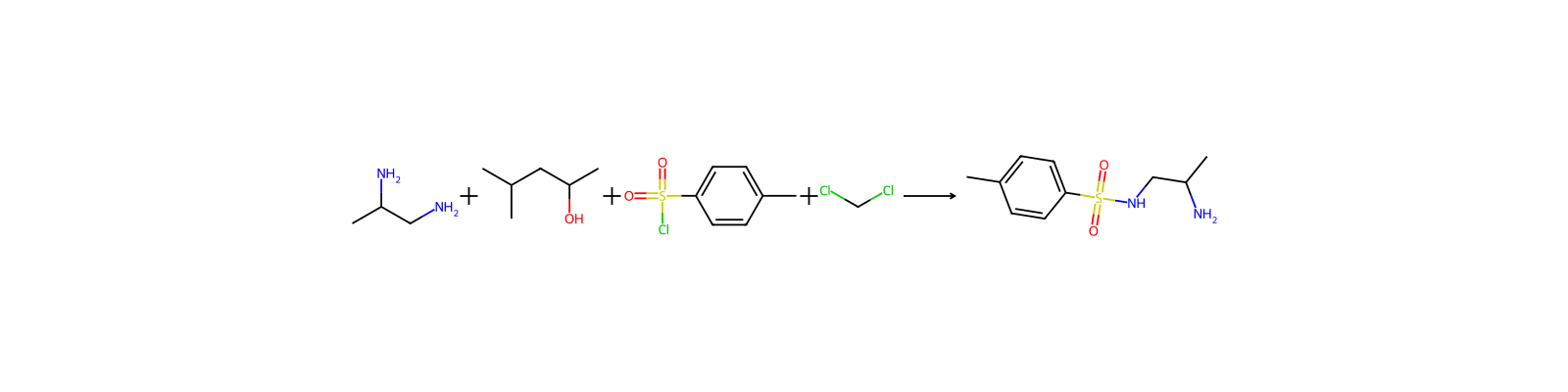
HRID 4870反応物としてuspto-grants-1993_09
HRID 92523 の反応式
HRID 92523反応物としてTraining data from https://doi.org/10.1039/C8SC04228D (2/10)
HRID 92588 の反応式
HRID 92588反応物としてTraining data from https://doi.org/10.1039/C8SC04228D (2/10)
HRID 134601 の反応式
HRID 134601反応物としてTraining data from https://doi.org/10.1039/C8SC04228D (9/10)
HRID 134616 の反応式
HRID 134616反応物としてTraining data from https://doi.org/10.1039/C8SC04228D (9/10)
HRID 135404 の反応式
HRID 135404反応物としてTraining data from https://doi.org/10.1039/C8SC04228D (9/10)
HRID 147932 の反応式
HRID 147932反応物としてTraining data from https://doi.org/10.1039/C8SC04228D (9/10)
HRID 148974 の反応式
HRID 148974反応物としてTraining data from https://doi.org/10.1039/C8SC04228D (9/10)
1 / 12 ページ

化合物ノート

読み込み中…

このページの内容基本情報概要名称と識別子物性安全と法規制化学と産業関連反応化合物ノート
その他の操作
ノートを作成反応を作成見積依頼を出す

2%

Flash Point · 6 件

106 °F (USCG, 1999)

105 °F

105 °F (OPEN CUP)

41 °C

106 °F

106 °F

Boiling Point · 5 件

269.2 °F at 760 mmHg (USCG, 1999)

133 °C @ 760 MM HG

132 °C

271 °F

271 °F

Melting Point · 5 件

less than -130 °F (USCG, 1999)

-90 °C

-90 °C

-130 °F

-130 °F

物理化学的性質

融点
-90 °C · -90 °C
沸点
134 · 134-135 °C(lit.)
比重(密度)
0.802 g/mL · 0.802 g/mL at 25 °C(lit.)
蒸気密度
3.5 · 3.5 (vs air)
蒸気圧
3.7 mm · 3.7 mm Hg ( 20 °C)
屈折率
20 · n20/D 1.415(lit.)
闪点
107 °F · 107 °F
貯蔵温度
30 °C · Store below +30°C.
溶解性
16.4 g/リットル · 16.4g/リットル
外見
液体
酸解離定数(Pka)
15.31 · 15.31±0.20(Predicted)
色
無色透明
臭い (Odor)
シャープ;マイルドで残らない。
においのタイプ
スパイシーな味
爆発限界(explosive limit)
1 · 1-5.5%(V)
水溶解度
2 g/100mL · 2g/100mL
比熱容量
2.67 J/ · Cp(liquid): 2.67 J/(g·K), at 25℃
BRN
1098268 · 1098268
Henry's Law Constant
2.2 · 2.2×10-1 mol/(m3Pa) at 25℃, Brockbank (2013)
安定性
安定。可燃性。酸化剤、酸、酸塩化物とは相容れない。
化粧品成分の機能
香料
InChI
1S/C6H14O/c1-5(2)4-6(3)7/h5-7H,4H2,1-3H3
InChIKey
WVYWICLMDOOCFB-UHFFFAOYSA-N
SMILES
CC(C)CC(C)O
LogP
1.57 at · 1.57 at 20℃
CAS データベース
108 · 108-11-2(CAS DataBase Reference)
NISTの化学物質情報
2 · 2-Pentanol, 4-methyl-(108-11-2)
EPAの化学物質情報
4 · 4-Methyl-2-pentanol (108-11-2)

化学的性質

化学的特性colourless liquid

Fire Potential
MODERATE FIRE RISK.
Health Hazards · 2 件

Vapor irritates eyes and nose; may cause anesthesia. Prolonged contact with liquid causes irritation and cracking of skin; also irritates eyes. (USCG, 1999)

· May cause toxic effects if inhaled or absorbed through skin.

Hazards SummaryIn acute animal studies, high concentrations induce narcosis and anesthesia. [ACGIH] Inhalation of high concentrations can cause CNS depression; A skin, eye, and respiratory tract irritant; [ICSC]
DOT ID and Guide · 2 件

2053 129

2053 129

Reactive GroupAlcohols and Polyols
EC ClassificationSymbol: Xi; R: 10-37; S: (2)-24/25
UN ClassificationUN Hazard Class: 3; UN Pack Group: III
OSHA Standards · 2 件

Permissible Exposure Limit: Table Z-1 8-hr Time-Weighted Avg: 25 ppm (100 mg/cu m). Skin Designation.

Vacated 1989 OSHA PEL TWA 25 ppm (100 mg/cu m); STEL 40 ppm (165 mg/cu m), skin designation, is still enforced in some states.

安全と保護具

Fire Fighting · 2 件

Excerpt from ERG Guide 129 [Flammable Liquids (Water-Miscible / Noxious)]:

Use water spray, powder, alcohol-resistant foam, carbon dioxide.

First Aid Measures · 4 件

Fresh air, rest. Artificial respiration may be needed. Refer for medical attention.

Remove contaminated clothes. Rinse skin with plenty of water or shower. Refer for medical attention .

First rinse with plenty of water for several minutes (remove contact lenses if easily possible), then refer for medical attention.

Rinse mouth. Rest. Refer for medical attention .

Accidental Release Measures · 2 件

· CALL 911. Then call emergency response telephone number on shipping paper. If shipping paper not available or no answer, refer to appropriate telephone number listed on the inside back cover.

· ELIMINATE all ignition sources (no smoking, flares, sparks or flames) from immediate area.

First Aid · 3 件

Excerpt from NIOSH Pocket Guide for Methyl isobutyl carbinol:

General First Aid:

(General first aid procedures)

Safe StorageFireproof if in building. Separated from strong oxidants. Cool.
Exposure Control and Personal Protection · 2 件

· Wear positive pressure self-contained breathing apparatus (SCBA).

20.0 [ppm]

Fire Fighting ProceduresALCOHOL FOAM.
Nonfire Spill ResponseExcerpt from ERG Guide 129 [Flammable Liquids (Water-Miscible / Noxious)]:
Spillage Disposal · 1 件

Personal protection: filter respirator for organic gases and vapours adapted to the airborne concentration of the substance. Ventilation. Collect leaking liquid in sealable containers. Absorb remaining liquid in sand or inert absorbent. Then store and dispose of according to local regulations. Do NOT wash away into sewer.

Preventive Measures · 3 件

The worker should immediately wash the skin when it becomes contaminated.

Work clothing that becomes wet or significantly contaminated should be removed and replaced.

SRP: The scientific literature for the use of contact lenses in industry is conflicting. The benefit or detrimental effects of wearing contact lenses depend not only upon the substance, but also on factors including the form of the substance, characteristics and duration of the exposure, the uses of other eye protection equipment, and the hygiene of the lenses. However, there may be individual substances whose irritating or corrosive properties are such that the wearing of contact lenses would be harmful to the eye. In those specific cases, contact lenses should not be worn. In any event, the usual eye protection equipment should be worn even when contact lenses are in place.

Isolation and Evacuation · 2 件

Excerpt from ERG Guide 129 [Flammable Liquids (Water-Miscible / Noxious)]:

Immediate precautionary measure

Eye PreventionWear safety goggles.

毒性情報

Toxicological InformationRanking: 548 (total points: 244.7)
Target OrgansEyes, skin, central nervous system
Ecotoxicity ValuesLD50 Goldfish 360 mg/l/24 hr (modified ASTM D 1345)
Environmental Fate · 3 件

TERRESTRIAL FATE: If 4-methyl-2-pentanol is released to soil, it will be expected to exhibit high to very high mobility in soil(1,SRC) based upon estimated Koc of 143 and 21 estimated from log Kow(2) and water solubility(3), respectively, using a recommended regression equations(4,SRC). It may, therefore, leach through soil(SRC). It will not hydrolyze in moist soil(4), but it may be subject to volatilization from near surface soil based upon estimated rates for its volatilization from water(4-6). It may be subject to biodegradation in soil based upon the rapid biodegradation observed in laboratory aqueous screening tests using sewage and activated sludge inoculum(7,8).

AQUATIC FATE: If 4-methyl-2-pentanol is released to water, it will not be expected to adsorb to sediment and suspended particulate matter or to bioconcentrate in aquatic organisms based upon estimated Koc and BCF, respectively, estimated(2,SRC) from the measured log Kow (1) and water solubility(3). It will not be expected to hydrolyze(2) or directly photolyze(4,SRC). It may be subject to biodegradation in natural waters based upon the rapid biodegradation observed in laboratory aqueous screening tests using sewage and activated sludge inoculum(5,6). It will be subject to volatilization from surface waters based upon half-lives of 23 hr for volatilization from a model river one meter deep flowing 1 m/sec with a wind velocity of 3 m/sec(2,SRC) and 10.6 days for volatilization from a model pond(7,SRC), respectively, estimated using a measured Henry's Law constant(8).

ATMOSPHERIC FATE: If 4-methyl-2-pentanol is released to the atmosphere, it can be expected to exist mainly in the vapor-phase in the ambient atmosphere(1,SRC) based upon an experimental vapor pressure of 5.3 mm Hg at 25 °C(2,SRC). The measured rate constant for vapor-phase reaction with photochemically produced hydroxyl radicals of 7.1X10⁻¹² cu cm/molecule-sec at 25 °C(3) corresponds to an atmospheric half-life of 2.3 days at an atmospheric concentration of 5X10+5 hydroxyl radicals per cu cm(SRC). 4-Methyl-2-pentanol has been rated a moderately reactive (Class III) compound(4) with respect to ozone formation as observed in smog chamber tests(5). 4-Methyl-2-pentanol will not be expected to directly photolyze in the atmosphere(6,SRC).

Food Survey Values4-Methyl-2-pentanol was qualitatively detected in the mixture of volatiles from mountain Beaufort cheese(1).
Adverse EffectsNeurotoxin - Acute solvent syndrome
Exposure Routes · 2 件

The substance can be absorbed into the body by inhalation of its vapour and through the skin.

inhalation, skin absorption, ingestion, skin and/or eye contact

Signs and Symptoms · 4 件

Cough. Sore throat. Unconsciousness.

Dry skin. Redness. Pain.

Redness. Pain.

irritation eyes, skin; headache, drowsiness; dermatitis; In Animals: narcosis

Effluent Concentrations · 1 件

4-Methyl-2-pentanol was detected at a concn of 136 ppb in a sample of influent water from an unspecified municipal wastewater treatment plant(1). It was not indicated whether the compound was detected in final effluent from the plant(1). It was detected at a concn of 45 ppb in effluent samples taken from the Los Angeles County wastewater treatment plant discharge, Palos Verdes, CA between Nov 1980 and Aug 1981(2). A concn of 140 ppm was found in samples of leachate or samples of groundwater plume taken at an unspecified industrial landfill at an unspecified time(3). 4-Methyl-2-pentanol was qualitatively detected in 4 of 16 samples of concentrate derived from large volume (>400 gallons) samples of advanced treatment concentrate from 4 of 6 cities (Lake Tahoe, CA, Oct 1974; Pomona, CA, 1975; Orange County, CA, Feb 1976; Blue Plains, Washington, DC, May 1975)(4).

Soil Adsorption/Mobility · 1 件

Based upon an experimental log Kow of 1.43(1), a Koc of 143 has been estimated using a recommended regression equation(2). Based upon an experimental water solubility of 1.64X10+4 mg/kg(3), a Koc of 21 has been estimated using a recommended regression equation(2). Based upon these estimated Koc, 4-methyl-2-pentanol will be expected to exhibit high to very high mobility in soil(4). 4-Methyl-2-pentanol, therefore, may leach through soil to groundwater if it does not volatilize or biodegrade first(SRC).

Natural Pollution Sources4-Methyl-2-pentanol was qualitatively detected in the mixture of volatiles from mountain Beaufort cheese(1) which indicates that the compound may be formed naturally(SRC).
Atmospheric Concentrations · 1 件

4-Methyl-2-pentanol was qualitatively detected in ambient air samples taken Nov 20, 1979 at the BFI Landfill in New Jersey(1). It was detected in ambient air during an air pollution peak at concn ranging from 0.9 to 7.0 ppb; date and location not specified(2).

法規制情報

Atmospheric Standards · 1 件

This action promulgates standards of performance for equipment leaks of Volatile Organic Compounds (VOC) in the Synthetic Organic Chemical Manufacturing Industry (SOCMI). The intended effect of these standards is to require all newly constructed, modified, and reconstructed SOCMI process units to use the best demonstrated system of continuous emission reduction for equipment leaks of VOC, considering costs, non air quality health and environmental impact and energy requirements. Methyl isobutyl carbinol is produced, as an intermediate or final product, by process units covered under this subpart.

安全データ

OEB
A
OEL
TWA: 25 ppm (100 mg/m3), STEL: 40 ppm (165 mg/m3) [skin]
wgk
1
IDLA
400 ppm
tsca
TSCA listed
rtecs
SA7350000
ridadr
UN 2053
毒性
LD50 orally in Rabbit: 2590 mg/kg LD50 dermal Rabbit 2884 mg/kg
hs_code
29051900
risk_code
10-37-36/37/38
化審法
(2)-217
安衛法
57,57-2
消防法
危-4-2-III
hazard_code
Xi
safety_code
24/25-26
hazard_class
3
packing_group
III
自然発火温度
305 °C
Hazard Classifications
Eye Irrit. 2Flam. Liq. 3STOT SE 3
ストレージクラス
3 - Flammable liquids
有毒物質データの
108-11-2(Hazardous Substances Data)
応用分野 · 4 件

用途有機合成原料。

用途中沸点溶剤(ラッカーの助溶剤)、浮遊選鉱剤、潤滑油添加剤の原料、メチルアミルアセテート溶剤の原料

使用(^+)-4-Methyl-2-pentanol is employed as a solvent in organic synthesis, dyes and stains, natural resins and waxes. It is an additive to surface coatings. It finds applications in the manufacture of lube oil additives, zinc dialkyldithiophosphate, brake fluids. It is the precursor to some plasticizers and frother in mineral flotation. It acts as a corrosion inhibitor and also utilized in the characterization of volatile fraction of mono varietal wines and tar sand mining processes.

一般的な説明A clear colorless liquid. Flash point 120°F. Less dense than water. Vapors heavier than air.

調製方法 · 2 件

Methyl isobutyl carbinol is prepared commercially as a byproduct of the synthesis of methyl isobutyl ketone.

純化方法Wash the 2-pentanol with aqueous NaHCO3, dry and distil it. Purify it further by converting it to the phthalate ester by adding 120mL of dry pyridine and 67g of phthalic anhydride per mole of alcohol, purifying the ester and steam distilling it in the presence of NaOH. The distillate is extracted with ether, and the extract is dried and fractionally distilled. [Levine & Walti J Biol Chem 94 367 1931, Beilstein 1 IV 1717.]

上流・下流製品情報

上流原料

水酸化バリウムジアセトンアルコール2-メチル-4-ヘプタノール

下流製品

4-メチル-2-ペンタノン4-メチル-2-ペンテン (cis-, trans-混合物)4-メチル-1-ペンテン