2,4,6-トリメチルピリジン
2,4,6-Trimethylpyridine
データを補完しています。しばらくしてからページを更新すると最新の内容を表示できます

基本情報
- CAS
108-75-8- 標準SMILES
Cc1cc(C)nc(C)c1- InChIKey
BWZVCCNYKMEVEX-UHFFFAOYSA-N- 分子式
- C8H11N
- 平均分子量
- 121.18 g/mol
- 単同位体質量
- 121.08914935
概要
Collidine appears as a clear colorless liquid. Less dense than water and insoluble in water. Hence floats on water. Vapors heavier than air. Produces toxic oxides of nitrogen during combustion. Used to make other chemicals.
名称と識別子
- 優先名称
- 2,4,6-Trimethylpyridine
- IUPAC
- 2,4,6-trimethylpyridine
- 現地名
- 2,4,6-トリメチルピリジン
- 英語名
- 2,4,6-Collidine
- 分子式
- C8H11N
- 分子量
- 121.18
名称と別名
2,4,6-Trimethylpyridine108-75-82,4,6-COLLIDINEs-Collidinegamma-CollidinePyridine, 2,4,6-trimethyl-sym-Collidine2,4,6-Kollidinalpha,gamma,alpha'-Collidine7IE4BK5J5VNSC-460DTXSID1051561
名称をさらに表示
2,4,6-トリメチルピリジンs-コリジンsym-コリジンγ-コリジン2,4,6-コリジン2,4,6-コリジン(2,4,6-トリメチルピリジン)2,4,6‐トリメチルピリジン (別名2,4,6-コリジン)2,4,6‐トリメチルピリジンg-Collidine2,4,6-CoLSYM COLLIDINE246CO246BD
RefChem:82156pyridine, 2,4,6-trimethylDTXCID5030113203-613-3COLLIDINE.gamma.-Collidine2,4,6-trimethyl-pyridineNSC 460
データベース識別子
- CAS
108-75-8、29611-84-5- PubChem CID
- 7953
- DTXSID
DTXSID1051561- ChEMBL
CHEMBL1209580- ChEBI
CHEBI:189131- UNII
- 7IE4BK5J5V
- EC Number
- 203-613-3
- Nikkaji
- J5.079B
物性
構造計算による物性補完中
- XLogP
- 1.9
- 極性表面積
- 12.9 Ų
- 水素結合供与体数
- 0
- 水素結合受容体数
- 1
- 回転可能結合数
- 0
- 重原子数
- 9
- 形式電荷
- 0
- 複雑度
- 80.6
実験および物理化学的性質
Chemical ClassesNitrogen Compounds -> Pyridines
SpringerMaterials PropertiesBoiling point
LogPlog Kow = 1.88
OdorAromatic odor
Density0.913 @ 20 °C/20 °C
Flavoring AgentsEU Flavoring substances
Color/FormColorless liquid
Solubility
Sol in methanol, ethanol, chloroform, benzene, toluene, and dil acids; miscible with ether
Sol in acetone
Sol in water (in g/100 ml water): 20.8 g @ 6 °C, 3.5 g @ 20 °C, 1.8 g @ 100 °C
Flash Point
58 °C
136 °F
Boiling Point170.4 °C
DecompositionWhen heated to decomposition it emits toxic vapors of /nitrogen oxides/.
Melting Point-44.5 °C
物理化学的性質
- 融点
- -43 °C · -43 °C (lit.)
- 沸点
- 171 · 171-172 °C (lit.)
- 比重(密度)
- 0.917 g/mL · 0.917 g/mL at 25 °C (lit.)
- 蒸気圧
- 4 hPa · 4 hPa (20 °C)
- 屈折率
- 20 · n20/D 1.498(lit.)
- 闪点
- 135 °F · 135 °F
- 貯蔵温度
- 30 °C · Store below +30°C.
- 溶解性
- 35 g/リットル · 35g/リットル
- 外見
- 液体
- 酸解離定数(Pka)
- 7.43 · 7.43(at 25℃)
- 色
- 無色透明~黄色
- 水溶解度
- 35 g/L · 35g/L(20℃)
- Merck
- 14 · 14,9718
- BRN
- 107283 · 107283
- Henry's Law Constant
- 1.1 · 1.1×100 mol/(m3Pa) at 25℃, Duchowicz et al. (2020)
- Dielectric constant
- 1.9 · 1.9(20℃)
- 安定性
- 安定。可燃性。強力な酸化剤とは相容れない。
- InChI
- 1S/C8H11N/c1-6-4-7(2)9-8(3)5-6/h4-5H,1-3H3
- InChIKey
- BWZVCCNYKMEVEX-UHFFFAOYSA-N
- SMILES
- Cc1cc(C)nc(C)c1
- LogP
- 1.25 at · 1.25 at 20℃
- CAS データベース
- 108 · 108-75-8(CAS DataBase Reference)
- NISTの化学物質情報
- 2 · Pyridine, 2,4,6-trimethyl-(108-75-8)
- EPAの化学物質情報
- 2 · 2,4,6-Trimethylpyridine (108-75-8)
化学的性質
化学的特性colourless liquid
安全と法規制
安全情報は参考情報です。供給元の安全データシート(SDS)、適用法令、専門家による評価に代わるものではありません。
GHS分類
GHS Classification
This chemical does not meet GHS hazard criteria for 0.5% (1 of 187) of reports.
Danger
H226 (99.5%): Flammable liquid and vapor [Warning Flammable liquids]
P210, P233, P240, P241, P242, P243, P261, P262, P264, P264+P265, P270, P271, P280, P301+P317, P302+P352, P303+P361+P353, P304+P340, P305+P351+P338, P316, P317, P319, P321, P330, P332+P317, P337+P317, P361+P364, P362+P364, P370+P378, P403+P233, P403+P235, P405, and P501 (click each P-code to see the statement)
Aggregated GHS information provided per 187 reports by companies from 15 notifications to the ECHA C&L Inventory. Each notification may be associated with multiple companies.
Danger
危険有害性情報
Regulatory Information
Chemical: Pyridine, 2,4,6-trimethyl-
Commission Regulation (EC) No 1565/2000 (Repealed by Com. Implementing Reg. (EU) No 872/2012)
Status: Active Update: 16-02-2021 https://echa.europa.eu/registration-dossier/-/registered-dossier/32320
Pyridine, 2,4,6-trimethyl-: HSNO Approval: HSR001388 Approved with controls
DOT LabelFlammable Liquid
Fire HazardsExcerpt from ERG Guide 128 [Flammable Liquids (Water-Immiscible)]:
Health HazardsExcerpt from ERG Guide 128 [Flammable Liquids (Water-Immiscible)]:
Hazards Summary
Emergency treatment: Pyridine; Pyridine is an irritant that causes CNS depression after ingestion of 1/2 cup or inhalation of 6-12 ppm; It can cause liver and kidney injury; [HSDB] [HSDB] A skin and strong eye irritant; [Alfa Aesar MSDS] See Pyridine.
Reactive GroupAmines, Phosphines, and Pyridines
Reactivity Profile
COLLIDINE neutralizes acids in exothermic reactions to form salts plus water. These acid-base reactions are exothermic. Incompatible with isocyanates, halogenated organics, peroxides, phenols (acidic), epoxides, anhydrides, and acid halides. May generate flammable gaseous hydrogen in combination with strong reducing agents such as hydrides.
Air and Water ReactionsFlammable. Insoluble in water.
Hazard Classes and Categories
Flam. Liq. 3 (99.5%)
Flammable liquids - Category 3
安全と保護具
Fire FightingExcerpt from ERG Guide 128 [Flammable Liquids (Water-Immiscible)]:
First AidExcerpt from ERG Guide 128 [Flammable Liquids (Water-Immiscible)]:
Nonfire Spill ResponseExcerpt from ERG Guide 128 [Flammable Liquids (Water-Immiscible)]:
Disposal Methods
SRP: At the time of review, criteria for land treatment or burial (sanitary landfill) disposal practices are subject to significant revision. Prior to implementing land disposal of waste residue (including waste sludge), consult with environmental regulatory agencies for guidance on acceptable disposal practices.
Isolation and EvacuationExcerpt from ERG Guide 128 [Flammable Liquids (Water-Immiscible)]:
Protective Action Criteria (PAC)
1.3 [ppm]
14 [ppm]
85 [ppm]
Personal Protective Equipment (PPE)Excerpt from ERG Guide 128 [Flammable Liquids (Water-Immiscible)]:
毒性情報
Environmental Fate
TERRESTRIAL FATE: Based on a classification scheme(1), an estimated Koc value of 250(SRC), determined from a log Kow of 1.9(2) and a regression-derived equation(3), indicates that 2,4,6-trimethylpyridine is expected to have moderate mobility in soil(SRC). The pKa of 2,4,6-trimethylpyridine is 7.4(4), indicating that this compound will mainly exist in the protonated form in the environment and cations generally adsorb to organic carbon and clay more strongly than their neutral counterparts, thus attenuating soil mobility(5). Volatilization of 2,4,6-trimethylpyridine from moist soil surfaces is expected to be an important fate process(SRC) given an estimated Henry's Law constant of 8.8X10⁻⁶ atm-cu m/mole(SRC), derived from its vapor pressure, 2.0 mm Hg(6), and water solubility, 3.5X10+4 mg/l(7). However, adsorption to soil is expected to attenuate volatilization(SRC). The potential for volatilization of 2,4,6-trimethylpyridine from dry soil surfaces may exist(SRC) based upon a vapor pressure of 2.0 mm Hg(6). Under aerobic and anaerobic conditions, 2,4,6-trimethylpyridine, present at 1 mM, degraded 100% in >97 days at pH 7 using a 0.5% garden soil suspension with glucose-yeast extract (20 ppm) and a screening test(8). Within 2 weeks under aerobic conditions, 100% transformation of 2,4,6-trimethylpyridine occurred in soil previously contaminated with pyridine contaminants(9).
AQUATIC FATE: Based on a classification scheme(1), an estimated Koc value of 250(SRC), determined from a log Kow of 1.9(2) and a regression-derived equation(3), indicates that 2,4,6-trimethylpyridine is expected to adsorb slightly to suspended solids and sediment(SRC). However, the pKa of 2,4,6-trimethylpyridine is 7.4(4), indicating that this compound will mainly exist in the protonated form in the environment and cations generally adsorb to organic carbon and clay more strongly than their neutral counterparts(5). Volatilization from water surfaces is expected(3) based upon an estimated Henry's Law constant of 8.8X10⁻⁶ atm-cu m/mole(SRC), derived from its vapor pressure, 2.0 mm Hg(6), and water solubility, 3.5x10+4 mg/l(7). Using this Henry's Law constant and an estimation method(3), volatilization half-lives for a model river and model lake are 3.1 and 38 days, respectively(SRC). According to a classification scheme(8), an estimated BCF of 6(SRC), from its log Kow(2) and a regression-derived equation(9), suggests the potential for bioconcentration in aquatic organisms is low(SRC). Under aerobic and anaerobic conditions, 2,4,6-trimethylpyridine, present at 1 mM, degraded 100% in >97 days at pH 7 using a 0.5% garden soil suspension with glucose-yeast extract (20 ppm) and a screening test(10).
ATMOSPHERIC FATE: According to a model of gas/particle partitioning of semivolatile organic compounds in the atmosphere(1), 2,4,6-trimethylpyridine, which has a vapor pressure of 2.0 mm Hg at 25 °C(2), is expected to exist solely as a vapor in the ambient atmosphere(SRC). Vapor-phase 2,4,6-trimethylpyridine is degraded in the atmosphere by reaction with photochemically-produced hydroxyl radicals(SRC); the half-life for this reaction in air is estimated to be 2.3 days(SRC), calculated from its rate constant of 7.0X10⁻¹² cu cm/molecule-sec at 25 °C(SRC) that was derived using a structure estimation method(3).
Adverse EffectsNeurotoxin - Other CNS neurotoxin
Effluent Concentrations
The concn of 2,4,6-trimethylpyridine in Australian oil shale retort water (basic fraction) was 2 mg/l(1). The concn of 2,4,6-trimethylpyridine in condensate and process retort water produced in modified in situ oil-shale retort were 70.1 and 4.0 mg/l, respectively(2). In a closed system, 2,4,6-trimethylpyridine was detected in air above 1 of 3 samples of shale oil wastewaters (detection limit of 0.4 ng per 1 ml air)(3); a concn of 8.3 ng of 2,4,6-trimethylpyridine per 1 ml of air was measured above a 1 ml sample of wastewater with a concn of <0.8 ng/ml of 2,4,6-trimethylpyridine(3).
Soil Adsorption/Mobility
The Koc of 2,4,6-trimethylpyridine is estimated as 250(SRC), using a log Kow of 1.9(1) and a regression-derived equation(2). According to a classification scheme(3), this estimated Koc value suggests that 2,4,6-collidine is expected to have moderate mobility in soil(SRC). The pKa of 2,4,6-trimethylpyridine is 7.4(4), indicating that this compound will partially exist in the protonated form in the environment and cations generally adsorb to organic carbon and clay more strongly than their neutral counterparts(5).
Natural Pollution Sources2,4,6-Trimethylpyridine is found in small amounts in coal tar and shale oil(1).
Human Toxicity Excerpts
MAJOR ACTIONS OF PYRIDINE & ITS SIMPLE ALKYL DERIV ARE...NERVOUS SYSTEM DEPRESSION... /PYRIDINE & ITS ALKYL DERIV/
...PYRIDINE AND ITS DERIV CAUSE LOCAL IRRITATION ON CONTACT WITH SKIN, MUCOUS MEMBRANES AND CORNEA. /PYRIDINE & DERIVATIVES/
TRANSIENT SYMPTOMS OF NAUSEA, HEADACHE, INSOMNIA, NERVOUSNESS, & LOW BACK OR ABDOMINAL DISCOMFORT WITH URINARY FREQUENCY HAVE BEEN OBSERVED IN PERSONS WITH REPEATED EXPOSURES TO PYRIDINE IN CONCN VARYING FROM 15-330 PPM. /PYRIDINE/
...EXPOSURE TO...MIXT OF PYRIDINE, PICOLINE, LUTIDINE, & COLLIDINE...IN 2 MEN. BOTH HAD GI DISTURBANCES, & 1 HAD...LOSSES OF CONSCIOUSNESS...FACIAL PARALYSIS, ANISOCORIA, & ATAXIA. OTHER HAD HEADACHE... RIGHT-SIDE FACIAL PARALYSIS, & 2 DAYS LATER...PTOSIS...ANISOCORIA, & LEFT-SIDED ABDUCENS PARESIS.
...COLLIDINES, CAUSE SYMPTOMS RESEMBLING THOSE OBSERVED WITH PYRIDINE. THESE ARE LARGELY, NONSPECIFIC & INCL WEAKNESS, ATAXIA, DIARRHEA, & UNCONSCIOUSNESS. DELAYED DEATHS FOLLOWING SINGLE DOSE ARE UNCOMMON & SURVIVORS GENERALLY GAIN WT NORMALLY. /COLLIDINES/
Artificial Pollution Sources2,4,6-Trimethylpyridine's production and use as a chemical intermediate and as a dehydrohalogenation agent(1) may result in its release to the environment through various waste streams(SRC).
Environmental Biodegradation
AEROBIC: 2,4,6-Trimethylpyridine, present at 1 mM, degraded 100% in >97 days at pH 7 using a 0.5% garden soil suspension with glucose-yeast extract (20 ppm) and a screening test(1). Within 2 weeks, 100% transformation of 2,4,6-trimethylpyridine occurred in soil previously contaminated with pyridine contaminants(2).
ANAEROBIC: 2,4,6-Trimethylpyridine, present at 1 mM, degraded 100% in >97 days at pH 7 using a 0.5% garden soil suspension with glucose-yeast extract (20 ppm) and a screening test(1).
Environmental Bioconcentration
An estimated BCF of 6 was calculated for 2,4,6-trimethylpyridine(SRC), using a log Kow of 1.9(1) and a regression-derived equation(2). According to a classification scheme(3), this BCF suggests the potential for bioconcentration in aquatic organisms is low(SRC).
Volatilization from Water/Soil
The Henry's Law constant for 2,4,6-trimethylpyridine is estimated as 8.8X10⁻⁶ atm-cu m/mole(SRC) derived from its vapor pressure, 2 mm Hg(1), and water solubility, 3.5X10+4 mg/l(2). This Henry's Law constant indicates that 2,4,6-trimethylpyridine is expected to volatilize from water surfaces(3). Based on this Henry's Law constant, the volatilization half-life from a model river (1 m deep, flowing 1 m/sec, wind velocity of 3 m/sec)(3) is estimated as 3.1 days(SRC). The volatilization half-life from a model lake (1 m deep, flowing 0.05 m/sec, wind velocity of 0.5 m/sec)(3) is estimated as 38 days(SRC). 2,4,6-Trimethylpyridine's estimated Henry's Law constant indicates that volatilization from moist soil surfaces may occur(SRC). However, the pKa of 2,4,6-trimethylpyridine is 7.4(4) which suggests that volatilization from water surfaces is expected to be attenuated slightly since ions are not expected to volatilize(SRC). 2,4,6-Trimethylpyridine is expected to volatilize from dry soil surfaces(SRC) based upon its vapor pressure(1).
Non-Human Toxicity Excerpts
THE AMINO DERIVATIVES, THE 2- & 4-VINYL DERIVATIVES, & COLLIDINE APPEAR TO BE THE MOST POTENT PRIMARY IRRITANTS OF THE /PYRIDINE/ SERIES.
...RANGE-FINDING STUDIES... /TABLE:/ APPROX LD50 (G/KG) RATS ORAL 0.4; IP 0.05-0.1. MICE ORAL 0.2-0.4; IP 0.1-0.2. APPROX LD50 (ML/KG) GUINEA PIGS PERCUTANEOUS 1.0-2.0. WHERE RANGE IS GIVEN, ALL ANIMALS DIED AT HIGH DOSE & ALL SURVIVED AT LOWER DOSE. WHERE SINGLE FIGURE IS GIVEN, APPROX 1/2 THE ANIMALS DIED AT THAT DOSE.
THREE OF THREE RATS DIED FOLLOWING EXPOSURE TO 2500 PPM FOR 2 HR. CONCENTRATED VAPOR PRODUCED BY BUBBLING AIR THROUGH COMPD AT ROOM TEMP. /FROM TABLE/
Environmental Abiotic Degradation
The rate constant for the vapor-phase reaction of 2,4,6-trimethylpyridine with photochemically-produced hydroxyl radicals has been estimated as 7.0X10⁻¹² cu cm/molecule-sec at 25 °C(SRC) using a structure estimation method(1). This corresponds to an atmospheric half-life of about 2.3 hrs at an atmospheric concentration of 5X10+5 hydroxyl radicals per cu cm(1). 2,4,6-Trimethylpyridine is not expected to undergo hydrolysis in the environment due to the lack of hydrolyzable functional groups(2). 3,5-Lutidine, a structurally similar alkylated pyridine, has a weak absorption band that extends into the environmental UV spectrum(3), which suggests that direct photolysis is not likely to be an important fate process for alkylated pyridines(SRC).
安全データ
- wgk
- 3
- tsca
- TSCA listed
- rtecs
- UU0970000
- ridadr
- UN 1992 3/PG 3
- 毒性
- LD50 orally in Rabbit: 400 mg/kg
- hs_code
- 29333999
- risk_code
- 10-20/21/22-36/37/38
- 化審法
- (5)-715
- 消防法
- 危-4-2-III
- hazard_code
- Xn
- safety_code
- 26-36/37-36
- hazard_class
- 3
- packing_group
- III
- Hazard Classifications
- Acute Tox. 3 DermalAcute Tox. 4 OralAquatic Chronic 3Eye Irrit. 2Flam. Liq. 3Skin Irrit. 2STOT SE 3
- ストレージクラス
- 3 - Flammable liquids
- 有毒物質データの
- 108-75-8(Hazardous Substances Data)
化学と産業
薬理情報
Metabolism/MetabolitesMETABOLIC FATE OF PYRIDINES IS NOT COMPLETELY KNOWN. HYDROXYLATION, N-METHYLATION, OXIDN & CONJUGATION REACTIONS HAVE BEEN IDENTIFIED. /PYRIDINES/
Absorption, Distribution and ExcretionPYRIDINE & ITS ALKYL DERIV ARE ABSORBED FROM GI TRACT, IP CAVITY, & LUNGS. /PYRIDINE & ITS ALKYL DERIV/
用途と製造
Uses
Used as a chemical intermediate, dehydrohalogenation agent, tissue fixative for electron microscopy, and solvent for the manufacture of anthraquinones; [HSDB]
Chemical intermediate
Used as a chemical intermediate and as a dehydrohalogenation agent
TISSUE FIXATIVE FOR ELECTRON MICROSCOPY
SOLVENT FOR MANUFACTURE OF ANTHRAQUINONES (AS MIXTURE)
U.S. Imports
(1979) 6.09X10+6 GRAMS (MIXT OF COLLIDINES)
(1981) 1.70X10+6 GRAMS (MIXT OF COLLIDINES)
U.S. Production
(1979) PROBABLY GREATER THAN 2.27X10+6 GRAMS
(1981) PROBABLY GREATER THAN 2.27X10+6 GRAMS
Methods of Manufacturing
Produced commercially from coal tar to some extent; also produced by Hantzsch pyridine synthesis: Hantzsch, Ann 215, 1 (1882); Mosher in Heterocyclic Compd vol 1, RC Elderfield, ed, (John Wiley, NY, 1950) pp 462-472...
Produced...from acetone and ammonia: Mosher in Kirk-Othmer Encyclopedia of Chemical Technology vol II (NY, 1953) p 287, Compare Durkopf, Ber 21, 2713 (1888); from paraldehyde, acetone, ammonium acetate, and ammonia water: German patent 349,267; FRDL 14, 539...
Produced...from 3,5-dimethyl-2-cyclohexen-1-one, ammonium acetate, and ammonia water: Frank, Meikle, J Am Chem Soc 72, 4184 (1950).
Formulations/PreparationsGrades: Technical (97.5% purity)
General Manufacturing InformationPyridine, 2,4,6-trimethyl-: ACTIVE
応用分野
解説コリジン,2,4,6-trimethylpyridine.C8H11N(121.18).sym-コリジンまたはγ-コリジンともいう.骨油より分留して得られる.アセトンと尿素を塩化亜鉛の存在下で加熱して合成される.液体.沸点171~172 ℃.2,4,6-トリメチルピリジン(2,4,6-コリジン)のほかに,2,4,5-トリメチルピリジン(2,4,5-コリジン,沸点165~168 ℃),2-メチル-4-エチルピリジン(沸点179 ℃),および4-メチル-3-エチルピリジン(沸点195 ℃)が知られている
用途化学中間体
用途有機合成原料。
使用2,4,6-Collidine is an reagent used for various synthetic preparations such as the synthesis of methylated pyridines by three-componet catalytic condensation of acetylene, acetone and ammonia.
一般的な説明2,4,6-Trimethylpyridine is a pyridine derivative. It has a pK of 7.4. The product can react with trifluoroiodomethane in cyclopentane solution to afford 1:1 complex. This complex was investigated by NMR (Nuclear Magnetic Resonance) spectroscopy. Collidine-buffered osmium tetroxide solutions have been prepared by adding osmium tetroxide solution to it. These solutions have been used as fixative for electron microscopic studies.2,4,6-Trimethylpyridine can undergo oxidation with potassium permanganate to form 2,4,6-pyridinetricarboxylic acid.
調製方法
純化方法Commercial samples may be grossly impure. Likely contaminants include 3,5-dimethylpyridine, 2,3,6-trimethylpyridine and water. Brown, Johnson and Podall [J Am Chem Soc 76 5556 1954] fractionally distilled 2,4,6-trimethylpyridine under reduced pressure through a 40cm Vigreux column (p 11) and added to 430mL of the distillate slowly, with cooling to 0o, 45g of BF3-diethyl etherate. The mixture was again distilled, and an equal volume of dry *benzene was added to the distillate. Dry HCl was passed into the solution, which was kept cold in an ice-bath, and the hydrochloride was filtered off. It was recrystallised from absolute EtOH (1.5mL/g) to m 286-287o[m 256o(sealed tube), also m 293-294o subliming slowly]. The free base was regenerated by treatment with aqueous NaOH, then extracted with *benzene, dried (MgSO4) and distilled under reduced pressure. Sisler et al. [J Am Chem Soc 75 446 1953] precipitated trimethylpyridine as its phosphate from a solution of the base in MeOH by adding 85% H3PO4, shaking and cooling. The free base was regenerated as above. Garrett and Smythe [J Chem Soc 763 1903] purified the trimethylpyridine via the HgCl2 complex. It is more soluble in cold than hot H2O [the solubility is 20.8% at 6o, 3.5% at 20o, 1.8% at 100o]. Alternatively, purify it by dissolving it in CHCl3, adding solid K2CO3 and Drierite, filtering and fractionally distilling through an 8in helix-packed column. The sulfate has m 205o, and the picrate (from hot H2O) has m 155-156o. [Frank & Meikle J Am Chem Soc 72 4184 1950, Beilstein 20 H 250, 20 I 87, 20 II 164, 20 III/IV 2810, 20/6 V 93.]
上流・下流製品情報
上流原料
下流製品
補足説明
定義Methyl, ethyl, propyl, and trimethyl homologs of pyridine.
関連反応
706 件


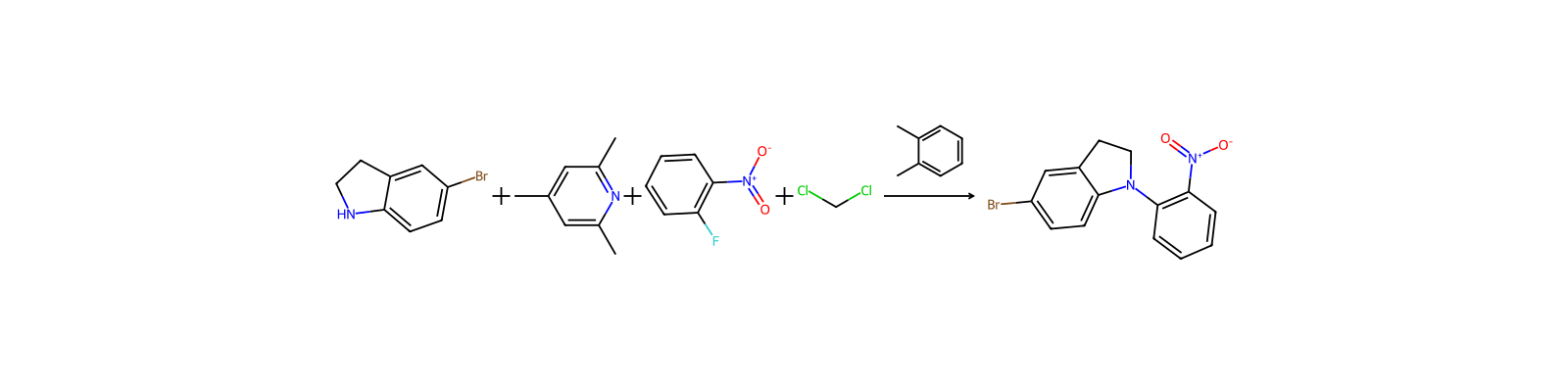


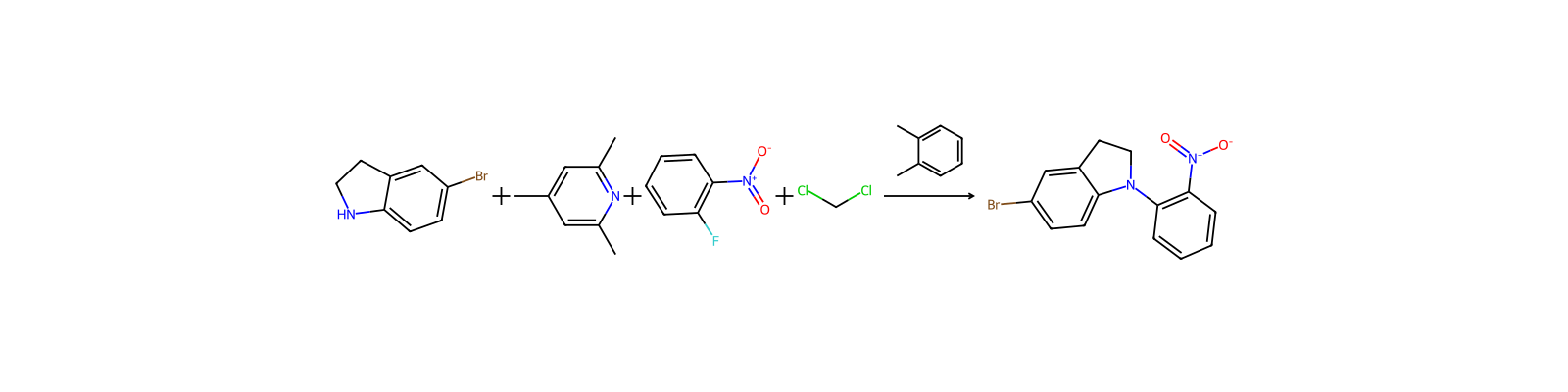
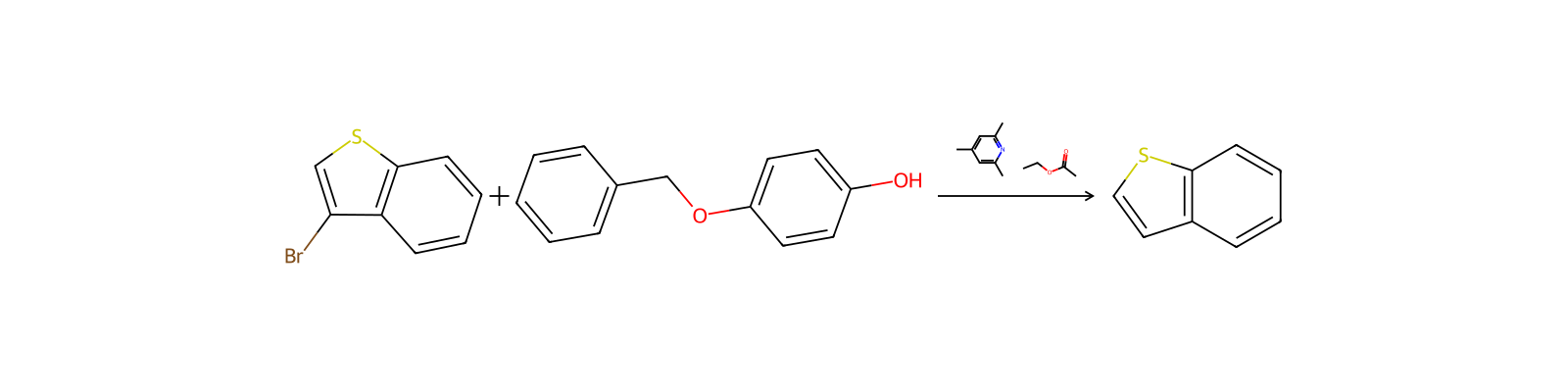
化合物ノート
読み込み中…