ホームMCPワークベンチSkills
ホームワークベンチ通知マイページ
llms.txt · MCPガイドプライバシーポリシー · 利用規約 · サポートv1.8.0
  1. ホーム
  2. /化合物

1-クロロブタン

Butyl Chloride

HCID 8005
ノートを作成反応を作成見積依頼を出す
印刷プレビュー
基本情報概要名称と識別子物性安全と法規制化学と産業関連反応化合物ノート
部分構造検索類似構造を探す

基本情報

CAS
109-69-3
標準SMILES
CCCCCl
InChIKey
VFWCMGCRMGJXDK-UHFFFAOYSA-N
分子式
C4H9Cl
平均分子量
92.57 g/mol
単同位体質量
92.03927797

概要

Butyl chloride appears as a water white liquid with a sharp odor. Flash point 20 °F. Boiling point 77-78 °C (173 °F). Density 7.5 lb / gal. Slightly soluble in water. Vapors are heavier than air. Used in the manufacture of a variety of organic chemicals.

名称と識別子

優先名称
Butyl Chloride
IUPAC
1-chlorobutane
現地名
1-クロロブタン
英語名
1-Chlorobutane
分子式
C4H9Cl
分子量
92.57

名称と別名

1-Chlorobutane109-69-3Butyl chlorideN-BUTYL CHLORIDEChlorure de butyleButane, 1-chloro-NBC wormerN-Propylcarbinyl chlorideSure ShotNCI-C06155DTXSID8020206NSC-8419
名称をさらに表示
1-クロロブタン4-クロロブタン塩化n-ブチルブチルクロリド塩化ブチル塩化nブチルn-ブチルクロライド1クロロブタンl-クロロブタン塩化 n-ブチル(1-クロロブタン)1‐クロロブタン1-クロロブタン REAGENTPLUS,99%1-クロロブタン クロマソルブ,FOR HPLC,≥99.8%N-ブチルクロリド1-クロロブタン, 99+%1-クロロブタン,塩化ブチルn-Chlorobutane1-butyl chloride1-CHLOROBUTANE, 99%1-CHLOROBUTANE, 99%1-CHLOROBUTANE, 99%1-CHLOROBUTANE, 99%n-C4H9Clorobutane
ZP7R667SGDDTXCID00206NBC Kaps WormerRefChem:57812Happy Jack Worm Capsules203-696-6chlorobutane1-CHLORO-BUTANE

データベース識別子

CAS
109-69-3、25154-42-1
PubChem CID
8005
DTXSID
DTXSID8020206
ChEMBL
CHEMBL47259
UNII
ZP7R667SGD
EC Number
203-696-6
Nikkaji
J2.435J

物性

構造計算による物性

XLogP
2.6
極性表面積
0 Ų
水素結合供与体数
0
水素結合受容体数
0
回転可能結合数
2
重原子数
5
形式電荷
0
複雑度
13.1

実験および物理化学的性質

Chemical ClassesFlammable agents - 3rd degree
SolventsSolvents -> Chlorinated Aliphatics
SpringerMaterials PropertiesSchoenflies notation
PesticidesPesticide -> EPA IRIS
LogP · 3 件

log Kow= 2.39

2.82

2.39

OdorUnpleasant
Density · 4 件

0.8862 at 68 °F (USCG, 1999) - Less dense than water; will float

0.88098 @ 25 °C/4 °C; 0.89197 @ 15 °C/4 °C; 0.88648 @ 20 °C/4 °C

Relative density (water = 1): 0.89 (20 °C)

0.892 @ 15°C

Viscosity · 2 件

0.0045 POISE @ 20 °C

0.45 mPa*s at 20 °C

Color/FormCOLORLESS LIQ
Solubility · 3 件

less than 1 mg/mL at 59 °F (NTP, 1992)

PRACTICALLY INSOL IN WATER (0.066% @ 12 °C); MISCIBLE WITH ALC, ETHER

Solubility in water, g/l at 25 °C: 0.87 (practically insoluble)

安全と法規制

安全情報は参考情報です。供給元の安全データシート(SDS)、適用法令、専門家による評価に代わるものではありません。

GHS分類

GHS Classification · 6 件

Danger

H225: Highly Flammable liquid and vapor [Danger Flammable liquids]

P210, P233, P240, P241, P242, P243, P280, P303+P361+P353, P370+P378, P403+P235, and P501 (click each P-code to see the statement)

Danger

H225 (100%): Highly Flammable liquid and vapor [Danger Flammable liquids]

P210, P233, P240, P241, P242, P243, P273, P280, P303+P361+P353, P370+P378, P403+P235, and P501 (click each P-code to see the statement)

危険有害性情報

Regulatory Information · 5 件

Chemical: Butane, 1-chloro-

Butane, 1-chloro- is listed on the EPA's Chemical Data Reporting (CDR) system. Manufacturers and importers of Butane, 1-chloro- are required to report information about their production and use of this chemical to the EPA under the Toxic Substances Control Act (TSCA). (40 eCFR Part 711)

Status: Active Update: 16-12-2022 https://echa.europa.eu/registration-dossier/-/registered-dossier/13696

Butane, 1-chloro-: HSNO Approval: HSR001101 Approved with controls

The New Jersey Worker and Community Right to Know Act requires public and private employers to provide information about hazardous substances at their workplaces. (N.J.S.A. 34:5A-1 et. seq.)

DOT LabelFlammable Liquid
Fire Hazards · 3 件

Special Hazards of Combustion Products: May produce phosgene gas in fire (USCG, 1999)

· HIGHLY FLAMMABLE: Will be easily ignited by heat, sparks or flames.

Highly flammable. Gives off irritating or toxic fumes (or gases) in a fire. Vapour/air mixtures are explosive.

Fire PotentialFLAMMABLE, DANGEROUS FIRE RISK.
Health Hazards · 2 件

Mildly irritating to the skin and eyes, liquid may cause rash due to removal of skin oils. Ingestion or skin absorbtion may cause intestinal upset, cramping, and central nervous system depression. (USCG, 1999)

化学と産業

用途と製造

Uses · 6 件

Used as a solvent, intermediate, and veterinary anthelmintic; [HSDB]

SOLVENT; INT IN SYNTHESIS OF ALKYLATED ANILINES

Key intermediate for organotin stabilizer

Reacts with lithium metal in hydrocarbon media, eg, hexane and cyclohexane, to yield n-butyl lithium /the most important organolithium compound/

Reacts with magnesium metal in a hydrocarbon solvent to produce di-n-butylmagnesium (DNBM)

For more Uses (Complete) data for N-BUTYL CHLORIDE (7 total), please visit the HSDB record page.

U.S. Production · 3 件

2023: 100,000 - <250,000 lb

(1977) PROBABLY GREATER THAN 4.54X10+6 GRAMS

(1979) PROBABLY GREATER THAN 4.54X10+6 GRAMS

Consumer UsesIntermediate
Industry UsesCatalyst
Methods of Manufacturing · 2 件

IRRADIATION OF ETHYLENE AND HYDROGEN CHLORIDE WITH COBALT 60

PREPD FROM N-BUTYL ALC BY HEATING WITH HYDROCHLORIC ACID & ANHYDROUS ZINC CHLORIDE.

Formulations/PreparationsGRADES: NF; TECHNICAL.
Use ClassificationAnimal Drugs -> FDA Approved Animal Drug Products (Green Book) -> Active Ingredients
General Manufacturing Information · 2 件

All other Petroleum and Coal Products Manufacturing

Butane, 1-chloro-: ACTIVE

応用分野 · 5 件

用途溶剤、有機合成原料。

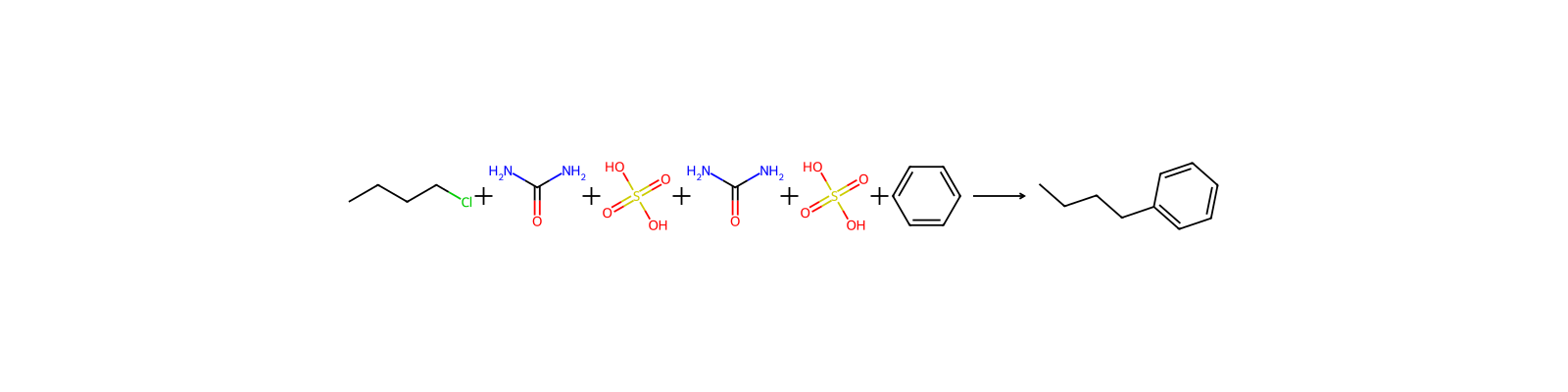
用途溶剤、フリーデルクラフト反応の際のアルキル化剤、防汚塗料、防カビ剤、有機金属化合物用中間体、医薬原料、ブチルセルロース原料、駆虫剤

関連反応

152 件
反応記録を作成
HRID 3904 の反応式
HRID 3904反応物としてuspto-grants-1988_02
HRID 19678 の反応式
HRID 19678溶媒としてuspto-grants-2010_06
HRID 47944 の反応式
HRID 47944反応物としてuspto-grants-2004_03
HRID 64577 の反応式
HRID 64577溶媒としてuspto-grants-1986_09
HRID 66444 の反応式
HRID 66444溶媒としてuspto-grants-1982_08
HRID 76243 の反応式
HRID 76243溶媒としてuspto-grants-2014_09
HRID 90185 の反応式
HRID 90185反応物としてTraining data from https://doi.org/10.1039/C8SC04228D (2/10)
HRID 90670 の反応式
HRID 90670反応物としてTraining data from https://doi.org/10.1039/C8SC04228D (2/10)
1 / 19 ページ

化合物ノート

読み込み中…

このページの内容基本情報概要名称と識別子物性安全と法規制化学と産業関連反応化合物ノート
その他の操作
ノートを作成反応を作成見積依頼を出す
Flash Point · 3 件

20 °F (NTP, 1992)

15 °F (-9 °C) (Closed Cup)

-12 °C

Animal DrugsActive Ingredients (N-butyl Chloride) -> FDA Greenbook

物理化学的性質

融点
-123 °C · -123 °C (lit.)
沸点
77 · 77-78 °C (lit.)
比重(密度)
0.886 g/mL · 0.886 g/mL at 25 °C (lit.)
蒸気密度
3.2 · 3.2 (vs air)
蒸気圧
80.1 mm · 80.1 mm Hg ( 78.4 °C)
屈折率
20 · n20/D 1.402(lit.)
闪点
-12 °F · -12 °F
貯蔵温度
2 · 2-8°C
溶解性
0.11 g/L · 水:可溶0.11g/L at 20℃
外見
粘性液体
色
ホワイトからピンク、ライトブラウン
臭い (Odor)
不快な臭い
爆発限界(explosive limit)
1.8 · 1.8-10.1%(V)
水溶解度
0.5 g/L · 0.5g/L(20℃)
Merck
14 · 14,1560
BRN
1730909 · 1730909
Henry's Law Constant
5.6 · 5.6×10-4 mol/(m3Pa) at 25℃, Brockbank (2013)
Dielectric constant
9.6 · 9.6(20℃)
安定性
安定。とても燃えやすい。引火点が低く、爆発範囲が広いことに注意してください。強酸化剤および強塩基とは相容れない。
InChI
1S/C4H9Cl/c1-2-3-4-5/h2-4H2,1H3
InChIKey
VFWCMGCRMGJXDK-UHFFFAOYSA-N
SMILES
CCCCCl
LogP
2.66 at · 2.66 at 20℃
表面張力
23.74 mN/m · 23.74mN/m at 293.15K
CAS データベース
109 · 109-69-3(CAS DataBase Reference)
NISTの化学物質情報
1 · Butane, 1-chloro-(109-69-3)
EPAの化学物質情報
1 · 1-Chlorobutane (109-69-3)
化学的性質 · 1 件

化学的特性1-Chlorobutane is a highly flammable, clear, colorless liquid at standard temperature and pressure. The density is 0.886 g/cm3, which is lower than that of water. It does not react with water, is classified as highly flammable, but it is neither an oxidizer nor an explosive. However, vapors can form explosive mixtures with air. The substance self-ignites at 245℃.

· May cause toxic effects if inhaled or absorbed through skin.

Hazards Summary · 1 件

Dangerous fire risk; [Hawley] Reacts slowly with water evolving hydrochloric acid; A skin, eye, and respiratory tract irritant; The substance may cause effects on the nervous system. [ICSC] A skin and eye irritant; [HSDB] A mild skin and eye irritant based on animal studies; [CHEMINFO] An irritant; Effects in high-dose animal studies (subacute and chronic) include convulsions or effect on seizure threshold; [MSDSonline]

DOT ID and Guide1127 130
FDA RequirementsSpecification and dosage requirements for n-butyl chloride are given in detail for the removal of ascarids and hookworms in dogs, puppies, cats, and kittens.
Reactive GroupHalogenated Organic Compounds
UN ClassificationUN Hazard Class: 3; UN Pack Group: II
Special ReportsDHHS/NTP; Toxicology & Carcinogenesis Studies of n-Butyl Chloride in F344/N Rats and B6C3F1 Mice Technical Report Series No. 312 (1986) NIH Publication No. 86-2568
Reactivity AlertsHighly Flammable

安全と保護具

Fire Fighting · 2 件

Excerpt from ERG Guide 130 [Flammable Liquids (Water-Immiscible / Noxious)]:

Use powder, foam, carbon dioxide. In case of fire: keep drums, etc., cool by spraying with water.

First Aid Measures · 4 件

Fresh air, rest. Refer for medical attention.

Remove contaminated clothes. Rinse and then wash skin with water and soap.

First rinse with plenty of water for several minutes (remove contact lenses if easily possible), then refer for medical attention.

Rinse mouth. Do NOT induce vomiting. Refer for medical attention .

Accidental Release Measures · 2 件

· CALL 911. Then call emergency response telephone number on shipping paper. If shipping paper not available or no answer, refer to appropriate telephone number listed on the inside back cover.

· ELIMINATE all ignition sources (no smoking, flares, sparks or flames) from immediate area.

First Aid · 2 件

EYES: First check the victim for contact lenses and remove if present. Flush victim's eyes with water or normal saline solution for 20 to 30 minutes while simultaneously calling a hospital or poison control center. Do not put any ointments, oils, or medication in the victim's eyes without specific instructions from a physician. IMMEDIATELY transport the victim after flushing eyes to a hospital even if no symptoms (such as redness or irritation) develop.

General First Aid:

Safe StorageFireproof. Separated from incompatible materials. Well closed. Keep in a well-ventilated room. Store in an area without drain or sewer access. See Chemical Dangers.
Exposure Control and Personal Protection· Wear positive pressure self-contained breathing apparatus (SCBA).
Fire Fighting Procedures · 3 件

To fight fire: Foam, carbon dioxide, dry chemical.

If material /is/ on fire or involved in /a/ fire do not extinguish fire unless flow can be stopped. Use water in flooding quantities as fog. Solid streams of water may spread fire. Cool all affected containers with flooding quantities of water. Apply water from as far a distance as possible. Use foam, dry chemial or carbon dioxide.

If fire becomes uncontrollable or container is exposed to direct flame-consider evacuation of one-third (1/3) mile radius.

Nonfire Spill ResponseExcerpt from ERG Guide 130 [Flammable Liquids (Water-Immiscible / Noxious)]:
Spillage Disposal · 1 件

Personal protection: filter respirator for organic gases and vapours adapted to the airborne concentration of the substance. Collect leaking and spilled liquid in sealable containers as far as possible. Absorb remaining liquid in sand or inert absorbent. Then store and dispose of according to local regulations. Do NOT wash away into sewer. Do NOT let this chemical enter the environment.

Preventive Measures · 4 件

If material /is/ not on fire and not involved in /a/ fire keep sparks, flames, and other sources of ignition away. Keep material out of water sources and sewers. Build dikes to contain flow as necessary. Attempt to stop leak if without undue personnel hazard. Use water spray to knock-down vapors.

Avoid breathing vapors. Keep upwind. Do not handle broken packages unless wearing appropriate personal protective equipment. Wash away any material which may have contacted the body with copious amounts of water or soap and water.

If material leaking (not on fire) consider evacuation from downwind area based on amount of material spilled, location and weather conditions.

SRP: The scientific literature for the use of contact lenses in industry is conflicting. The benefit or detrimental effects of wearing contact lenses depend not only upon the substance, but also on factors including the form of the substance, characteristics and duration of the exposure, the uses of other eye protection equipment, and the hygiene of the lenses. However, there may be individual substances whose irritating or corrosive properties are such that the wearing of contact lenses would be harmful to the eye. In those specific cases, contact lenses should not be worn. In any event, the usual eye protection equipment should be worn even when contact lenses are in place.

Isolation and Evacuation · 2 件

Excerpt from ERG Guide 130 [Flammable Liquids (Water-Immiscible / Noxious)]:

Immediate precautionary measure

Eye PreventionWear safety spectacles or eye protection in combination with breathing protection.

毒性情報

Ecotoxicity ValuesLC50 Poecilia reticulata (guppy) 97 ppm/7 days /Conditions of bioassay not specified/
Environmental Fate · 4 件

TERRESTRIAL FATE: n-Butyl chloride has a very high vapor pressure, 100 mm Hg at 25 °C(1), indicating that volatilization from soil will be rapid and a primary removal process. It has an estimated low adsorptivity to soil (Koc = 93-102)(1-2) and therefore would be mobile in soil. Biodegradation in soil is unknown(SRC).

AQUATIC FATE: If released in water, n-butyl chloride will be lost rapidly by volatilization. Its estimated volatilization half-life in a model river and pond are 2.9 hr(1-2) and 34 hr(3), respectively. In groundwater, where volatilization may not occur, n-butyl chloride may be lost by hydrolysis. Based upon hydrolysis rates for alkyl chlorides, the half-life is estimated to be between 6 hr and 38 days at neutral pH(4). The half-life at higher pHs will be shorter. Photodegradation, adsorption to sediment, and bioconcentration in fish are not important aquatic fate processes(SRC).

ATMOSPHERIC FATE: n-Butyl chloride will degrade via reaction with photochemically produced hydroxyl radicals in the atmosphere. The half-life of n-butyl chloride in the atmosphere is estimated to be 7.0 days(1). n-Butyl chloride does not absorb radiation >290 nm and therefore it will not directly photolyze(2). Due to its water solubility, 1100 mg/l(3), washout by rain should occur. However, n-butyl chloride removed in this manner will revolatilize into the atmosphere(SRC).

Maximum permissible concentrations in open waters are 0.004 mg/l.

Adverse EffectsNeurotoxin - Acute solvent syndrome
Exposure RoutesThe substance can be absorbed into the body by inhalation of its vapour and by ingestion.
Signs and Symptoms · 4 件

Cough. Sore throat. Drowsiness.

Redness. Dry skin.

Redness.

See Inhalation.

Ongoing Test Status · 1 件

The following link will take the user to the National Toxicology Program (NTP) Test Agent Search Results page, which tabulates all of the "Standard Toxicology & Carcinogenesis Studies", "Developmental Studies", and "Genetic Toxicity Studies" performed with this chemical. Clicking on the "Testing Status" link will take the user to the status (i.e., in review, in progress, in preparation, on test, completed, etc.) and results of all the studies that the NTP has done on this chemical. [http://ntp-apps.niehs.nih.gov/ntp_tox/index.cfm?fuseaction=ntpsearch.searchresults&searchterm=109-69-3]

Effluent ConcentrationsIn a study of 63 industrial effluents that discharge into surface waters, chlorobutane was found in one effluent at a concentration of <10 ug/l(1).
ICSC Environmental DataBioaccumulation of this chemical may occur along the food chain.
EPA IRIS Information1-Chlorobutane
Soil Adsorption/MobilityUsing the water solubility for n-butyl chloride, 1100 mg/l(1), the Koc can be estimated to be 93 and 102 using two recommended regression equations(2,SRC). These estimates indicate that n-butyl chloride will have high mobility in soil(3).
Atmospheric ConcentrationsSOURCE DOMINATED: n-Butyl chloride was identified, but not quantified, in one of 10 samples of ambient air in the Kanawna Valley, WV(1). Various locations were sampled during three trips.
Human Toxicity Excerpts · 2 件

TOXIC ON PROLONGED INHALATION.

WEAKER CENTRAL NERVOUS DEPRESSANT ACTIONS THAN ETHYL CHLORIDE.

法規制情報

FDA RequirementsSpecification and dosage requirements for n-butyl chloride are given in detail for the removal of ascarids and hookworms in dogs, puppies, cats, and kittens.
State Drinking Water Guidelines(FL) FLORIDA 2,800 ug/l

安全データ

F
1-10
wgk
2
tsca
TSCA listed
rtecs
EJ6300000
ridadr
UN 1127 (CHLOROBUTANES)
毒性
LD50 orally in rats: 2.67 g/kg (Smyth)
hs_code
29031990
risk_code
11
化審法
(2)-60
消防法
危-4-1-II
hazard_code
F
safety_code
9-16-29
hazard_class
3
packing_group
II
自然発火温度
860 °F
Hazard Classifications
Aquatic Chronic 3Asp. Tox. 1Flam. Liq. 2
ストレージクラス
3 - Flammable liquids
有毒物質データの
109-69-3(Hazardous Substances Data)

用途島津全自動タンパク質一次構造分析装置(PSQ-1, PSQ-2, PPSQ-10)用試薬。

使用1-Chlorobutane is used as an intermediate for the production of other chemicals in the chemical industry. 1-chlorobutane is a common extraction solvent in the forensic toxicology arena. A benefit of 1-chlorobutane is that it is less dense than water and therefore settles above the aqueous layer. As butylating agent in organic synthesis, e.g., in the manufacture of butyl cellulose. 1-chlorobutane will be halogenated to produce dichlorobutane using sulfuryl chloride via a free-radical chain reaction mechanism.

一般的な説明A water white liquid with a sharp odor. Flash point 20°F. Boiling point 77-78°C (173°F). Density 7.5 lb / gal. Slightly soluble in water. Vapors are heavier than air. Used in the manufacture of a variety of organic chemicals.

調製方法 · 2 件

製造方法1-Chlorobutane is obtained by esterification of n-butanol with hydrogen chloride or hydrochloric acid at 100℃ either without a catalyst or utilizing the accelerating effect of zinc chloride, tripentylamine hydrochloride, or phosphorus pentachloride. n-Butyl chloride is also obtained, along with 2-chlorobutane, by the chlorination of butane over aluminum oxide at 200℃.

純化方法Shake repeatedly with concentrated H2SO4 (until no more color develops in acid), then wash with water, aqueous NaHCO3 or Na2CO3, and more water. Dry with CaCl2 or MgSO4 (then with P2O5, if necessary), decant and fractionate. Alternatively, continue to pass oxygen for about three times until the outlet gas first develops color on starch iodide paper. After washing with NaHCO3 solution to hydrolyze the ozonide and remove the organic acid produced, the 1-chlorobutane liquid is dried and distilled [Chien & Willard J Am Chem Soc 75 6160 1953]. [Beilstein 1 IV 246. ]

上流・下流製品情報

上流原料

塩化亜鉛塩酸1-ブタノール

下流製品

AZIMILIDEビス(2,4-ペンタンジオナト)バナジウム(IV)オキシドジブチルすずオキシド2-[2-[2-(2-ブトキシエトキシ)エトキシ]エトキシ]エタノールジ(トリブチルスタンニル)オキシド1-ブチル-1-メチルピロリジニウムビス(トリフルオロメタンスルホニル)イミド4-(4-Fluorophenyl)pyrimidine-2-thiol2-(4-クロロフェニル)ヘキサンニトリルブチルマロン酸ジエチル1,4-ジクロロブタン2-(1H-イミダゾール-1-イルメチル)-2-フェニルヘキサンニトリル2-(4-クロロフェニル)-2-(1H-1,2,4-トリアゾール-1-イルメチル)ヘキサンニトリル6-ブロモ-2-ピリジンカルボキシアルデヒド 臭化物tert-ブチルベンゼンn-ブチルアミン2 -phenyl-HexanenitrileSisthsne2-[[(4-メトキシ-6-メチル-1,3,5-トリアジン-2-イル)カルバモイル]スルファモイル]安息香酸メチルブチル スルフィドブチルリチウム