ホームMCPワークベンチSkills
ホームワークベンチ通知マイページ
llms.txt · MCPガイドプライバシーポリシー · 利用規約 · サポートv1.8.0
  1. ホーム
  2. /化合物

1,2-ジメトキシエタン

1,2-Dimethoxyethane

HCID 8071
ノートを作成反応を作成見積依頼を出す
印刷プレビュー
基本情報概要名称と識別子物性安全と法規制化学と産業関連反応化合物ノート
部分構造検索類似構造を探す

基本情報

CAS
110-71-4
標準SMILES
COCCOC
InChIKey
XTHFKEDIFFGKHM-UHFFFAOYSA-N
分子式
C4H10O2
平均分子量
90.12 g/mol
単同位体質量
90.06807956

概要

1,2-dimethoxyethane appears as a liquid with a sharp odor. Less dense than water. Flash point 34 °F. Mildly toxic by ingestion and inhalation. Severely irritates skin and eyes. Vapors heavier than air. Used to make other chemicals.

名称と識別子

優先名称
1,2-Dimethoxyethane
IUPAC
1,2-dimethoxyethane
現地名
1,2-ジメトキシエタン
英語名
1,2-Dimethoxyethane
分子式
C4H10O2
分子量
90.12

名称と別名

1,2-DIMETHOXYETHANE110-71-4MonoglymeEthylene glycol dimethyl etherGlymeDimethyl CellosolveDimethoxyethaneEgdme2,5-DioxahexaneEthane, 1,2-dimethoxy-Glycol dimethyl etherDimethylcellosolve
名称をさらに表示
1,2-ジメトキシエタンモノグリムグリムジメチルセロソルブジメチルグリコールグライム2,5-ジオキサヘキサン2-メトキシエチルメチルエーテルモノグライムメチル(2-メトキシエチル)エーテルエチレングリコールジメチルエーテルエチレングリコルジメチルエテルエチレングリコ-ルジメチルエ-テル1,2-ジメトキシエタン(脱水)エチレングリコールジメチルエーテル(脱水)ジメチルセロソルブ(脱水)ジメチルセロソルブ(エチレングリコールジメチルエーテル)エチレングリコールジメチルエーテル(脱水) ‐SUPER‐1,2-ジメトキシエタン REAGENTPLUS,≥99%,INHIBITOR-FREE1,2-ジメトキシエタン クロマソルブ,FOR HPLC,99.9%,INHIBITOR-FREEDMEGDME1,2-dimethoxy-ethan
Hisolve MMMEthylene dimethyl etherAnsul ether 121DME (glycol ether)Monoethylene glycol dimethyl etherDTXSID0025286alpha,beta-DimethoxyethaneGXS24JF5IW

データベース識別子

CAS
110-71-4、24991-55-7
PubChem CID
8071
DTXSID
DTXSID0025286
ChEMBL
CHEMBL1232411
ChEBI
CHEBI:42263
UNII
GXS24JF5IW
EC Number
203-794-9、607-475-9
Nikkaji
J5.099G

物性

構造計算による物性

XLogP
-0.2
極性表面積
18.5 Ų
水素結合供与体数
0
水素結合受容体数
2
回転可能結合数
3
重原子数
6
形式電荷
0
複雑度
17.5

実験および物理化学的性質

Chemical ClassesFlammable agents - 3rd degree
DrugsPharmaceuticals -> Listed in ZINC15
SolventsSolvents -> Glycol Ethers (Glymes)
pH8.2
SpringerMaterials PropertiesSchoenflies notation
LogP · 3 件

Log Kow = -0.21

-0.21

-0.21

Odor · 2 件

SHARP ETHEREAL ODOR

Mild odor

Density · 4 件

0.868 at 68 °F (USCG, 1999) - Less dense than water; will float

0.86285 @ 20 °C/4 °C

Relative density (water = 1): 0.86

0.86877 @25 °C

Color/Form · 2 件

WATER-WHITE LIQUID

COLORLESS LIQUID

Solubility · 5 件

greater than or equal to 100 mg/mL at 72 °F (NTP, 1992)

MISCIBLE WITH WATER, ALCOHOL; SOL IN HYDROCARBON SOLVENTS

SOL IN CHLOROFORM, ETHER, ACETONE, BENZENE

water solubility = 1.00X10+6 mg/l @ 25 °C

安全と法規制

安全情報は参考情報です。供給元の安全データシート(SDS)、適用法令、専門家による評価に代わるものではありません。

GHS分類

GHS Classification · 6 件

Danger

H225: Highly Flammable liquid and vapor [Danger Flammable liquids]

P203, P210, P233, P240, P241, P242, P243, P261, P271, P280, P303+P361+P353, P304+P340, P317, P318, P370+P378, P403+P235, P405, and P501 (click each P-code to see the statement)

This chemical does not meet GHS hazard criteria for 0.2% (1 of 640) of reports.

Danger

H225 (99.8%): Highly Flammable liquid and vapor [Danger Flammable liquids]

危険有害性情報

Regulatory Information · 6 件

Chemical: Ethane, 1,2-dimethoxy-

Hazard Traits - Reproductive Toxicity

Ethane, 1,2-dimethoxy- is listed on the EPA's Chemical Data Reporting (CDR) system. Manufacturers and importers of Ethane, 1,2-dimethoxy- are required to report information about their production and use of this chemical to the EPA under the Toxic Substances Control Act (TSCA). (40 eCFR Part 711)

S - indicates a substance that is identified in a final Significant New Use Rule.

REACH registered substance: 1,2-dimethoxyethane (EC: 203-794-9)

Substance: 1, 2-dimethoxyethane; ethylene glycol dimethyl ether (EGDME)

Other Safety InformationIMAP assessments - Ethane, 1,2-dimethoxy-: Environment tier I assessment
DOT LabelFlammable Liquid
Fire Hazards · 3 件

Behavior in Fire: Containers may explode in fires. (USCG, 1999)

· HIGHLY FLAMMABLE: Will be easily ignited by heat, sparks or flames.

Highly flammable. Vapour/air mixtures are explosive.

Fire Potential · 2 件

DANGEROUS, WHEN EXPOSED TO HEAT OR FLAME; CAN REACT VIGOROUSLY WITH OXIDIZING MATERIALS

FLAMMABLE, DANGEROUS FIRE RISK

Health Hazards

化学と産業

用途と製造

Uses · 4 件

Used as a specialty solvent and reagent; [Merck Index] Used in lithium batteries and industrial coatings; [EPA: Initial Risk-Based Prioritization of HPV Chemicals: Monoglyme]

Battery Manufacturing [Category: Industry]

SOLVENT TO FACILITATE FORMATION OF ALKALI METAL-HYDROCARBON ADDUCTS; IN REFORMATSKY REACTION WITH METHYL GAMMA-BROMOCROTONATE

Process solvent/solubilizer

U.S. Imports · 2 件

(1972) NEGLIGIBLE

(1976) NEGLIGIBLE

U.S. Production · 3 件

2023: 550,000 - <1,000,000 lb

(1972) PROBABLY GREATER THAN 4.54X10+5 GRAMS

(1975) PROBABLY GREATER THAN 4.5X10+5 GRAMS

Consumer UsesPropellants, non-motive (blowing agents)
Industry UsesSolvent
Methods of Manufacturing · 3 件

...FROM ETHYLENE GLYCOL MONOMETHYL ETHER, METHYL SULFATE AND METALLIC SODIUM; FROM CHLOROMETHYL METHYL ETHER IN THE PRESENCE OF SODIUM BY WURTZ REACTIONS.

...FROM ETHYLENE GLYCOL MONOMETHYL ETHER, METHYL CHLORIDE AND SODIUM.

Ethylene glycol monomethyl ether + dimethyl sulphate (ether formation)

Formulations/PreparationsGRADES: COMMERCIAL
Household ProductsInformation on 1 consumer products that contain 1,2-Dimethoxyethane in the following categories is provided:
General Manufacturing Information · 3 件

All Other Basic Organic Chemical Manufacturing

Ethane, 1,2-dimethoxy-: ACTIVE

USED IN DDVP & DTOP PESTICIDE MIXT TO INCR STABILITY IN HIGHLY CONCN FORM UNDER LOW TEMP

関連反応

18,896 件
反応記録を作成
HRID 10 の反応式
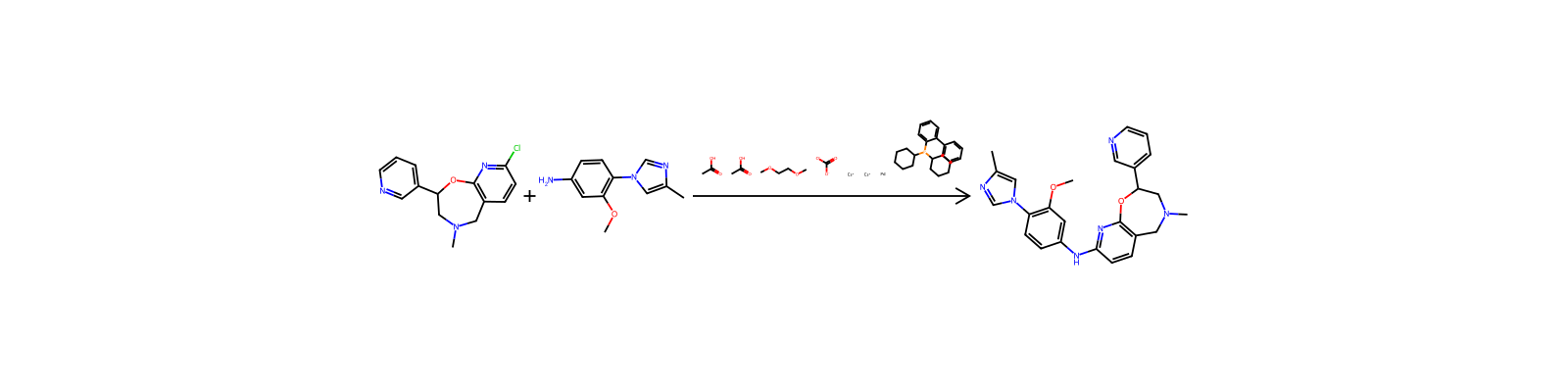
HRID 10溶媒として750 AstraZeneca ELN dataset
HRID 11 の反応式
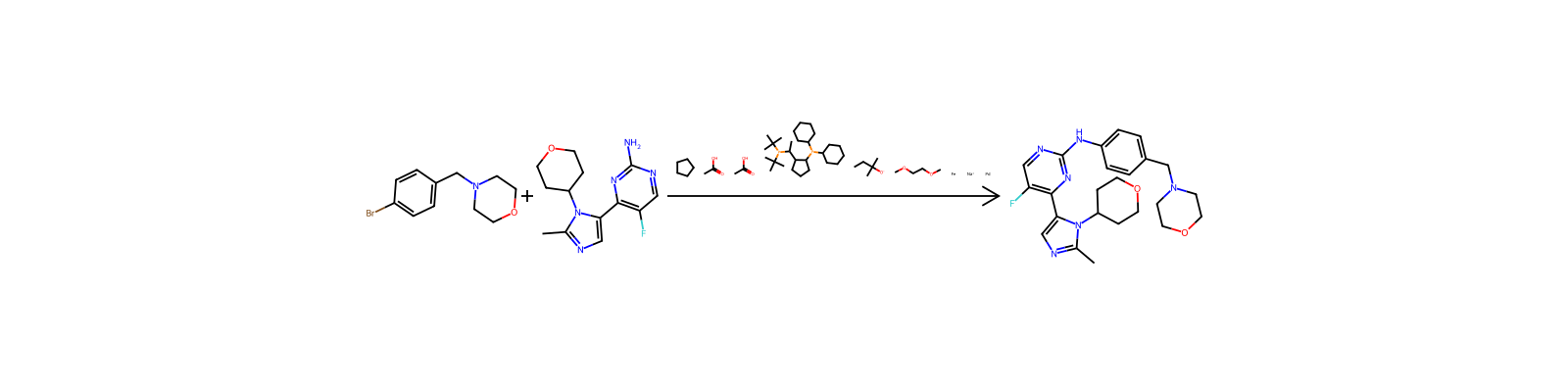
HRID 11溶媒として750 AstraZeneca ELN dataset
HRID 12 の反応式
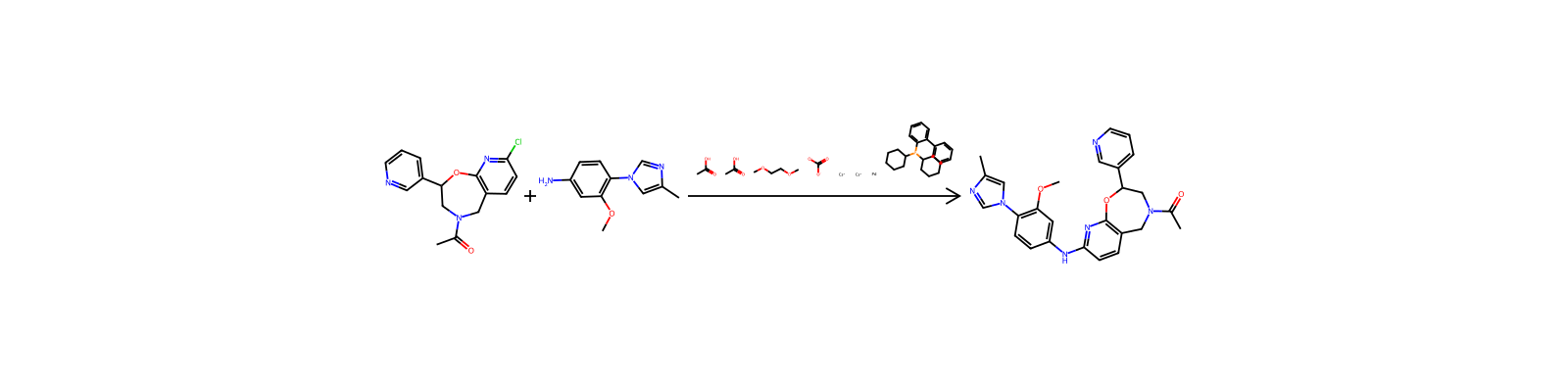
HRID 12溶媒として750 AstraZeneca ELN dataset
HRID 36 の反応式
HRID 36溶媒として750 AstraZeneca ELN dataset
HRID 37 の反応式
HRID 37溶媒として750 AstraZeneca ELN dataset
HRID 38 の反応式
HRID 38溶媒として750 AstraZeneca ELN dataset
HRID 59 の反応式
HRID 59溶媒として750 AstraZeneca ELN dataset
HRID 61 の反応式
HRID 61溶媒として750 AstraZeneca ELN dataset
1 / 500 ページ

化合物ノート

読み込み中…

このページの内容基本情報概要名称と識別子物性安全と法規制化学と産業関連反応化合物ノート
その他の操作
ノートを作成反応を作成見積依頼を出す

Solubility in water: miscible

Flash Point · 4 件

32 °F (NTP, 1992)

-2 °C

29 °F(-2 °C) (CLOSED CUP)

-2 °C c.c.

Boiling Point · 3 件

185 °F at 760 mmHg (NTP, 1992)

82-83 °C @ 760 MM HG

82-83 °C

物理化学的性質

融点
-69 °C · -69 °C
沸点
85 °C · 85 °C(lit.)
比重(密度)
0.867 g/mL · 0.867 g/mL at 25 °C(lit.)
蒸気密度
3.1 · 3.1 (20 °C, vs air)
蒸気圧
48 mm · 48 mm Hg ( 20 °C)
屈折率
20 · n20/D 1.379(lit.)
闪点
32 °F · 32 °F
貯蔵温度
30 °C · Store below +30°C.
溶解性
1000 g/l可溶 · 1000g/l可溶
外見
液体
色
クリア
臭い (Odor)
白色液体、強いエーテル様臭
PH
7 · 7
爆発限界(explosive limit)
10.4 % · 10.4%
水溶解度
混和性
比熱容量
2.14 J/ · Cp(liquid): 2.14 J/(g·K), at 25℃
Merck
14 · 14,3224
BRN
1209237 · 1209237
Henry's Law Constant
1.3 · 1.3×100 mol/(m3Pa) at 25℃, Brockbank (2013)
Dielectric constant
7.2 · 7.2(25℃)
安定性
空気にさらされると、安定しているが爆発性の過酸化物が生成される場合があります。加熱前に過酸化物の存在をテストします。熱、光、空気を避ける。とても燃えやすい。不活性ガス下で保管してください。
主な用途
洗浄剤化粧品環境食品および飲料パーソナルケア
InChI
1S/C4H10O2/c1-5-3-4-6-2/h3-4H2,1-2H3
InChIKey
XTHFKEDIFFGKHM-UHFFFAOYSA-N
SMILES
COCCOC
LogP
-0.21 at · -0.21 at 25℃
表面張力
24.7 mN/m · 24.7mN/m at 293.15K
CAS データベース
110 · 110-71-4(CAS DataBase Reference)
NISTの化学物質情報
1 · Ethane, 1,2-dimethoxy-(110-71-4)
EPAの化学物質情報
Ethylene glycol dimethyl ether (110-71-4)
化学的性質 · 1 件

化学的特性Ethylene glycol dimethyl ether, also called 1,2-Dimethoxyethane, is a colorless liquid with a strong smell similar to ether. It is stable and does not easily react. It can dissolve different resins and cellulose, and can be mixed with water and various organic solvents like alcohols, ketones, and esters in any amount. Its solubility can be changed by diluting it with water or specific solvents.

· 2 件

If ingested causes nausea, vomiting, cramps, weakness, coma. (USCG, 1999)

· Inhalation or contact with material may irritate or burn skin and eyes.

Hazards Summary · 1 件

TLV Basis is hematologic effect and male reproductive & embryo/fetal damage; [ACGIH] 2-Methoxyethanol is a major metaobolite; The potential health hazard of monoglyme is high based on the results of repeated-dose (blood, thymus, adrenal gland, and testicular degeneration) and developmental (increased fetal death and skeletal effects and decreased fetal body weight) toxicity studies at relatively low doses in animal studies. [EPA: Initial Risk-Based Prioritization of HPV Chemicals: Monoglyme] Reproductive toxin in animal tests; [ICSC] Labeled as May impair fertility and May cause harm to the unborn child by EU regulations; [Glycol Ethers Online] Inhalation of vapor may cause dizziness or difficulty breathing; [HSDB] A severe skin and eye irritant; [CAMEO] Reproductive toxin and highly flammable; [MSDSonline] See GLYCOL ETHERS. See 2-Methoxyethanol.

DOT ID and Guide2252 127
Reactive GroupEthers
EC ClassificationSymbol: F, T; R: 60-61-11-19-20; S: 53-45
UN ClassificationUN Hazard Class: 3; UN Pack Group: II
Reactivity AlertsHighly Flammable

安全と保護具

Fire Fighting · 2 件

Excerpt from ERG Guide 127 [Flammable Liquids (Water-Miscible)]:

Use water spray, foam, powder, carbon dioxide. In case of fire: keep drums, etc., cool by spraying with water.

First Aid Measures · 4 件

Fresh air, rest.

Remove contaminated clothes. Rinse skin with plenty of water or shower.

First rinse with plenty of water for several minutes (remove contact lenses if easily possible), then refer for medical attention.

Rinse mouth. Give one or two glasses of water to drink.

Accidental Release Measures · 2 件

· CALL 911. Then call emergency response telephone number on shipping paper. If shipping paper not available or no answer, refer to appropriate telephone number listed on the inside back cover.

· ELIMINATE all ignition sources (no smoking, flares, sparks or flames) from immediate area.

First Aid · 2 件

EYES: First check the victim for contact lenses and remove if present. Flush victim's eyes with water or normal saline solution for 20 to 30 minutes while simultaneously calling a hospital or poison control center. Do not put any ointments, oils, or medication in the victim's eyes without specific instructions from a physician. IMMEDIATELY transport the victim after flushing eyes to a hospital even if no symptoms (such as redness or irritation) develop.

General First Aid:

Safe StorageCool. Fireproof. Separated from strong oxidants.
Exposure Control and Personal Protection· Wear positive pressure self-contained breathing apparatus (SCBA).
Fire Fighting Procedures · 2 件

EXTINGUISH WITH CHEMICAL, ALCOHOL FOAM, OR CARBON DIOXIDE. COOL EXPOSED CONTAINERS WITH WATER. CONTAINERS MAY EXPLODE IN FIRE.

If material on fire or involved in fire: Do not extinguish fire unless flow can be stopped or safely confined. Use water in flooding quantities as fog. Solid streams of water may be ineffective. Cool all affected containers with flooding quantities of water. Use "alcohol" foam, dry chemical or carbon dioxide. Keep run-off water out of sewers and water sources.

Nonfire Spill ResponseExcerpt from ERG Guide 127 [Flammable Liquids (Water-Miscible)]:
Disposal Methods · 1 件

SRP: At the time of review, criteria for land treatment or burial (sanitary landfill) disposal practices are subject to significant revision. Prior to implementing land disposal of waste residue (including waste sludge), consult with environmental regulatory agencies for guidance on acceptable disposal practices.

Spillage Disposal · 1 件

Personal protection: filter respirator for organic gases and vapours adapted to the airborne concentration of the substance. Remove all ignition sources. Ventilation. Collect leaking and spilled liquid in sealable containers as far as possible.

Preventive Measures · 2 件

If material not on fire and not involved in fire: Keep sparks, flames, and other sources of ignition away. Keep material out of water sources and sewers. Build dikes to contain flow as necessary. Attempt to stop leak if without undue personnel hazard. Use water spray to knock-down vapors.

Personnel protection: Avoid breathing vapors. Keep upwind. ... Do not handle broken packages unless wearing appropriate personal protective equipment. If contact with the material anticipated, wear appropriate chemical protective clothing.

Isolation and Evacuation · 2 件

Excerpt from ERG Guide 127 [Flammable Liquids (Water-Miscible)]:

Immediate precautionary measure

毒性情報

Environmental Fate · 3 件

TERRESTRIAL FATE: Based on a recommended classification scheme(1), an estimated Koc value of 18(SRC), determined from a measured log Kow(2) and a recommended regression-derived equation(3), indicates that 1,2-dimethoxyethane will have very high mobility in soil(SRC). Limited data, based on pure culture studies(4), suggest that this compound may be resistant to biodegradation(SRC). Volatilization of 1,2-dimethoxyethane may be important from dry soil surfaces(SRC) based on a measured vapor pressure of 48 mm Hg(5), but not from moist soil surfaces(SRC) given an estimated Henry's Law constant of 1.1X10⁻⁶ atm-cu m/mole(6,SRC).

AQUATIC FATE: Based on a recommended classification scheme(1), an estimated Koc value of 18(SRC), determined from a measured log Kow(2) and a recommended regression-derived equation(3), indicates that 1,2-dimethoxyethane should not adsorb to suspended solids and sediment(SRC) in the water. Limited data, from pure culture studies(4), suggest that this compound may be resistant to biodegradation(SRC). 1,2-Dimethoxyethane may volatilize slowly from water surfaces based on an estimated Henry's Law constant of 1.1X10⁻⁶ atm-cu m/mole(SRC), developed using a fragment constant estimation method(5). Estimated half-lives for a model river and model lake are 33 and 240 days, respectively(3,SRC). According to a recommended classification scheme(6), an estimated BCF value of 0.4(3,SRC), from a measured log Kow(2), suggests that bioconcentration of 1,2-dimethoxyethane will be low in aquatic organisms(SRC).

ATMOSPHERIC FATE: According to a suggested classification scheme(1), a measured vapor pressure of 48 mm Hg at 20 °C(2) indicates that 1,2-dimethoxyethane will mainly exist in the vapor phase in the ambient atmosphere. Vapor-phase 1,2-dimethoxyethane is degraded in the atmosphere by reaction with photochemically produced hydroxyl radicals(SRC); the half-life for this reaction in air is estimated to be about 25 hours(3,SRC).

Adverse EffectsNeurotoxin - Acute solvent syndrome
Exposure RoutesThe substance can be absorbed into the body by ingestion, by inhalation and through the skin.
Signs and Symptoms · 3 件

MAY BE ABSORBED!

Redness.

Nausea.

Soil Adsorption/Mobility · 1 件

The Koc of 1,2-dimethoxyethane is estimated as approximately 18(SRC), using a measured log Kow of -0.21(1) and a regression-derived equation(2,SRC). According to a recommended classification scheme(3), this estimated Koc value suggests that 1,2-dimethoxyethane has very high mobility in soil(SRC).

Human Toxicity Excerpts · 2 件

...TOXICITY OF ETHYLENE GLYCOL DIMETHYL ETHER MAY BE CONSIDERED TO BE LOW FROM LIMITED REPEATED SHORT EXPOSURES. CARE SHOULD BE EXERCISED, HOWEVER, TO AVOID PROLONGED OR REPEATED INHALATION OF HIGH CONCN OF THE VAPOR.

IF /VAPOR/ INHALED, WILL CAUSE DIZZINESS OR DIFFICULT BREATHING. LIQUID IS NOT IRRITATING TO SKIN. IF SWALLOWED, WILL CAUSE NAUSEA, VOMITING OR LOSS OF CONSCIOUSNESS.

Artificial Pollution Sources1,2-Dimethoxyethane's production and use as a solvent and solubilizer(1) may result in its release to the environment through various waste streams(SRC).
Environmental BiodegradationFour pure cultures of bacteria, isolated from either soil or activated sludge, were unable to utilize 1,2-dimethoxyethane as a carbon source(1).
Environmental Bioconcentration · 1 件

An estimated BCF value of 0.4 was calculated for 1,2-dimethoxyethane(SRC), using a measured log Kow of -0.21(1) and a recommended regression-derived equation(2). According to a classification scheme(3), this BCF value suggests that bioconcentration in aquatic organisms will be low(SRC).

Volatilization from Water/Soil · 1 件

The Henry's Law constant for 1,2-dimethoxyethane is estimated as 1.1X10⁻⁶ atm-cu m/mole(SRC) using a fragment constant estimation method(1). This value indicates that 1,2-dimethoxyethane will volatilize from slowly moving water surfaces(2,SRC). Based on this Henry's Law constant, the volatilization half-life from a model river (1 m deep, flowing 1 m/sec, wind velocity of 3 m/sec) is estimated as approximately 33 days(2,SRC). The volatilization half-life from a model lake (1 m deep, flowing 0.05 m/sec, wind velocity of 0.5 m/sec) is estimated as approximately 240 days(2,SRC). Volatilization from dry soil surfaces is expected based on an experimental vapor pressure of 48 mm Hg(3). However, volatilization from moist soil surfaces should not be important based on its estimated Henry's Law constant(1,SRC).

Non-Human Toxicity Excerpts · 5 件

/IN FEMALE RATS/...A SINGLE EXPOSURE TO 8000 PPM CAUSED SIGNIFICANT DECR IN AVOIDANCE RESPONSE; HOWEVER...NO EFFECT ON ESCAPE RESPONSE. FURTHER EXPOSURES DECR BOTH RESPONSES, & AFTER 5 DAILY 4 HR EXPOSURES HALF...DIED. ...MASSIVE HEMORRHAGE OF LUNG & GI TRACT. /SEVERAL RATS DIED AFTER 4 HR/4000 PPM/10 EXPOSURES/.

/IN FEMALE RATS, EXPOSED AT 1000 & 2000 PPM 4 HR/DAY, 5 DAYS/WK/...ALL SURVIVED BUT...SHOWED SIGNIFICANT...AVOIDANCE RESPONSE BUT NO ESCAPE RESPONSE. COMPLETE RECOVERY FROM BEHAVIORAL EFFECTS OCCURRED WITHIN A FEW DAYS AFTER CESSATION OF EXPOSURE. ...THERE WAS A DEFINITE REDUCTION IN GROWTH DEPENDING ON CONCN.

1,2-DIMETHOXYETHANE WAS ADMIN TO PREGNANT MICE ON THE 7TH, 8TH, 9TH, & 10TH DAYS OF PREGNANCY. 490 MG/KG WAS ADMIN TO 28 MICE (GROUP A), 350 MG/KG TO 23 MICE (GROUP B) & 250 MG/KG TO 23 MICE (GROUP C). GROUP FETAL MORTALITY RATES: 20% (A), 13.1% (B), & 12.6% (C).

ADMIN ON 7TH, 8TH, 9TH & 10TH DAYS OF PREGNANCY: 490 MG/KG/28 MICE (GROUP A), 350 MG/KG/23 MICE (B) & 250 MG/KG/23 MICE (C). SURFACE DEFORMITY RATES: 19.2% (A), 5.1% (B) & 0.3% (C). EXTERNAL BRAIN, PALPEBRAL PATENCY, CAUDAL DEFECT, PERITONEAL HERNIA, & CLEFT PALATE NOTED.

ADMIN ON 7TH, 8TH, 9TH, & 10TH DAYS OF PREGNANCY: 490 MG/KG/28 MICE (GROUP A), 350 MG/KG/23 MICE (GROUP B), & 250 MG/KG/23 MICE (GROUP C). FETAL CERVICAL VERTEBRAE ABNORMALITIES, SPINAL FUSION, & COSTAL FUSION DEFORMITY RATES INCREASED WITH INCREASING DOSAGE.

Environmental Abiotic Degradation · 1 件

The rate constant for the vapor-phase reaction of 1,2-dimethoxyethane with photochemically produced hydroxyl radicals has been estimated as 1.6X10⁻¹¹ cu cm/molecule-sec at 25 °C(SRC) using a structure estimation method(1,SRC). This corresponds to an atmospheric half-life of about 25 hours at an atmospheric concentration of 5X10+5 hydroxyl radicals per cu cm(1,SRC).

安全データ

F
3-10-23
wgk
1
tsca
TSCA listed
rtecs
KI1451000
ridadr
UN 2252
hs_code
29091900
risk_code
60-61-11-19-20-38
化審法
(2)-421, (7)-1321
消防法
危険物第4類第一石油類(水溶性)
hazard_code
F,T
safety_code
53-45
hazard_class
3
packing_group
II
自然発火温度
396 °F
Hazard Classifications
Acute Tox. 4 InhalationFlam. Liq. 2Repr. 1BSkin Irrit. 2
ストレージクラス
3 - Flammable liquids
有毒物質データの
110-71-4(Hazardous Substances Data)
応用分野 · 5 件

用途溶剤、冷凍機冷媒、吸収剤,(酸性)ガス洗浄剤

用途主に溶剤、加工助剤として産業用化学品の製造配合製剤

用途汎用溶剤。

説明1,2-Dimethoxyethane (DME) is a liquid ether used as an aprotic solvent. It is also known as glyme, monoglyme, dimethyl glycol, ethylene glycol, dimethyl ether, dimethyl cellosolve, and DME. It has the special ability to form chelates thanks to the high flexibility of its chains. Moreover, DME is the molecular model system for the poly(oxyethylene) chain. It is commonly used as a solvent in batteries and in organometallic reaction chemistry since it has higher boiling than diethyl ether and THF[1].

一般的な説明A liquid with a sharp odor. Less dense than water. Flash point 34°F. Mildly toxic by ingestion and inhalation. Severely irritates skin and eyes. Vapors heavier than air. Used to make other chemicals.

調製方法 · 1 件

純化方法Traces of water and acidic materials have been removed from it by refluxing with Na, K or CaH2, decanting and distilling from Na, K, CaH2 or LiAlH4. The reaction has been speeded up by using vigorous high-speed stirring with molten potassium. For virtually complete elimination of water, 1,2-dimethoxyethane has been dried with Na-K alloy until a characteristic blue colour is formed in the solvent at Dry-ice/cellosolve temperatures: the solvent is kept with the alloy until distilled for use [Ward J Am Chem Soc 83 1296 1961]. Alternatively, glyme, refluxed with benzophenone and Na-K, is dry enough if, on distillation, it gives a blue colour of the ketyl immediately on addition to benzophenone and sodium [Ayscough & Wilson J Chem Soc 5412 1963]. It has also been purified by distillation under N2 from sodium benzophenone ketyl (see above). [Beilstein 1 IV 2376.]

上流・下流製品情報

上流原料

2-メトキシエタノール水酸化ナトリウム

下流製品

テトラヒドロジフェルロイルメタン2-アミノキノリン3-アミノビフェニル2'-デオキシ-5-クロロウリジン4‐(4‐ホルミル‐1,3‐チアゾール‐2‐イル)テトラヒドロ‐1(2H)‐ピリジンカルボン酸TERT‐ブチル2-Bromo-5-hydroxypyridine radical ion(1+)4-ベンジルモルホリン-2-カルボン酸1-メチルインドール-5-ボロン酸トリス〔3-(トリフルオロメチルヒドロキシメチレン)-D-カンフォラト〕ユウロピウム(III)2-Chloro-5-cyano-3-methylpyridineキナクリドン4-クロロ-1,3-ジメチル-1H-ピラゾロ[3,4-B]ピリジン-5-カルボン酸3-N-BOC-アミノアゼチジン4-クロロ-7-メチルチエノ[3,2-D]ピリミジン(1R,4R)-1,7,7-トリメチル-3-(トリフルオロアセチル)ビシクロ[2.2.1]ヘプタン-2-オン1-(2,4-ジフルオロフェニル)-6-フルオロ-1,4-ジヒドロ-7-(3-メチル-1-ピペラジニル)-4-オキソ-3-キノリンカルボン酸アゼチジンN,N-DiphenylquinacridonePigment Red 1224-チアゾールカルボン酸2-クロロ-5-ヨード-3-メチルピリジン7-Methylthieno[3,2-d]pyrimidin-4(3H)-one4-メトキシ-3-オキソブタン酸エチルサラフロキサシン10-ウンデシン酸3,4-ジクロロ-N-メチルアニリンN,N'-ジメチルキナクリドン (D2687の精製品)Thiophene-2,5-dicarboxylic acid monomethyl esterDCJTB4-(5-ホルミル-4-メチル-1,3-チアゾール-2-イル)ピペリジン-1-カルボン酸TERT-ブチルtert-Butyl 5-(4,4,5,5-tetramethyl-1,3,2-dioxaborolan-2-yl)isoindoline-2-carboxylateベラプロスト1,1,1-トリクロロアセトン2,3,5,6-テトラフルオロベンジル アルコール2-フェニルマロンアミド5-ホルミル-2-チオフェンカルボン酸4'-ブロモ-3'-フルオロアセトアニリド2,3,5,6-テトラフルオロ-4-メチルベンジルアルコ-ル

補足説明

定義ChEBI: 1,2-dimethoxyethane is a diether that is the 1,2-dimethyl ether of ethane-1,2-diol. It has a role as a non-polar solvent. It is functionally related to an ethylene glycol.