

基本情報
- 標準SMILES
CCCCCCCCCCCCN(C)C- InChIKey
YWFWDNVOPHGWMX-UHFFFAOYSA-N- 分子式
- C14H31N
- 平均分子量
- 213.4 g/mol
- 単同位体質量
- 213.24564999
概要
N,n-dimethyldodecylamine appears as a clear yellow liquid with a fishlike odor. Insoluble in water and less dense than water. Hence floats on water. Contact may irritate skin, eyes and mucous membranes. May be toxic by ingestion, inhalation or skin absorption. Used to make other chemicals.
名称と識別子
- 優先名称
- Lauryldimethylamine
- IUPAC
- N,N-dimethyldodecan-1-amine
- 現地名
- N,N-ジメチルドデシルアミン
- 英語名
- N,N-Dimethyldodecylamine
- 分子式
- C14H31N
- 分子量
- 213.4
名称と別名
N,N-Dimethyldodecylamine112-18-5LauryldimethylamineAntioxidant DDAN,N-DimethyllaurylamineBarlene 125N-DodecyldimethylamineDDA (antioxidant)N-LauryldimethylamineEmpigen ABMonolauryl dimethylamineArmeen DM-12D
名称をさらに表示
N,N-ジメチルドデシルアミンジメチルドデシルアミンジメチルラウリルアミンドデシルジメチルアミンN,N-ジメチル-1-ドデカンアミンジメチルラウラミンN-ドデシルジメチルアミンN,N-ジメチルドデカン-1-アミンN,N-ジメチルラウリルアミンN,N-ジメチル-N-ドデシルアミンN,NジメチルドデシルアミンN・N-ジメチルドデシルアミンN-ラウリルジメチルアミン1-(ジメチルアミノ)ドデカンN,N-ジメチルドデカン-1-イルアミンN,N‐ジメチル‐N‐ドデシルアミンDimethyldodecylamineiplDODECYLDIMETHYLAMINEAdma12Dimethyl Lauraminen-Dodecyldimethlamine1-Dodecanamine,N,N-dimethyl-adma2DMA12
DDA (corrosion inhibitor)Farmin DM 20N,N-DIMETHYL-1-DODECANAMINEGenamin LA 302D1-Dodecanamine, N,N-dimethyl-Dodecylamine, N,N-dimethyl-Farmin DM 2098ADMA 2
データベース識別子
- CAS
112-18-5、68390-97-6、68391-04-8- PubChem CID
- 8168
- DTXSID
DTXSID1026906- ChEMBL
CHEMBL109737- ChEBI
CHEBI:229425- UNII
- 6V2OM30I1Z
- EC Number
- 203-943-8
- Nikkaji
- J27.950A
物性
構造計算による物性
- XLogP
- 5.9
- 極性表面積
- 3.2 Ų
- 水素結合供与体数
- 0
- 水素結合受容体数
- 1
- 回転可能結合数
- 11
- 重原子数
- 15
- 形式電荷
- 0
- 複雑度
- 110
実験および物理化学的性質
Chemical ClassesNitrogen Compounds -> Amines, Aliphatic
Cosmetics
Cosmetic ingredients (Dimethyl Lauramine) -> CIR (Cosmetic Ingredient Review)
Hair conditioning; Antistatic
Personal care product -> emollient -> DIMLA: dimethyl lauryl amine
SpringerMaterials PropertiesBoiling point
Color/FormLiquid
DecompositionWhen heated to decomposition it emits toxic fumes of NOx /nitrogen oxides/.
Vapor Pressure0.01 [mmHg]
Food Contact SubstancesFCS -> FDA Inventory of Food Contact Substances Listed in 21 CFR
Physical Description
N,n-dimethyldodecylamine appears as a clear yellow liquid with a fishlike odor. Insoluble in water and less dense than water. Hence floats on water. Contact may irritate skin, eyes and mucous membranes. May be toxic by ingestion, inhalation or skin absorption. Used to make other chemicals.
Liquid; CBI
Clear yellow liquid with a fishy odor; [CAMEO] Clear colorless liquid; [MSDSonline]
物理化学的性質
- 融点
- 20 °C · −20 °C(lit.)
- 沸点
- 80 · 80-82 °C0.1 mm Hg(lit.)
- 比重(密度)
- 0.787 g/mL · 0.787 g/mL at 20 °C(lit.)
- 蒸気圧
- 129 mm · <129 mm Hg ( 21 °C)
- 屈折率
- 20 · n20/D 1.4375(lit.)
- 闪点
- 230 °F · >230 °F
- 貯蔵温度
- -20 °C · -20°C
- 溶解性
- Chloroform (Slightly), Methanol (Slightly)
- 外見
- 液体
- 酸解離定数(Pka)
- 9.78 · 9.78±0.28(Predicted)
- 色
- クリア
- 比重
- 0.786 · 0.786 (20℃)
- 由来生物
- goat
- 水溶解度
- 無視できる
- BRN
- 1700191 · 1700191
- Henry's Law Constant
- 4 · 4.0×100 mol/(m3Pa) at 25℃, Altschuh et al. (1999)
- 化粧品成分の機能
- ヘアコンディショニング帯電防止
- InChI
- 1S/C14H31N/c1-4-5-6-7-8-9-10-11-12-13-14-15(2)3/h4-14H2,1-3H3
- InChIKey
- YWFWDNVOPHGWMX-UHFFFAOYSA-N
- SMILES
- CCCCCCCCCCCCN(C)C
- LogP
- 1.3 · 1.3-6.91 at 20℃ and pH7.1-8.8
- 表面張力
- 25.2 mN/m · 25.2mN/m at 1g/L and 25℃
- CAS データベース
- 112 · 112-18-5(CAS DataBase Reference)
- NISTの化学物質情報
- 1 · 1-Dodecanamine, N,N-dimethyl-(112-18-5)
- EPAの化学物質情報
- Lauryldimethylamine (112-18-5)
化学的性質
化学的特性Liquid
安全と法規制
GHS分類
GHS Classification
This chemical does not meet GHS hazard criteria for 1.1% (12 of 1116) of reports.
Danger
H302 (98.7%): Harmful if swallowed [Warning Acute toxicity, oral]
P260, P264, P264+P265, P270, P273, P280, P301+P317, P301+P330+P331, P302+P361+P354, P304+P340, P305+P354+P338, P316, P317, P321, P330, P363, P391, P405, and P501 (click each P-code to see the statement)
Aggregated GHS information provided per 1116 reports by companies from 27 notifications to the ECHA C&L Inventory. Each notification may be associated with multiple companies.
Danger
危険有害性情報
Regulatory Information
Chemical: 1-Dodecanamine, N,N-dimethyl-
Commission Regulation (EC) No 1565/2000 (Repealed by Com. Implementing Reg. (EU) No 872/2012)
1-Dodecanamine, N,N-dimethyl- is listed on the EPA's Chemical Data Reporting (CDR) system. Manufacturers and importers of 1-Dodecanamine, N,N-dimethyl- are required to report information about their production and use of this chemical to the EPA under the Toxic Substances Control Act (TSCA). (40 eCFR Part 711)
Status: Active Update: 18-04-2023 https://echa.europa.eu/registration-dossier/-/registered-dossier/14856
Dimethyldodecylamine: Does not have an individual approval but may be used under an appropriate group standard
Other Safety InformationIMAP assessments - Tertiary aliphatic (C12-22) and fatty amines: Human health tier II assessment
DOT LabelCorrosive
Fire HazardsThe flash point for this chemical is not available. However, it is probably combustible. (NTP, 1992)
Health HazardsExcerpt from ERG Guide 153 [Substances - Toxic and/or Corrosive (Combustible)]:
Hazards Summary
Severely irritating to skin and eyes; [SAX] Abnormalities of the heart, lungs, and GI tract observed in animals in oral and dermal lethal-dose studies; [EPA HPVIS] Corrosive to rabbit skin; No specific target organs identified following 28-day gavage study of rats; Does not induce point mutation effects or chromosomal mutations; Parental, fertility, and embryo/fetal/pup toxicity only seen at doses above the NOEL; [SIDSUNEP] A severe skin and eye irritant; [RTECS] Causes burns; Harmful if swallowed; Inhalation can cause corrosive effects to upper respiratory tract and lungs; [Aldrich MSDS]
Reactive GroupAmines, Phosphines, and Pyridines
Reactivity Profile
N,N-DIMETHYLDODECYLAMINE neutralizes acids in exothermic reactions to form salts plus water. May be incompatible with isocyanates, halogenated organics, peroxides, phenols (acidic), epoxides, anhydrides, and acid halides. Flammable gaseous hydrogen may be generated in combination with strong reducing agents, such as hydrides.
DOT Hazard Classification
N,N-Dimethyldodecylamine
Severe marine pollutant
Air and Water ReactionsInsoluble in water.
Toxic Combustion ProductsWhen heated to decomposition it emits toxic fumes of NOx /nitrogen oxides/.
Hazard Classes and Categories
Acute Tox. 4 (98.7%)
Acute toxicity - category 4
Acute toxicity (Oral) - Category 4
Acute toxicity (Oral) - Category 4
安全と保護具
Fire FightingFires involving this material can be controlled with a dry chemical, carbon dioxide or a Halon extinguisher. (NTP, 1992)
First Aid
EYES: First check the victim for contact lenses and remove if present. Flush victim's eyes with water or normal saline solution for 20 to 30 minutes while simultaneously calling a hospital or poison control center. Do not put any ointments, oils, or medication in the victim's eyes without specific instructions from a physician. IMMEDIATELY transport the victim after flushing eyes to a hospital even if no symptoms (such as redness or irritation) develop.
Nonfire Spill Response
SMALL SPILLS AND LEAKAGE: If you spill this chemical, FIRST REMOVE ALL SOURCES OF IGNITION. Then, use absorbent paper to pick up all liquid spill material. Seal the absorbent paper, as well as any of your clothing which may be contaminated, in a vapor-tight plastic bag for eventual disposal. Wash any surfaces you may have contaminated with a soap and water solution. Do not reenter the contaminated area until the Safety Officer (or other responsible person) has verified that the area has been properly cleaned.
Disposal Methods
SRP: At the time of review, criteria for land treatment or burial (sanitary landfill) disposal practices are subject to significant revision. Prior to implementing land disposal of waste residue (including waste sludge), consult with environmental regulatory agencies for guidance on acceptable disposal practices.
Preventive Measures
SRP: The scientific literature for the use of contact lenses in industry is conflicting. The benefit or detrimental effects of wearing contact lenses depend not only upon the substance, but also on factors including the form of the substance, characteristics and duration of the exposure, the uses of other eye protection equipment, and the hygiene of the lenses. However, there may be individual substances whose irritating or corrosive properties are such that the wearing of contact lenses would be harmful to the eye. In those specific cases, contact lenses should not be worn. In any event, the usual eye protection equipment should be worn even when contact lenses are in place.
Isolation and EvacuationExcerpt from ERG Guide 153 [Substances - Toxic and/or Corrosive (Combustible)]:
Personal Protective Equipment (PPE)
RECOMMENDED RESPIRATOR: Where the neat test chemical is weighed and diluted, wear a NIOSH-approved half face respirator equipped with an organic vapor/acid gas cartridge (specific for organic vapors, HCl, acid gas and SO2) with a dust/mist filter. (NTP, 1992)
毒性情報
InteractionsADMIN TO RATS IN DRINKING-WATER WITH & WITHOUT SODIUM NITRITE. DIMETHYLDODECYLAMINE PLUS NITRITE INDUCED TUMORS OF URINARY BLADDER IN 10% OF TREATED RATS.
Environmental Fate
TERRESTRIAL FATE: Based on a classification scheme(1), an estimated Koc value of 21,700(SRC), determined from an estimated log Kow of 5.4(2,SRC) and a regression-derived equation(3), indicates that N,N-dimethyl-1-dodecanamine is expected to be immobile in soil(SRC). Volatilization of N,N-dimethyl-1-dodecanamine from moist soil surfaces is expected to be an important fate process(SRC) given an estimated Henry's Law constant of 4.9X10⁻³ atm-cu m/mole(SRC), using a fragment constant estimation method(4); however, adsorption may attenuate this process(SRC). N,N-Dimethyl-1-dodecanamine is not expected to volatilize from dry soil surfaces(SRC) based upon an estimated vapor pressure of 0.016 mm Hg(SRC), determined from a fragment constant method(5). N,N-Dimethyl-1-dodecanamine, present at 100 mg/l, achieved 49.4% of its theoretical BOD in 2 weeks using an activated sludge inoculum at 30 mg/l and the Japanese MITI test(6).
AQUATIC FATE: Based on a classification scheme(1), an estimated Koc value of 21,700(SRC), determined from an estimated log Kow of 5.4(2,SRC) and a regression-derived equation(3), indicates that N,N-dimethyl-1-dodecanamine is expected to adsorb to suspended solids and sediment in water(SRC). Volatilization from water surfaces is expected(3) based upon an estimated Henry's Law constant of 4.9X10⁻³ atm-cu m/mole(SRC), developed using a fragment constant estimation method(4); however, adsorption may attenuate this process(SRC). Using this Henry's Law constant and an estimation method(3), volatilization half-lives for a model river and model lake are 2 hours and 6 days, respectively if adsorption is neglected(SRC). The volatilization half-life from a model pond is about 160 days when adsorption is considered(5). According to a classification scheme(6), an estimated BCF of 310(SRC), from its estimated log Kow(2) and a regression-derived equation(7), suggests the potential for bioconcentration in aquatic organisms is high(SRC). N,N-Dimethyl-1-dodecanamine, present at 100 mg/l, achieved 49.4% of its theoretical BOD in 2 weeks using an activated sludge inoculum at 30 mg/l and the Japanese MITI test(8).
ATMOSPHERIC FATE: According to a model of gas/particle partitioning of semivolatile organic compounds in the atmosphere(1), N,N-dimethyl-1-dodecanamine, which has an estimated vapor pressure of 0.016 mm Hg at 25 °C(2), is expected to exist solely as a vapor in the ambient atmosphere. Vapor-phase N,N-dimethyl-1-dodecanamine is degraded in the atmosphere by reaction with photochemically-produced hydroxyl radicals(SRC); the half-life for this reaction in air is estimated to be 4 hours(SRC), calculated from its rate constant of 9.3X10⁻¹¹ cu cm/molecule-sec at 25 °C(3) determined using a structure estimation method(3).
Adverse EffectsDermatotoxin - Skin burns.
Toxicity SummarySafe in the present practices of use and concentration. Ingredient, concentration, and use information are available in documents discoverable at https://cir-reports.cir-safety.org
Soil Adsorption/Mobility
The Koc of N,N-dimethyl-1-dodecanamine is estimated as 21,700(SRC), using an estimated log Kow of 5.4(1,SRC) and a regression-derived equation(2). According to a classification scheme(3), this estimated Koc value suggests that N,N-dimethyl-1-dodecanamine is expected to be immobile in soil(SRC).
Human Toxicity Excerpts
THERMAL DECOMPOSITION OF TOBACCO ANTISUCKERING COMPD, INCL N,N-DIMETHYLDODECANAMINE WAS STUDIED IN RELATION TO POSSIBLE HEALTH HAZARD DURING SMOKING. AMMONIA, HYDROGEN CYANIDE, PHENOL, CRESOLS, BENZO[A]PYRENE, BENZO[E]PYRENE, BENZ[A]ANTHRACENE, CHRYSENE, & 1- & 2-NAPHTHOLS WERE IDENTIFIED AT 850 °C AS PYROLYSIS PRODUCTS OF N,N-DIMETHYLDODECANAMINE.
Artificial Pollution SourcesN,N-Dimethyl-1-dodecanamine's production and use as a corrosion inhibitor, acid-stable emulsifier and intermediate for cationic detergents(1) may result in its release to the environment through various waste streams(SRC).
Environmental Biodegradation
AEROBIC: N,N-Dimethyl-1-dodecanamine, present at 100 mg/l, achieved 49.4% of its theoretical BOD in 2 weeks using an activated sludge inoculum at 30 mg/l and the Japanese MITI test(1). N,N-Dimethyl-1-dodecanamine was completely mineralized by pure cultures with dodecanal and dodecanoic acid as intermediates(2).
Environmental Bioconcentration
An estimated BCF of 310 was calculated for N,N-dimethyl-1-dodecanamine(SRC), using an estimated log Kow of 5.4(1,SRC) and a regression-derived equation(2). According to a classification scheme(3), this BCF suggests the potential for bioconcentration in aquatic organisms is high(SRC).
Volatilization from Water/Soil
The Henry's Law constant for N,N-dimethyl-1-dodecanamine is estimated as 4.9X10⁻³ atm-cu m/mole(SRC) using a fragment constant estimation method(1). This Henry's Law constant indicates that N,N-dimethyl-1-dodecanamine is expected to volatilize from water surfaces(2); however, adsorption may attenuate this process(SRC). Based on this Henry's Law constant, the volatilization half-life from a model river (1 m deep, flowing 1 m/sec, wind velocity of 3 m/sec)(2) is estimated as 2 hours if adsorption is neglected(SRC). The volatilization half-life from a model lake (1 m deep, flowing 0.05 m/sec, wind velocity of 0.5 m/sec)(2) is estimated as 6 days if adsorption is neglected(SRC). The volatilization half-life from a model pond is about 164 days when adsorption is considered(3). N,N-Dimethyl-1-dodecanamine's Henry's Law constant(1) indicates that volatilization from moist soil surfaces may occur; however adsorption may attenuate this process(SRC). N,N-Dimethyl-1-dodecanamine is not expected to volatilize from dry soil surfaces(SRC) based upon an estimated vapor pressure of 0.016 mm Hg(SRC), determined from a fragment constant method(4).
Non-Human Toxicity ExcerptsMINIMUM DOSE AT WHICH DIMETHYLDODECANAMINE DECREASED BLOOD PRESSURE WHEN ADMIN IV TO DOGS WAS 0.2 TO 0.3 MG/KG. AT HIGHER DOSES, IT DECR THE FREQUENCY OF HEART CONTRACTIONS & DEPRESSED RESP. LETHAL DOSE WAS 40-85 MG/KG.
Environmental Abiotic Degradation
The rate constant for the vapor-phase reaction of N,N-dimethyl-1-dodecanamine with photochemically-produced hydroxyl radicals has been estimated as 9.3X10⁻¹¹ cu cm/molecule-sec at 25 °C(SRC) using a structure estimation method(1). This corresponds to an atmospheric half-life of about 4 hours at an atmospheric concentration of 5X10+5 hydroxyl radicals per cu cm(1). N,N-Dimethyl-1-dodecanamine is not expected to undergo hydrolysis in the environment due to the lack of hydrolyzable functional groups(2) nor to directly photolyze due to the lack of absorption in the environmental portion of the UV spectrum.
安全データ
- F
- 10-34
- wgk
- 2
- tsca
- TSCA listed
- rtecs
- JR6600000
- ridadr
- UN 2735 8/PG 2
- PRTR法
- 第一種指定化学物質
- hs_code
- 29211990
- risk_code
- 22-34-50/53
- 化審法
- (2)-176 優先評価化学物質
- 消防法
- 危-4-3-III
- hazard_code
- C,N
- safety_code
- 26-36/37/39-45-60-61
- hazard_class
- 8
- packing_group
- III
- 環境リスク評価
- N,N-ジメチルドデシルアミン(112-18-5)
- Hazard Classifications
- Acute Tox. 4 OralAquatic Acute 1Aquatic Chronic 1Eye Dam. 1Skin Corr. 1B
- ストレージクラス
- 8A - Combustible corrosive hazardous materials
- 有毒物質データの
- 112-18-5(Hazardous Substances Data)
化学と産業
用途と製造
Uses
CIR ingredient: Dimethyl Lauramine
Used as corrosion inhibitor, acid-stable emulsifier, cationic detergent, and intermediate in chemical synthesis; [HSDB] Commonly found in commercial mixtures with C12-14 alkyldimethylamine (CAS 84649-84-3); Used to make amineoxides, betaines, and quaternary amino compounds with end-uses as disinfectants, detergents, textile chemicals, pharmaceuticals, corrosion inhibitors, etc.; [SIDSUNEP]
Corrosion inhibitor; acid-stable emulsifier; as cationic detergent
USED TO SYNTHESIZE A MICROBIOCIDE FROM REACTION PRODUCT OF CHLOROMETHYLATED CROSS-LINKED POLYSTYRENE
CHEM INT FOR N,N-DIMETHYL-N-DODECANAMINE OXIDE
CHEM INT FOR BENZYL DIMETHYL DODECYL AMMONIUM CHLORIDE
U.S. Production
2023: 50,000,000 - <100,000,000 lb
(1979) PROBABLY GREATER THAN 6.81X10+6 GRAMS
(1981) PROBABLY GREATER THAN 4.54X10+6 GRAMS
Consumer UsesSurfactant (surface active agent)
Industry UsesAntioxidant
Methods of ManufacturingREACTION OF 1-DODECANOL WITH DIMETHYLAMINE; REACTION OF 1-DODECANAMINE WITH FORMALDEHYDE; REACTION OF COCONUT OIL ALKYL AMINE WITH FORMALDEHYDE OR COCONUT OIL ALCOHOLS WITH DIMETHYLAMINE (PRODUCES A MIXT OF N-ALKYL DIMETHYLAMINES)
Formulations/PreparationsARMEEN /IS/ TRADEMARK FOR SERIES OF HIGH-MOLECULAR-WT ALIPHATIC AMINES...DERIVED FROM COCO, SOYA OR TALLOW FATTY ACIDS. /ARMEEN/
Household ProductsInformation on 1 consumer products that contain Dimethyl Lauramine in the following categories is provided:
Use ClassificationCosmetics -> Hair conditioning; Antistatic
General Manufacturing Information
All Other Basic Organic Chemical Manufacturing
1-Dodecanamine, N,N-dimethyl-: ACTIVE
APPLICATIONS: N,N-DIMETHYLDODECANAMINE WAS STRONG SUPPRESSOR OF BEETLE BROOD DEVELOPMENT, EVEN AT 50 PPM.
応用分野
用途カチオン界面活性剤?両性界面活性剤?樹脂処理剤?消毒剤原料?アミンオキサイド?第四級アンモニウム塩原料,顔料フラッシング剤
使用N,N-Dimethyldodecylamine is used as a as a capping agent during the synthesis of Au(core) -Pd(shell) bimetallic nanoparticles in toluene. It is used in the synthesis of N-alkyl-N,N-dimethyl-1-ammonio-2-hydroxy-3-propane sulfonate. Also used in the preparation of novel bis-quaternary ammonium salt.
一般的な説明N,N-Dimethyldodecylamine is a colorless to light colored liquid at room temperature. Has the fishy odor that characterizes fatty amines. Very slightly soluble in water and denser than water. Industrial materials containing this compound typically are blends with closely similar alkyl compounds such as tetradecyldimethylamine and hexadecyldimethylamine. Used as intermediates in the manufacture of quaternary ammonium compounds for use in cleaning agents and cosmetics.
上流・下流製品情報
上流原料
下流製品
サプライヤー50 社
Shandong chuangyingchemical Co., Ltd.18853181302 · [email protected]
Hebei Chuanghai Biotechnology Co., Ltd+86-17732866630 · [email protected]
Career Henan Chemica Co+86-0371-86658258 +86-13203830695 · [email protected]
广州纳珑化工有限公司13192879270; 13192879270 · [email protected]
山东安米化工科技有限公司0533-0533-2115911 13396436781 · [email protected]
湖北鑫杰成化工科技有限公司13554075426 · [email protected]
Henan Rane Chemical Co., Ltd.+86-18738066252 · [email protected]
苏州市森菲达化工有限公司18796480002 18796480002 · [email protected]
河北创海生物科技有限公司+86-86-13131129325 · [email protected]
江苏艾康生物医药研发有限公司025-025-66113011 15955137747 · [email protected]
Dayang Chem (Hangzhou) Co.,Ltd.+86-0571-88938639 17705817739 · [email protected]
Hebei Yanxi Chemical Co., Ltd.+86-17531190177 · [email protected]
广东云星生物技术有限公司0751-18902340975/189023400307 18902340307 · [email protected]
武汉丰泰威远科技有限公司027-87465837 19945049750 · [email protected]
武汉贝乐叶生物医药科技有限公司15871353653 18086118076 · [email protected]
苏州启航生物科技有限公司18662190603;18151111370 · [email protected]
上海凝远贸易有限公司021-54415088 13003227123 · [email protected]
Shanghai Scibiotron Pharmaceutical Co., Ltd+86-16621589600 · [email protected]
PT CHEM GROUP LIMITED+86-85511178; +86-85511178 · [email protected]
中山市迪欣化工有限公司0760-1893339-0325 18933390325
武汉贝乐叶生物医药科技有限公司18086118078 · [email protected]
佛山市贝司化工有限公司19584229548 15218144393 · [email protected]
Alfa Chemistry1-516-6625404 · [email protected]
广东翁江化学试剂有限公司0751-2815987 13927875076 · [email protected]
中山市迪欣化工有限公司19849939632; 19849939632 · [email protected]
厦门志信化学有限公司+86-5922680277 +86-13806087780 · [email protected]
湖北世腾化工科技有限公司18971850150 19086915685 · [email protected]
武汉匠信生物科技有限公司19272768272 18007157445 · [email protected]
英伟凯生物科技(上海)有限公司13012862996 · [email protected]
武汉福鑫化工有限公司+86-2759207851; +86-18007136271 · [email protected]
河南沃咖斯生物科技有限公司18537671377 · [email protected]
湖北鑫杰成化工科技有限公司18008658050 18008658050 · [email protected]
南京新思化学有限公司18805263762 · [email protected]
湖北世腾化工科技有限公司19086915685 18971850150 · [email protected]
上海博昀新材料有限公司13862233611 · [email protected]
威尔曼医药集团有限公司15807197853 18971451745 · [email protected]
武汉弘德悦欣医药科技有限公司027-83850116 18164090116 · [email protected]
上海仲骏化工有限公司15618409868 · [email protected]
Nanjing New Thinking Chem Co.,Ltd15896017193 · [email protected]
巴师傅(上海)生物医药科技有限公司60662071 18117346937 · [email protected]
湖北诺纳科技有限公司59209883 17386169806 · [email protected]
杭州洁汉化工有限公司+86-571-86217390; +8618058761490 · [email protected]
山东攀泽化工科技有限公司0533-2885858 · [email protected]
湖北斯维图新材料科技有限公司13277095679 · [email protected]
ANHUI WITOP BIOTECH CO., LTD+8618071025641 · [email protected]
XIAMEN AMITY INDUSTRY AND TRADE CO., LTD.+8618950047208 · [email protected]
SHANGHAI KEAN TECHNOLOGY CO., LTD.+8613817748580 · [email protected]
SUZHOU SENFEIDA CHEMICAL CO.,LTD+86-0512-83500002 +86-15195660023 · [email protected]
SHANGHAI YOUNG-CHEM CHEMICAL CO., LTD.13817489192 · [email protected]
广州远达新材料有限公司19849939632; 19849939632 · [email protected]
補足説明
定義本品は、次の化学式で表される脂肪族3級アミンである。
関連反応
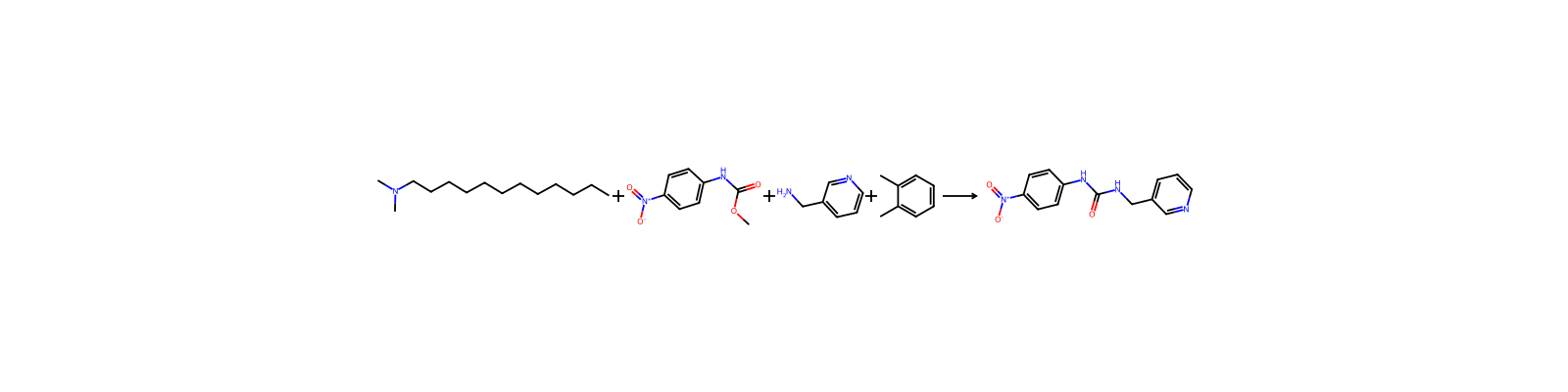
36 件



関連ノート
読み込み中…