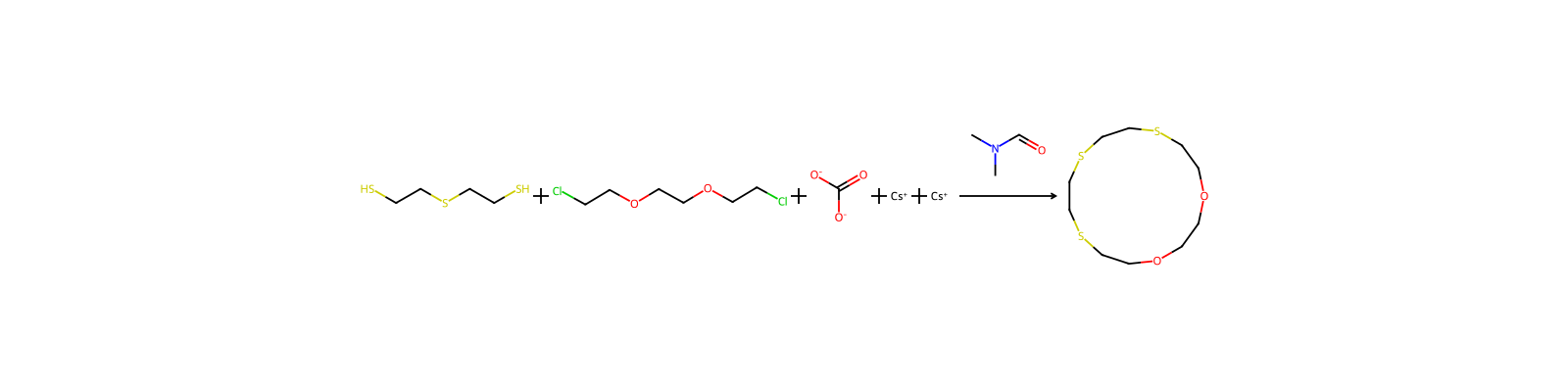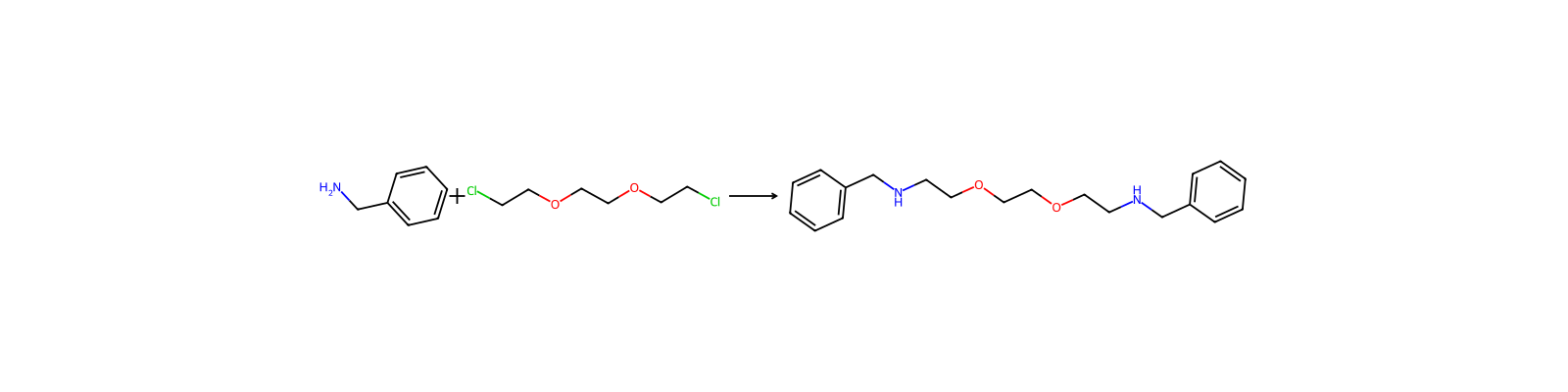
HRID 6216反応物として

112-26-5ClCCOCCOCCClAGYUOJIYYGGHKV-UHFFFAOYSA-N112-26-5、27252-69-3DTXSID8047000CHEMBL31889771.1974 @ 20 °C/20 °C
1.197 @25 °C
Soluble in carbon tetrachloride
In water, 18,900 mg/l @ 20 °C
241.3 °C
241.3 °C @760 [mm Hg]
FP: -31.5 °C
-31.5 °C
0.06 [mmHg]
0.06 mm Hg @ 20 °C
0.06 [mm Hg] @20 °C
安全情報は参考情報です。供給元の安全データシート(SDS)、適用法令、専門家による評価に代わるものではありません。
Danger
H301 (98.1%): Toxic if swallowed [Danger Acute toxicity, oral]
P261, P264, P264+P265, P270, P271, P280, P301+P316, P302+P352, P304+P340, P305+P351+P338, P305+P354+P338, P317, P319, P321, P330, P332+P317, P337+P317, P362+P364, P403+P233, P405, and P501 (click each P-code to see the statement)
Aggregated GHS information provided per 156 reports by companies from 9 notifications to the ECHA C&L Inventory. Each notification may be associated with multiple companies.
Danger
H301: Toxic if swallowed [Danger Acute toxicity, oral]
FRI - indicates a polymeric substance containing no free-radical initiator in its Inventory name but is considered to cover the designated polymer made with any free-radical initiator regardless of the amount used.
REACH registered substance: 1,2-bis(2-chloroethoxy)ethane (EC: 203-952-7)
1,2-Bis-(2-chloroethoxy) ethane: Does not have an individual approval but may be used under an appropriate group standard
2 - Materials that, under emergency conditions, can cause temporary incapacitation or residual injury.
1 - Materials that must be preheated before ignition can occur. Materials require considerable preheating, under all ambient temperature conditions, before ignition and combustion can occur.
0 - Materials that in themselves are normally stable, even under fire conditions.
1,2-Bis(2-chloroethoxy)ethane
D: Other compounds that may form peroxides
Kelly
Acute Tox. 3 (98.1%)
Acute toxicity (Oral) - Category 3
Water or foam may cause frothing.
To fight fire use carbon dioxide or dry chemical.
SRP: At the time of review, criteria for land treatment or burial (sanitary landfill) disposal practices are subject to significant revision. Prior to implementing land disposal of waste residue (including waste sludge), consult with environmental regulatory agencies for guidance on acceptable disposal practices.
SRP: The scientific literature for the use of contact lenses in industry is conflicting. The benefit or detrimental effects of wearing contact lenses depend not only upon the substance, but also on factors including the form of the substance, characteristics and duration of the exposure, the uses of other eye protection equipment, and the hygiene of the lenses. However, there may be individual substances whose irritating or corrosive properties are such that the wearing of contact lenses would be harmful to the eye. In those specific cases, contact lenses should not be worn. In any event, the usual eye protection equipment should be worn even when contact lenses are in place.
0.49 [mg/m3]
5.4 [mg/m3]
32 [mg/m3]
TERRESTRIAL FATE: Based on a classification scheme(1), an estimated Koc value of 19(SRC), determined from a water solubility of 18,900 mg/l(2) and a regression-derived equation(3), indicates that 1,2-bis(2-chloroethoxy)ethane is expected to have very high mobility in soil(SRC). Volatilization of 1,2-bis(2-chloroethoxy)ethane from moist soil surfaces is not expected to be an important fate process(SRC) given an estimated Henry's Law constant of 7.8X10⁻⁷ atm-cu m/mole(SRC), derived from its vapor pressure, 0.06 mm Hg(2), and water solubility, 18,900 mg/l(2). 1,2-Bis(2-chloroethoxy)ethane is not expected to volatilize from dry soil surfaces(SRC) based upon a its vapor pressure(2). 1,2-Bis(2-chloroethoxy)ethane is moderately resistent (eg, 2 to 18 months) to biodegradation(4). The compound was not degraded by bacteria isolated from soil enriched with triethylene glycol(5).
AQUATIC FATE: Based on a classification scheme(1), an estimated Koc value of 19(SRC), determined from a water solubility of 18,900 mg/l(2) and a regression-derived equation(3), indicates that 1,2-bis(2-chloroethoxy)ethane is not expected to adsorb to suspended solids and sediment(SRC). Volatilization from water surfaces is not expected(3) based upon an estimated Henry's Law constant of 7.8X10⁻⁷ atm-cu m/mole(SRC), derived from its vapor pressure, 0.06 mm Hg(2), and its water solubility(2). According to a classification scheme(4), an estimated BCF of 2(SRC), from its water solubility(2) and a regression-derived equation(5), suggests the potential for bioconcentration in aquatic organisms is low(SRC). 1,2-Bis(2-chloroethoxy)ethane is moderately resistent (eg, 2 to 18 months) to biodegradation(6). The compound was not degraded by bacteria isolated from soil enriched with triethylene glycol(7).
ATMOSPHERIC FATE: According to a model of gas/particle partitioning of semivolatile organic compounds in the atmosphere(1), 1,2-bis(2-chloroethoxy)ethane, which has a vapor pressure of 0.06 mm Hg at 20 °C(SRC), determined from a fragment constant method(2), is expected to exist solely as a vapor in the ambient atmosphere(SRC). Vapor-phase 1,2-bis(2-chloroethoxy)ethane is degraded in the atmosphere by reaction with photochemically-produced hydroxyl radicals(SRC); the half-life for this reaction in air is estimated to be 1.8 days(SRC), calculated from its rate constant of 8.9X10⁻¹² cu cm/molecule-sec at 25 °C(SRC) that was derived using a structure estimation method(3).
The Koc of is estimated as 19(SRC), using a water solubility of 18,900 mg/l(1) and a regression-derived equation(2). According to a classification scheme(3), this estimated Koc value suggests that 1,2-bis(2-chloroethoxy)ethane is expected to have very high mobility in soil(SRC).
1,2-Bis(2-chloroethoxy)ethane's production and use as a solvent and chemical intermediate(1) may result in its release to the environment through various waste streams(SRC). A gross estimate of annual industrial discharge (as of 1975) is 30 tons(2). It has been suggested that 1,2-bis(2-chloroethoxy)ethane is possibly created during drinking water treatment by chlorination of diethoxyethane(2).
The biodegradability of 1,2 bis(2-chloroethoxy)ethane has been classified as moderately persistent with a timeframe of 2 to 18 months(1).
1,2-Bis(2-chloroethoxy)ethane was not degraded by a pure culture of soil bacteria isolated from soil enriched with triethylene glycol (1).
An estimated BCF of 2 was calculated for 1,2-bis(2-chloroethoxy)ethane(SRC), using a water solubility of 18,900 mg/l(1) and a regression-derived equation(2). According to a classification scheme(3), this BCF suggests the potential for bioconcentration in aquatic organisms is low(SRC).
The Henry's Law constant for 1,2-bis(2-chloroethoxy)ethane is estimated as 7.8X10⁻⁷ atm-cu m/mole(SRC) derived from its vapor pressure, 0.06 mm Hg(1), and water solubility, 18,900 mg/l(1). This Henry's Law constant indicates that 1,2-bis(2-chloroethoxy)ethane is expected to be essentially nonvolatile from water surfaces(2). 1,2-Bis(2-chloroethoxy)ethane is not expected to volatilize from dry soil surfaces(SRC) based upon its vapor pressure(1).
The rate constant for the vapor-phase reaction of 1,2-bis(2-chloroethoxy)ethane with photochemically-produced hydroxyl radicals has been estimated as 8.9X10⁻¹² cu cm/molecule-sec at 25 °C(SRC) using a structure estimation method(1). This corresponds to an atmospheric half-life of about 1.8 days at an atmospheric concentration of 5X10+5 hydroxyl radicals per cu cm(1). 1,2-Bis(2-chloroethoxy)ethane is not expected to undergo hydrolysis in the environment due to the lack of hydrolyzable functional groups(2) nor to directly photolyze due to the lack of absorption in the environmental portion of the UV spectrum (>290 nm)(SRC).
NIOSH (NOHS Survey 1972 1974) has statistically estimated that 125 workers are potentially exposed to 1,2-bis(2-chloroethoxy)ethane in the USA(1). Occupational exposure to 1,2-bis(2-chloroethoxy)ethane may occur through inhalation and dermal contact with this compound at workplaces where 1,2-bis(2-chloroethoxy)ethane is produced or used(SRC). Monitoring data indicate that the general population may be exposed to 1,2-bis(2-chloroethoxy)ethane via ingestion of drinking water containing 1,2-bis(2-chloroethoxy)ethane(SRC).
Used as a solvent for hydrocarbons and oils, as an extractant, and to make resins and insecticides; [HSDB]
SOLVENT FOR HYDROCARBONS, OILS, ETC; EXTRACTANT; INTERMEDIATE FOR RESINS & INSECTICIDES; ORGANIC SYNTHESIS.
GRADE: TECHNICAL.
97%
Ethane, 1,2-bis(2-chloroethoxy)-: ACTIVE
Poly(oxy-1,2-ethanediyl), .alpha.-(2-chloroethyl)-.omega.-(2-chloroethoxy)-: ACTIVE