ホームMCPワークベンチSkills
ホームワークベンチ通知マイページ
llms.txt · MCPガイドプライバシーポリシー · 利用規約 · サポートv1.8.0
  1. ホーム
  2. /化合物

テトラエチレングリコール

Tetraethylene Glycol

HCID 8200
ノートを作成反応を作成見積依頼を出す
印刷プレビュー

データを補完しています。しばらくしてからページを更新すると最新の内容を表示できます
基本情報概要名称と識別子物性安全と法規制化学と産業関連反応化合物ノート
部分構造検索類似構造を探す

基本情報

CAS
112-60-7
標準SMILES
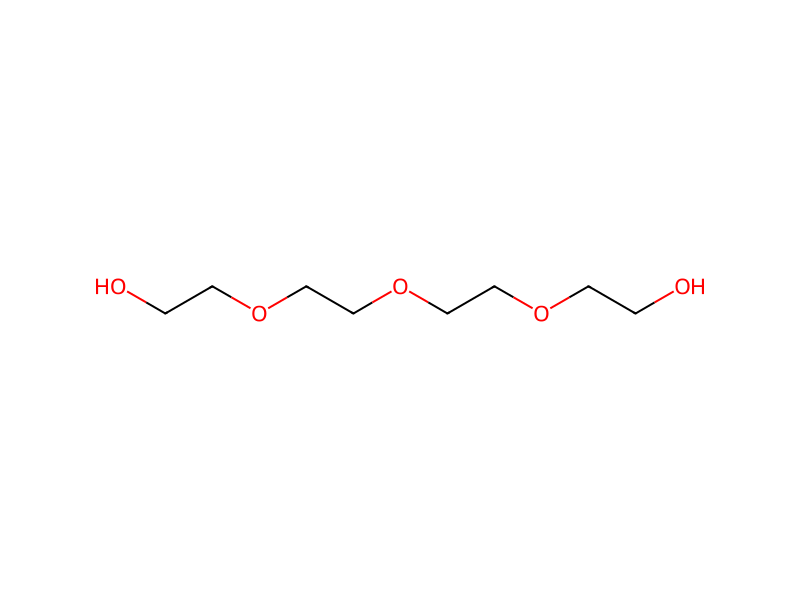
OCCOCCOCCOCCO
InChIKey
UWHCKJMYHZGTIT-UHFFFAOYSA-N
分子式
C8H18O5
平均分子量
194.23 g/mol
単同位体質量
194.11542368

概要

Tetraethylene glycol is a colorless to straw-colored liquid with a mild odor. Sinks and mixes with water. (USCG, 1999)

名称と識別子

優先名称
Tetraethylene Glycol
IUPAC
2-[2-[2-(2-hydroxyethoxy)ethoxy]ethoxy]ethanol
現地名
テトラエチレングリコール
英語名
tetraethylene glycol
分子式
C8H18O5
分子量
194.23

名称と別名

TETRAETHYLENE GLYCOL112-60-7HI-Dry3,6,9-Trioxaundecane-1,11-diolCarbitol, diethyl3,6,9-Trioxaundecan-1,11-diolDTXSID9026922Ethanol, 2,2'-[oxybis(2,1-ethanediyloxy)]bis-Ethanol, 2,2'-(oxybis(ethyleneoxy))di-AI3-018382,2'-[oxybis(2,1-ethanediyloxy)]diethanolEthanol, 2,2'-(oxybis(2,1-ethanediyloxy))bis-
名称をさらに表示
テトラエチレングリコールテトラグリコール2,2'-[オキシビス(エチレンオキシ)]ビスエタノール2-[2-[2-(2-ヒドロキシエトキシ)エトキシ]エトキシ]エタノールビス[2-(2-ヒドロキシエトキシ)エチル]エーテル2,2'-[オキシビス(エチレンオキシ)]ジエタノール2,2'-(オキシビスエチレンビスオキシ)ビスエタノール2,2'-[オキシビス(2,1-エタンジイルオキシ)]ビス(エタノール)2,2'-オキシビス(エチレンオキシ)ビスエタノール2,2'-[オキシビス(2,1-エタンジイルオキシ)]ジエタノール3,6,9-トリオキサウンデカン-1,11-ジオール3,6,9-トリオキサ-1,11-ウンデカンジオールテトラエチレングリコルテトラエチレングリコ-ル2,2’-[オキシビス(エタン-2,1-ジイルオキシ)]ジエタノールビス〔2-(2-ヒドロキシエトキシ)エチル〕エーテルテトラエチレングリコール, 99%2,2′-[オキシビス(エチレンオキシ)]ジエタノール2,2′-[オキシビス(エチレンオキシ)]ビスエタノール2,2′-(オキシビスエチレンビスオキシ)ビスエタノール2,2'-((Oxybis(ethane-2,1-diyl))bis(oxy))bis(ethan-1-ol)TETRAGLYCOLtetragolOH-PEG4-OHTetraethylene glyco

データベース識別子

CAS
112-60-7、157299-02-0
PubChem CID
8200
DTXSID
DTXSID9026922
ChEMBL
CHEMBL1235254
ChEBI
CHEBI:44920
EC Number
203-989-9
Nikkaji
J43.377B

物性

構造計算による物性補完中

XLogP
-1.6
極性表面積
68.2 Ų
水素結合供与体数
2
水素結合受容体数
5
回転可能結合数
10
重原子数
13
形式電荷
0
複雑度
78.6

実験および物理化学的性質

Chemical ClassesOther Classes -> Ethylene Glycols
Cosmetics · 2 件

Cosmetic ingredients (PEG-4) -> CIR (Cosmetic Ingredient Review)

Solvent; Humectant

SpringerMaterials PropertiesBoiling point
SurfactantsSurfactant
LogP-1.38
OdorMild odor
Density · 4 件

1.12 at 68 °F (USCG, 1999) - Denser than water; will sink

1.1285 g/cu cm at 15 °C

Hygroscopic. Bulk density: 9.4 lb/gal at 20 °C

1.1248 @ 20°C

Viscosity61.9 mPa-sec at 20 °C
Color/Form · 3 件

Liquid

Colorless liquid

Colorless to straw-colored liquid

Solubility · 4 件

Miscible with water /1.0X10+6 mg/L/ at 20 °C

Insoluble in benzene, toluene, or gasoline

Soluble in ethanol, ethyl ether, carbon tetrachloride, dioxane

安全と法規制

安全情報は参考情報です。供給元の安全データシート(SDS)、適用法令、専門家による評価に代わるものではありません。

GHS分類

GHS Classification · 5 件

This chemical does not meet GHS hazard criteria for 83% (293 of 353) of all reports.

Warning

H319 (17%): Causes serious eye irritation [Warning Serious eye damage/eye irritation]

P264+P265, P280, P305+P351+P338, and P337+P317 (click each P-code to see the statement)

Aggregated GHS information provided per 353 reports by companies from 6 notifications to the ECHA C&L Inventory.

危険有害性情報

Regulatory Information · 5 件

Chemical: Benzene, 1,3-bis(1-isocyanato-1-methylethyl)-, homopolymer

Chemical: Ethanol, 2,2'-[oxybis(2,1-ethanediyloxy)]bis-

Ethanol, 2,2'-[oxybis(2,1-ethanediyloxy)]bis- is listed on the EPA's Chemical Data Reporting (CDR) system. Manufacturers and importers of Ethanol, 2,2'-[oxybis(2,1-ethanediyloxy)]bis- are required to report information about their production and use of this chemical to the EPA under the Toxic Substances Control Act (TSCA). (40 eCFR Part 711)

Status: Active Update: 21-01-2022 https://echa.europa.eu/registration-dossier/-/registered-dossier/5383

Ethanol, 2,2'-[oxybis(2,1-ethanediyloxy)]bis-: Does not have an individual approval but may be used under an appropriate group standard

Other Safety InformationIMAP assessments - Ethanol, 2,2'-[oxybis(2,1-ethanediyloxy)]bis-: Human health tier I assessment
Fire PotentialCombustible
Health HazardsCompound is nonirritating. No symptoms observed by any exposure route. (USCG, 1999)
Hazards Summary · 1 件

In rat studies, testicular abnormalities and congenital anomalies have been reported. [REPROTOX] In oral lethal dose studies, rats exhibited heavy breathing, tremors, and sluggishness; [Reference #1] An irritant; [MSDSonline] See Ethylene glycol.

化学と産業

用途と製造

Uses · 6 件

CIR ingredient: PEG-4

Used as a solvent (nitrocellulose, coatings, adhesives, inks, lacquers, lubricants, metalworking fluids, and textile finishes); Also used to extract other solvents, to soften paper tissue, and to make other chemicals; [HSDB] Used as a solvent, extractant, plasticizer, humectant (natural gas), and lubricant (textiles); Also used in cement grinding and brake fluid manufacturing; [Reference #1]

Metal Machining [Category: Heat or Machine]

Solvent for nitrocellulose, plasticizer, lacquers, coating compositions.

Plasticizer and solvent where a high boiling point and low volatility are important. ... Effective coupling agent in formulating water-soluble and water insoluble materials.

Ceramic paste/printing ink binder; lubricant (metalworking fluids/textile spin finishes); softening agent (paper tissue)

U.S. Production · 6 件

2023: 100,000,000 - <500,000,000 lb

(1972) 5.36X10+9 GRAMS

(1975) 6.81X10+9 GRAMS

(1984) 9.80X10+9 g

(2006) 1,612 million lb annual capacity /Glycol ethers/

For more U.S. Production (Complete) data for TETRAETHYLENE GLYCOL (7 total), please visit the HSDB record page.

Consumer UsesHeat transferring agent
Industry UsesMonomers
Methods of Manufacturing · 3 件

Produced as a coproduct of diethylene glycol manufacture

Tetraethylene glycol is prepared commercially by adding ethylene oxide to ethylene glycol, diethylene glycol, or water in the presence of a suitable catalyst.

Diethylene glycol + ethylene oxide (epoxidation)

Household ProductsInformation on 15 consumer products that contain Tetraethylene glycol in the following categories is provided:
Use Classification · 3 件

EPA Safer Chemical Functional Use Classes -> Solvents

Safer Chemical Classes -> Green half-circle - The chemical is expected to be of low concern

関連反応

108 件
反応記録を作成
HRID 6625 の反応式
HRID 6625反応物としてuspto-grants-2006_08
HRID 6626 の反応式
HRID 6626反応物としてuspto-grants-2006_08
HRID 6627 の反応式
HRID 6627反応物としてuspto-grants-2006_08
HRID 6638 の反応式
HRID 6638反応物としてuspto-grants-2006_08
HRID 6639 の反応式
HRID 6639反応物としてuspto-grants-2006_08
HRID 24993 の反応式
HRID 24993反応物としてuspto-grants-2005_02
HRID 24994 の反応式
HRID 24994反応物としてuspto-grants-2005_02
HRID 25352 の反応式
HRID 25352反応物としてuspto-grants-2005_02
1 / 14 ページ

化合物ノート

読み込み中…

このページの内容基本情報概要名称と識別子物性安全と法規制化学と産業関連反応化合物ノート
その他の操作
ノートを作成反応を作成見積依頼を出す
Tetraethylene glycol, 99.5%
BIS[2-(2-HYDROXYETHOXY)ETHYL]ETHER
2,2'-((Oxybis(ethane-2,1-diyl))bis(oxy))diethanol
2-{2-[2-(2-hydroxyethoxy)ethoxy]ethoxy}ethan-1-olDTXCID8069222,2'-[oxybis(ethane-2,1-diyloxy)]diethanolCHEBI:44920R95B8J264J2,2'-[oxybis(2,1-ethanediyloxy)]bisethanol2,2'-(Oxybis(2,1-ethanediyloxy))diethanol2,2'-(oxybis(ethane-2,1-diyloxy))diethanol

Miscible with methanol

Flash Point · 2 件

360 °F (USCG, 1999)

360 °F (182 °C) (Open cup)

Boiling Point · 3 件

621 °F at 760 mmHg (USCG, 1999)

327.3 °C

327.3 °C @760 [mm Hg]

物理化学的性質

融点
-5.6 °C · -5.6 °C (lit.)
沸点
314 °C · 314 °C (lit.)
比重(密度)
1.125 g/mL · 1.125 g/mL at 25 °C (lit.)
蒸気密度
6.7 · 6.7 (vs air)
蒸気圧
0.01 mm · <0.01 mm Hg
屈折率
20 · n20/D 1.459(lit.)
闪点
400 °F · 400 °F
貯蔵温度
30 °C · Store below +30°C.
溶解性
1000 g/リットル · 1000g/リットル
外見
液体
酸解離定数(Pka)
14.06 · 14.06±0.10(Predicted)
色
やや黄色く澄んでいる
PH
8.5 · 8.5-9.0 (500g/l, H2O, 20℃)
爆発限界(explosive limit)
0.5 · 0.5-3.4%(V)
水溶解度
溶ける
比熱容量
2.21 J/ · Cp(liquid): 2.21 J/(g·K), at 25℃
BRN
1634320 · 1634320
Henry's Law Constant
1.8 · 1.8×1013 mol/(m3Pa) at 25℃, HSDB (2015)
安定性
安定。強酸化剤、強塩基とは相容れない。
InChI
1S/C8H18O5/c9-1-3-11-5-7-13-8-6-12-4-2-10/h9-10H,1-8H2
InChIKey
UWHCKJMYHZGTIT-UHFFFAOYSA-N
SMILES
OCCOCCOCCOCCO
LogP
-2 at · -2 at 25℃
表面張力
44.72 mN/m · 44.72 mN/m at 303.15K
CAS データベース
112 · 112-60-7(CAS DataBase Reference)
NISTの化学物質情報
2 · Ethanol, 2,2'-[oxybis(2,1-ethanediyloxy)]bis-(112-60-7)
EPAの化学物質情報
Tetraethylene glycol (112-60-7)
化学的性質 · 1 件

化学的特性Tetraethylene glycol is a high-boiling, clear liquid of low volatility. hygroscopic. It is completely miscible with water and a wide variety of organic solvents. insoluble in benzene, toluene, or gasoline. Combustible. For certain aliphatic hydrocarbons, it has a very slight affinity. Tetraethylene glycol is used as a coupling agent for blending water-soluble and water-insoluble compounds in such formulations as lubricants, glues, cork and textile products, etc.

Reactive Group
Alcohols and Polyols
Special ReportsEuropean Chemicals Bureau; IUCLID Dataset, 3,6,9-Trioxaundecane-1,11-diol (CAS # 112-60-7)[Available from, as of February 23, 2007: http://esis.jrc.ec.europa.eu/]
EPA Safer ChemicalChemical: Tetraethylene glycol
Reactivity Profile · 1 件

TETRAETHYLENE GLYCOL is a ether-alcohol derivative. The ether being relatively unreactive. Flammable and/or toxic gases are generated by the combination of alcohols with alkali metals, nitrides, and strong reducing agents. They react with oxoacids and carboxylic acids to form esters plus water. Oxidizing agents convert alcohols to aldehydes or ketones. Alcohols exhibit both weak acid and weak base behavior. They may initiate the polymerization of isocyanates and epoxides. May attack some forms of plastics (USCG, 1999).

Air and Water ReactionsWater soluble.
NFPA Hazard Classification · 3 件

1 - Materials that, under emergency conditions, can cause significant irritation.

1 - Materials that must be preheated before ignition can occur. Materials require considerable preheating, under all ambient temperature conditions, before ignition and combustion can occur.

0 - Materials that in themselves are normally stable, even under fire conditions.

Hazard Classes and CategoriesEye Irrit. 2A (17%)

安全と保護具

Fire FightingFire Extinguishing Agents Not to Be Used: Water or foam may cause frothing.
First AidINGESTION: if large amounts are swallowed, induce vomiting; treat symptomatically.
Fire Fighting Procedures · 2 件

Wear self-contained breathing apparatus for firefighting if necessary.

Alcohol foam, dry chemical or carbon dioxide.

Storage Conditions · 2 件

Stable under recommended storage conditions.

Keep container tightly closed in a dry and well-ventilated place. Store under inert gas. Storage class (TRGS 510): Combustible liquids.

Cleanup Methods · 2 件

Avoid breathing vapors, mist or gas.

Keep in suitable, closed containers for disposal.

Disposal Methods · 2 件

SRP: Recycle any unused portion of the material for its approved use or return it to the manufacturer or supplier. Ultimate disposal of the chemical must consider: the material's impact on air quality; potential migration in air, soil or water; effects on animal, aquatic and plant life; and conformance with environmental and public health regulations. If it is possible or reasonable use an alternative chemical product with less inherent propensity for occupational harm/injury/toxicity or environmental contamination.

Product: Offer surplus and non-recyclable solutions to a licensed disposal company. Contaminated Packaging: Dispose of as unused product.

Preventive Measures · 1 件

Gloves must be inspected prior to use. Use proper glove removal technique (without touching glove's outer surface) to avoid skin contact with this product. Dispose of contaminated gloves after use in accordance with applicable laws and good laboratory practices. Wash and dry hands.

Protective Action Criteria (PAC) · 3 件

90 [mg/m3]

990 [mg/m3]

5900 [mg/m3]

Personal Protective Equipment (PPE) · 6 件

Goggles or face shield and rubber gloves. (USCG, 1999)

Use equipment for eye protection tested and approved under appropriate government standards such as NIOSH (US) or EN 166(EU).

Handle with gloves.

Impervious clothing, The type of protective equipment must be selected according to the concentration and amount of the dangerous substance at the specific workplace.

Respiratory protection not required. For nuisance exposures use type OV/AG (US) or type ABEK (EU EN 14387) respirator cartridges. Use respirators and components tested and approved under appropriate government standards such as NIOSH (US) or CEN (EU).

Goggles or face shield & rubber gloves.

毒性情報

Ecotoxicity ValuesLC50; Species: Artemia salina nauplii (Brine Shrimp); Conditions: saltwater, static, 24 °C; Concentration: 10000000 ug/L for 24 hr /formulation/
Environmental Fate · 3 件

TERRESTRIAL FATE: Based on a classification scheme(1), an estimated Koc value of 10(SRC), determined from a structure estimation method(2), indicates that tetraethylene glycol is expected to have very high mobility in soil(SRC). Volatilization of tetraethylene glycol from moist soil surfaces is not expected to be an important fate process(SRC) given an estimated Henry's Law constant of 1.2X10⁻¹¹ atm-cu m/mole(SRC), based upon its vapor pressure, 4.65X10⁻⁵ mm Hg(3), and an assigned value for water solubility of 1X10+6 mg/L (miscible)(4). Tetraethylene glycol is not expected to volatilize from dry soil surfaces(SRC) based upon its vapor pressure(3). Tetraethylene glycol is expected to biodegrade in soil based upon a 4% degradation in 5 days under unacclimated conditions to an 88% degradation in 20 days after acclimation, both using a wastewater inoculum(5).

AQUATIC FATE: Based on a classification scheme(1), an estimated Koc value of 10(SRC), determined from a structure estimation method(2), indicates that tetraethylene glycol is not expected to adsorb to suspended solids and sediment(SRC). Volatilization from water surfaces is not expected(3) based upon an estimated Henry's Law constant of 1.2X10⁻¹¹ atm-cu m/mole(SRC), derived from its vapor pressure, 4.65X10⁻⁵ mm Hg(4), and an assigned value for water solubility of 1X10+6 mg/L (miscible)(5). Tetraethylene glycol is not expected to undergo hydrolysis in the environment due to the lack of functional groups that hydrolyze under environmental conditions(3). According to a classification scheme(6), an estimated BCF of 3(SRC), from an estimated log Kow of -2.02(2) and a regression-derived equation(2), suggests the potential for bioconcentration in aquatic organisms is low(SRC). Tetraethylene glycol is expected to biodegrade in water based upon a 4% degradation in 5 days under unacclimated conditions to an 88% degradation in 20 days after acclimation, both using a wastewater inoculum(7).

ATMOSPHERIC FATE: According to a model of gas/particle partitioning of semivolatile organic compounds in the atmosphere(1), tetraethylene glycol, which has a vapor pressure of 4.65X10⁻⁵ mm Hg at 26 °C(2), will exist in both the vapor and particulate phases in the ambient atmosphere. Vapor-phase tetraethylene glycol is degraded in the atmosphere by reaction with photochemically-produced hydroxyl radicals(SRC); the half-life for this reaction in air is estimated to be 7.6 hours(SRC), calculated from its rate constant of 5.0X10⁻¹¹ cu cm/molecule-sec at 25 °C(SRC) that was derived using a structure estimation method(3). Particulate-phase tetraethylene glycol may be removed from the air by wet and dry deposition(SRC). Tetraethylene glycol does not contain chromophores that absorb at wavelengths >290 nm(4) and, therefore, is not expected to be susceptible to direct photolysis by sunlight(SRC).

Adverse EffectsNeurotoxin - Other CNS neurotoxin
Toxicity Summary · 2 件

Safe in the present practices of use and concentration. Ingredient, concentration, and use information are available in documents discoverable at https://cir-reports.cir-safety.org

IDENTIFICATION AND USE: Tetraethylene Glycol (TetraEG) is colorless or straw-colored liquid with a mild odor. It is used as a solvent for nitrocellulose, plasticizer, lacquers, coating compositions. It is also used in ceramic paste/printing ink binder; as a lubricant (metalworking fluids/textile spin finishes), softening agent (paper tissue), and fragrance ingredient and viscosity decreasing agent in cosmetic formulations. HUMAN EXPOSURE AND TOXICITY: TetraEG caused minimal skin irritation and was not a skin sensitizer when tested in humans. ANIMAL STUDIES: TetraEG did not cause any adverse events when rats were exposed to vapors of this material for 8 hrs. Instillation of 0.1 mL of sample into rabbit eyes produced minor, transient irritation which did not involve the cornea. TetraEG exhibited no potential to produce dermal sensitization in the guinea pig. No treatment-related effects of toxicological significance were noted in rats administered TetraEG in the drinking water to provide up to 2000 mg/kg/d for 4 weeks. TetraEG did not produce significant mutagenic effect in the CHO gene mutation assay in the tests with and without metabolic activation and was negative in Ames (Salmonella) gene mutation test. However, it produced statistically significant increases of SCEs in tests with and without metabolic activation, but the increases did not occur with a dose-related trend characteristic of genotoxic agents. ECOTOXICITY STUDIES: For fish, snail, copepod, protozoan and fungi LC50 values of DMSO, ethlyene glycol, triethylene glycolmonomethyl ether and tetraethylene glycol were more than 30000 ppm. These solvents exhibit the lowest toxicity compared to other surfactants and their acceptable concentration was estimated at about 300 ppm.

Ecotoxicity Excerpts · 1 件

/AQUATIC SPECIES/ ...Many kinds of surfactants have higher toxicity for phytoplankton than organic solvents. The least toxic surfactants for phytoplankton were the Tween (polyoxyethylene(20) sorbitan) series and polyoxyethylene(20)octyl ether and their acceptable concentration was estimated from 10 to 100 ppm. For the other organisms (fish, snail, copepod, protozoan and fungi), LC50 values of DMSO, ethlyene glycol, triethylene glycolmonomethyl ether and tetraethylene glycol were more than 30000 ppm, and these solvents exhibit the lowest toxicity and their acceptable concentration was estimated at about 300 ppm.

Ongoing Test Status · 1 件

EPA has released the first beta version (version 0.5) of the Interactive Chemical Safety for Sustainability (iCSS) Dashboard. The beta version of the iCSS Dashboard provides an interactive tool to explore rapid, automated (or in vitro high-throughput) chemical screening data generated by the Toxicity Forecaster (ToxCast) project and the federal Toxicity Testing in the 21st century (Tox21) collaboration. /The title compound was tested by ToxCast and/or Tox21 assays; Click on the "Chemical Explorer" button on the tool bar to see the data./[USEPA; ICSS Dashboard Application; Available from, as of April 22, 2015: http://actor.epa.gov/dashboard/]

Effluent ConcentrationsTetraethylene glycol was not detected in tire wear particle or road dust particle samples but was detected in a brake lining particle sample at 403.6 ug/g(1).
Soil Adsorption/Mobility · 1 件

Using a structure estimation method based on molecular connectivity indices(1), the Koc of tetraethylene glycol can be estimated to be 10(SRC). According to a classification scheme(2), this estimated Koc value suggests that tetraethylene glycol is expected to have very high mobility in soil.

TSCA Test Submissions · 5 件

Acute oral toxicity was evaluated in 10 Sprague-Dawley albino rats (mixed sex) administered tetraethylene glycol by oral gavage a dose level of 16.0 mL/kg of body weight. Mortality was not observed. No signs of toxicity were observed, however, the gross necropsy revealed dark red lungs in 2 male rats.

Acute oral toxicity was evaluated in groups of 5 male Wistar rats administered undiluted tetraethylene glycol by oral gavage at dose levels of 20.0 and 40.0 mL/kg body weight. Mortality was observed in 4 rats in the 40.0 dose group; the LD50 was determined to be 30.8 mL/kg (confidence limits 22.8-41.7) by the moving average method. Clinical observations included heavy breathing, sluggishness, slight salivation and sporadic tremors in both dose groups. Gross necropsy in decedents revealed petechial hemorrhage in lungs, and congestion throughout abdominal viscera while survivors showed slight congestion in the abdominal viscera.

Acute dermal toxicity was evaluated in 10 New Zealand white rabbits (mixed sex), administered single occluded doses of undiluted tetraethylene glycol at a dose level of 16.0 mL/kg of body weight. The test article was held in contact with the intact skin for 24 hours. Mortality was not observed. No signs of toxicity were observed in the clinical or gross necropsy evaluation. Slight skin irritation was observed, however, in the form of erythema in 1 female and edema in an animal of each sex.

Acute dermal toxicity was evaluated in groups 4 male albino New Zealand rabbits receiving single occluded doses of undiluted tetraethylene glycol at dose levels of 10.0 and 20.0 mL/kg of body weight. The test article was held in contact with the intact skin for 24 hours. Mortality was observed in 2 animals in the 20.0 mL/kg dose group; the LD50 was determined to be 20.0 (confidence limits 5.60 to 71.5) by the moving average method. Clinical observations included erythema, ecchymosis, diarrhea, and lethargy. Gross necropsy revealed congestion throughout the lungs, livers and kidneys of decedents.

For more TSCA Test Submissions (Complete) data for TETRAETHYLENE GLYCOL (11 total), please visit the HSDB record page.

Human Toxicity Excerpts · 2 件

/HUMAN EXPOSURE STUDIES/ The dermal irritation of tetraethylene glycol was examined in humans. A group of 103 humans received 0.2 mL applied occlusively to the infrascapular area of the back, either to the right or left of the midline for 48 hours. Humans were examined at the end of the 48 hour period and 24 hours later. The primary irritation index was 15.5, indicating minimal irritation.

/HUMAN EXPOSURE STUDIES/ The dermal sensitization potential of tetraethylene glycol /TetraEG/ was examined in humans. TetraEG was applied (0.2 mL) semiocclusively or occlusively to the skin of 397 individuals every 48 hours for 9 applications. Subjects removed patches after 24 hours. After a two-week rest phase, the challenge phase was initiated. Subjects removed patches 24 hrs after application and sites were graded at 48 and 72 hrs after application. TetraEG was not a human skin sensitizer.

Artificial Pollution Sources · 1 件

Tetraethylene glycol's production and use as a solvent for nitrocellulose, lacquers, and coating compositions, as a plasticizer(1), and in pigment/water based ink(2) may result in its release to the environment through various waste streams(SRC).

Environmental Biodegradation · 1 件

AEROBIC: Based on aerobic biological screening study data, utilizing settled waste water, sewage, or activated sludge for inocula, tetraethylene glycol should biodegrade in the environment(1-6). In one study, tetraethylene glycol biodegraded 23% in 20 days without an acclimation period, using a wastewater inoculum(4). Following an acclimation period of 45-60 days 12, 54, 71 and 88% of the added tetraethylene glycol was biodegraded in 5, 10, 15 and 20 days, respectively, under the same test conditions(4). A semi-continuous biological treatment simulator showed a 29% loss of tetraethylene glycol in < 24 hrs(5). Tetraethylene glycol showed losses of 4, 10, and 22% when incubated at 20 °C for 5, 10, and 20 days, respectively(6). Using the OECD 301D screening test, tetraethylene glycol showed losses of 6, 20, and 40% when incubated at 20 °C for 5, 15, and 28 days, respectively(6).

安全データ

wgk
2
tsca
TSCA listed
rtecs
XC2100000
毒性
LD50 orally in Rabbit: > 18056 mg/kg LD50 dermal Rabbit > 18056 mg/kg
hs_code
29094919
risk_code
36/37/38
化審法
(2)-441
消防法
危-4-3-III
safety_code
24/25
自然発火温度
340 °C DIN 51794
ストレージクラス
10 - Combustible liquids
有毒物質データの
112-60-7(Hazardous Substances Data)

Cosmetics -> Solvent; Humectant

General Manufacturing Information · 2 件

Petrochemical Manufacturing

Ethanol, 2,2'-[oxybis(2,1-ethanediyloxy)]bis-: ACTIVE

応用分野 · 3 件

用途高沸点溶剤、有機合成原料。

使用Solvent for nitrocellulose, plasticizer, lacquers, coating compositions.

一般的な説明Colorless to straw-colored liquid with a mild odor. Sinks and mixes with water.

調製方法

Tetraethylene glycol is prepared commercially by adding ethylene oxide to ethylene glycol, diethylene glycol, or water in the presence of a suitable catalyst.

上流・下流製品情報

上流原料

酸化エチレン

下流製品

2-[2-[2-(2-ブトキシエトキシ)エトキシ]エトキシ]エタノール4'-ホルミルベンゾ-15-クラウン5-エーテルヘプタエチレングリコールジグリコール酸2,5,8,11,14,17,20-ヘプタオキサドコサン-22-酸アセチルチオ-PEG3-C2-アジドチオール-PEG4-アルコール3,6,9,12,15-ペンタオキサヘキサデカン酸3,6,9,12,15,18,21,24,27,30,33,36-ドデカオキサ-1,38-オクタトリアコンタンジオール11-アミノ-3,6,9-トリオキサウンデカン酸Bromo-PEG4-t-butyl esterAZIDO-DPEG®₇-AMINE1-アザ-18-クラウン 6-エーテルFMoc-NH-8(ethylene glycol)-acetic acidm-PEG7-CH2COOHビオチン-PEG3-アミンO-(2-Aminoethyl)-O-(2-(Boc-amino)ethyl)octaethylene glycolドデカエチレン グリコール モノメチル エーテルテトラエチレングリコールモノドデシルエーテル

補足説明

定義本品は、次の化学式で表される酸化エチレンの重合体である。