ホームMCPワークベンチSkills
ホームワークベンチ通知マイページ
llms.txt · MCPガイドプライバシーポリシー · 利用規約 · サポートv1.8.0
  1. ホーム
  2. /化合物

Dimethyl Ether

HCID 8254
ノートを作成反応を作成見積依頼を出す
印刷プレビュー

データを補完しています。しばらくしてからページを更新すると最新の内容を表示できます

基本情報概要名称と識別子物性安全と法規制化学と産業関連反応化合物ノート
部分構造検索類似構造を探す

基本情報

CAS
115-10-6
標準SMILES
COC
InChIKey
LCGLNKUTAGEVQW-UHFFFAOYSA-N
分子式
C2H6O
平均分子量
46.07 g/mol
単同位体質量
46.04186481

概要

Dimethyl ether is a colorless gas with a faint ethereal odor. It is shipped as a liquefied gas under its vapor pressure. Contact with the liquid can cause frostbite. It is easily ignited. Its vapors are heavier than air. Any leak can be either liquid or vapor. It can asphyxiate by the displacement of air. Under prolonged exposure to fire or intense heat the containers may rupture violently and rocket.

名称と識別子

優先名称
Dimethyl Ether
IUPAC
methoxymethane
英語名
Dimethyl ether
分子式
C2H6O
分子量
46.06844

名称と別名

DIMETHYL ETHERMethoxymethaneMethyl etherDimethyl oxide115-10-6OxybismethaneMethyl oxideMethane, oxybis-Wood etherDymel AEther, dimethylEther, methyl
名称をさらに表示
Demeon DAM13FS69BXDTXSID8026937CHEBI:28887RefChem:6420DTXCID106937204-065-8Methane, 1,1'-oxybis-

データベース識別子

CAS
115-10-6
PubChem CID
8254
DTXSID
DTXSID8026937
ChEMBL
CHEMBL119178
ChEBI
CHEBI:28887
UNII
AM13FS69BX
EC Number
204-065-8
Nikkaji
J2.275.141G、J2.464C、J2.911.357B

物性

構造計算による物性補完中

XLogP
0.1
極性表面積
9.2 Ų
水素結合供与体数
0
水素結合受容体数
1
回転可能結合数
0
重原子数
3
形式電荷
0
複雑度
2.8

実験および物理化学的性質

Chemical ClassesFlammable agents - 4th degree
SolventsSolvents -> Ethers (<C12)
CosmeticsPropellant; Solvent
SpringerMaterials PropertiesSchoenflies notation
LogP · 2 件

log Kow = 0.10

0.1

Odor · 2 件

Slight ethereal odor

Ether-like odor

Density · 4 件

0.724 at -12.46 °F (USCG, 1999) - Less dense than water; will float

1.91855 g/L at 1 atm and 25 °C

Relative density (water = 1): 0.61

1.92 g/L

Viscosity825 at 0 °C
Color/Form · 3 件

COLORLESS GAS @ USUAL TEMP, BUT EASILY CONDENSIBLE

Colorless gas

Colorless compressed gas or liquid

Solubility · 6 件

1 vol water takes up 37 vol gas

Sol in ether, acetone, chloroform; ethyl alcohol

SOL IN ORG SOLVENTS EXCEPT FOR POLYALCOHOLS

安全と法規制

安全情報は参考情報です。供給元の安全データシート(SDS)、適用法令、専門家による評価に代わるものではありません。

GHS分類

GHS Classification · 6 件

Danger

H220: Extremely flammable gas [Danger Flammable gases]

P203, P210, P222, P280, P377, P381, and P403 (click each P-code to see the statement)

This chemical does not meet GHS hazard criteria for < 0.1% (1 of 1497) of reports.

Danger

H220 (99.7%): Extremely flammable gas [Danger Flammable gases]

危険有害性情報

Regulatory Information · 6 件

Chemical: Methane, oxybis-

Regulation (EC) No 178/2002 (amended)

Methane, 1,1'-oxybis- is listed on the EPA's Chemical Data Reporting (CDR) system. Manufacturers and importers of Methane, 1,1'-oxybis- are required to report information about their production and use of this chemical to the EPA under the Toxic Substances Control Act (TSCA). (40 eCFR Part 711)

Status: Active Update: 10-02-2023 https://echa.europa.eu/registration-dossier/-/registered-dossier/15974

Dimethyl ether: HSNO Approval: HSR000995 Approved with controls

The New Jersey Worker and Community Right to Know Act requires public and private employers to provide information about hazardous substances at their workplaces. (N.J.S.A. 34:5A-1 et. seq.)

DOT LabelFlammable Gas
Fire Hazards · 3 件

Behavior in Fire: Containers may explode. Vapors are heavier than air and may travel long distance to a source of ignition and flash back. (USCG, 1999)

· EXTREMELY FLAMMABLE.

Extremely flammable. Gas/air mixtures are explosive.

Fire Potential · 3 件

DANGEROUS; WHEN HEATED OR EXPOSED TO FLAME OR OXIDIZERS.

ALL SOURCES OF IGNITION SHOULD BE ELIMINATED IN AREAS WHERE APPRECIABLE CONCN OF ETHER VAPOR MAY BE PRESENT IN NORMAL OPERATIONS, AS IN DRYING OVENS, OR WHERE THERE MAY BE ACCIDENTAL RELEASE OF THE ETHER...

ONLY ELECTRICAL EQUIPMENT OF EXPLOSION-PROOF TYPE (GROUP C CLASSIFICATION) IS PERMITTED TO BE OPERATED IN ETHER AREAS. ETHER SHOULD NOT BE STORED NEAR POWERFUL OXIDIZERS OR IN AREAS OF HIGH FIRE HAZARD. /ETHERS/

化学と産業

用途と製造

Uses · 6 件

Used as solvent, propellant, refrigerant, chemical intermediate, and polymerization catalyst and stabilizer; [HSDB]

Plastic Composites Manufacturing [Category: Industry]

ROCKET PROPELLANT, ANESTHETIC; STARTER FOR GASOLINE ENGINES IN COLD WEATHER

Used as a refrigerant, solvent, propellant for aerosol sprays, and in making plastics.

The most common replacements for CFCs as solvent and propellant in spray cans are hydrocarbons and dimethylether/ water.

... Extraction agent, ... catalyst and stabilizer in polymerization.

U.S. Production · 5 件

2023: 10,000,000 - <50,000,000 lb

(1972) GREATER THAN 4.54X10+5 GRAMS

(1974) GREATER THAN 4.54X10+5 GRAMS

Methane, oxybis- is listed as a High Production Volume (HPV) chemical (65FR81686). Chemicals listed as HPV were produced in or imported into the U.S. in >1 million pounds in 1990 and/or 1994. The HPV list is based on the 1990 Inventory Update Rule. (IUR) (40 CFR part 710 subpart B; 51FR21438).

Production volumes for non-confidential chemicals reported under the Inventory Update Rule. [Table#1104]

Consumer UsesSealant (barrier)
Industry UsesCorrosion inhibitor
Methods of Manufacturing · 5 件

The preparation of dimethyl ether from methanol in the presence of acidic catalysts on a laboratory scale has been known for many years. ... Aliphatic ethers can be prepared by heating alcohols in the presence of zinc chloride. Other suitable catalysts are iron chloride, copper sulfate, copper chloride, manganese chloride, aluminum chloride, aluminum sulfate, chromium sulfate, alums, thorium compounds, aluminum oxide, titanium oxide, barium oxide, silica gel, and aluminum phosphate. Aluminum oxide and aluminum silicate, with or without doping, are the most important catalysts for industrial use.

The catalytic dehydration of pure, gaseous methanol is carried out in a pipe reactor. The product is cooled in two stages and subsequently distilled to yield pure dimethyl ether.

Very pure dimethyl ether which is suitable as an aerosol propellant is obtained by special rectification processes.

関連反応

332 件
反応記録を作成
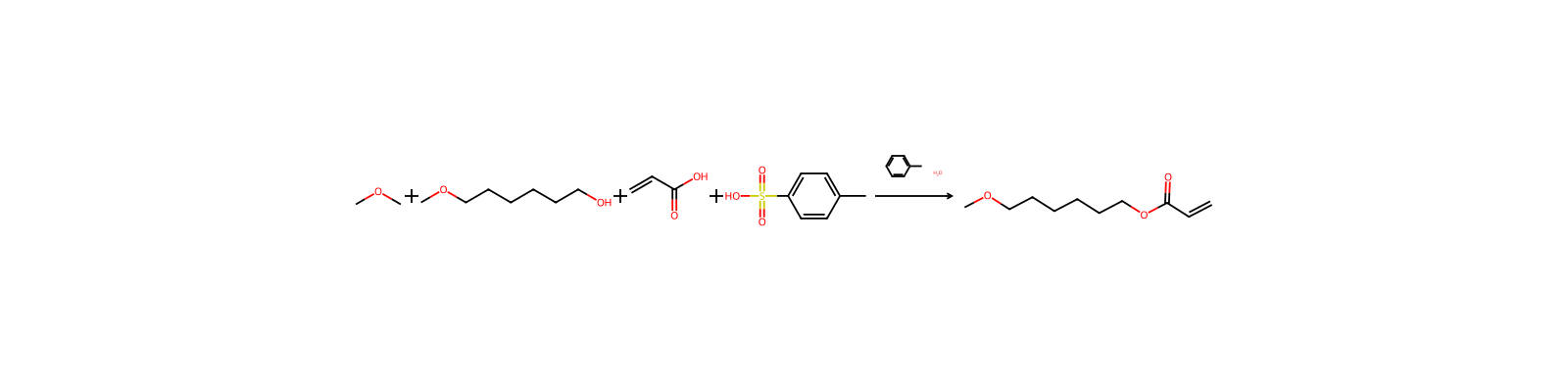
HRID 1979 の反応式
HRID 1979反応物としてuspto-grants-1998_03
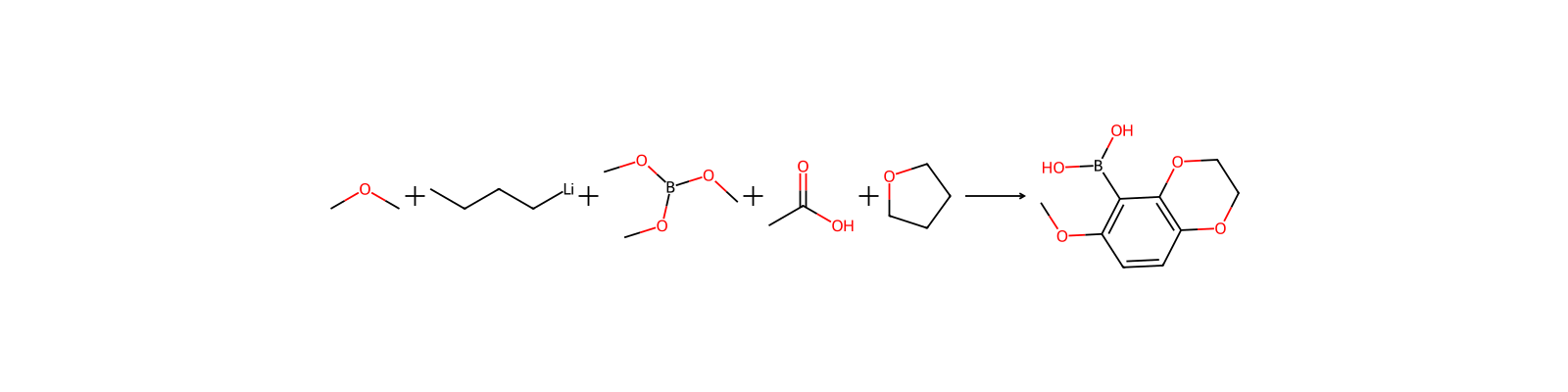
HRID 4467 の反応式
HRID 4467反応物としてuspto-grants-1988_02
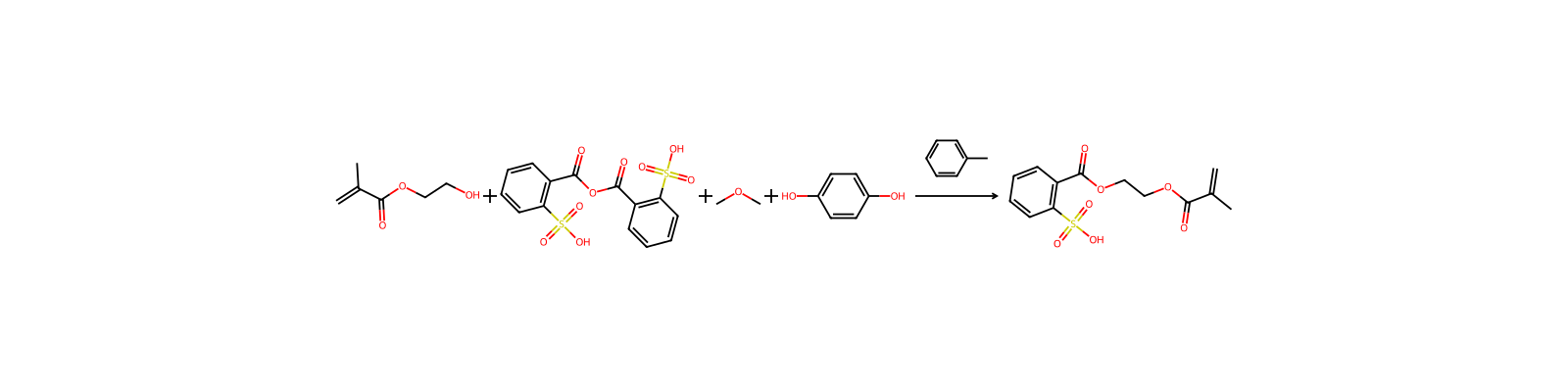
HRID 5202 の反応式
HRID 5202反応物としてuspto-grants-1993_09
HRID 38383 の反応式
HRID 38383反応物としてuspto-grants-2013_09
HRID 46389 の反応式
HRID 46389反応物としてuspto-grants-2013_09
HRID 48036 の反応式
HRID 48036反応物としてuspto-grants-2004_03
HRID 50470 の反応式
HRID 50470反応物としてuspto-grants-2004_03
HRID 66427 の反応式
HRID 66427反応物としてuspto-grants-1978_12
1 / 42 ページ

化合物ノート

読み込み中…

このページの内容基本情報概要名称と識別子物性安全と法規制化学と産業関連反応化合物ノート
その他の操作
ノートを作成反応を作成見積依頼を出す

Soluble in oxygenated solvents

In water, 4.6X10+4 mg/L at 25 °C

Solubility in water, g/100ml: 2.4

CorrosivityNONCORROSIVE
Flash Point · 3 件

25 °F (NTP, 1992)

-42 °F (closed cup)

Flammable gas

物理化学的性質

融点
-141.5 °C · -141.5 °C
沸点
-24.8 °C · -24.8 °C
比重(密度)
0.61 g/cm3 · 0.61 g/cm3
Health Hazards · 2 件

Inhalation produces some anesthesia (but less than that of ethyl ether), blurring of vision, headache, intoxication, loss of consciousness. Liquid or concentrated vapor irritates eyes. Contact of liquid with skin may cause frostbite. (USCG, 1999)

· Vapors may cause dizziness or asphyxiation without warning, especially when in closed or confined areas.

Hazards Summary · 1 件

In animal studies at lethal concentrations, dimethyl ether acts as a general anesthetic. [ChemIDplus] Liquid will cause frostbite. [CHRIS] Dimethyl ether is in the list of Some volatile substances which may be abused by inhalation published on the web site of the U.N. International Drug Control Programme, indicating its potential to cause narcosis in workers. [Reference #1] Caused slight intoxication at 50,000 ppm, some incoordination at 82,000 ppm, an unconsciousness at 200,000 ppm (after 17 minutes) in human volunteers; [AIHA]

DOT ID and Guide1033 115
Reactive GroupEthers
EC ClassificationSymbol: F+; R: 12; S: (2)-9-16-33
UN ClassificationUN Hazard Class: 2.1
FIFRA Requirements · 2 件

Residues of dimethyl ether are exempted from the requirement of a tolerance when used as a propellant in accordance with good agricultural practice as inert (or occasionally active) ingredients in pesticide formulations applied to growing crops or to raw agricultural commodities after harvest.

Residues of dimethyl ether are exempted from the requirement of a tolerance when used as a propellant in accordance with good agricultural practice as inert (or occasionally active) ingredients in pesticide formulations applied to animals.

Reactivity AlertsHighly Flammable

安全と保護具

Fire Fighting · 2 件

Excerpt from ERG Guide 115 [Gases - Flammable (Including Refrigerated Liquids)]:

Shut off supply; if not possible and no risk to surroundings, let the fire burn itself out. In other cases extinguish with dry powder, carbon dioxide. In case of fire: keep cylinder cool by spraying with water. Combat fire from a sheltered position.

First Aid Measures · 3 件

Fresh air, rest. Refer for medical attention.

ON FROSTBITE: rinse with plenty of water, do NOT remove clothes. Rinse skin with plenty of water or shower.

First rinse with plenty of water for several minutes (remove contact lenses if easily possible), then refer for medical attention.

Accidental Release Measures · 2 件

· CALL 911. Then call emergency response telephone number on shipping paper. If shipping paper not available or no answer, refer to appropriate telephone number listed on the inside back cover.

· ELIMINATE all ignition sources (no smoking, flares, sparks or flames) from immediate area.

First Aid · 2 件

EYES: First check the victim for contact lenses and remove if present. Flush victim's eyes with water or normal saline solution for 20 to 30 minutes while simultaneously calling a hospital or poison control center. Do not put any ointments, oils, or medication in the victim's eyes without specific instructions from a physician. IMMEDIATELY transport the victim after flushing eyes to a hospital even if no symptoms (such as redness or irritation) develop.

General First Aid:

Safe StorageFireproof. Cool.
Exposure Control and Personal Protection · 2 件

· Wear positive pressure self-contained breathing apparatus (SCBA).

1000.0 [ppm]

Fire Fighting Procedures · 4 件

In case of fire: keep cylinder cool by spraying with water. Combat fire from a sheltered position. Shut off supply; if not possible and no risk to surroundings, let the fire burn itself out; in other cases extinguish with dry powder, carbon dioxide.

Stop flow of gas before extinguishing fire. Use water spray to keep fire-exposed containers cool. Use dry chemical, carbon dioxide, water spray, or "alcohol resistant" foam.

If material on fire or involved in fire: Do not extinguish fire unless flow can be stopped. Use water in flooding quantities as fog. Cool all affected containers with flooding quantities of water. Apply water from as far a distance as possible.

Water, foam, carbon dioxide, and dry chemical powders can be employed to control dimethyl ether fires. Fire extinguishers suitable for class C (Europe) or class B (United States) can be used. Endangered vessels must be cooled.

Storage Conditions · 3 件

Seperate from oxidizing materials. Store in cool, dry, well-ventilated area. Avoid sunlight.

KEEP IN CLOSED CONTAINER AWAY FROM HEAT & OPEN FLAME.

Dimethyl ether is usually stored as a liquid under pressure.

Cleanup Methods · 1 件

Eliminate all ignition sources. Stop or control the leak, if this can be done without undue risk. Use water spray to cool & disperse vapors, protect personnel, & dilute spills to form nonflammable mixtures. Control runoff & isolate discharged material for proper disposal.

Nonfire Spill ResponseExcerpt from ERG Guide 115 [Gases - Flammable (Including Refrigerated Liquids)]:
Disposal Methods · 2 件

SRP: The most favorable course of action is to use an alternative chemical product with less inherent propensity for occupational exposure or environmental contamination. Recycle any unused portion of the material for its approved use or return it to the manufacturer or supplier. Ultimate disposal of the chemical must consider: the material's impact on air quality; potential migration in soil or water; effects on animal, aquatic, and plant life; and conformance with environmental and public health regulations.

This compound should be susceptible to removal from waste water by air stripping. /Bis(2-chloroethyl)ether/

Spillage DisposalEvacuate danger area! Consult an expert! Personal protection: filter respirator for organic gases and vapours adapted to the airborne concentration of the substance. Remove all ignition sources.

毒性情報

Body BurdenDimethyl ether was detected in 1 of 12 samples of mothers breast milk from the cities of Bayonne NJ, Jersey City NJ, Bridgeville PA and Baton Rouge LA(1).
InteractionsSometimes encountered as mole-per-mole complex with boron trifluoride which is said to be severe pulmonary irritant.
Environmental Fate · 3 件

TERRESTRIAL FATE: Based on a classification scheme(1), an estimated Koc value of 27(SRC), determined from a log Kow of 0.10(2) and a regression-derived equation(3), indicates that dimethyl ether is expected to have very high mobility in soil(SRC). Volatilization of dimethyl ether from moist soil surfaces is expected to be an important fate process(SRC) given an estimated Henry's Law constant of 5.9X10⁻³ atm-cu m/mole(SRC), derived from its vapor pressure, 4450 mm Hg(4), and water solubility, 4.6X10+4 mg/L(5). Volatilization of dimethyl ether from dry soil surfaces is expected(SRC) based upon this compound's vapor pressure(4). Biodegradation of dimethyl ether in soil is expected to be a slow process(SRC), based upon its slow biodegradation in an aqueous screening study(6).

AQUATIC FATE: Based on a classification scheme(1), an estimated Koc value of 27(SRC), determined from a log Kow of 0.10(2) and a regression-derived equation(3), indicates that dimethyl ether is not expected to adsorb to suspended solids and sediment in the water column(SRC). Dimethyl ether is expected to volatilize from water surfaces(3) based on an estimated Henry's Law constant of 5.9X10⁻³ atm-cu m/mole(SRC), derived from its vapor pressure, 4450 mm Hg(4), and water solubility, 4.6X10+4 mg/L(5). Using this Henry's Law constant and an estimation method(3), volatilization half-lives for a model river and model lake are 2.4 hours and 2.8 days, respectively(SRC). According to a classification scheme(6), an estimated BCF of 3(SRC), from the log Kow(2) and a regression derived equation(7), suggests the potential for bioconcentration in aquatic organisms is low(SRC). Biodegradation of dimethyl ether in water is expected to be a slow process(SRC), based upon its slow biodegradation in an aqueous screening study(8).

ATMOSPHERIC FATE: According to a model of gas/particle partitioning of semivolatile organic compounds in the atmosphere(1), dimethyl ether, which has a vapor pressure of 4450 mm Hg at 25 °C(2), will exist solely as a gas in the ambient atmosphere. Gas-phase dimethyl ether is degraded in the atmosphere by reaction with photochemically-produced hydroxyl radicals and nitrate radicals(SRC); half-lives for these reactions in air are estimated to be 5.4 and 123 days, respectively(3,4). Direct photolysis is not expected to be an important removal process since aliphatic ethers do not absorb light in the environmental spectrum(5).

Food Survey ValuesDimethyl ether was identified, but not quantified, as a volatile flavor component of baked Idaho Russet Burbank potatoes by one of two analytical techniques(1).
Adverse EffectsNeurotoxin - Acute solvent syndrome
Exposure RoutesThe substance can be absorbed into the body by inhalation.
Milk ConcentrationsDimethyl ether was detected in 1 of 12 samples of human mothers breast milk from the cities of Bayonne NJ, Jersey City NJ, Bridgeville PA and Baton Rouge LA(1).
Toxicity Summary · 1 件

DME has very low acute inhalation toxicity. The 4-hour LC50 in rats is 164,000 ppm, and the cardiac sensitization threshold in dogs was greater than 200,000 ppm. In repeated inhalation rat studies of up to two years, DME was not carcinogenic and produced minimal toxicity at 25,000 and 10,000 ppm, and the NOAEC was 2000 ppm. DME was not teratogenic in pregnant rats up to 40,000 ppm; however, slight maternal and fetal toxicity were observed at greater than 5000 ppm. DME was not mutagenic in vitro or in vivo. The primary inhalation exposure finding was reversible CNS depression.

Ecotoxicity Excerpts · 2 件

/AQUATIC SPECIES/ Poecilia reticulata (Guppy) /NOEC/ value: >4000 mg/L. Method: NEN 6504; semistatic. With respect to rapid volatilization of DME, sealed flasks were used for the testing. Renewal of test solutions occurred after 48 hours. A total of 14 animals per concentration were tested in 2 replicates (7 animals/bottle x 2 bottles). ...All fish survived the dosages studied (nominal concentrations of 1900 and 3200 mg/L). pH: 7.3-7.5 at the end of the test; dissolved oxygen: saturated at study start 4.5-6.9 at the end of the test; temperature 23 °C.

/AQUATIC SPECIES/ Daphnia magna /NOEC/ value: >4000 mg/L. Method: NEN 6501. With respect to rapid volatilization of DME, sealed flasks were used for the testing. A total of 12-14 animals per concentration were tested in 2 replicates (6-7 animals/bottle x 2 bottles). ...All animals survived the dosages studied (nominal concentrations of 1000 and 3200 mg/L). pH: 7.3-8.1 at the end of the test; dissolved oxygen: saturated at study start >8 at the end of the test; temperature 20 °C.

Signs and Symptoms · 3 件

Cough. Sore throat. Confusion. Drowsiness. Unconsciousness.

ON CONTACT WITH LIQUID: FROSTBITE.

Redness. Pain.

Effluent Concentrations · 1 件

Dimethyl ether has been detected in 2 out of 63 samples of industrial effluents collected from a wide variety of industries across the U.S. at concn >100 ug/L (dates not reported)(1). It was qualitatively detected in primary treated municipal wastewater and sludge collected in 1983 from the Iona Island treatment plant in Vancouver, British Columbia, Canada(2). Dimethyl ether was identified, not quantified, as a frequently emitted VOC in the UK in 1990(3).

Medical Surveillance... Persons repeatedly exposed to appreciable concentrations should undergo periodic medical examinations.

法規制情報

FIFRA Requirements · 2 件

Residues of dimethyl ether are exempted from the requirement of a tolerance when used as a propellant in accordance with good agricultural practice as inert (or occasionally active) ingredients in pesticide formulations applied to growing crops or to raw agricultural commodities after harvest.

Residues of dimethyl ether are exempted from the requirement of a tolerance when used as a propellant in accordance with good agricultural practice as inert (or occasionally active) ingredients in pesticide formulations applied to animals.

Atmospheric Standards · 1 件

This action promulgates standards of performance for equipment leaks of Volatile Organic Compounds (VOC) in the Synthetic Organic Chemical Manufacturing Industry (SOCMI). The intended effect of these standards is to require all newly constructed, modified, and reconstructed SOCMI process units to use the best demonstrated system of continuous emission reduction for equipment leaks of VOC, considering costs, non air quality health and environmental impact and energy requirements. N,N-dimethyl ether is produced, as an intermediate or a final product, by process units covered under this subpart.

DHS Chemicals of Interest (COI) · 4 件

Methyl ether

1

10000

Flammable chemical that can be released at a facility.

安全データ

ridadr
UN 1033
hazard_class
2.1

AS BY-PRODUCT OF METHYL ALCOHOL PRODN BY HYDROGENATION OF CARBON MONOXIDE & OF ACETIC ACID; PRODN FROM CARBON MONOXIDE & METHYL ALCOHOL.

For more Methods of Manufacturing (Complete) data for DIMETHYL ETHER (7 total), please visit the HSDB record page.

Formulations/Preparations · 3 件

Grades: technical; 99.5%

99.87% minimum grade /Matheson Gas Products/

99.0% minimum purity, liquid phase /Union Carbide, Corp/

Household ProductsInformation on 208 consumer products that contain Dimethyl ether in the following categories is provided:
Use ClassificationCosmetics -> Propellant; Solvent
General Manufacturing Information · 6 件

All Other Basic Inorganic Chemical Manufacturing

Methane, 1,1'-oxybis-: ACTIVE

IT HAS ... BEEN USED IN LIMITED AMT TO FREEZE MEAT & FISH BY DIRECT IMMERSION.

IS NOT PRONE TO PEROXIDE FORMATION & APPEARS TO BE SAFE TO USE AS AN AEROSOL PROPELLANT.

AN AEROSOL MIXT CONTAINS DIMETHYL ETHER 28-97-38.5%. A CARRIER FOR A HAIR CARE PRODUCT CONTAINING POLYVINYLPYRROLIDONE WAS PREPARED WITH 77.04 G 70% AQ DIMETHYL ETHER, 14.11 G DIMETHYL ETHER & 1.09 G CO2.

Dimethyl ether is transformed to C2-C10 hydrocarbons through zeolite catalysis