
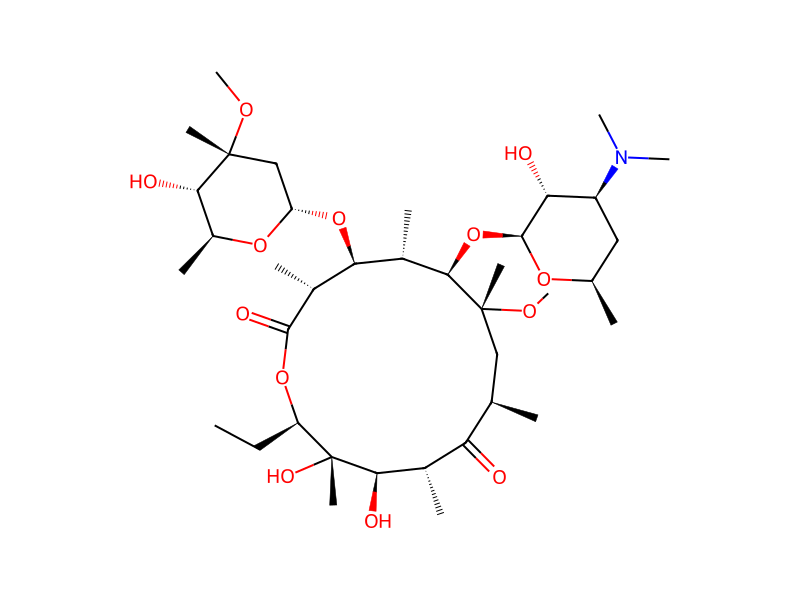
基本情報
- 標準SMILES
CC[C@H]1OC(=O)[C@H](C)[C@@H](O[C@H]2C[C@@](C)(OC)[C@@H](O)[C@H](C)O2)[C@H](C)[C@@H](O[C@@H]2O[C@H](C)C[C@H](N(C)C)[C@H]2O)[C@](C)(OC)C[C@@H](C)C(=O)[C@H](C)[C@@H](O)[C@]1(C)O- InChIKey
AGOYDEPGAOXOCK-KCBOHYOISA-N- 分子式
- C38H69NO13
- 平均分子量
- 748 g/mol
- 単同位体質量
- 747.47689127
概要
Clarithromycin can cause developmental toxicity according to state or federal government labeling requirements.
名称と識別子
- 優先名称
- Clarithromycin
- IUPAC
- (3R,4S,5S,6R,7R,9R,11R,12R,13S,14R)-6-[(2S,3R,4S,6R)-4-(dimethylamino)-3-hydroxy-6-methyloxan-2-yl]oxy-14-ethyl-12,13-dihydroxy-4-[(2R,4R,5S,6S)-5-hydroxy-4-methoxy-4,6-dimethyloxan-2-yl]oxy-7-methoxy-3,5,7,9,11,13-hexamethyl-oxacyclotetradecane-2,10-dione
- 現地名
- クラリスロマイシン
- 英語名
- Clarithromycin
- 分子式
- C38H69NO13
- 分子量
- 747.95
名称と別名
clarithromycin81103-11-9Biaxin6-O-MethylerythromycinKlaricidClarithromycineErythromycin, 6-O-methyl-6-O-Methylerythromycin aMacladinKlacidVeclamAbbott-56268
名称をさらに表示
クラリスロマイシンマインベースDS抗生物質A-56268クラリスクラリシッドリクモースマインベース抗生物質TE-31クラリトロマイシンCAM【クラリスロマイシン】ビクラルクラリスロマイシン標準品クラリスロマイシン IDENTITYクラリスロマイシン (JP17)(6R)-6-メトキシ-6-デオキシエリスロマイシン6-O-メチルエリスロマイシン6-O-メチルエリトロマイシンクラロイシン(3R,4S,5S,6R,7R,9R,11R,12R,13S,14R)-4-[(2,6-ジデオキシ-3-C-メチル-3-O-メチル-α-L-ribo-ヘキソピラノシル)オキシ]-14-エチル-12,13-ジヒドロキシ-7-メトキシ-3,5,7,9,11,13-ヘキサメチル-6-[[3,4,6-トリデオキシ-3-(ジメチルアミノ)-β-D-xylo-ヘキソピラノシル]オキシ]オキサシクロテトラデカン-2,10-ジオン(3R,4S,5S,6R,7R,9R,11R,12R,13S,14R)-6-{[(2S,3R,4S,6R)-4-(ジメチルアミノ)-3-ヒドロキシ-6-メチルオキサン-2-イル]オキシ}-14-エチル-12,13-ジヒドロキシ-4-{[(2R,4R,5S,6S)-5-ヒドロキシ-4-メトキシ-4,6-ジメチルオキサン-2-イル]オキシ}-7-メトキシ-3,5,7,9,11,13-ヘキサメチル-1-オキサシクロテトラデカン-2,10-ジオンClarithromycin PowderClarithrote-03ClamicinClarithromycin-13C-D3KladdClaris
ZeclarMavidNaxyClaritromicinaCyllindClarithromycinumTE-031Biaxin XL
データベース識別子
- CAS
116836-41-0、81103-11-9- PubChem CID
- 84029
- DTXSID
DTXSID3022829- ChEMBL
CHEMBL1741- ChEBI
CHEBI:3732- UNII
- H1250JIK0A
- EC Number
- 617-200-4、658-034-2
物性
構造計算による物性
- XLogP
- 3.2
- 極性表面積
- 183 Ų
- 水素結合供与体数
- 4
- 水素結合受容体数
- 14
- 回転可能結合数
- 8
- 重原子数
- 52
- 形式電荷
- 0
- 複雑度
- 1,190
実験および物理化学的性質
Drugs
Pharmaceuticals -> Listed in ZINC15
Pharmaceuticals -> Antibiotics
Pharmaceuticals -> Antibiotics (Macrolides)
Pharmaceuticals -> Used in Switzerland
LipidsPolyketides [PK] -> Macrolides and lactone polyketides [PK04]
LogP
log Kow = 3.16
1.7
3.16
Color/FormColorless needles from chloroform + diisopropyl ether (1:2) ... Also reported as crystals from ethanol
Solubility2.17e-01 g/L
Human Drugs
Breast Feeding; Lactation; Anti-Bacterial Agents; Anti-Infective Agents; Macrolides
FDA approved drugs -> Active ingredient
FDA approved drugs -> Active ingredient
Pharmaceuticals
Watch group antibiotics
DecompositionWhen heated to decomposition it emits toxic vapors of /oxides of nitrogen/.
Melting Point
217-220 °C (decomposes) ... Also reported as mp 222-225 °C
217 - 220 °C
Optical RotationSpecific optical rotation: -90.4 deg at 24 °C/D (c = 1 in CHCl3)
Physical DescriptionSolid
Ionization Efficiency
Positive
5.3
2.7
Agilent XCT
Electrospray ionization
formic acid (5.3nM)
Dissociation Constants
8.99
8.99 (at 25 °C)
pKa = 8.99
物理化学的性質
- 融点
- 217 · 217-220°C
- 沸点
- 86 ℃ · 86℃
- 比旋光度
- 24 · D24 -90.4° (c = 1 in CHCl3)
- 比重(密度)
- 1.1334 · 1.1334 (rough estimate)
- 屈折率
- -92 ° · -92 ° (C=1, CHCl3)
- 闪点
- 110 ° · >110°(230°F)
- 貯蔵温度
- -20 °C · -20°C
- 溶解性
- DMSOに可溶
- 酸解離定数(Pka)
- 8.99 · pKa 8.99(H2O t=25.0 I=0.167) (Uncertain)
- 外見
- 粉
- 色
- 無色~微黄色
- 由来生物
- synthetic
- 水溶解度
- 99.48 mg/L · 99.48mg/L(20℃)
- Merck
- 14 · 14,2339
- BCS Class
- 4 · 4
- 安定性
- 冷凍庫で保存
- InChIKey
- AGOYDEPGAOXOCK-KCBOHYOISA-N
- EPAの化学物質情報
- 6 · Erythromycin, 6-O-methyl- (81103-11-9)
化学的性質
化学的特性Colourless Crystalline Needles
安全と法規制
GHS分類
GHS Classification
Warning
H302 (99.2%): Harmful if swallowed [Warning Acute toxicity, oral]
P264, P270, P301+P317, P330, and P501 (click each P-code to see the statement)
Aggregated GHS information provided per 243 reports by companies from 11 notifications to the ECHA C&L Inventory.
Warning
H302 (100%): Harmful if swallowed [Warning Acute toxicity, oral]
危険有害性情報
Regulatory Information
Hazard Traits - Developmental Toxicity
Clarithromycin: Does not have an individual approval but may be used under an appropriate group standard
FDA Requirements
The Approved Drug Products with Therapeutic Equivalence Evaluations identifies currently marketed prescription drug products, including clarithromycin, approved on the basis of safety and effectiveness by FDA under sections 505 of the Federal Food, Drug, and Cosmetic Act.
Hazard Classes and Categories
Acute Tox. 4 (99.2%)
Acute toxicity (Oral) - Category 4
安全と保護具
Fire Fighting Procedures
As with all fires, evacuate personnel to a safe area. Firefighters should use self-contained breathing equipment and protective clothing.
Water spray, dry chemical, carbon dioxide, or foam as appropriate for surrounding fire and materials.
Storage Conditions
Store in tight container as defined in the USP-NF. This material should be handled and stored per label instructions to ensure product integrity.
Clarithromycin granules for oral suspension should be stored in well-closed containers at 15-30 °C. Following reconstitution as directed, oral suspensions of clarithromycin should be stored at 15-30 °C in well-closed containers; the reconstituted suspension should not be refrigerated.
Commercially available clarithromycin 250-mg conventional tablets should be stored in well-closed containers at 15-30 °C and should be protected from light.1 Clarithromycin 500-mg conventional tablets should be stored in well- closed containers at controlled room temperature between 20-25 det C. Clarithromycin extended-release tablets should be stored at 20-25 °C, but may be exposed to temperatures ranging from 15-30 °C.
Cleanup Methods
Wear approved respiratory protection, chemically compatible gloves, and protective clothing. Wipe up spillage or collect spillage using a high-efficiency vacuum cleaner. Avoid breathing dust. Place spillage in appropriately labeled container for disposal. Wash spill site.
Disposal Methods
SRP: Wastewater from contaminant suppression, cleaning of protective clothing/equipment, or contaminated sites should be contained and evaluated for subject chemical or decomposition product concentrations. Concentrations shall be lower than applicable environmental discharge or disposal criteria. Alternatively, pretreatment and/or discharge to a permitted wastewater treatment facility is acceptable only after review by the governing authority and assurance that "pass through" violations will not occur. Due consideration shall be given to remediation worker exposure (inhalation, dermal and ingestion) as well as fate during treatment, transfer and disposal. If it is not practicable to manage the chemical in this fashion, it must be evaluated in accordance with EPA 40 CFR Part 261, specifically Subpart B, in order to determine the appropriate local, state and federal requirements for disposal.
SRP: Expired or waste pharmaceuticals shall carefully take into consideration applicable DEA, EPA, and FDA regulations. It is not appropriate to dispose by flushing the pharmaceutical down the toilet or discarding to trash. If possible return the pharmaceutical to the manufacturer for proper disposal being careful to properly label and securely package the material. Alternatively, the waste pharmaceutical shall be labeled, securely packaged and transported by a state licensed medical waste contractor to dispose by burial in a licensed hazardous or toxic waste landfill or incinerator.
Preventive Measures
As a general rule, when handling USP Reference Standards, avoid all contact and inhalation of dust, mists, and/or vapors associated with the material. Clean equipment and work surfaces with suitable detergent or solvent after use. After removing gloves, wash hands and other exposed skin thoroughly.
As with all dry powders, it is advisable to ground mechanical equipment in contact with dry material to dissipate the potential buildup of static electricity.
SRP: Contaminated protective clothing should be segregated in such a manner so that there is no direct personal contact by personnel who handle, dispose, or clean the clothing. The completeness of the cleaning procedures should be considered before the decontaminated protective clothing is returned for reuse by the workers. Contaminated clothing should not be taken home at the end of shift, but should remain at employee's place of work for cleaning.
SRP: Local exhaust ventilation should be applied wherever there is an incidence of point source emissions or dispersion of regulated contaminants in the work area. Ventilation control of the contaminant as close to its point of generation is both the most economical and safest method to minimize personnel exposure to airborne contaminants. Ensure that the local ventilation moves the contaminant away from the worker.
Personal Protective Equipment (PPE)
Respiratory Protection: Where respirators are deemed necessary to reduce or control occupational exposures, use NIOSH-approved respiratory protection and have an effective respirator program in place. Gloves: Chemically compatible. For handling solutions, ensure that the glove material is protective against the solvent being used. Use handling practices that minimize direct hand contact. Employees who are sensitive to natural rubber (latex) should use nitrile or other synthetic nonlatex gloves. Use of powdered latex gloves should be avoided due to the risk of latex allergy. Eye Protection: Safety glasses with sideshields are recommended. Face shields or goggles may be required if splash potential exists or if corrosive materials are present. Approved eye protection (e.g., bearing the ANSI Z87 or CSA stamp) is preferred. Maintain eyewash facilities in the work area. Protective clothing: For handling of laboratory scale quantities, a cloth lab coat is recommended. Where significant quantities are handled, work clothing may be necessary to prevent take-home contamination.
Airborne exposure should be controlled primarily by engineering controls such as general dilution ventilation, local exhaust ventilation, or process enclosure. Local exhaust ventilation is generally preferred to general exhaust because it can control the contaminant at its source, preventing dispersion into the work area. An industrial hygiene survey involving air monitoring may be used to determine the effectiveness of engineering controls. Effectiveness of engineering controls intended for use with highly potent materials should be assessed by use of nontoxic surrogate materials. Local exhaust ventilation such as a laboratory fume hood or other vented enclosure is recommended, particularly for grinding, crushing, weighing, or other dust-generating procedures.
毒性情報
Interactions
The manufacturer of darifenacin states that darifenacin dosage should not exceed 7.5 mg daily in patients receiving the drug concomitantly with potent CYP3A4 inhibitors, including clarithromycin.
Concomitant administration of clarithromycin and cisapride is contraindicated. Coadministration of clarithromycin and/or erythromycin with cisapride has been associated with QT prolongation and serious cardiac arrhythmias (ventricular tachycardia, ventricular fibrillation, torsades de pointes); fatalities have been reported. In 2 patients with chronic renal failure who were receiving cisapride (10 mg 3-4 times daily), QT prolongation and/or torsades de pointes occurred within several days after initiating therapy with clarithromycin (500 mg twice daily). Elevated serum cisapride concentrations observed in one patient decreased following discontinuance of clarithromycin.
Clarithromycin should be used with caution in patients receiving carbamazepine; if such concomitant therapy is used, a reduction in carbamazepine dosage and/or monitoring of plasma carbamazepine concentrations is advised. Limited data in healthy men indicate that clarithromycin may increase area under the serum concentration-time curve (AUC) for carbamazepine and decrease peak serum concentration and AUC for carbamazepine 10,11-epoxide (CBZ-E).2 51 In addition, increased plasma concentrations of carbamazepine (but not CBZ-E) and, in some patients, manifestations of carbamazepine toxicity (i.e., drowsiness, dizziness, ataxia) occurred within 3-5 days after initiation of clarithromycin therapy (200 mg twice daily) in several patients receiving carbamazepine (600 mg/day) with or without other drugs; plasma carbamazepine concentrations decreased and toxic manifestations subsided within several days following carbamazepine discontinuation.
The manufacturer of eszopiclone states that eszopiclone dosage should be reduced if the drug is used concomitantly with a potent CYP3A4 inhibitor, including clarithromycin. In such situations, the initial eszopiclone dosage should not exceed 1 mg but may be increased to 2 mg if clinically indicated.457
For more Interactions (Complete) data for Clarithromycin (36 total), please visit the HSDB record page.
Hepatotoxicity
Clarithromycin, like other macrolide antibiotics, has been linked to a low rate of acute, transient and usually asymptomatic elevations in serum aminotransferase levels which occur in 1% to 2% of patients treated for short periods and a somewhat higher proportion of patients given clarithromycin long term. Asymptomatic elevations in serum enzymes are particularly common among elderly patients given higher doses of clarithromycin.
Ecotoxicity Values
EC50; Species: Ceriodaphnia dubia (Water Flea) age <24 hr; Conditions: freshwater, static, 25 °C; Concentration: 18660 ug/L for 24 hr (95% confidence interval: 15990-21770 ug/L); Effect: intoxication, immobilization />99% purity formulation/
EC50; Species: Ceriodaphnia dubia (Water Flea) age <24 hr; Conditions: freshwater, renewal, 25 °C, dissolved oxygen >90% saturated; Concentration: 8160 ug/L for 48 hr (95% confidence interval: 2700-18520 ug/L); Effect: decreased population abundance />99% purity formulation/
EC50; Species: Pseudokirchneriella subcapitata (Green Algae) exponential growth phase (Log) 1000 cells/mL; Conditions: freshwater, static, 25 °C, dissolved oxygen >90% saturated; Concentration: 2 ug/L for 3 days (95% confidence interval: 1.9-2.8 ug/L); Effect: decreased population abundance />99% purity formulation/
EC50; Species: Daphnia magna (Water Flea) age <24 hr neonate; Conditions: freshwater, static, 20 °C; Concentration: 25720 ug/L for 24 hr (95% confidence interval: 21720-30450 ug/L); Effect: intoxication, immobilization />99% purity formulation/
Environmental Fate
TERRESTRIAL FATE: Based on a classification scheme(1), an estimated Koc value of 150(SRC), determined from a log Kow of 3.16(2) and a regression-derived equation(3), indicates that clarithromycin is expected to have moderate mobility in soil(SRC). The pKa of clarithromycin is 8.99(2), indicating that this compound will exist almost entirely in the cation form in the environment and cations generally adsorb more strongly to soils containing organic carbon and clay than their neutral counterparts(4). Volatilization from moist soil is not expected because the compound exists as an cation and cations do not volatilize. Clarithromycin is not expected to volatilize from dry soil surfaces(SRC) based upon an estimated vapor pressure of 2.3X10⁻²⁵ mm Hg at 25 °C(SRC), determined from a fragment constant method(5). Utilizing the Closed Bottle test, 0% of the Theoretical BOD was reached in 4 weeks(6) indicating that biodegradation is not an important environmental fate process in soil(SRC).
AQUATIC FATE: Based on a classification scheme(1), an estimated Koc value of 150(SRC), determined from a log Kow of 3.16(2) and a regression-derived equation(3), indicates that clarithromycin is expected to adsorb to suspended solids and sediment(SRC). A pKa of 8.99(2) indicates clarithromycin will exist almost entirely in the cation form at pH values of 5 to 9 and therefore volatilization from water surfaces is not expected to be an important fate process(SRC). According to a classification scheme(4), an estimated BCF of 56(SRC), from its log Kow(2) and a regression-derived equation(3), suggests the potential for bioconcentration in aquatic organisms is moderate(SRC). Utilizing the Closed Bottle test, 0% of the Theoretical BOD was reached in 4 weeks(5) indicating that biodegradation is not an important environmental fate process in water(SRC).
ATMOSPHERIC FATE: According to a model of gas/particle partitioning of semivolatile organic compounds in the atmosphere(1), clarithromycin, which has an estimated vapor pressure of 2.3X10⁻²⁵ mm Hg at 25 °C(SRC), determined from a fragment constant method(2), is expected to exist solely in the particulate phase in the ambient atmosphere. Particulate-phase clarithromycin may be removed from the air by wet or dry deposition(SRC). Clarithromycin has a reported UV max of 288 nm in methanol(3) and, therefore, may be susceptible to direct photolysis by sunlight(SRC).
Milk ConcentrationsIn 12 women who received oral clarithromycin in a dosage of 250 mg twice daily for 6 days, mean peak concentrations of clarithromycin and 14-hydroxyclarithromycin in milk were 25 and 75%, respectively, of corresponding serum concentrations.
Ecotoxicity Excerpts
/AQUATIC SPECIES/ The growth-inhibiting and binary joint effects of 12 antibacterial agents on the freshwater green alga Pseudokirchneriella subcapitata (Korschikov) Hindak were investigated over 72-hr exposures. The toxicity values (the median inhibitory concentration value, in micromoles) in decreasing order of sensitivity were triclosan (0.0018) > triclocarban (0.054) > roxithromycin (0.056) > clarithromycin (0.062) > tylosin (0.20) > tetracycline (2.25) > chlortetracycline (3.49) > norfloxacin (5.64) > sulfamethoxazole (7.50) > ciprofloxacin (20.22) > sulfamethazine (31.26) > trimethoprim (137.78). Several of these antibacterial compounds would be toxic at the micrograms per liter concentrations reported in surface waters and sewage effluents. Simple additive effects were observed in binary mixtures of sulfonamides, and most tylosin, triclosan, or triclocarban combinations. Potentially synergistic effects were observed in binary mixtures of the same class, such as macrolides, tetracyclines, and fluoroquinolones, as well as in some combined drugs, such as trimethoprim and sulfonamides or tylosin and tetracyclines. Potentially antagonistic effects were only observed between tylosin and triclocarban, triclosan and norfloxacin, and triclocarban and norfloxacin. Although present at low concentrations in the aquatic environment, mixtures of these antibacterial agents can potentially affect algal growth in freshwater systems due to their combined action.
/AQUATIC SPECIES/ Recent evidence indicates that a variety of antibiotic residues may affect the integrity of streams located downstream from wastewater treatment plants. Aquatic communities comprising bacterial and fungal decomposers and invertebrate detritivores (shredders) play an important role in the decomposition of allochthonous leaf litter, which acts as a primary energy source for small running waters. The aim of the present study was to assess whether an antibiotic mixture consisting of sulfamethoxazole, trimethoprim, erythromycin-H2O, roxithromycin, and clarithromycin has an effect on such a decomposer-detritivore system. Leaf discs were exposed to these antibiotics (total concentration of 2 or 200 ug/L) for approximately 20 days before offering these discs and corresponding control discs to an amphipod shredder, Gammarus fossarum, in a food choice experiment. Gammarus preferred the leaf discs conditioned in the presence of the antibiotic mixture at 200 ug/L over the control discs (pair-wise t test; p = 0.006). A similar tendency, while not significant, was observed for leaves conditioned with antibiotics at a concentration of 2 ug/L. The number of bacteria associated with leaves did not differ between treatments at either antibiotic concentration (t test; p = 0.57). In contrast, fungal biomass (measured as ergosterol) was significantly higher in the 200 ug/L treatment (t test; p = 0.038), suggesting that the preference of Gammarus may be related to a shift in fungal communities. Overall these results indicate that mixtures of antibiotics may disrupt important ecosystem processes such as organic matter flow in stream ecosystems, although effects are likely to be weak at antibiotic concentrations typical of streams receiving wastewater treatment plant effluents.
Ongoing Test Status
The following link will take the user to the National Toxicology Program (NTP) Test Agent Search Results page, which tabulates all of the "Standard Toxicology & Carcinogenesis Studies", "Developmental Studies", and "Genetic Toxicity Studies" performed with this chemical. Clicking on the "Testing Status" link will take the user to the status (i.e., in review, in progress, in preparation, on test, completed, etc.) and results of all the studies that the NTP has done on this chemical.[Available from, as of June 21, 2012: http://ntp-apps.niehs.nih.gov/ntp_tox/index.cfm?fuseaction=ntpsearch.searchresults&searchterm=81103-11-9]
Effluent Concentrations
Clarithromycin exhibited a median concentration of 0.87 ug/L (0.536 ug/L maximum) in 8 wastewater treatment plant final effluents sampled in five Canadian cities during 2002; detection limit = 0.001 ug/L(1). Clarithromycin was detected in one of 5 influent samples at a concentration of 112 ng/L (Feb 9, 2007) (limit of detection was 1 ng/L); it was not detected in effluent samples. Sampling took place at a wastewater treatment plant in Kentucky serving a local community of approximately 15,000 with an additional influx of approximately 10,000 students, academic year 2006-2007(2). Median concentrations of clarithromycin were 380 ng/L in raw influents and 240 ng/L in tertiary effluents of conventional wastewater treatment employed in Zurich, Switzerland(3). Clarithromycin concentration ranges in treated effluents of 3 wastewater treatment plants (Zurich-Werdhoelzli, Kloten-Opfikon, and Duebendorf, Switzerland) were 194-328, 97-163, and 57-135 ng/L, respectively; sampling was conducted in July 2000(4). The influent and effluent load ranges of not detected to 46 and not detected to 421 mg/day/100 inhabitants, respectively, was reported in the analysis of 6 sewage treatment plants located in Italy (Cagliari, Naples, Latina, Cuneo, Varese Olona, Varese Lago); median concentrations were 21 and 55 mg/day/100 inhabitants, respectively(5). The compound was reported in effluents from 9 Italian sewage treatment plants at a median concentration of 18.1 ng/L(6). Clarithromycin exhibited percent frequencies of detection of 77, 85, and 83 in waste water influent, effluent, and sewage sludge, respectively, based on analysis of 3 wastewater treatment plants in Catalonia, Spain during 8 sampling campaigns. Limits of detection were 5.0 ng/L, 4.0 ng/L and 7.1 ng/g in influent, effluent and sludge, respectively(7). Clarithromycin concentrations in sewage water effluents of the Netherlands in 2002 ranged from approximately 120 to 550 ng/L(8).
Soil Adsorption/Mobility
The Koc of clarithromycin is estimated as 150(SRC), using a log Kow of 3.16(1) and a regression-derived equation(2). According to a classification scheme(3), this estimated Koc value suggests that clarithromycin is expected to have moderate mobility in soil. The pKa of clarithromycin is 8.99(1), indicating that this compound will exist almost entirely in the cation form in the environment and cations generally adsorb more strongly to soils containing organic carbon and clay than their neutral counterparts(4).
Using a 2.4 meter soil column, treated effluent was applied to the top of the column over 23 days, simulating a recharge condition similar to those in arid or semiarid climates. The soil used was a Mohall-Laveen sandy loam from an area northwest of Phoenix, AZ with no known history of cultivation or irrigation. Secondarily treated effluent from a 17.5 million gallon/day municipal waste water treatment plant serving 120,000-150,000 residents near Phoenix, AZ was employed. Clarithromycin was not detected in the outflow of the column; reporting limit not determined(1). Clarithromycin was shown to absorb to suspended solids and sludge during waste water treatment plant processes; Kd values in activated sludge were 300 and 400 for October 2003 and February 2004, respectively, at municipal treatment facilities in Switzerland (a KD of 262 was reported for an unspecified field study)(2). Percentage of attenuation in surface water particulates was reported as 41% in a study of the River Olona which receives effluent from the Varese Olona Sewage Treatment Plant, Italy(3).
Human Toxicity Excerpts
/CASE REPORTS/ Myelotoxicity, a major toxicity of vinorelbine. may be related to the degree of one's exposure to vinorelbine. In theory, clarithromycin has the potential to alter vinorelbine's pharmacokinetics by inhibiting CYP3A and/or P-glycoprotein; this may result in massive exposure to vinorelbine and severe toxicity. ... A total of 12 (63.2%) and 11 (27.5%) episodes of grade 3/4 neutropenia occurred among the patients who were and were not administered clarithromycin, respectively. The incidence of grade 4 neutropenia was higher in the group administered clarithromycin than in those who did not receive it (31.6% vs 2.5%; p = 0.0033). Vinorelbine dose, concomitant clarithromycin administration, and female sex were significantly correlated with severe neutropenia, with unadjusted odds ratios of 0.07 (95% CI 0.01 to 0.59), 4.52 (95% CI 1.41 to 14.45), and 4.55 (95% CI 1.39 to 14.29), respectively. Compared with patients who are administered vinorelbine alone, patients who are administered clarithromycin during chemotherapy with vinorelbine are at a higher risk for severe neutropenia. Physicians should educate their patients about this interaction. If possible, clarithromycin administration should be avoided in patients who will undergo chemotherapy with vinorelbine in the near future. However, further prospective pharmacokinetic studies are required to confirm this interaction.
/CASE REPORTS/ The case is presented of a 70-yr-old woman who developed prolonged QT syndrome following treatment with 250 mg oral clarithromycin twice daily for 4 days. Concomitant therapy included sotalol, nitroglycerin, prednisone, hydroxychloroquine, and methotrexate. Before beginning clarithromycin, the patient had a QTc of 440/498 msec. After 4 days of clarithromycin therapy, the QT/QTc was 696/641 msec. Clarithromycin and sotalol were discontinued. Over the next 5 days, QT/QTc returned to normal values, resting heart rate increased, and the patient had no syncopal or ischemic pain episodes. She was discharged on her previous medications with the exception of clarithromycin and sotalol. The suggestion that clarithromycin contributed to QT prolongation was supported by a lack of symptoms during 3 months of sotalol therapy before initiation of clarithromycin, rapid prolongation of the QT after clarithromycin initiation, and reversal upon stopping clarithromycin and sotalol
/CASE REPORTS/ A case of an acute toxic cholestatic reaction to clarithromycin, proven by liver biopsy, in a patient with comorbid diseases, prior exposure to erythromycin and ultimate death /is reported/. No autopsy was performed. A 59-year-old woman with diabetes mellitus and chronic renal insufficiency received clarithromycin 500 mg twice daily for 3 days for acute maxillary sinusitis and then developed a rash and jaundice. She was hospitalized 11 days after stopping clarithromycin. Progressive cholestatic jaundice accompanied by oligo-anuric renal failure requiring hemodialysis ensued. Liver biopsy showed pure bilirubinostasis without parenchymal inflammation. On the 22nd hospital day, after clinical deterioration, she died from an apparent cardiopulmonary death. ...
/CASE REPORTS/ Clarithromycin is a macrolide antibiotic structurally related to erythromycin. Although ototoxicity has been reported with erythromycin, few reports have documented clarithromycin induced hearing loss (most affected patients received 2000 mg/day). This case report describes ototoxicity in a patient receiving clarithromycin 500 mg/day. The patient was an 80 year old, 27 kg, female with chronic renal insufficiency. Liver enzymes (AST, ALT) were normal. The patient experienced severe hearing loss while receiving a 24 day course of clarithromycin for a Mycobacterium avium respiratory infection. The dose of clarithromycin was adjusted for body weight and decreased renal function. Hearing loss was observed clinically, but unconfirmed by audiometric testing. Confounding factors may have contributed, but clarithromycin was thought to be the cause.
/GENOTOXICITY/ In the in vitro chromosome aberration test, clarithromycin produced weakly positive results in one test and negative results in another.
Artificial Pollution SourcesClarithromycin's production and use as an antibiotic(1) may result in its release to the environment through various waste streams(SRC).
Environmental Biodegradation
AEROBIC: Clarithromycin, present at 2.43 mg/L, reached -3 and 0% of its theoretical BOD in 14 and 28 days, respectively, using a sewage inoculum at 2 drops/L in the Closed Bottle test(1). Clarithromycin was not removed in sewage treatment plants equipped with pretreatment, primary settling and activated sludge processes(2). In a mass balance assessment study, 1% persisted in sludge, 79% is released in effluents, and 20% is lost to degradation or otherwise unaccounted for during sewage treatment(3). Clarithromycin present at 3000 ng/g biosolid and stored under aerobic conditions exhibited a degradation rate constant of 0.596/day, 50% dissipation time of 1.2 days(4).
法規制情報
FDA Requirements
The Approved Drug Products with Therapeutic Equivalence Evaluations identifies currently marketed prescription drug products, including clarithromycin, approved on the basis of safety and effectiveness by FDA under sections 505 of the Federal Food, Drug, and Cosmetic Act.
安全データ
- wgk
- 3
- rtecs
- KF4997000
- 毒性
- LD50 in male, female mice, male, female rats (mg/kg): 2740, 2700, 3470, 2700 orally, 1030, 850, 669, 753 i.p., >5000 all s.c. (Abe)
- hs_code
- 29419000
- risk_code
- 22-36/37/38
- hazard_code
- Xn,Xi
- safety_code
- 26-36-60
- 環境リスク評価
- クラリスロマイシン(81103-11-9)
- Hazard Classifications
- Acute Tox. 4 Oral
- ストレージクラス
- 11 - Combustible Solids
- 有毒物質データの
- 81103-11-9(Hazardous Substances Data)
化学と産業
薬理情報
ATC Code
J01FA09
J01FA09
J - Antiinfectives for systemic use
QJ - Antiinfectives for systemic use
J01FA09
Protein Binding~ 70% protein bound
Pharmacodynamics
Clarithromycin is a macrolide antibiotic whose spectrum of activity includes many gram-positive (<i>Staphylococcus aureus, S. pneumoniae, and S. pyogenes</i>) and gram-negative aerobic bacteria (<i>Haemophilus influenzae, H. parainfluenzae, and Moraxella catarrhalis</i>), many anaerobic bacteria, some mycobacteria, and some other organisms including <i>Mycoplasma, Ureaplasma, Chlamydia, Toxoplasma</i>, and <i>Borrelia</i>. Other aerobic bacteria that clarithromycin has activity against include <i>C. pneumoniae and M. pneumoniae</i>. Clarithromycin has an in-vitro activity that is similar or greater than that of erythromycin against erythromycin-susceptible organisms. Clarithromycin is usually bacteriostatic, but may be bactericidal depending on the organism and the drug concentration.
Mechanism of Action
Clarithromycin is first metabolized to 14-OH clarithromycin, which is active and works synergistically with its parent compound. Like other macrolides, it then penetrates bacteria cell wall and reversibly binds to domain V of the 23S ribosomal RNA of the 50S subunit of the bacterial ribosome, blocking translocation of aminoacyl transfer-RNA and polypeptide synthesis. Clarithromycin also inhibits the hepatic microsomal CYP3A4 isoenzyme and P-glycoprotein, an energy-dependent drug efflux pump.
Clarithromycin usually is bacteriostatic, although it may be bactericidal in high concentrations or against highly susceptible organisms. Bactericidal activity has been observed against Streptococcus pyogenes, S. pneumoniae, Haemophilus influenzae, and Chlamydia trachomatis. Clarithromycin inhibits protein synthesis in susceptible organisms by penetrating the cell wall and binding to 50S ribosomal subunits, thereby inhibiting translocation of aminoacyl transfer-RNA and inhibiting polypeptide synthesis. The site of action of clarithromycin appears to be the same as that of erythromycin, clindamycin, lincomycin, and chloramphenicol.
Biological Half-Life
3-4 hours
Following oral administration of single 250-mg or 1.2-g doses of clarithromycin conventional tablets in healthy men, the elimination half-life averaged 4 or 11 hours, respectively. During multiple dosing every 12 hours, the elimination half-life of clarithromycin reportedly increased from 3-4 hours following a 250-mg dose (conventional tablets) every 12 hours to 5-7 hours following a 500-mg dose every 8-12 hours; the half-life of 14-hydroxyclarithromycin increased from 5-6 hours with a 250-mg dose to 7-9 hours with a 500-mg dose. When clarithromycin is administered as the oral suspension, the elimination half-life of the drug and of its 14-hydroxy metabolite appear to be similar to those observed at steady-state following administration of equivalent doses of clarithromycin as tablets.
Metabolism/Metabolites
Hepatic - predominantly metabolized by CYP3A4 resulting in numerous drug interactions.
The principal metabolite found in urine is 14-hydroxyclarithromycin, which accounts for approximately 10-15% of the dose following administration of 250 or 500 mg of clarithromycin as tablets.
Clarithromycin is extensively metabolized in the liver, principally by oxidative N- demethylation and hydroxylation at the 14 position; hydrolytic cleavage of the cladinose sugar moiety also occurs in the stomach to a minor extent. Although at least 7 metabolites of clarithromycin have been identified, 14-hydroxyclarithromycin is the principal metabolite in serum and the only one with substantial antibacterial activity. While both the R- and S-epimers of 14-hydroxyclarithromycin are formed in vivo, the R-epimer is present in greater amounts and has the greatest antimicrobial activity. Metabolism of clarithromycin appears to be saturable since the amount of 14-hydroxyclarithromycin after an 800-mg dose of the parent drug is only marginally greater than that after a 250-mg dose.
Following oral administration of a single 250-mg dose of radiolabeled clarithromycin in healthy men, approximately 38% of the dose (18% as clarithromycin) was excreted in urine, and 40% in feces (4% as clarithromycin), over 5 days. ... The principal metabolite found in urine is 14-hydroxyclarithromycin, which accounts for approximately 10-15% of the dose following administration of 250 or 500 mg of clarithromycin as tablets.
FDA Pharmacological Classification
H1250JIK0A
CLARITHROMYCIN
Established Pharmacologic Class [EPC] - Macrolide Antimicrobial
Chemical Structure [CS] - Macrolides
Mechanisms of Action [MoA] - Cytochrome P450 3A4 Inhibitors
Mechanisms of Action [MoA] - Cytochrome P450 3A Inhibitors
MeSH Pharmacological Classification
Compounds which inhibit the synthesis of proteins. They are usually ANTI-BACTERIAL AGENTS or toxins. Mechanism of the action of inhibition includes the interruption of peptide-chain elongation, the blocking the A site of ribosomes, the misreading of the genetic code or the prevention of the attachment of oligosaccharide side chains to glycoproteins.
Substances that inhibit the growth or reproduction of BACTERIA.
Drugs and compounds which inhibit or antagonize the biosynthesis or actions of CYTOCHROME P-450 CYP3A.
Absorption, Distribution and Excretion
Clarithromycin is well-absorbed, acid stable and may be taken with food.
After a 250 mg tablet every 12 hours, approximately 20% of the dose is excreted in the urine as clarithromycin, while after a 500 mg tablet every 12 hours, the urinary excretion of clarithromycin is somewhat greater, approximately 30%.
Limited data are available on the distribution of clarithromycin in humans. Clarithromycin and 14-hydroxyclarithromycin appear to be distributed into most body tissues and fluids. Because of high intracellular concentrations of the drug, tissue concentrations are higher than serum concentrations. High concentrations of clarithromycin were present in tissue samples obtained from patients undergoing surgery. In patients who received 250-500 mg of clarithromycin orally every 12 hours for 3 days prior to surgery, peak clarithromycin concentrations in lung, tonsils, and nasal mucosa reportedly were attained 4 hours after administration and averaged 13.5-17.5, 5.3-6.5, and 5.9-8.3 mg/ kg, respectively; however, it has been suggested that these data may represent an overestimate of clarithromycin tissue concentrations because of the microbiologic assay's inability to distinguish between parent drug and its active metabolite. In children receiving clarithromycin suspension for otitis media at a dosage of 7.5 mg/kg every 12 hours for 5 doses, peak clarithromycin and 14- hydroxyclarithromycin concentrations in middle ear fluid were 2.5 and 1.3 ug/ mL, respectively; concomitant serum concentrations were 1.7 and 0.8 ug/mL, respectively. Results of studies in animals given radiolabeled clarithromycin or erythromycin indicate higher and more prolonged activity of clarithromycin in various body tissues, particularly the lung
Clarithromycin is absorbed rapidly from the GI tract after oral administration; GI absorption of the drug exceeds that of erythromycin.
Clarithromycin is eliminated by both renal and nonrenal mechanisms.
Following oral administration of a single 250-mg dose of radiolabeled clarithromycin in healthy men, approximately 38% of the dose (18% as clarithromycin) was excreted in urine, and 40% in feces (4% as clarithromycin), over 5 days. With oral administration of 250 or 500 mg of clarithromycin as tablets every 12 hours, approximately 20 or 30% of the respective dose is excreted unchanged in urine within 12 hours. After an oral clarithromycin dosage of 250 mg every 12 hours as the suspension, approximately 40% of the administered dose is excreted unchanged in urine. The principal metabolite found in urine is 14-hydroxyclarithromycin, which accounts for approximately 10-15% of the dose following administration of 250 or 500 mg of clarithromycin as tablets.
Cellular LocationsMembrane
Metabolite PathwaysClarithromycin Action Pathway
用途と製造
Uses
MEDICATION
Use (kg) in Switzerland (2009): >1000
Methods of Manufacturing
Preparation: Y. Watanable, et al., EP 41355; eidem, US 4331803 (1981, 1982 both to Taisho)
Antibiotics are fermentation products and are isolated either as unfinished products or as intermediates, generally solid substances of limited stability. They are purified by methods normally employed in organic chemistry, which include chromatography, crystallization, and precipitation. /Antibiotics/
Formulations/Preparations
Table: Clarithromycin Preparations [Table#8043]
Table: Clarithromycin Combinations [Table#8044]
Trade Names: Clarosip /Grunenthal/; Clathromycin /Taisho/; Cyllind /Abbott/; Klacid /Abbott/; Klaricid /Abbott/; Macladin /Guidotti/; Naxy /Sanofi Winthrop/; Veclam /Zambon/; Zeclar /Abbott/.
Use Classification
Pharmaceuticals
Pharmaceuticals -> Antiinfectives for systemic use -> Antibacterials for systemic use -> Macrolides, lincosamines and streptogramins -> Macrolides -> Antibiotics
応用分野
解説6-O-methyl-erythromycin.C38H69NO13(747.95).エリスロマイシンの6-O-メチル誘導体.白色の針状晶.分解点217~220 ℃.[α]24D-90.4°(クロロホルム).クラリスロマイシンは,マクロライド系抗生物質の一。放線菌の一種が産生するエリスロマイシンを半合成したもの。酸に安定で、胃酸で分解されない。咽頭炎、気管支炎、肺炎などの気道感染症に用いられる。グラム陽性菌,グラム陰性菌,マイコプラズマ,クラミジアなどに抗菌力を示す.エリスロマイシンより抗菌力が強く経口で用いる.酸に安定で,胃酸に分解されない.ヘリコバクター·ピロリの除菌にも使用される.LD50 669 mg/kg(雄ラット,腹腔).森北出版「化学辞典(第2版)
用途マクロライド系抗生物質、感染症の研究。
用途14 員環マクロライド系抗生 物質です。細菌のリボソーム 50S に結合し、 タンパク質合成を阻害します。抗菌スペクト ルは広く、グラム陽性菌、グラム陰性菌、ク ラミジア、マイコプラズマなどに対して抗菌 作用を示します。
説明Clarithromycin is an acid stable macrolide antibiotic indicated for use in the treatment of skin, urinary and respiratory tract infections. Compared to erythromycin, clarithromycin exhibits the same in vitro activity against conventional pathogens, but is better tolerated by generating less gastrointestinal problems.
使用Clarithromycin is a semi-synthetic macrolide antibiotic. Clarithromycin is a derivative of Erythromycin (E650000).
一般的な説明Some of the microbiological properties of clarithromycin appear to be superior to those of erythromycin. It exhibitsgreater potency against M. pneumoniae, Legionellaspp., Chlamydia pneumoniae, H. influenzae, and M. catarrhalisthan does erythromycin. Clarithromycin also hasactivity against unusual pathogens such as Borrelia burgdorferi(the cause of Lyme disease) and the Mycobacteriumavium complex (MAC). Clarithromycin is significantly moreactive than erythromycin against group A streptococci, S.pneumoniae, and the viridans group of streptococci in vivobecause of its superior oral bioavailability. Clarithromycin is,however, more expensive than erythromycin, which must beweighed against its potentially greater effectiveness.Adverse reactions to clarithromycin are rare. The mostcommon complaints relate to GI symptoms, but these seldomrequire discontinuance of therapy. Clarithromycin,like erythromycin, inhibits cytochrome P450 oxidases and,thus, can potentiate the actions of drugs metabolized bythese enzymes.Clarithromycin occurs as a white crystalline solid that ispractically insoluble in water, sparingly soluble in alcohol,and freely soluble in acetone. It is provided as 250- and 500-mg oral tablets and as granules for the preparation of aqueousoral suspensions containing 25 or 50 mg/mL.
上流・下流製品情報
上流原料
サプライヤー50 社
国药集团化学试剂有限公司86-21-63210123 · [email protected]
北京华美互利生物化工010-56205725 · [email protected]
梯希爱(上海)化成工业发展有限公司021-67121386 · [email protected]
上海阿拉丁生化科技股份有限公司400-6206333 13167063860 · [email protected]
湖北威德利化学试剂有限公司181-6332-1995 18062128043 · [email protected]
上海如吉生物科技发展有限公司+86-21-65211385-8001 36031160 · [email protected]
LGM Pharma1-(800)-881-8210 · [email protected]
上海迈瑞尔生化科技有限公司4006356688 18621169109 · [email protected]
武汉易泰科技有限公司上海分公司18930552037 · [email protected]
大连美仑生物技术有限公司0411-62910999 13889544652 · [email protected]
安耐吉化学&3A(安徽泽升科技股份有限公司)400-0056266 · [email protected]
上海柯维化学技术有限公司021-64609169 18901607656 · [email protected]
Pure Chemistry Scientific Inc.001-857-928-2050 or 1-888-588-9418 · [email protected]
上海泰坦科技股份有限公司400-6009262 15618770481 · [email protected]
MedChemexpress LLC021-58955995 · [email protected]
合肥天健化工有限公司551-65418679 15856988503;15837135945 · [email protected]
孝感深远化工有限公司15527621225; 15527621225 · [email protected]
湖南汇百侍生物科技有限公司0731-85526065 13308475853 · [email protected]
南京维奥化工有限公司Please Send Email 18652950785 · [email protected]
斯百全化学(上海)有限公司021-021-021-67601398-809-809-809 15221380277 · [email protected]
上海源叶生物科技有限公司13636370518 · [email protected]
山东铭枫医药科技有限公司053155551677 15315114555 · [email protected]
深圳菲斯生物科技有限公司0755-83725681-603
上海思域化工科技有限公司86-21-34053660 · [email protected]
AdooQ BioScience, LLC+1 (866) 930-6790 · [email protected]
上海遐瑞医药科技有限公司+86 21 61551611
上海健超生物科技有限公司150-2103-5486 18017383231 · [email protected]
TCI AMERICA800-4238616 · [email protected]
TOKYO CHEMICAL INDUSTRY CO., LTD.03-36680489 · [email protected]
TCI Europe320-37350700 · [email protected]
深圳振强药物研发有限公司0755-66853366 13670046396 · [email protected]
南京杜莱生物技术有限公司025-84699383-8003;025-846993838003-8003 18013301590 · [email protected]
广州爱纯医药科技有限公司020-39119399 18927568969 · [email protected]
南京生利德生物科技有限公司025-57798810 18652991625 · [email protected]
上海倍卓生物科技有限公司021-61119791,13386096464 · [email protected]
湖北威德利化学试剂有限公司186-02735115 18602735115 · [email protected]
Cato Research Chemicals Inc.020-81960175 · [email protected]
湖北鑫源顺医药化工有限公司13971561712, 13995564702, 027-50664929 · [email protected]
上海将来实业股份有限公司021-61552785 · [email protected]
HBCChem, Inc.+1-510-219-6317 · [email protected]
四川省维克奇生物科技有限公司028-81700200 18116577057 · [email protected]
成都零六生物科技有限公司400-1166-196 13458535857 · [email protected]
上海创赛科技有限公司400-6087598 15021221957 · [email protected]
上海麦克林生化科技股份有限公司15221275939 15221275939 · [email protected]
杭州杰恒化工有限公司0571-87396432 · [email protected]
南京恰风和医药科技有限公司025-57018978 18251899859 · [email protected]
南京百鑫德诺生物科技有限公司025-58849295 · [email protected]
上海孚一生物科技有限公司+86 (21) 61124340
凯试(上海)科技有限公司021-50135380 · [email protected]
池州凯隆进出口贸易有限公司[email protected]
補足説明
定義ChEBI: The 6-O-methyl ether of erythromycin A, clarithromycin is a macrolide antibiotic used in the treatment of respiratory-tract, skin and soft-tissue infections. It is also used to eradicate Helicobacter pylori in the treatment f peptic ulcer disease. It prevents bacteria from growing by interfering with their protein synthesis.
関連反応
14 件


関連ノート
読み込み中…