ホームMCPワークベンチSkills
ホームワークベンチ通知マイページ
llms.txt · MCPガイドプライバシーポリシー · 利用規約 · サポートv1.8.0
  1. ホーム
  2. /化合物

ほう酸トリメチル

Trimethyl borate

HCID 8470
ノートを作成反応を作成見積依頼を出す
印刷プレビュー

データを補完しています。しばらくしてからページを更新すると最新の内容を表示できます
基本情報概要名称と識別子物性安全と法規制化学と産業関連反応化合物ノート
部分構造検索類似構造を探す

基本情報

CAS
121-43-7
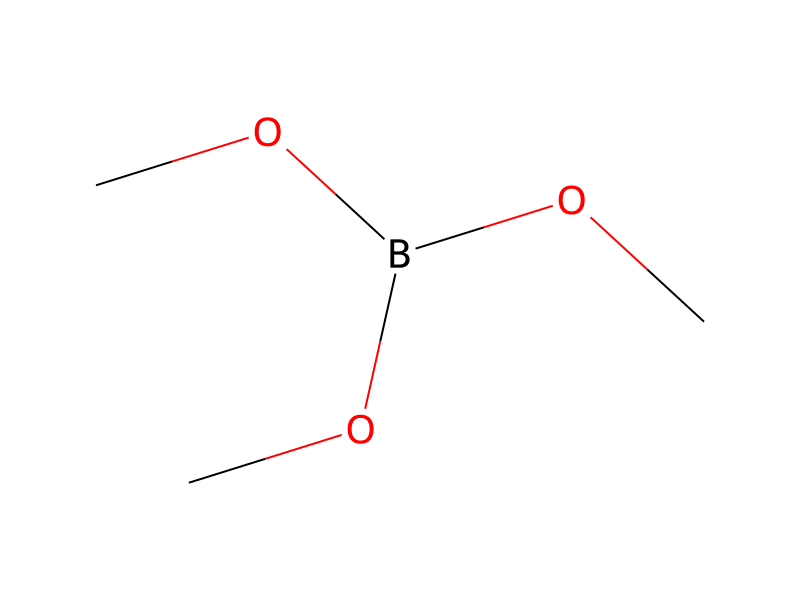
標準SMILES
COB(OC)OC
InChIKey
WRECIMRULFAWHA-UHFFFAOYSA-N
分子式
C3H9BO3
平均分子量
103.92 g/mol
単同位体質量
104.0644743

概要

Trimethyl borate appears as a water-white liquid. Denser than water. Vapors heavier than air. Used as a solvent and fungicide for fruit.

名称と識別子

優先名称
Trimethyl borate
IUPAC
trimethyl borate
現地名
ほう酸トリメチル
英語名
Trimethyl borate
分子式
C3H9BO3
分子量
103.91

名称と別名

TRIMETHYL BORATE121-43-7TrimethoxyboraneMethyl boratetrimethylborateTrimethoxyboronBoric acid trimethyl esterBorester OTrimethoxyborineBoric acid, trimethyl esterBoric acid (H3BO3), trimethyl esterTrimethylester kyseliny borite
名称をさらに表示
ほう酸トリメチル (63-65%メタノール溶液)ほう酸 トリメチルトリス(メトキシ)ボランボレステルOほう酸メチルトリメチルボラートトリメトキシボランオルトほう酸トリメチルトリメチルボラート,6Nトリメチルボラート,メタノール溶液トリメトキシボラン,6Nトリメトキシボラン,メタノール溶液ほう酸メチル,メタノール溶液トリメチルホウ酸トリメチルボレートほう酸メチル(トリメチルボレート)ほう酸メチル (63-65%メタノール溶液)トリメチルボラート(ほう酸トリメチル), ACROSEALRほう酸トリメチルトリメチル ボラートB(OMe)3trimethylB(OCH3)3C3H9BO3LobitridolTriMethyl boratBORON METHOXIDEborestero
NSC-77782U64J6F5NDTXSID0037738CHEBI:38913RefChem:191751DTXCID8017738204-468-9934-685-0

データベース識別子

CAS
121-43-7、3349-42-6
PubChem CID
8470
DTXSID
DTXSID0037738
ChEBI
CHEBI:38913
UNII
82U64J6F5N
EC Number
204-468-9、693-032-5、934-685-0
Nikkaji
J2.484H

物性

構造計算による物性補完中

極性表面積
27.7 Ų
水素結合供与体数
0
水素結合受容体数
3
回転可能結合数
3
重原子数
7
形式電荷
0
複雑度
31.7

実験および物理化学的性質

Chemical Classes · 2 件

Metals -> Metalloid Compounds (Boron)

Flammable agents - 3rd degree

LogP-1.9
Density · 3 件

0.915 g/cu cm

Relative density (water = 1): 0.915

0.92 @ 20°C

Color/FormColorless, moisture-sensitive liquid; fumes in air
Solubility · 3 件

Miscible with tetrahydrofuran, ether, isoporpylamine, hexane, methanol, nujol, and other organic liquids

Miscible with alcohol, ether; soluble in polar nonhydroxylic solvents

Solubility in water: reaction

Flash Point · 3 件

less than 80 °F (NFPA, 2010)

< 80 °F (< 27 °C) (closed cup)

- 7 °C

Boiling Point · 3 件

67.5 °C

68 °C

68 °C @760 [mm Hg]

Decomposition · 2 件

The substance decomposes on heating or on burning producing toxic fumes including boron oxide.

When heated to decomposition it emit acrid smoke and irritating fumes.

Melting Point · 3 件

安全と法規制

安全情報は参考情報です。供給元の安全データシート(SDS)、適用法令、専門家による評価に代わるものではありません。

GHS分類

GHS Classification · 6 件

Danger

H226: Flammable liquid and vapor [Warning Flammable liquids]

P203, P210, P233, P240, P241, P242, P243, P280, P302+P352, P303+P361+P353, P317, P318, P321, P362+P364, P370+P378, P403+P235, P405, and P501 (click each P-code to see the statement)

Danger

H225 (40.5%): Highly Flammable liquid and vapor [Danger Flammable liquids]

P203, P210, P233, P240, P241, P242, P243, P260, P261, P262, P264, P264+P265, P270, P271, P280, P301+P316, P302+P352, P303+P361+P353, P304+P340, P305+P351+P338, P308+P316, P316, P317, P318, P321, P330, P337+P317, P361+P364, P362+P364, P370+P378, P403+P233, P403+P235, P405, and P501 (click each P-code to see the statement)

危険有害性情報

Regulatory Information · 6 件

Chemical: Boric acid (H3BO3), trimethyl ester

Hazard Traits - Reproductive Toxicity

Boric acid (H3BO3), trimethyl ester is listed on the EPA's Chemical Data Reporting (CDR) system. Manufacturers and importers of Boric acid (H3BO3), trimethyl ester are required to report information about their production and use of this chemical to the EPA under the Toxic Substances Control Act (TSCA). (40 eCFR Part 711)

REACH registered substance: Trimethyl borate (EC: 204-468-9)

Boric acid, trimethyl ester: HSNO Approval: HSR001230 Approved with controls

The New Jersey Worker and Community Right to Know Act requires public and private employers to provide information about hazardous substances at their workplaces. (N.J.S.A. 34:5A-1 et. seq.)

DOT LabelFlammable Liquid
Fire Hazards · 3 件

Excerpt from ERG Guide 129 [Flammable Liquids (Water-Miscible / Noxious)]:

· HIGHLY FLAMMABLE: Will be easily ignited by heat, sparks or flames.

Highly flammable. Gives off irritating or toxic fumes (or gases) in a fire. Vapour/air mixtures are explosive.

Fire Potential · 2 件

化学と産業

用途と製造

Uses · 6 件

Used as a flame retardant, welding and brazing flux, chemical intermediate, fungicide, and a solvent for waxes, resins, and oils; [HSDB]

Welding [Category: Weld]

As solvent for waxes, resins, oils; catalyst in manufacture of ketones; analysis of paint and varnish ingredients; as neutron detector gas in presence of a scintillation counter; as promoter of diborane reactions

Dehydrating agent; fungicide for citrus fruit

Intermediate in preparation of metal borohydrides

Azeotropic gaseous flux for welding and brazing

U.S. Production · 3 件

2023: 1,000,000 - <8,500,000 lb

(1979) PROBABLY GREATER THAN 4.54X10+6 G

Production figures for trimethyl borate were given as 21.1 million pound in 1977(1), most of which is used captively in the production of sodium borohydride(2).

Industry UsesNot Known or Reasonably Ascertainable
Methods of Manufacturing...From pyridine-boron trichloride complex; from methanol and boric oxide, borax or boric acid; from methyl orthosilicates and boron halide; from boric acid and methanol...
General Manufacturing Information · 6 件

Pharmaceutical and Medicine Manufacturing

Boric acid (H3BO3), trimethyl ester: ACTIVE

US 2689259; US 2884439; US 2937195 (to Callery Chem)

US 2881227 and US 2884440 (to Olin Mathieson)

US 2855427 (to Am. Potash & Chem.)

US 2739979 ( to USAEC)

応用分野 · 3 件

用途熔接用フラックス原料,医薬?農薬中間体

使用Trimethyl borate is a useful reagent in organic synthesis. It is involved in the production of resins, waxes and paints and acts as a methylation agent. As a boron source, Trimethyl borate is used to prepare flame retardants, anti-oxidants and corrosion inhibitors. It reacts with Grignard reagents followed by hydrolysis to prepare boronic acid. It is also used as a precursor of borate esters, which finds application in the Suzuki coupling reaction. It is used as neutron detector gas in the presence of a scintillation counter; as a promoter of diborane reactions.

関連反応

1,498 件
反応記録を作成
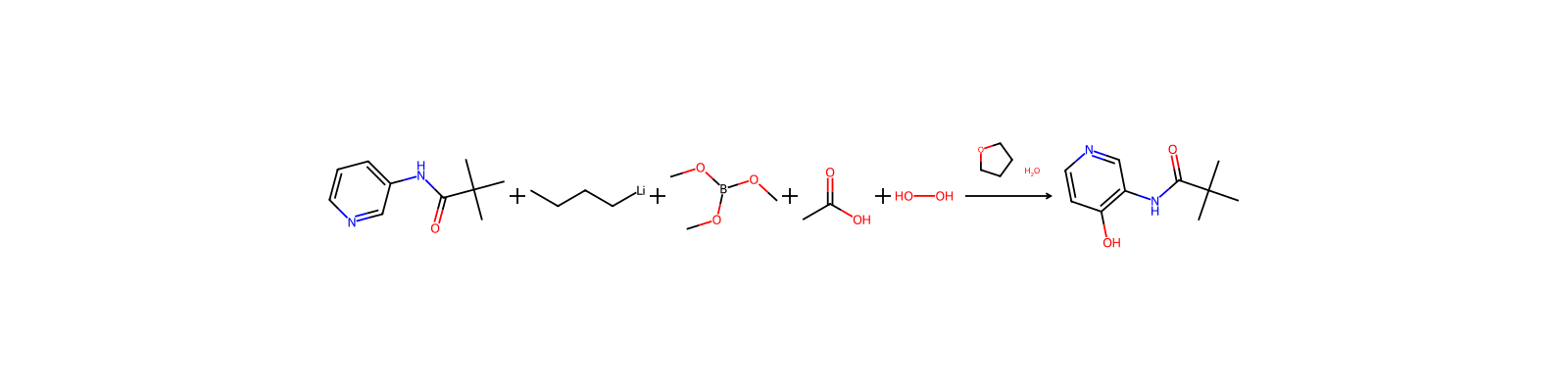
HRID 1874 の反応式
HRID 1874反応物としてuspto-grants-1998_03
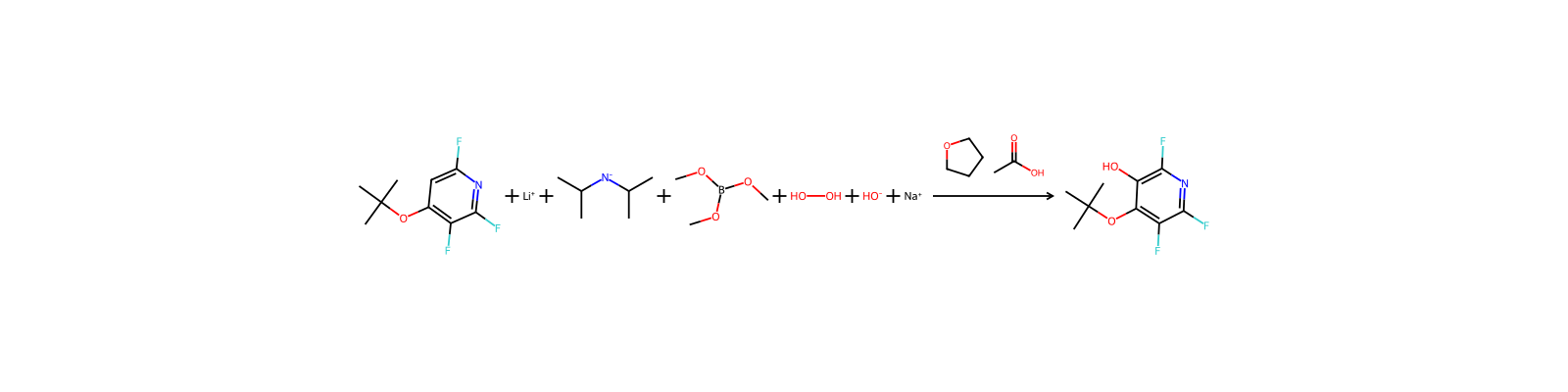
HRID 2061 の反応式
HRID 2061反応物としてuspto-grants-1998_03
HRID 2578 の反応式
HRID 2578反応物としてuspto-grants-1998_03
HRID 5138 の反応式
HRID 5138反応物としてuspto-grants-1993_09
HRID 7777 の反応式
HRID 7777反応物としてuspto-grants-2006_08
HRID 11166 の反応式
HRID 11166反応物としてuspto-grants-2006_08
HRID 11418 の反応式
HRID 11418反応物としてuspto-grants-2006_08
HRID 13639 の反応式
HRID 13639反応物としてuspto-grants-2010_06
1 / 188 ページ

化合物ノート

読み込み中…

このページの内容基本情報概要名称と識別子物性安全と法規制化学と産業関連反応化合物ノート
その他の操作
ノートを作成反応を作成見積依頼を出す

-29.3 °C

-29 °C

-29 °C

Vapor Density · 2 件

3.59 (Air = 1)

Relative vapor density (air = 1): 3.6

Vapor Pressure · 4 件

137.0 [mmHg]

137 mm Hg at 25 °C

Vapor pressure, kPa at 25 °C: 18

137 [mm Hg] @25 °C

Refractive IndexIndex of refraction: 1.3568 at 20 °C/D

物理化学的性質

融点
-34 °C · -34 °C (lit.)
沸点
68 · 68-69 °C (lit.)
比重(密度)
0.932 g/mL · 0.932 g/mL at 20 °C (lit.)
蒸気密度
3.59 · 3.59 (vs air)
蒸気圧
147.9 · 147.9-148 hPa ( 20 °C)
屈折率
20 · n20/D 1.358(lit.)
闪点
8 °F · 8 °F
貯蔵温度
20 °C · Store at <= 20°C.
溶解性
テトラヒドロフラン、エーテル、イソプロピルアミン、ヘキサン、メタノールと混和します。
外見
液体
色
無色
比重
0.915 · 0.915
水溶解度
反応する
比熱容量
1.83 J/ · Cp(liquid): 1.83 J/(g·K), at 25℃
Merck
14 · 14,9712
BRN
1697939 · 1697939
Dielectric constant
8.2 · 8.2(20℃)
安定性
安定。酸化剤と相容れない。湿気があるとゆっくりと分解する。可燃性。
InChI
1S/C3H9BO3/c1-5-4(6-2)7-3/h1-3H3
InChIKey
WRECIMRULFAWHA-UHFFFAOYSA-N
SMILES
COB(OC)OC
CAS データベース
121 · 121-43-7(CAS DataBase Reference)
NISTの化学物質情報
Boric acid, trimethyl ester(121-43-7)
EPAの化学物質情報
Boric acid (H3BO3), trimethyl ester (121-43-7)
化学的性質 · 1 件

化学的特性Water-white moisture-sensitive liquid, fumes in the air. It forms an azeotrope with methanol with an azeotrope of 55°C. Miscible with ether, methanol, hexane, tetrahydrofuran; It is stable in anhydrous state and decomposes into methanol and boric acid in presence of water.

Flammable, fire risk ...

A very dangerous fire hazard when exposed to heat, flame, or oxidizers.

Health Hazards · 2 件

Excerpt from ERG Guide 129 [Flammable Liquids (Water-Miscible / Noxious)]:

· May cause toxic effects if inhaled or absorbed through skin.

Hazards Summary · 1 件

A skin and eye irritant; Inhalation may cause cough and sore throat; [ICSC] Chronic poisoning in grazing animals where soil is high in boric acid results in vomiting, diarrhea, shock, convulsions, and paralysis; Post-mortem findings include inflammation of the GI tract, liver and kidney damage, and cerebral edema; [HSDB]

DOT ID and Guide2416 129
Reactive GroupEsters, Sulfate Esters, Phosphate Esters, Thiophosphate Esters, and Borate Esters
EC ClassificationSymbol: Xn; R: 10-21; S: (2)-23-25
UN ClassificationUN Hazard Class: 3; UN Pack Group: II
Special ReportsUSEPA/OWRS; Quality Criteria for Water 1986 Boron (1986) EPA 440/5-86-001
Reactivity AlertsHighly Flammable

安全と保護具

Fire Fighting · 2 件

Excerpt from ERG Guide 129 [Flammable Liquids (Water-Miscible / Noxious)]:

Use foam, powder, carbon dioxide. In case of fire: keep drums, etc., cool by spraying with water. NO direct contact with water.

First Aid Measures · 4 件

Fresh air, rest.

Rinse skin with plenty of water or shower.

First rinse with plenty of water for several minutes (remove contact lenses if easily possible), then refer for medical attention.

Rinse mouth. Refer for medical attention .

Accidental Release Measures · 2 件

· CALL 911. Then call emergency response telephone number on shipping paper. If shipping paper not available or no answer, refer to appropriate telephone number listed on the inside back cover.

· ELIMINATE all ignition sources (no smoking, flares, sparks or flames) from immediate area.

First Aid · 2 件

Excerpt from ERG Guide 129 [Flammable Liquids (Water-Miscible / Noxious)]:

General First Aid:

Safe StorageFireproof. Separated from strong oxidants and strong acids. Dry.
Exposure Control and Personal Protection· Wear positive pressure self-contained breathing apparatus (SCBA).
Fire Fighting Procedures · 2 件

To fight fire use dry chemical, CO2, spray, foam.

If material on fire or involved in fire: Do not extinguish fire unless flow can be stopped. Use water in flooding quantities as fog. Solid stream of water may be ineffective. Cool all affected containers with flooding quantities of water. Use "alcohol" foam, dry chemical or carbon dioxide. Keep run-off water out of sewers and water sources.

Cleanup Methods · 1 件

Collect leaking and spilled liquid in sealable containers as far as possible. Absorb remaining liquid in dry sand or inert absorbent and remove to safe place. Do NOT wash away into sewer (extra personal protection: self-contained breathing apparatus). /table/

Nonfire Spill ResponseExcerpt from ERG Guide 129 [Flammable Liquids (Water-Miscible / Noxious)]:
Disposal Methods · 1 件

SRP: The most favorable course of action is to use an alternative chemical product with less inherent propensity for occupational exposure or environmental contamination. Recycle any unused portion of the material for its approved use or return it to the manufacturer or supplier. Ultimate disposal of the chemical must consider: the material's impact on air quality; potential migration in soil or water; effects on animal, aquatic, and plant life; and conformance with environmental and public health regulations.

Spillage Disposal · 1 件

Personal protection: filter respirator for organic vapours of low boiling point adapted to the airborne concentration of the substance. Collect leaking liquid in sealable containers. Do NOT wash away into sewer. Absorb remaining liquid in dry sand or inert absorbent. Then store and dispose of according to local regulations.

Preventive Measures · 5 件

Do not breathe gas, fumes, vapor, or spray. Avoid contact with eyes.

SRP: The scientific literature for the use of contact lenses in industry is conflicting. The benefit or detrimental effects of wearing contact lenses depend not only upon the substance, but also on factors including the form of the substance, characteristics and duration of the exposure, the uses of other eye protection equipment, and the hygiene of the lenses. However, there may be individual substances whose irritating or corrosive properties are such that the wearing of contact lenses would be harmful to the eye. In those specific cases, contact lenses should not be worn. In any event, the usual eye protection equipment should be worn even when contact lenses are in place.

SRP: Local exhaust ventilation should be applied wherever there is an incidence of point source emissions or dispersion of regulated contaminants in the work area. Ventilation control of the contaminant as close to its point of generation is both the most economical and safest method to minimize personnel exposure to airborne contaminants.

SRP: Contaminated protective clothing should be segregated in such a manner so that there is no direct personal contact by personnel who handle, dispose, or clean the clothing. Quality assurance to ascertain the completeness of the cleaning procedures should be implemented before the decontaminated protective clothing is returned for reuse by the workers. Contaminated clothing should not be taken home at end of shift, but should remain at employee's place of work for cleaning.

For more Preventive Measures (Complete) data for TRIMETHYL BORATE (6 total), please visit the HSDB record page.

毒性情報

Environmental Fate · 3 件

TERRESTRIAL FATE: Trimethyl borate is rapidly hydrolyzed to boric acid and methanol in the presence of water(1,2). Hydrolysis would be expected to be the dominate fate process for trimethyl borate in the environment(SRC).

AQUATIC FATE: Trimethyl borate is rapidly hydrolyzed to boric acid and methanol in the presence of water(1,2). Hydrolysis would be expected to be the dominate fate process for trimethyl borate in the environment(SRC).

ATMOSPHERIC FATE: According to a model of gas/particle partitioning of semivolatile organic compounds in the atmosphere(1), trimethyl borate, which has a vapor pressure of 136 mm Hg at 25 °C(2), is expected to exist solely as a vapor in the ambient atmosphere. Trimethyl borate is rapidly hydrolyzed to boric acid and methanol in the presence of water(3,4). Hydrolysis would be expected to be the dominate fate process for trimethyl borate in the environment(SRC).

Adverse EffectsNeurotoxin - Other CNS neurotoxin
Exposure RoutesThe substance can be absorbed into the body by inhalation, through the skin and by ingestion.
Signs and Symptoms · 4 件

Cough. Sore throat.

Redness. Burning sensation.

Redness. Pain.

Burning sensation. Abdominal pain.

Medical SurveillanceNo specific considerations are needed for boric acid or borates except for general health and liver and kidney function. /Boric acid and borates/
Soil Adsorption/Mobility · 1 件

Trimethyl borate is rapidly hydrolyzed to boric acid and methanol in the presence of water(1,2). Hydrolysis would be expected to be the dominate fate process for trimethyl borate in the environment(SRC). Adsorption to soil or suspended particles in water is not considered an important environmental fate for trimethyl borate(SRC).

Natural Pollution SourcesBorates are found in ocean water, sedimentary rocks, coal, shale, and soils(1).
Human Toxicity Excerpts · 2 件

/SIGNS AND SYMPTOMS/ Inhalation: Cough, sore throat. Eyes: Redness, pain. Skin: Redness, burning sensation. /table/

/OTHER TOXICITY INFORMATION/ Harmful in contact with skin

Artificial Pollution Sources · 1 件

Trimethyl borate's production and use as a solvent, flame retardant for textiles, dehydrating agent, brazing flux, wood preservative, catalyst, as well as it use as an intermediate for the synthesis of boron compounds and in scintillation counters(1-3) may result in its release to the environment through various waste streams(SRC). Trimethyl borate is used to treat wood where it is decomposed to boric acid upon contact with the moisture in the wood; the boric acid formed acts as a wood preservative preventing damage from wood-destroying fungi and insects(2).

Environmental BiodegradationTrimethyl borate is rapidly hydrolyzed to boric acid and methanol in the presence of water(1,2). Biodegradation in not considered an important environmental fate for trimethyl borate(SRC).
Environmental Bioconcentration · 1 件

Trimethyl borate is rapidly hydrolyzed to boric acid and methanol in the presence of water(1,2). Hydrolysis would be expected to be the dominate fate process for trimethyl borate in the environment(SRC). Bioconcentration is not considered an important environmental fate for trimethyl borate(SRC).

Volatilization from Water/Soil · 1 件

Trimethyl borate is rapidly hydrolyzed to boric acid and methanol in the presence of water(1,2). Hydrolysis would be expected to be the dominate fate process for trimethyl borate in the environment(SRC). Volatilization from water or soil is not considered an important environmental fate for trimethyl borate(SRC).

法規制情報

State Drinking Water Guidelines · 5 件

(CA) CALIFORNIA 1000 ug/L /Boron/

(NH) NEW HAMPSHIRE 630 ug/L /Boron/

(ME) MAINE 1,400 ug/L /Boron/

(MN) MINNESOTA 1,000 ug/L /Boron/

(WI) WISCONSIN 960 ug/L /Boron/

Federal Drinking Water GuidelinesEPA 600 ug/L /Boron/

安全データ

F
21
wgk
3
tsca
TSCA listed
rtecs
ED5600000
ridadr
UN 2416
毒性
LD50 orally in rats: 6.14 ml/kg (Smyth)
PRTR法
第一種指定化学物質
hs_code
29209085
risk_code
11-21-23/25-36/37/38-10-36-61-60
化審法
(2)-2101, (2)-2114
安衛法
有機則 第二種有機溶剤等
消防法
危-4-1-II
hazard_code
Xn,F,T
safety_code
16-27-36/37/39-45-25-23-2-26-53
hazard_class
3
packing_group
II
自然発火温度
305°C
Hazard Classifications
Acute Tox. 3 DermalAcute Tox. 3 InhalationAcute Tox. 3 OralEye Irrit. 2Flam. Liq. 2Repr. 1BSTOT SE 1
ストレージクラス
3 - Flammable liquids
有毒物質データの
121-43-7(Hazardous Substances Data)

一般的な説明Trimethyl borate appears as a water-white liquid. Denser than water. Vapors heavier than air. Used as a solvent and fungicide for fruit.

調製方法 · 2 件

製造方法The preparation method of trimethyl borate1. The direct reaction between boric acid and methanol is as follows:3CH30H+H3B03→B (OCH3) 3+3H20Usually the trimethyl borate formed in the reaction forms an azeotrope with excess methanol and is distilled out together, and then the trimethyl borate is obtained by separating the azeotrope.2. The direct reaction between boron oxide and methanol is as follows:B203+6CH30H→2B (OCH3) 3+3H203. Borax, methanol and sulfuric acid are directly reacted, and the reaction formula is :Na2B4O7.1OH2O+12CH30H+2H2S04→4B (OCH3)3+2NaHS04+17H20

純化方法Carefully fractionate the borate through a gauze-packed column. Re-distil and collect it in weighed glass vials and seal them. Keep it away from moisture. It undergoes alkyl exchange with alcohols and forms azeotropes, e.g. with MeOH the azeotrope consists of 70% (MeO)3B and 30% MeOH with b 52-54o/760mm, d 0.87. [Charnley et al. J Chem Soc 2288 1952, Gerrard & Lappert Chem Ind (London) 53 1952, Schlesinger et al. J Am Chem Soc 75 213 1953.] It has also been dried with Na and then distilled. [Beilstein 1 IV 1269.]

上流・下流製品情報

上流原料

オルトけい酸テトラメチル

下流製品

ベンゾフラン-2-ボロン酸キノリン-8-ボロン酸1-メチル-4-(4,4,5,5-テトラメチル-1,3,2-ジオキサボロラン-2-イル)ピラゾール4-イソプロピルフェニルボロン酸2-N-(メタンスルホンアミド)フェニルボロン酸2-(1-メチルエテニル)-4,4,5,5-テトラメチル-1,3,2-ジオキサボロラン2-(N,N-DIETHYLAMINOCARBONYL)PHENYLBORONIC ACID3-ビフェニルボロン酸2-FLUOROPHENYLBORONIC ACID2-イソプロポキシフェニルボロン酸2-ナフタレンボロン酸1-メチルインドール-5-ボロン酸ベンジルボロン酸4-tert-ブチルフェニルボロン酸4-(メチルチオ)フェニルボロン酸2,3-ジメチルフェニルボロン酸2,6-ジフルオロフェノール2,5-ジクロロフェニルボロン酸1,4-フェニレンジボロン酸3,5-ジメチルイソオキサゾール-4-ボロン酸2-フルオロフェニルボロン酸3,4-(メチレンジオキシ)フェニルボロン酸5-METHOXYBENZOFURAN-2-BORONIC ACID4-ベンジルオキシフェニルボロン酸ベンゾ[b]チオフェン-2-イルボロン酸4-(フェニルカルバモイル)フェニルボロン酸テトラフェニルほう酸ナトリウム2,2'-ビチオフェン-5-ボロン酸4-FLUORO-2-NITROPHENYLBORONIC ACID2-メトキシピリジン-3-ボロン酸2-ベンジルオキシフェニルボロン酸4-シアノフェニルボロン酸3-(メトキシメチル)フェニルボロン酸3,4,5-トリフルオロフェノール4-フルオロ-3-(ヒドロキシメチル)フェニルボロン酸4-(メトキシカルボニル)フェニルボロン酸4-フェノキシフェニルボロン酸インドール-5-ボロン酸1-メチル-5-(4,4,5,5-テトラメチル-1,3,2-ジオキサボロラン-2-イル)ピラゾールキノリン-5-ボロン酸

補足説明

定義ChEBI: Trimethyl borate is a member of the class of borate esters obtained by the formal condensation of three equivalents of methanol with boric acid.