アントラニル酸フェネチル
Phenethyl anthranilate
HCID 8615
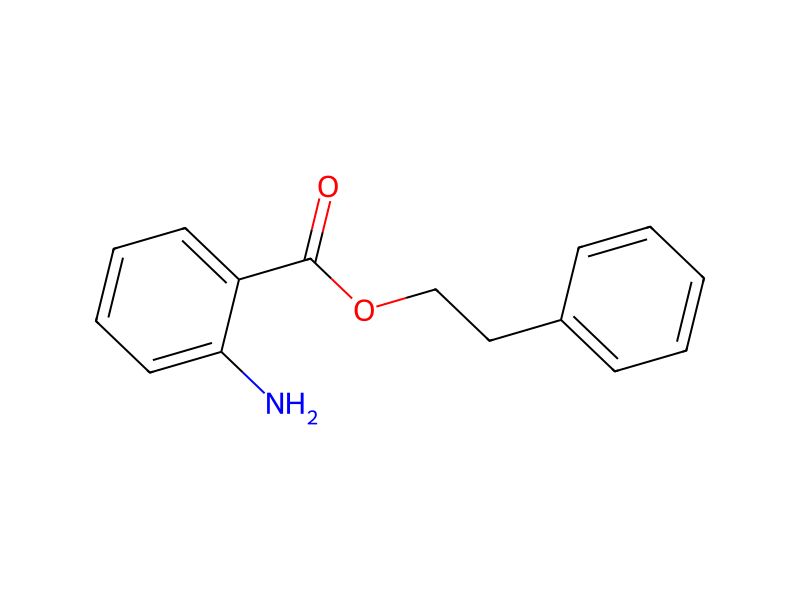
基本情報
- CAS
133-18-6- 標準SMILES
Nc1ccccc1C(=O)OCCc1ccccc1- InChIKey
PXWNBAGCFUDYBE-UHFFFAOYSA-N- 分子式
- C15H15NO2
- 平均分子量
- 241.28 g/mol
- 単同位体質量
- 241.11027872
概要
Phenethyl anthranilate is a colorless solid with an odor of grape and orange. Insoluble in water. (NTP, 1992)
名称と識別子
- 優先名称
- Phenethyl anthranilate
- IUPAC
- 2-phenylethyl 2-aminobenzoate
- 現地名
- アントラニル酸フェネチル
- 英語名
- Phenylethyl Anthranilate
- 分子式
- C15H15NO2
- 分子量
- 241.29
名称と別名
PHENETHYL ANTHRANILATE2-Phenylethyl 2-aminobenzoatePhenylethyl anthranilateBenzylcarbinyl anthranilateBenzoic acid, 2-amino-, 2-phenylethyl esterAnthranilic acid, phenethyl ester2-Phenylethyl o-aminobenzoate2-Phenylethyl-o-aminobenzoatebeta-Phenethyl-o-aminobenzoateFEMA No. 2859NSC 66441CCRIS 4695
名称をさらに表示
アントラニル酸2-フェニルエチル2-アミノ安息香酸2-フェニルエチルアントラニル酸フェネチル2-アミノ安息香酸フェネチルフェネチルアントラニレ-トアンスラニル酸フェニルエチル2-フェニルエチル 2-アミノベンゾアートFEMA 2859Phenethylanthranilat2-Phenethyl anthranilatePHENYL ETHYL ANTHRANILATEbenzylcarbinylanthranilateB-PHENYLETHYL ANTHRANILATE2-PHENYLETHYL ANTHRANILATE
DTXSID5025861EINECS 205-098-0beta-Phenylethyl anthranilateUNII-8HBK71OD818HBK71OD81.beta.-Phenethyl-o-aminobenzoateAI3-36132Anthranilic acid, phenylethyl ester
データベース識別子
- CAS
133-18-6- PubChem CID
- 8615
- DTXSID
DTXSID5025861- ChEMBL
CHEMBL1488668- ChEBI
CHEBI:191913- UNII
- 8HBK71OD81
- EC Number
- 205-098-0
- Nikkaji
- J10.045E
物性
構造計算による物性
- XLogP
- 4.2
- 極性表面積
- 52.3 Ų
- 水素結合供与体数
- 1
- 水素結合受容体数
- 3
- 回転可能結合数
- 5
- 重原子数
- 18
- 形式電荷
- 0
- 複雑度
- 261
実験および物理化学的性質
FragrancesFragrance Ingredient (Phenylethyl anthranilate) -> IFRA transparency List
Food AdditivesFLAVORING AGENT OR ADJUVANT -> FDA Substance added to food
Density1.14 at 77 °F (NTP, 1992) - Denser than water; will sink
Flavoring AgentsEU Flavoring substances
Solubility
Insoluble (<1 mg/ml at 68.0 °F) (NTP, 1992)
Insoluble in water
Soluble (in ethanol)
Melting Point42 °C
Physical Description
Phenethyl anthranilate is a colorless solid with an odor of grape and orange. Insoluble in water. (NTP, 1992)
Solid
Fused, colourless to pale yellow-amber crystaline mass; Neroli, grape undertone
物理化学的性質
- 融点
- 39 · 39-44 °C(lit.)
- 沸点
- 226 °C · 226 °C(lit.)
- 比重(密度)
- 1.0944 · 1.0944 (rough estimate)
安全と法規制
安全情報は参考情報です。供給元の安全データシート(SDS)、適用法令、専門家による評価に代わるものではありません。
GHS分類
GHS Classification
This chemical does not meet GHS hazard criteria for 69.8% (90 of 129) of all reports.
Warning
H315 (30.2%): Causes skin irritation [Warning Skin corrosion/irritation]
P261, P264, P264+P265, P271, P273, P280, P302+P352, P304+P340, P305+P351+P338, P319, P321, P332+P317, P337+P317, P362+P364, P391, P403+P233, P405, and P501 (click each P-code to see the statement)
Aggregated GHS information provided per 129 reports by companies from 3 notifications to the ECHA C&L Inventory. Each notification may be associated with multiple companies.
危険有害性情報
Regulatory Information
Chemical: Benzoic acid, 2-amino-, 2-phenylethyl ester
Commission Regulation (EC) No 1565/2000 (Repealed by Com. Implementing Reg. (EU) No 872/2012)
Benzoic acid, 2-amino-, 2-phenylethyl ester: Does not have an individual approval but may be used under an appropriate group standard
Other Safety InformationIMAP assessments - Benzoic acid, 2-amino-, 2-phenylethyl ester: Human health tier I assessment
DOT LabelClass 9
Fire HazardsFlash point data are not available for this chemical, but it is probably combustible. (NTP, 1992)
Health HazardsSYMPTOMS: May cause skin irritation.
Reactive GroupEsters, Sulfate Esters, Phosphate Esters, Thiophosphate Esters, and Borate Esters
Reactivity ProfilePHENETHYL ANTHRANILATE forms salts readily with acids. Hydrolyzes under alkaline pH conditions. (NTP, 1992).
化学と産業
薬理情報
Cellular LocationsMembrane
用途と製造
Use Classification
Fragrance Ingredients
Flavouring Agent -> FLAVOURING_AGENT -> JECFA Functional Classes
Flavoring Agents -> JECFA Flavorings Index
Flavouring Agent -> FLAVOURING_AGENT -> JECFA Functional Classes
General Manufacturing InformationBenzoic acid, 2-amino-, 2-phenylethyl ester: ACTIVE
応用分野
天然物の起源Has apparently not been reported to occur in nature.
使用Phenylethyl Anthranilate is a synthetic flavoring agent that is a stable, white to yellow crystal of grape and orange blossom odor. It should be stored in glass or polyethylene-lined containers. It is used for flavors such as grape and cherry in applications such as beverages, ice cream, candy, and baked goods at 2–6 ppm.
一般的な説明Colorless solid with an odor of grape and orange. Insoluble in water.
調製方法
製造方法By direct esterification of anthranilic acid with phenylethyl alcohol; pure material from phenylethyl alcohol plus isatoic anhydride; also from phenylethyl alcohol and methylanthranilate.
上流・下流製品情報
上流原料
関連反応
0 件
関連する反応はまだありません