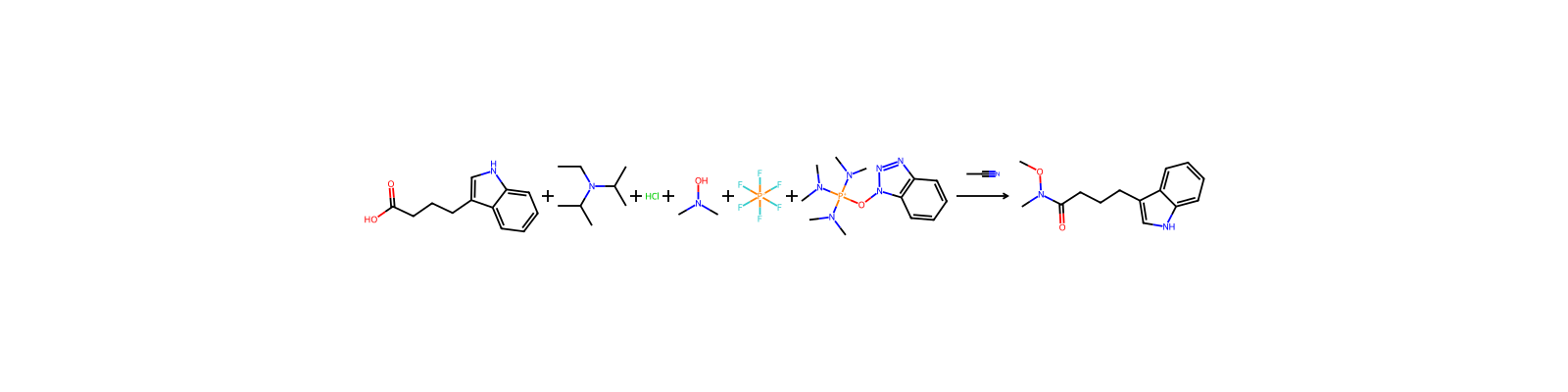
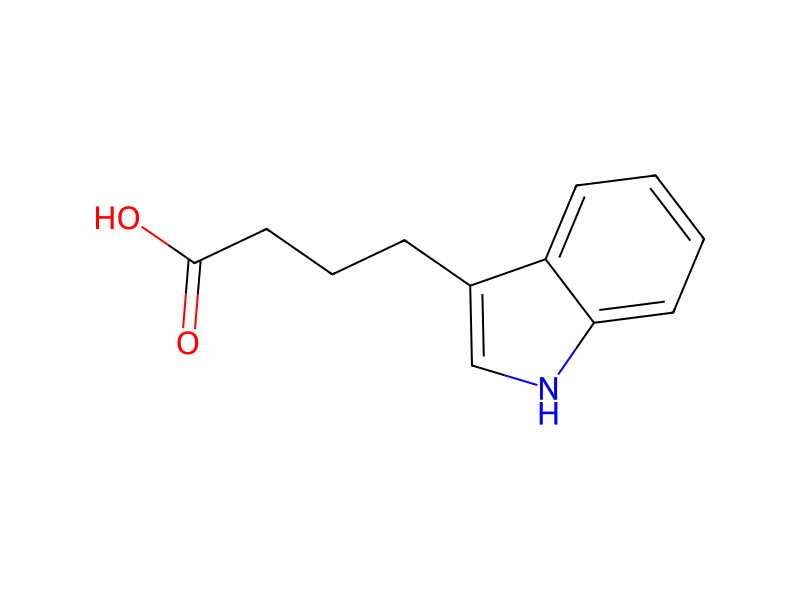
基本情報
- 標準SMILES
O=C(O)CCCc1c[nH]c2ccccc12- InChIKey
JTEDVYBZBROSJT-UHFFFAOYSA-N- 分子式
- C12H13NO2
- 平均分子量
- 203.24 g/mol
- 単同位体質量
- 203.09462866
概要
Indole-3-butyric acid is a indol-3-yl carboxylic acid that is butanoic acid carrying a 1H-indol-3-yl substituent at position 1. It has a role as an auxin, a plant hormone and a plant metabolite. It is functionally related to a butyric acid. It is a conjugate acid of an indole-3-butyrate.
名称と識別子
- 優先名称
- Indole-3-Butyric Acid
- IUPAC
- 4-(1H-indol-3-yl)butanoic acid
- 現地名
- 3-インドール酪酸
- 英語名
- Indole-3-butyric acid
- 分子式
- C12H13NO2
- 分子量
- 203.24
名称と別名
Indole-3-butyric acid3-Indolebutyric acid133-32-44-(1H-Indol-3-yl)butanoic acidIndolebutyric acidHormodinSeradix1H-INDOLE-3-BUTANOIC ACID4-(3-Indolyl)butyric acidJiffy grow4-indol-3-ylbutyric acidIndole-3-butanoic acid
名称をさらに表示
3-インドール酪酸4-(1H-インドール-3-イル)酪酸1H-インドール-3-酪酸セラジックス4-(1H-インドール-3-イル)ブタン酸オキシベロン1H-インドール-3-ブタン酸ホルモジンインドール-3-酪酸インドール酪酸インド-ル-3-酪酸ω(3インドリル)ラク酸3‐インドール酪酸4-(3-インドリル)酪酸3-インドール酪酸(Β-)IBAhormexrootingpowder3-Indolybutyric acidIndole-3-butyric acid IBA4-indole-3-ylbutyric acid
Indolbutyric acidSeradix 2Seradix 3Seradix B 2Seradix B 3Rhizopon AAIndole butyric acid3-Indolyl-gamma-butyric acid
データベース識別子
- CAS
133-32-4- PubChem CID
- 8617
- DTXSID
DTXSID8032623- ChEMBL
CHEMBL582878- ChEBI
CHEBI:33070- UNII
- 061SKE27JP
- EC Number
- 205-101-5
- Nikkaji
- J2.525I
物性
構造計算による物性
- XLogP
- 2.3
- 極性表面積
- 53.1 Ų
- 水素結合供与体数
- 2
- 水素結合受容体数
- 2
- 回転可能結合数
- 4
- 重原子数
- 15
- 形式電荷
- 0
- 複雑度
- 230
実験および物理化学的性質
DrugsPharmaceuticals -> Listed in ZINC15
Pesticides
Plant Growth Regulators
Active substance -> EU Pesticides database: Approved
Pesticides -> Plant Growth Regulators
Herbicides
LogP
log Kow = 2.30
2.30
2.3
OdorEssentially odorless
Color/Form
White to slightly yellow crystals
White to tan powder or crystalline solid
Solubility
In benzene: >1000 g/L; in acetone, ethanol, diethyl ether: 30-100 g/L; in chloroform: 0.01-1 g/L
In water, 250 mg/L @ 20 °C
0.25 mg/mL at 20 °C
Endocrine DisruptorsPotential endocrine disrupting compound
Melting Point
124.5 °C
124.5 °C
Vapor Pressure
0.00000117 [mmHg]
Vapor pressure: <0.01 mPa (<8X10⁻⁸ mm Hg) @ 25 °C
1.8X10⁻⁶ mm Hg @ 25 °C /Estimated/
Henry's Law ConstantHenry's Law constant: 1.3X10⁻¹¹ atm cu m/mol@ 25 °C /Estimated/
Physical Description
White or slightly yellow solid; [Merck Index] Off-white powder; [MSDSonline]
Solid
Stability/Shelf LifeVery stable in neutral, acidic and alkaline media.
物理化学的性質
- 融点
- 124 · 124-125.5 °C(lit.)
- 沸点
- 341.55 °C · 341.55°C (rough estimate)
- 比重(密度)
- 1.1255 · 1.1255 (rough estimate)
- 屈折率
- 1.544 · 1.5440 (estimate)
- 貯蔵温度
- 2 · 2-8°C
- 溶解性
- 25 mg/mL; · DMF: 25 mg/mL; DMSO: 25 mg/mL; Ethanol: 25 mg/mL; PBS (pH 7.2): 0.1 mg/mL
- 酸解離定数(Pka)
- 4.83 · 4.83±0.10(Predicted)
- 外見
- 液体
- 色
- 無色透明~淡黄色
- 水溶解度
- 水に溶けます(0.25g/L)。
- Merck
- 14 · 14,4965
- BRN
- 171120 · 171120
- 安定性
- 安定。強力な酸化剤とは相容れない。光に敏感。
- InChI
- 1S/C12H13NO2/c14-12(15)7-3-4-9-8-13-11-6-2-1-5-10(9)11/h1-2,5-6,8,13H,3-4,7H2,(H,14,15)
- InChIKey
- JTEDVYBZBROSJT-UHFFFAOYSA-N
- SMILES
- OC(=O)CCCc1c[nH]c2ccccc12
- LogP
- 2.3 · 2.300
- CAS データベース
- 133 · 133-32-4(CAS DataBase Reference)
- EPAの化学物質情報
- -3 · Indole-3-butyric acid (133-32-4)
化学的性質
化学的特性Indole-3-butyric acid (IBA) is a white to light yellow powder or crystalline solid with a slight characteristic odor. It is practically insoluble in chloroform, but is soluble in alcohol, ether and acetone. The solubility of IBA in water is 250 mg L-1 (EPA, 2010).
安全と法規制
GHS分類
GHS Classification
Danger
H301 (98%): Toxic if swallowed [Danger Acute toxicity, oral]
P261, P264, P264+P265, P270, P271, P280, P301+P316, P302+P352, P304+P340, P305+P351+P338, P319, P321, P330, P332+P317, P337+P317, P362+P364, P403+P233, P405, and P501 (click each P-code to see the statement)
Aggregated GHS information provided per 98 reports by companies from 23 notifications to the ECHA C&L Inventory. Each notification may be associated with multiple companies.
Danger
H301: Toxic if swallowed [Danger Acute toxicity, oral]
危険有害性情報
Regulatory Information
Commission Regulation (EC) No 2229/2004
2008/941/EC, 2011/28/EU, Reg. (EU) 2023/918, Reg.(EU) No 2018/1266, Reg.(EU) No 540/2011
Indolylbutyric acid: Does not have an individual approval but may be used under an appropriate group standard
Other Safety InformationIMAP assessments - 1H-Indole-3-butanoic acid: Environment tier I assessment
Fire PotentialNon-flammable
Hazards SummaryAll generic toxicology data requirements waived because of low toxicity; Causes substantial but temporary eye injury. [Reference #1] An irritant; [MSDSonline] See Indoleacetic acid.
Special Reports
USEPA/Office of Pesticide Programs; Reregistration Eligibility Decision Document - Indole-3-Butyric Acid, August 1992. The RED summarizes the risk assessment conclusions and outlines any risk reduction measures necessary for the pesticide to continue to be registered in the U.S.[Available from, as of February 10, 2004: http://www.epa.gov/pesticides/reregistration/status.htm]
FIFRA Requirements
An exemption from the requirement of a tolerance is established for residues of auxins (specifically: indole-3-acetic acid and indole-3-butyric acid) in or on all food commodities when used as plant regulators on plants, seeds, or cuttings and on all food commodities after harvest in accordance with good agricultural practices.
As the federal pesticide law FIFRA directs, EPA is conducting a comprehensive review of older pesticides to consider their health and environmental effects and make decisions about their future use. Under this pesticide reregistration program, EPA examines health and safety data for pesticide active ingredients initially registered before November 1, 1984, and determines whether they are eligible for reregistration. In addition, all pesticides must meet the new safety standard of the Food Quality Protection Act of 1996. Pesticides for which EPA had not issued Registration Standards prior to the effective date of FIFRA '88 were divided into three lists based upon their potential for human exposure and other factors, with List B containing pesticides of greater concern and List D pesticides of less concern. Indole-3-butyric acid is on List B. Case No: 2330; Pesticide type: fungicide, herbicide; Case Status: RED Approved 09/1992; OPP has made a decision that some/all uses of the pesticide are eligible for reregistration, as reflected in a Reregistration Eligibility Decision (RED) document.; Active ingredient (AI): indole-3-butyric acid; AI Status: OPP has completed a Reregistration Eligibility Decision (RED) for the case/AI..
The Agency ... finds that products containing only IBA as an active ingredient are eligible for reregistration once the product specific data, confirmatory ecotoxicity data, and amended labeling are received and accepted by the Agency. Products that contain additional active ingredients will be reregistered once the Agency completes eligibility decisions on the other active ingredients and once product specific and amended labeling are received and accepted.
Hazard Classes and Categories
Acute Tox. 3 (98%)
Acute toxicity (Oral) - Category 3
安全と保護具
Disposal Methods
SRP: The most favorable course of action is to use an alternative chemical product with less inherent propensity for occupational exposure or environmental contamination. Recycle any unused portion of the material for its approved use or return it to the manufacturer or supplier. Ultimate disposal of the chemical must consider: the material's impact on air quality; potential migration in soil or water; effects on animal, aquatic, and plant life; and conformance with environmental and public health regulations.
Allowable Tolerances
An exemption from the requirement of a tolerance is established for residues of auxins (specifically: indole-3-acetic acid and indole-3-butyric acid) in or on all food commodities when used as plant regulators on plants, seeds, or cuttings and on all food commodities after harvest in accordance with good agricultural practices.
毒性情報
Ecotoxicity Values
LC50 Oncorhynchus mykiss (Rainbow trout,donaldson trout) >90.5 ppm/96 hr; static /formulated product/
EC50 Daphnia magna (Water flea; intoxication, immobilization) 57 ppm/48 hr (95% confidence interval: 46-74 ppm); static /formulated product/
LC50 Colinus virginianus (Northern bobwhite, 14 day old) diet >5,000 ppm (in the diet)/8 days
LC50 Colinus virginianus (Northern bobwhite, 20 wk old) oral >2,150 mg/kg/14 days
EC50 Lactuca sativa (Lettuce; inhibition of germination) 0.06 mol/cu m/72 hr
Environmental Fate
TERRESTRIAL FATE: Based on a classification scheme(1), an estimated Koc value of 550(SRC), determined from a structure estimation method(2), indicates that indolebutyric acid is expected to have moderate to low mobility in soil(SRC). The estimated pKa of indolebutyric acid is 4.7 for the ionization of the carboxylic acid group(3), indicating that this compound will primarily exist in the dissociated form in the environment; anions generally do not adsorb to organic carbon and clay as strongly as their neutral counterparts(4). Volatilization of indolebutyric acid from moist soil surfaces is not expected to be an important fate process, since indolebutyric acid is expected to exist primarily in its dissociated form in the environment(SRC). Volatilization of the undissociated form of indolebutyric acid from moist soil surfaces is not expected to be an important fate process(SRC) given an estimated Henry's Law constant of 1.3X10⁻¹¹ atm-cu m/mole(SRC), developed using a fragment constant estimation method(7). Indolebutyric acid is not expected to volatilize from dry soil surfaces(SRC) based upon an estimated vapor pressure of 1.8X10⁻⁶ mm Hg(SRC), determined from a fragment constant method(5). Indolebutyric acid was reported to degrade rapidly in soil(6).
AQUATIC FATE: Based on a classification scheme(1), an estimated Koc value of 550(SRC), determined from a structure estimation method(2), indicates that indolebutyric acid is not expected to adsorb to suspended solids and sediment(SRC). This compound is expected to exist in the dissociated form in the environment, based on an estimated pKa of 4.7 for the ionization of the carboxylic acid group(3), and therefore volatilization from water surfaces is not expected to be an important fate process(SRC). Volatilization from water surfaces is not expected for the undissociated form of indolebutyric acid(9) based upon an estimated Henry's Law constant of 1.3X10⁻¹¹ atm-cu m/mole(SRC), developed using a fragment constant estimation method(10). Indolebutyric acid is not expected to undergo hydrolysis in the environment due to the lack of hydrolyzable functional groups(4). Indolebutyric acid was reported to be very stable in neutral, acidic, or alkaline media(5). According to a classification scheme(6), an estimated BCF of 3(SRC), from its log Kow of 2.30(7) and a regression-derived equation(8), suggests the potential for bioconcentration in aquatic organisms is low(SRC). Biodegradation data for indolebutyric acid in water were not found; however, indolebutyric acid was reported to degrade rapidly in soil(11).
ATMOSPHERIC FATE: According to a model of gas/particle partitioning of semivolatile organic compounds in the atmosphere(1), indolebutyric acid, which has an estimated vapor pressure of 1.8X10⁻⁶ mm Hg at 25 °C(SRC), determined from a fragment constant method(2), will exist in both the vapor and particulate phases in the ambient atmosphere. Vapor-phase indolebutyric acid is degraded in the atmosphere by reaction with photochemically-produced hydroxyl radicals(SRC); the half-life for this reaction in air is estimated to be 2 hours(SRC), calculated from its rate constant of 2.0X10⁻¹⁰ cu cm/molecule-sec at 25 °C(SRC) that was derived using a structure estimation method(3). Particulate-phase indolebutyric acid may be removed from the air by wet and dry deposition(SRC). Indolebutyric acid may be susceptible to direct photolysis by sunlight(SRC), since it has an absorbance at 290 nm(4).
Soil Adsorption/Mobility
Using a structure estimation method based on molecular connectivity indices(1), the Koc for indolebutyric acid can be estimated to be 550(SRC). According to a classification scheme(2), this estimated Koc value suggests that indolebutyric acid is expected to have low mobility in soil. The estimated pKa of indolebutyric acid is 4.7 for the carboxylic acid group(3), indicating that this compound will primarily exist in the dissociated form in the environment; anions generally do not adsorb to organic carbon and clay as strongly as their neutral counterparts(4).
Artificial Pollution Sources
Indolebutyric acid's production may result in its release to the environment through various waste streams; its use as a rooting hormone for plant cuttings and plant growth regulator(1,2) will result in its direct release to the environment(SRC).
Environmental BiodegradationIndolebutyric acid was reported to degrade rapidly in soil(1).
Environmental Bioconcentration
An estimated BCF of 3 was calculated for indolebutyric acid(SRC), using a log Kow of 2.30(1) and a regression-derived equation(2). According to a classification scheme(3), this BCF suggests the potential for bioconcentration in aquatic organisms is low(SRC).
Volatilization from Water/Soil
This compound is expected to exist in the dissociated form in the environment, based on an estimated pKa of 4.7(1), and therefore volatilization from water surfaces or moist soil surfaces is not expected to be an important fate process(SRC). Indolebutyric acid is not expected to volatilize from dry soil surfaces(SRC) based upon an estimated vapor pressure of 1.8X10⁻⁶ mm Hg(SRC), determined from a fragment constant method(2).
Non-Human Toxicity Excerpts
/LABORATORY ANIMALS: Acute Exposure/ ...These products have low acute toxicity as suggested from data of at least one formulated product (Toxicity Categories III and IV), no dermal irritation , and moderate eye irritation, perhaps from another active or an inert ingredient in the product formulation. /Formulated Indole-3-butyric acid/
/GENOTOXICITY/ ...Indole-3-butyric acid (IBA), was tested for genetic activity in Aspergillus nidulans in a plate test. IBA was found to greatly increase somatic segregation in the fungus. ... It was found that increasing concentrations of IBA increased mitotic segregation of the fungus with most of the segregants being produced by mitotic crossing-over, together with non-disjunctional segregants at a lower level. The metabolic activation technique was also used and it was shown that when S9 mixture was added to IBA a further 3- to 5-fold increase in the number of segregants was obtained.
/GENOTOXICITY/ The plant growth-regulating hormones indole-3-acetic acid (IAA) and indole-3-butyric acid (IBA), both strong recombinogens in Aspergillus nidulans, were tested in Salmonella typhimurium strains for his revertants at a range of concentrations from 1 to 2000 micrograms/plate with and without metabolic activation and were found negative.
Environmental Abiotic Degradation
The rate constant for the vapor-phase reaction of indolebutyric acid with photochemically-produced hydroxyl radicals has been estimated as 2.0X10⁻¹⁰ cu cm/molecule-sec at 25 °C(SRC) using a structure estimation method(1). This corresponds to an atmospheric half-life of about 2 hours at an atmospheric concentration of 5X10+5 hydroxyl radicals per cu cm(1). Indolebutyric acid is not expected to undergo hydrolysis in the environment due to the lack of hydrolyzable functional groups(2). Indolebutyric acid was reported to be very stable in neutral, acidic, or alkaline media(3). Indolebutyric acid may be susceptible to direct photolysis by sunlight(SRC), since it has an absorbance at 290 nm(4).
Probable Routes of Human Exposure
NIOSH (NOES Survey 1981-1983) has statistically estimated that 864 workers are potentially exposed to indolebutyric acid in the US(1). Occupational exposure to indolebutyric acid may occur through inhalation and dermal contact with this compound at workplaces where indolebutyric acid is produced or used(SRC). The general population may be exposed to indolebutyric acid via dermal contact with consumer products containing indolebutyric acid(SRC).
Environmental Fate/Exposure Summary
Indolebutyric acid's production may result in its release to the environment through various waste streams; its use as a rooting hormone for plant cuttings and plant growth regulator will result in its direct release to the environment. If released to air, an estimated vapor pressure of 1.8X10⁻⁶ mm Hg at 25 °C indicates indolebutyric acid will exist in both the vapor and particulate phases in the ambient atmosphere. Vapor-phase indolebutyric acid will be degraded in the atmosphere by reaction with photochemically-produced hydroxyl radicals; the half-life for this reaction in air is estimated to be 2 hours. Particulate-phase indolebutyric acid will be removed from the atmosphere by wet and dry deposition. Indolebutyric acid may be susceptible to direct photolysis by sunlight, since it has an absorbance at 290 nm. If released to soil, indolebutyric acid is expected to have moderate to low mobility based upon an estimated Koc of 550. The estimated pKa of indolebutyric acid is 4.7 for the ionization of the carboxylic acid group, indicating that this compound will primarily exist in the dissociated form in the environment and anions generally do not adsorb to organic carbon and clay as strongly as their neutral counterparts. Volatilization from moist soil surfaces is not expected to be an important fate process for indolebutyric acid, since it is expected to exist primarily in its dissociated form in the environment. Volatilization from moist soil surfaces is not expected for the undissociated form of indolebutyric acid based on an estimated Henry's Law constant of 1.3X10⁻¹¹ atm cu m/mol. Volatilization from dry soil is not expected based upon indolebutyric acid's estimated vapor pressure. Indolebutyric acid was reported to degrade rapidly in soil. If released into water, indolebutyric acid is not expected to adsorb to suspended solids and sediment based upon the estimated Koc. This compound is expected to exist in the dissociated form in the environment and therefore volatilization from water surfaces is not expected to be an important fate process. An estimated BCF of 3 suggests the potential for bioconcentration in aquatic organisms is low. Hydrolysis is not expected to be an important environmental fate process since this compound lacks functional groups that hydrolyze under environmental conditions. Indolebutyric acid was reported to be very stable in neutral, acidic, or alkaline media. Occupational exposure to indolebutyric acid may occur through inhalation and dermal contact with this compound at workplaces where indolebutyric acid is produced or used. The general population may be exposed to indolebutyric acid via dermal contact with consumer products containing indolebutyric acid. (SRC)
Antidote and Emergency Treatment
/SRP:/ Basic treatment: Establish a patent airway. Suction if necessary. Watch for signs of respiratory insufficiency and assist ventilations if needed. Administer oxygen by nonrebreather mask at 10 to 15 L/min. Monitor for pulmonary edema and treat if necessary ... . Monitor for shock and treat if necessary ... . Anticipate seizures and treat if necessary ... . For eye contamination, flush eyes immediately with water. Irrigate each eye continuously with normal saline during transport ... . Do not use emetics. For ingestion, rinse mouth and administer 5 ml/kg up to 200 ml of water for dilution if the patient can swallow, has a strong gag reflex, and does not drool ... . Cover skin burns with dry sterile dressings after decontamination ... . /Poison A and B/
/SRP:/ Advanced treatment: Consider orotracheal or nasotracheal intubation for airway control in the patient who is unconscious, has severe pulmonary edema, or is in respiratory arrest. Positive pressure ventilation techniques with a bag valve mask device may be beneficial. Monitor cardiac rhythm and treat arrhythmias as necessary ... . Start an IV with D5W /SRP: "To keep open", minimal flow rate/. Use lactated Ringer's if signs of hypovolemia are present. Watch for signs of fluid overload. Consider drug therapy for pulmonary edema ... . For hypotension with signs of hypovolemia, administer fluid cautiously. Watch for signs of fluid overload ... . Treat seizures with diazepam (Valium) ... . Use proparacaine hydrochloride to assist eye irrigation ... . /Poison A and B/
法規制情報
FIFRA Requirements
An exemption from the requirement of a tolerance is established for residues of auxins (specifically: indole-3-acetic acid and indole-3-butyric acid) in or on all food commodities when used as plant regulators on plants, seeds, or cuttings and on all food commodities after harvest in accordance with good agricultural practices.
As the federal pesticide law FIFRA directs, EPA is conducting a comprehensive review of older pesticides to consider their health and environmental effects and make decisions about their future use. Under this pesticide reregistration program, EPA examines health and safety data for pesticide active ingredients initially registered before November 1, 1984, and determines whether they are eligible for reregistration. In addition, all pesticides must meet the new safety standard of the Food Quality Protection Act of 1996. Pesticides for which EPA had not issued Registration Standards prior to the effective date of FIFRA '88 were divided into three lists based upon their potential for human exposure and other factors, with List B containing pesticides of greater concern and List D pesticides of less concern. Indole-3-butyric acid is on List B. Case No: 2330; Pesticide type: fungicide, herbicide; Case Status: RED Approved 09/1992; OPP has made a decision that some/all uses of the pesticide are eligible for reregistration, as reflected in a Reregistration Eligibility Decision (RED) document.; Active ingredient (AI): indole-3-butyric acid; AI Status: OPP has completed a Reregistration Eligibility Decision (RED) for the case/AI..
The Agency ... finds that products containing only IBA as an active ingredient are eligible for reregistration once the product specific data, confirmatory ecotoxicity data, and amended labeling are received and accepted by the Agency. Products that contain additional active ingredients will be reregistered once the Agency completes eligibility decisions on the other active ingredients and once product specific and amended labeling are received and accepted.
安全データ
- F
- 8-10-23
- wgk
- 3
- tsca
- TSCA listed
- rtecs
- NL5250000
- ridadr
- UN 2811 6.1/PG 3
- 毒性
- LD50 i.p. in mice: 100 mg/kg (Anderson)
- hs_code
- 29339990
- risk_code
- 25-36/37/38
- 化審法
- (5)-3368, (9)-297
- hazard_code
- T,Xi
- hazard_note
- Irritant
- safety_code
- 26-36-45-38-36/37/39-28A
- hazard_class
- 6.1
- packing_group
- III
- Hazard Classifications
- Acute Tox. 3 Oral
- ストレージクラス
- 6.1C - Combustible acute toxic Cat.3toxic compounds or compounds which causing chronic effects
- 有毒物質データの
- 133-32-4(Hazardous Substances Data)
化学と産業
薬理情報
Tissue LocationsNeuron
Cellular LocationsMembrane
用途と製造
Uses
Used to stimulate root formation of plant clippings; [HSDB] Similar in structure to the naturally occurring plant-growth hormone indole-3-acetic acid; Used on fruit, vegetable, and field crops and on ornamental turf; Used to reduce transplant shock in ornamental nursery stock; [Reference #1]
Farming (Pesticides) [Category: Industry]
For indole-3-butyric acid (USEPA/OPP Pesticide Code: 046701) ACTIVE products with label matches. /SRP: Registered for use in the U.S. but approved pesticide uses may change periodically and so federal, state and local authorities must be consulted for currently approved uses./
Biochemical pesticide, plant growth regulator.
To stimulate root formation of plant clippings.
Methods of Manufacturing... Heating indole, gamma-butyrolactone, and sodium hydroxide , followed by acidification of the product
Formulations/Preparations
Trade names: Hormodin, Seradix
Technical grade: 97.0%. Dust: 0.01%-4.5%; soluble concentrate/liquid: 0.0004%-1.03%; wettable powder/dust: 0.1%-0.8%.
Mixtures: Boll-Set (+gibberellic acid), Cytoplex HMS (+gibberellic acid+kinetin), Early Harvest (+cytokinins+gibberellic acid), Maxon II (+gibberellic acid), PGR-IV (+gibberellic acid), Super Lagniappe (+cytokinins+gibberellic acid).
Trade names: Synergol, Chryzoplus, Chryzopon, Chryzosan, Chryzotek, Chryzotop, Rhizopon AA.
Discontinued names: Rootone.
Household ProductsInformation on 5 consumer products that contain 3-Indolebutyric acid in the following categories is provided:
Use ClassificationHerbicides
General Manufacturing Information1H-Indole-3-butanoic acid: ACTIVE
応用分野
解説《indolebutyric acid》植物ホルモンの一。発根促進作用があり、挿し木や挿し芽の際に、発根に利用される。小学館 デジタル大辞泉について 情報 | 凡例
用途生化学 植物生長調節物質
使用Used to stimulate root formation of plant clippings. Suitable for plant cell culture tested.
一般的な説明Indole-3-butyric acid is a plant hormone in the auxin family and is widely used in agriculture since it induces rooting in various plants species such as mung bean (Vigna radiataL.) cuttings.
調製方法
純化方法Recrystallise the acid from H2O. It is soluble in EtOH, Et2O and Me2CO but insoluble in CHCl3. [Bowman & Islip Chem Ind London 154 1971, Jackson & Manske J Am Chem Soc 52 5029 1930, Albaum & Kaiser Am J Bot 24 420 1937.] It has also been recrystallised from EtOH/water [James & Ware J Phys Chem 89 5450 1985]. Its UV has 278 and 320nm in isoPrOH [Elvidge Quart J Pharm Pharmacol 13 219 1940].max The methyl ester has m 73-74o (from *C6H6/pet ether) and b 230o/6mm [Bullock & Hand J Am Chem Soc 78 5854 1951]. [Beilstein 22 III/IV 1128, 22/3 V 140.]
上流・下流製品情報
上流原料
下流製品
サプライヤー50 社
国药集团化学试剂有限公司86-21-63210123 · [email protected]
北京华美互利生物化工010-56205725 · [email protected]
梯希爱(上海)化成工业发展有限公司021-67121386 · [email protected]
衢州润东化工有限公司0570-8789886 18892685668 · [email protected]
上海阿拉丁生化科技股份有限公司400-6206333 13167063860 · [email protected]
INTATRADE GmbH+49 3493/605464 · [email protected]
爱斯特(成都)生物制药股份有限公司+86-28-85122536 85324413 · [email protected]
上海如吉生物科技发展有限公司+86-21-65211385-8001 36031160 · [email protected]
韶远科技(上海)有限公司021-50795510 4000665055 · [email protected]
科瑞迪化学400-821-5857 021-64326257 · [email protected]
Syntechem Co.,Ltd[email protected]
上海迈瑞尔生化科技有限公司4006356688 18621169109 · [email protected]
武汉易泰科技有限公司上海分公司18930552037 · [email protected]
上海拓克化学科技有限公司+86-021-69895597 13776836200 +86-13776836200 · [email protected]
大连美仑生物技术有限公司0411-62910999 13889544652 · [email protected]
阿法埃莎(中国)化学有限公司400-6106006 · [email protected]
太原市瑞和丰科贸有限公司+86 351 7031519 · [email protected]
安耐吉化学&3A(安徽泽升科技股份有限公司)400-0056266 · [email protected]
上海瀚鸿科技股份有限公司021-54306202 13764082696 · [email protected]
上海相辉医药科技有限公司13761987713 · [email protected]
上海景颜化工科技有限公司13817811078 · [email protected]
嘉兴市艾森化工有限公司0573-85285100 18627885956 · [email protected]
Pure Chemistry Scientific Inc.001-857-928-2050 or 1-888-588-9418 · [email protected]
上海泰坦科技股份有限公司400-6009262 15618770481 · [email protected]
MedChemexpress LLC021-58955995 · [email protected]
合肥天健化工有限公司551-65418679 15856988503;15837135945 · [email protected]
武汉丰泰威远科技有限公司027-87465837 19945049750 · [email protected]
孝感深远化工有限公司15527621225; 15527621225 · [email protected]
山东西亚化学有限公司13355009207 13355009207 · [email protected]
玛雅试剂+86 (573) 82222445 (0)18006601000 452520369 · [email protected]
四川库利南科技有限公司400-1166-196 18981987031 · [email protected]
天津希恩思生化科技有限公司400 638 7771 · [email protected]
湖南汇百侍生物科技有限公司0731-85526065 13308475853 · [email protected]
南京维奥化工有限公司Please Send Email 18652950785 · [email protected]
河南多贝化工有限公司0370-2785118 17550508557 · [email protected]
斯百全化学(上海)有限公司021-021-021-67601398-809-809-809 15221380277 · [email protected]
武汉海正工贸发展有限公司027-8866 0053/88660577/88660578
上海源叶生物科技有限公司13636370518 · [email protected]
艾科试剂4008-755-333 18080918076 · [email protected]
上海思域化工科技有限公司86-21-34053660 · [email protected]
赛默飞世尔科技(中国)有限公司800-810-5118 · [email protected]
北京伊诺凯科技有限公司400-810-7969 010-59572699 · [email protected]
AdooQ BioScience, LLC+1 (866) 930-6790 · [email protected]
上海遐瑞医药科技有限公司+86 21 61551611
南京诺利斯医药科技有限公司13901585132 · [email protected]
江苏艾康生物医药研发有限公司025-66113011 13913916777 · [email protected]
TCI AMERICA800-4238616 · [email protected]
TOKYO CHEMICAL INDUSTRY CO., LTD.03-36680489 · [email protected]
TCI Europe320-37350700 · [email protected]
深圳振强药物研发有限公司0755-66853366 13670046396 · [email protected]
補足説明
定義ChEBI: Indole-3-butyric acid is a indol-3-yl carboxylic acid that is butanoic acid carrying a 1H-indol-3-yl substituent at position 1. It has a role as a plant hormone, a plant metabolite and an auxin. It derives from a butyric acid. It is a conjugate acid of an indole-3-butyrate.
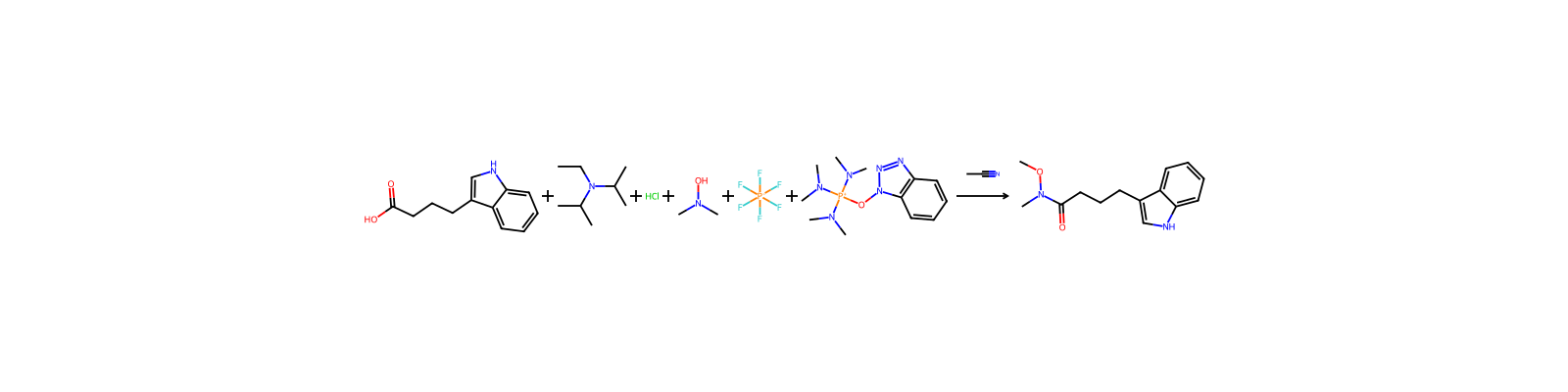
関連反応
33 件


関連ノート
読み込み中…