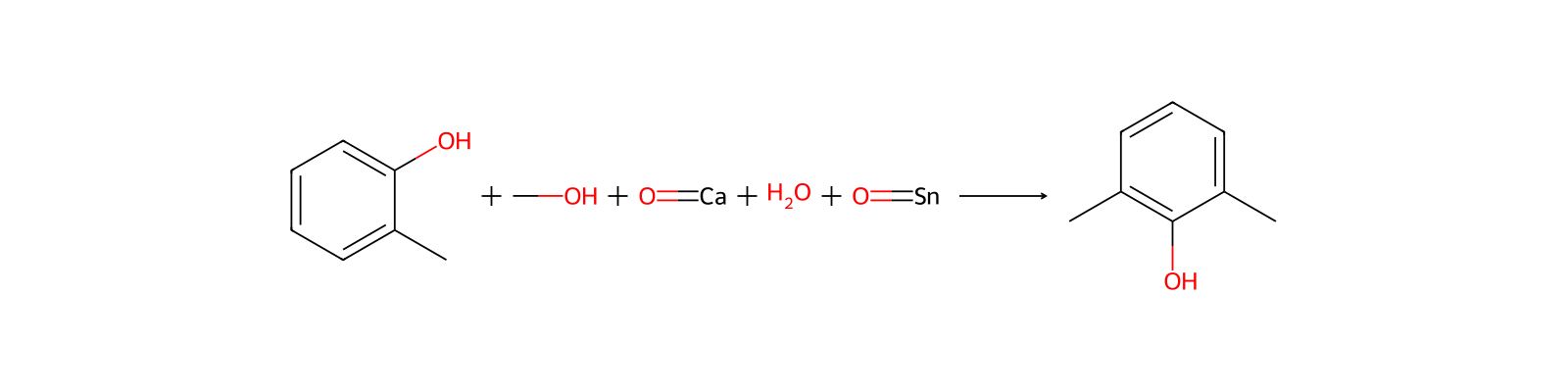
HRID 140467反応物として
TIN OXIDE (SnO)

21651-19-4[O]=[Sn]QHGNHLZPVBIIPX-UHFFFAOYSA-NTin(ii) oxide appears as brownish-black powder or black to blue-black crystalline solid. Mp: 1080 °C (decomposes); density: 6.45 g cm-3. Insoluble in water.
21651-19-46.3 (NIOSH, 2024) - Denser than water; will sink
6.45 g/cm³
6.3
6.95 @25 °C
6.3
Insoluble (NIOSH, 2024)
Solubility in water: none
Insoluble
Decomposes (NIOSH, 2024)
decomposes
Decomposes
1976 °F @ 600 mmHg. (Decomposes) (NIOSH, 2024)
1976 °F@600 mmHg (decomposes)
1630 °C
(600 mmHg): 1976 °F (Decomposes)
0 mmHg (approx) (NIOSH, 2024)
0 mmHg
0 mmHg (approx)
Tin(ii) oxide appears as brownish-black powder or black to blue-black crystalline solid. Mp: 1080 °C (decomposes); density: 6.45 g cm-3. Insoluble in water.
Dry Powder
Brownish-black solid; [Merck Index] Bluish-black odorless powder; [Alfa Aesar MSDS]
BLUE-TO-BLACK CRYSTALLINE POWDER.
Brownish-black powder or black to blue-black crystalline solid.
Brownish-black powder.
化学的特性black crystals with a characteristic odour. Tin oxide is insoluble in water but soluble in acids and alkalis and slightly soluble in ammonium chloride. Tin oxide is incompatible with acids and/or alkalis.
安全情報は参考情報です。供給元の安全データシート(SDS)、適用法令、専門家による評価に代わるものではありません。
This chemical does not meet GHS hazard criteria for 64.7% (130 of 201) of all reports.
Danger
H302 (35.3%): Harmful if swallowed [Warning Acute toxicity, oral]
P260, P261, P264, P264+P265, P270, P272, P280, P301+P317, P302+P352, P305+P351+P338, P319, P321, P330, P333+P317, P337+P317, P362+P364, and P501 (click each P-code to see the statement)
Aggregated GHS information provided per 201 reports by companies from 10 notifications to the ECHA C&L Inventory. Each notification may be associated with multiple companies.
Danger
Chemical: Tin oxide (SnO)
Tin oxide (SnO) is listed on the EPA's Chemical Data Reporting (CDR) system. Manufacturers and importers of Tin oxide (SnO) are required to report information about their production and use of this chemical to the EPA under the Toxic Substances Control Act (TSCA). (40 eCFR Part 711)
REACH registered substance: Tin monoxide (EC: 244-499-5)
Tin (II) oxide: Does not have an individual approval but may be used under an appropriate group standard
May cause mechanical respiratory tract irritation; Stannosis is a benign pneumoconiosis caused by inhalation of tin dust or fume. [ICSC] Slowly oxidized by air forming tin(IV) oxide; [CAMEO] May cause irritation; Harmful by ingestion; [Alfa Aesar MSDS] See Tin and inorganic compounds. See Tin(IV) oxide.
Acute Tox. 4 (35.3%)
Specific target organ toxicity - Repeated exposure - Category 1 (lung)
Fresh air, rest.
Rinse skin with plenty of water or shower.
First rinse with plenty of water for several minutes (remove contact lenses if easily possible), then refer for medical attention.
Rinse mouth.
Excerpt from NIOSH Pocket Guide for Tin(II) oxide (as Sn):
(General first aid procedures)
TIH (Toxic Inhalation Hazard) - Term used to describe gases and volatile liquids that are toxic when inhaled. Some are TIH materials themselves, e.g., chlorine, and some release TIH gases when spilled in water, e.g., chlorosilanes. [ERG 2016].
Personal protection: particulate filter respirator adapted to the airborne concentration of the substance. If appropriate, moisten first to prevent dusting. Sweep spilled substance into covered containers. Carefully collect remainder. Then store and dispose of according to local regulations.
EYES: irrigate opened eyes for several minutes under running water. INGESTION: do not induce vomiting. Rinse mouth with water (never give anything by mouth to an unconscious person). Seek immediate medical advice. SKIN: should be treated immediately by rinsing the affected parts in cold running water for at least 15 minutes, followed by thorough washing with soap and water. If necessary, the person should shower and change contaminated clothing and shoes, and then must seek medical attention. INHALATION: supply fresh air. If required provide artificial respiration.
inhalation, skin and/or eye contact
Oral (L308) ; inhalation (L308) ; dermal (L308)
Cough.
Stannosis (benign pneumoconiosis): dyspnea (breathing difficulty), decreased pulmonary function
Inorganic or organic tin compounds placed on the skin or in the eyes can produce skin and eye irritation. (L308)
Though tin metal is very poorly absorbed, tin compounds may be absorbed via oral, inhalation, or dermal routes, with organotin compounds being much more readily absorbed than inorganic tin compounds. Tin may enter the bloodstream and bind to hemoglobin, where it is distributed and accumulates mainly in the kidney, liver, lung, and bone. Tin and its metabolites are excreted mainly in the urine and feces. (L308)
Tin oxides are used in solders, protective coatings, and alloys; [ACGIH] Used as a reducing agent and to make stannous salts; [Merck Index] Used to make gold-tin and copper-tin ruby glass; [INCHEM CICADS]
Abrasive Blasting [Category: Clean]
Glassblowing [Category: Hobbies]
Tin(II) oxide is used as a precursor in manufacturing of other, typically divalent, tin compounds or salts, and as a reducing agent and in the creation of ruby glass. (L321)
Synthetic Dye and Pigment Manufacturing
Tin oxide (SnO): ACTIVE
用途還元剤、有機合成原料、第一すず化合物の製造原料。
用途高純度金属酸化物。
使用Tin(II) oxide is used as reducing agent, soft abrasive, and in preparation of stannous salts. It is used in the manufacture of copper ruby glass, and for illumination with UV light.
一般的な説明Brownish-black powder or black to blue-black crystalline solid. Mp: 1080°C (decomposes); density: 6.45 g cm-3. Insoluble in water.