ホームMCPワークベンチSkills
ホームワークベンチ通知マイページ
llms.txt · MCPガイドプライバシーポリシー · 利用規約 · サポートv1.8.0
  1. ホーム
  2. /化合物

ヘプタン

Heptane

HCID 8900
ノートを作成反応を作成見積依頼を出す
印刷プレビュー

データを補完しています。しばらくしてからページを更新すると最新の内容を表示できます

基本情報概要名称と識別子物性安全と法規制化学と産業関連反応化合物ノート
部分構造検索類似構造を探す

基本情報

CAS
142-82-5
標準SMILES
CCCCCCC
InChIKey
IMNFDUFMRHMDMM-UHFFFAOYSA-N
分子式
C7H16
平均分子量
100.2 g/mol
単同位体質量
100.12520051

概要

N-heptane is a clear colorless liquids with a petroleum-like odor. Flash point 25 °F. Less dense than water and insoluble in water. Vapors heavier than air.

名称と識別子

優先名称
Heptane
IUPAC
heptane
現地名
ヘプタン
英語名
Heptane
分子式
C7H16
分子量
100.2

名称と別名

HEPTANEn-Heptane142-82-5HeptanHeptyl hydrideDipropyl methaneGettysolve-CDipropylmethaneSkellysolve CHeptanenEptaninormal-Heptane
名称をさらに表示
ヘプタン (異性体含む)ヘプタン [HPLC用]ヘプタン [アミノ酸配列分析用]ヘプタン [標準物質]標準燃料ノルマルヘプタンノルマルヘプタンn-ヘプタン正ヘプタンnヘプタンヘプタン(N-へプタン)ヘプタン(脱水)ヘプタン(n-〃)ヘプタン [GC用標準物質]ヘプタン [高速液体クロマトグラフィー用]ヘプタン [吸光分析用]ノルマル‐ヘプタンヘプタン(N‐ヘプタン)ヘプタン(脱水) ‐SUPER‐ヘプタン LC-MS クロマソルブヘプタン PURISS. P.A.,REAG. PH. EUR.,≥99% N-ヘプタン BASIS (GC)heptanes1-HEPTANEAliphatic hydrocarbonNORMAL HEPTANEHEPTANE FRACTIONheptane(n-heptane)
DTXSID6024127456148SDMJNSC-62784DTXCID004127CHEBI:43098RefChem:6645205-563-8Pentane, ethyl-

データベース識別子

CAS
142-82-5
PubChem CID
8900
DTXSID
DTXSID6024127
ChEMBL
CHEMBL134658
ChEBI
CHEBI:43098
UNII
456148SDMJ
EC Number
205-563-8
Nikkaji
J2.027C、J3.192.067A

物性

構造計算による物性補完中

XLogP
4.4
極性表面積
0 Ų
水素結合供与体数
0
水素結合受容体数
0
回転可能結合数
4
重原子数
7
形式電荷
0
複雑度
19.2

実験および物理化学的性質

Chemical ClassesFlammable agents - 3rd degree
LipidsFatty Acyls [FA] -> Hydrocarbons [FA11]
SolventsSolvents -> Aliphatics, Saturated (<C12)
CosmeticsSolvent; Hair dyeing
SpringerMaterials PropertiesGibbs energy
PesticidesPesticide -> EPA IRIS
LogP · 4 件

log Kow = 4.66

4.66

4.66

4.48

OdorGasoline-like odor
Density · 6 件

0.6838 at 68 °F (USCG, 1999) - Less dense than water; will float

0.6795 g/cu cm at 25 °C

% in saturated air: 6.3 at 25 °C, 760 mm Hg; density of air saturated with vapor: 1.18 at 25 °C, 760 mm Hg

Density (at 20 °C): 0.68 g/ml

0.68

0.684 @25 °C

Color/FormColorless liquid
Solubility · 6 件

安全と法規制

安全情報は参考情報です。供給元の安全データシート(SDS)、適用法令、専門家による評価に代わるものではありません。

GHS分類

GHS Classification · 6 件

Danger

H225: Highly Flammable liquid and vapor [Danger Flammable liquids]

P210, P233, P240, P241, P242, P243, P261, P264, P271, P273, P280, P301+P316, P302+P352, P303+P361+P353, P304+P340, P319, P321, P331, P332+P317, P362+P364, P370+P378, P391, P403+P233, P403+P235, P405, and P501 (click each P-code to see the statement)

Danger

H225 (100%): Highly Flammable liquid and vapor [Danger Flammable liquids]

P210, P233, P240, P241, P242, P243, P261, P264, P271, P273, P280, P301+P316, P302+P352, P303+P361+P353, P304+P340, P319, P321, P331, P332+P317, P362+P364, P370+P378, P391, P403+P233, P403+P235, P405, and P501 (click each P-code to see the statement)

危険有害性情報

Regulatory Information · 6 件

Chemical: Heptane

Regulation (EC) No 178/2002 (amended)

Heptane is listed on the EPA's Chemical Data Reporting (CDR) system. Manufacturers and importers of Heptane are required to report information about their production and use of this chemical to the EPA under the Toxic Substances Control Act (TSCA). (40 eCFR Part 711)

REACH registered substance: Heptane (EC: 205-563-8)

Heptane: HSNO Approval: HSR001164 Approved with controls

The New Jersey Worker and Community Right to Know Act requires public and private employers to provide information about hazardous substances at their workplaces. (N.J.S.A. 34:5A-1 et. seq.)

DOT LabelFlammable Liquid
Fire Hazards · 3 件

FLAMMABLE. Flashback along vapor trail may occur. Vapor may explode if ignited in an enclosed area. (USCG, 1999)

· HIGHLY FLAMMABLE: Will be easily ignited by heat, sparks or flames.

Highly flammable. Vapour/air mixtures are explosive.

Fire PotentialHighly flammable liquid and vapor.
Health Hazards

化学と産業

薬理情報

Mechanism of Action · 1 件

In the present molecular dynamics simulations /investigators/ study the chemical warfare agent sulfur mustard (bis(2-chloroethyl) sulfide) and the alkane heptane inserted into a dipalmitoylphosphatidylcholine (DPPC) bilayer, a generic model for a biological membrane. /They/ investigate the diffusion, the orientation, the preferred positioning, and the end-to-end distance of the solutes within the membrane as well as the corresponding coupling times. /Investigators/ compare results of equilibrium simulations and simulation at different external forces, which drag the solutes through the membrane. These properties lead to a general comparison of the rotational and translational behaviors of the two solutes during the penetration of the membrane... For heptane the hindrance to penetrate into the membrane is significantly higher than for sulfur mustard. In contrast to heptane molecules, which spend the most of the time penetrating the tail groups, sulfur mustard needs more time to escape the tail group-head group interface of the membrane.

Metabolism/Metabolites · 4 件

Heptane is metabolized to its parent alcohols (mainly 2-heptanol and 3 heptanol, and to a minor extent 1-heptanol and 4- heptanol). The heptanol metabolites are conjugated by glucuronates or sulfates, and subsequently excreted in urine. Heptane is further metabolized at relatively high rates by hydroxylation before being converted to the corresponding keto forms. Diketone metabolic products, believed to be responsible for neurotoxicity, are produced to a lower extent compared to hexane in agreement with the finding that heptane is less neurotoxic. In vitro studies have shown that at least three cytochrome P450 isozymes are involved in the liver metabolism of heptane.

...Female Wistar rats were exposed to 2000 ppm n-heptane inhalation for 12 weeks. Metabolites in urine were identified by gas chromatography-mass spectrometry. Urinary metabolites were quantified following 6-hr n-heptane exposures. n-Heptane metabolites were 1-, 2-, 3-, and 4-heptanols, 2- and 3-heptanones, 2,5- and 2,6-heptanediols, 5-hydroxy-2-heptanone, 6-hydroxy-2-heptanone, 6-hydroxy-3-heptanone, 2,5- and 2,6-heptanediones, and gamma-valerolactone. The amount of urinary metabolites increased greatly after the second exposure day, achieving a steady-state concentration on subsequent exposure days over the 12 weeks of the exposure regimen. These results showed that n-heptane was metabolized mainly by hydroxylation at omega- 1 carbon atom and to a lesser extent at the omega- 2 carbon atom. 2-Heptanol, 6-hydroxy-2-heptanone, and 3-heptanol were the major metabolites and were excreted as sulfates and glucuronides. 2,5-Heptanedione, which is a neurotoxic agent, was the metabolite found in least amounts (2.4 +/- 2 ug/rat) in the urine. No clinical evidence of neurotoxicity was observed after n-heptane exposure.

関連反応

3,581 件
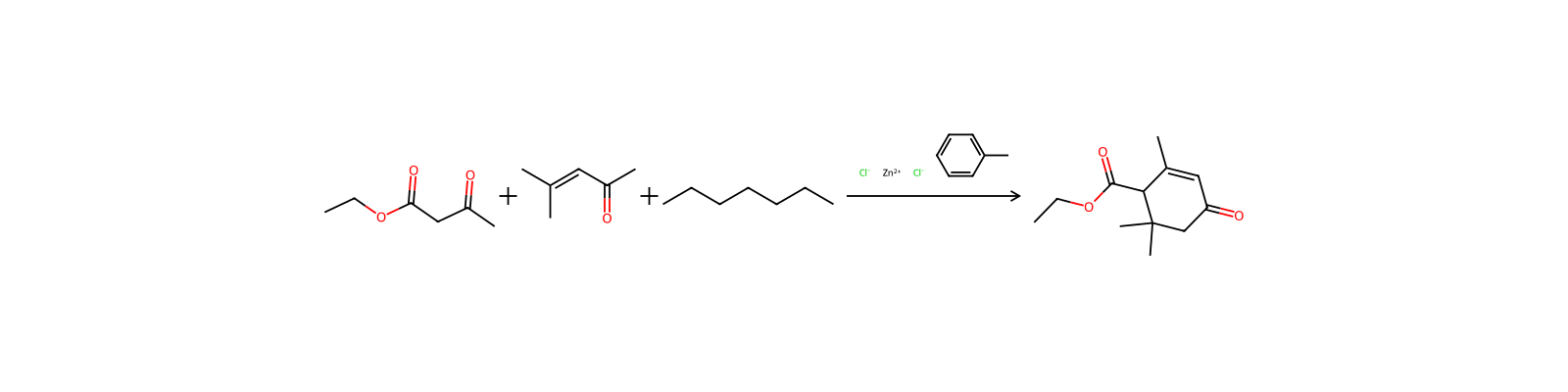
反応記録を作成
HRID 2539 の反応式
HRID 2539溶媒としてuspto-grants-1998_03
HRID 3979 の反応式
HRID 3979反応物としてuspto-grants-1988_02
HRID 5684 の反応式
HRID 5684溶媒としてuspto-grants-1993_09
HRID 5763 の反応式
HRID 5763溶媒としてuspto-grants-1993_09
HRID 8513 の反応式
HRID 8513溶媒としてuspto-grants-2006_08
HRID 8514 の反応式
HRID 8514溶媒としてuspto-grants-2006_08
HRID 8523 の反応式
HRID 8523溶媒としてuspto-grants-2006_08
HRID 9121 の反応式
HRID 9121溶媒としてuspto-grants-2006_08
1 / 448 ページ

化合物ノート

読み込み中…

このページの内容基本情報概要名称と識別子物性安全と法規制化学と産業関連反応化合物ノート
その他の操作
ノートを作成反応を作成見積依頼を出す

0.0003 % (NIOSH, 2024)

In water, 3.40 mg/L at 25 °C

Soluble in carbon tetrachloride; very soluble in ethanol; miscible with ethyl ether, acetone, benzene, chloroform, and petroleum ether

0.0034 mg/mL at 25 °C

Solubility in water, mg/l at 25 °C: 2.2 (very poor)

0.0003%

CorrosivityPasses ASTM D 130-30 test

物理化学的性質

融点
91 °C · −91 °C(lit.)
沸点
98 °C · 98 °C(lit.)
比重(密度)
0.684 g/mL · 0.684 g/mL at 20 °C
蒸気密度
3.5 · 3.5 (vs air)
蒸気圧
40 mm · 40 mm Hg ( 20 °C)
屈折率
20 · n20/D 1.397
闪点
30 °F · 30 °F
貯蔵温度
5 °C · Store at +5°C to +30°C.
溶解性
アセトン:混和性(点灯)
外見
液体
酸解離定数(Pka)
14 · >14 (Schwarzenbach et al., 1993)
比重
0.684 · 0.684 (20/4℃)
色
10 · ≤10(APHA)
臭い (Odor)
ガソリン。
臭気閾値(Odor Threshold)
0.67 ppm · 0.67ppm
爆発限界(explosive limit)
1 · 1-7%(V)
水溶解度
実質的に不溶
比熱容量
2.24 J/ · Cp(liquid): 2.24 J/(g·K), at 25℃
Merck
14 · 14,4659
BRN
1730763 · 1730763
Henry's Law Constant
0.901 · 0.901, 1.195, and 1.905(atmm3/mol) at 26.0, 35.8, and 45.0 °C, respectively (dynamic headspace, Hansen et al., 1995)
Dielectric constant
1.9 · 1.9(20℃)
安定性
安定。酸化剤、塩素、リンとは相容れない。とても燃えやすい。空気と爆発性混合物を容易に形成します。
主な用途
微生物学
化粧品成分の機能
溶媒
InChI
1S/C7H16/c1-3-5-7-6-4-2/h3-7H2,1-2H3
InChIKey
IMNFDUFMRHMDMM-UHFFFAOYSA-N
SMILES
CCCCCCC
LogP
4.66 · 4.660
表面張力
21.12 mN/m · 21.12mN/m at 293.15K
CAS データベース
142 · 142-82-5(CAS DataBase Reference)
NISTの化学物質情報
Heptane(142-82-5)
EPAの化学物質情報
Heptane (142-82-5)
Absorption
0.1 at · 0.10 at 225nm0.40 at 210nm1.0 at 197nm
化学的性質 · 3 件

化学的特性ヘプタインは興味深い化学物質でありその特性や用途は多岐にわたります化学式であるC7H16を持つこの炭化水素はアルカン系列に分類され飽和炭化水素の一種ですその構造は炭素原子が直鎖状または分岐鎖状に連なっていることが特徴です

化学的特性n-Heptane is a flammable liquid, present in crude oil and widely used in the auto- mobile industry. For example, as a solvent, as a gasoline knock testing standard, as automotive starter fl uid, and paraffi nic naphtha. n-Heptane causes adverse health effects in occupational workers, such as CNS depression, skin irritation, and pain. Other compounds such as n-octane (CH 3 (CH 2 ) 6 CH 3 ), n-nonane (CH 3 (CH 2 ) 7 CH 3 ), and n-decane (CH 3 (CH 2 ) 8 CH 3 ) have different industrial applications. Occupational workers exposed to these compounds also show adverse health effects. In principle, manage- ment of these aliphatic compounds requires proper handling and disposal to avoid health problems and to maintain chemical safety standards for safety to workers and the living environment.

化学性质沸点約98度セルシウス密度0684gcm320度セルシウス揮発性高い

· 2 件

VAPOR: Not irritating to eyes, nose or throat. If inhaled, will cause coughing or difficult breathing. LIQUID: Irritating to skin and eyes. If swallowed, will cause nausea or vomiting. (USCG, 1999)

CAUTION: Petroleum crude oil (UN1267) may contain TOXIC hydrogen sulphide gas.

DOT ID and Guide · 2 件

1206 128

1206 128

Reactive GroupHydrocarbons, Aliphatic Saturated
EC ClassificationSymbol: F, Xn, N; R: 11-38-50/53-65-67; S: (2)-9-16-29-33-60-61-62; Note: C
UN ClassificationUN Hazard Class: 3; UN Pack Group: II
TSCA Requirements · 2 件

Section 8(a) of TSCA requires manufacturers of this chemical substance to report preliminary assessment information concerned with production, exposure, and use to EPA as cited in the preamble in 51 FR 41329. Effective date: 1/26/94; Reporting date: 3/28/94.

Pursuant to section 8(d) of TSCA, EPA promulgated a model Health and Safety Data Reporting Rule. The section 8(d) model rule requires manufacturers, importers, and processors of listed chemical substances and mixtures to submit to EPA copies and lists of unpublished health and safety studies. Heptane is included on this list. Effective date: 1/26/94; Sunset date: 6/30/98.

Reactivity AlertsHighly Flammable
OSHA Standards · 2 件

Permissible Exposure Limit: Table Z-1 8-hr Time Weighted Avg: 500 ppm (2000 mg/cu m).

Vacated 1989 OSHA PEL TWA 400 ppm (1600 mg/cu m); STEL 500 ppm (2000 mg/cu m) is still enforced in some states.

安全と保護具

Fire Fighting · 2 件

Excerpt from ERG Guide 128 [Flammable Liquids (Water-Immiscible)]:

Use alcohol-resistant foam, dry powder, carbon dioxide, water spray. In case of fire: keep drums, etc., cool by spraying with water.

First Aid Measures · 4 件

Fresh air, rest. Refer for medical attention.

Rinse and then wash skin with water and soap. Refer for medical attention if skin irritation occurs.

First rinse with plenty of water for several minutes (remove contact lenses if easily possible), then refer for medical attention.

Rinse mouth. Give nothing to drink. Do NOT induce vomiting. Refer immediately for medical attention.

Accidental Release Measures · 2 件

· CALL 911. Then call emergency response telephone number on shipping paper. If shipping paper not available or no answer, refer to appropriate telephone number listed on the inside back cover.

· ELIMINATE all ignition sources (no smoking, flares, sparks or flames) from immediate area.

First Aid · 3 件

Excerpt from NIOSH Pocket Guide for n-Heptane:

General First Aid:

(General first aid procedures)

Safe StorageFireproof. Separated from strong oxidants. Store in an area without drain or sewer access. Provision to contain effluent from fire extinguishing.
Firefighting HazardsThe vapor is heavier than air and may travel along the ground; distant ignition possible. As a result of flow, agitation, etc., electrostatic charges can be generated.
Exposure Control and Personal Protection · 2 件

· Wear positive pressure self-contained breathing apparatus (SCBA).

500.0 [ppm]

Fire Fighting Procedures · 2 件

For small (incipient) fires, use media such as "alcohol" foam, dry chemical, or carbon dioxide. For large fires, apply water from as far as possible. Use very larg quantities (flooding) of water applied as a mist or spray; solid streams of water may be ineffective. Cool all affected containers with flooding quantities of water.

In case of fire: Evacuate area. Fight fire remotely due to the risk of explosion. Use water spray to cool unopened containers.

Storage ConditionsFireproof. Separated from strong oxidants. Store in an area without drain or sewer access.
Cleanup Methods · 1 件

Collect leaking liquid in sealable containers... Absorb remaining liquid in sand or inert absorbent. Then store and dispose of according to local regulations. Do NOT wash away into sewer. Personal protection: filter respirator for organic gases and vapors adapted to the airborne concentration of the substance.

Nonfire Spill ResponseExcerpt from ERG Guide 128 [Flammable Liquids (Water-Immiscible)]:
Disposal Methods · 3 件

SRP: Wastewater from contaminant suppression, cleaning of protective clothing/equipment, or contaminated sites should be contained and evaluated for subject chemical or decomposition product concentrations. Concentrations shall be lower than applicable environmental discharge or disposal criteria. Alternatively, pretreatment and/or discharge to a permitted wastewater treatment facility is acceptable only after review by the governing authority and assurance that "pass through" violations will not occur. Due consideration shall be given to remediation worker exposure (inhalation, dermal and ingestion) as well as fate during treatment, transfer and disposal. If it is not practicable to manage the chemical in this fashion, it must be evaluated in accordance with EPA 40 CFR Part 261, specifically Subpart B, in order to determine the appropriate local, state and federal requirements for disposal.

Burn in a chemical incinerator equipped with an afterburner and scrubber but exert extra care in igniting as this material is highly flammable. Offer surplus and non-recyclable solutions to a licensed disposal company. Contact a licensed professional waste disposal service to dispose of this material.

The following wastewater treatment technologies have been investigated for heptane: Biological treatment.

毒性情報

Body Burden · 1 件

n-Heptane was detected in 7 of 12 samples of mothers breast milk from the cities of Bayonne, NJ; Jersey City, NJ; Bridgeville, PA; and Baton Rouge, LA(1). n-Heptane has also been detected in mother's milk collected from Pittsburgh, PA(2). The concentrations of n-heptane in the samples from these studies were not reported(SRC).

TreatmentTreatment is mainly symptomatic and supportive. Gastric lavage, emesis, and the administration of activated charcoal should be avoided, as vomiting increases the risk of aspiration. (A600)
Target OrgansSkin, respiratory system, central nervous system
Health EffectsPetroleum distillates are aspiration hazards and may cause pulmonary damage, central nervous system depression, and cardiac effects such as cardiac arrhythmias. They may also affect the blood, immune system, liver, and kidney. (A600, L1297)
Ecotoxicity Values · 5 件

LC50; Species: Chaetogammarus marinus /amphipod/; Concentration: 0.2 mg/L for 96 hr /Conditions of bioassay not specified in source examined/

LC50; Species: Mysidopsis bahia (Opossum shrimp); Concentration: 0.1 mg/L for 96 hr /Conditions of bioassay not specified in source examined/

LC50; Species: Carassius auratus (Goldfish); Concentration: 4 mg/L for 24 hr /Conditions of bioassay not specified in source examined/

LC50; Species: Leuciscus idus melanotus (Golden orfe); Concentration: 2940 mg/L for 48 hr /Conditions of bioassay not specified in source examined/ /formulated product/

For more Ecotoxicity Values (Complete) data for n-Heptane (9 total), please visit the HSDB record page.

Environmental Fate · 3 件

TERRESTRIAL FATE: Based on a classification scheme(1), an estimated Koc value of 240(SRC), determined from a structure estimation method(2), indicates that n-heptane is expected to have moderate mobility in soil(SRC). Volatilization of n-heptane from moist soil surfaces is expected to be an important fate process(SRC) given an estimated Henry's Law constant of 1.8 atm-cu m/mole(SRC), based upon its vapor pressure, 46 mm Hg(3), and water solubility, 3.4 mg/L(4). n-Heptane is expected to volatilize from dry soil surfaces(SRC) based upon a vapor pressure of 46 mm Hg at 25 °C(3). A 101% of theoretical BOD using activated sludge in the Japanese MITI test(5) suggests that biodegradation is an important environmental fate process in soil(SRC).

AQUATIC FATE: Based on a classification scheme(1), an estimated Koc value of 240(SRC), determined from a structure estimation method(2), indicates that n-heptane is expected to adsorb to suspended solids and sediment(SRC). Volatilization from water surfaces is expected(3) based upon an estimated Henry's Law constant of 1.8 atm-cu m/mole(SRC), derived from its vapor pressure, 46 mm Hg(4), and water solubility, 3.4 mg/L(5). Using this Henry's Law constant and an estimation method(3), volatilization half-lives for a model river and model lake are 2.9 hours and 4.0 days, respectively(SRC). According to a classification scheme(6), an estimated BCF of 550(SRC), from its log Kow of 4.66(7) and a regression-derived equation(8), suggests the potential for bioconcentration in aquatic organisms is high(SRC). A 101% of theoretical BOD using activated sludge in the Japanese MITI test(9) suggests that biodegradation is an important environmental fate process in water.

ATMOSPHERIC FATE: According to a model of gas/particle partitioning of semivolatile organic compounds in the atmosphere(1), n-heptane, which has a vapor pressure of 46 mm Hg at 25 °C(2), is expected to exist solely as a vapor in the ambient atmosphere. Vapor-phase n-heptane is degraded in the atmosphere by reaction with photochemically-produced hydroxyl radicals(SRC); the half-life for this reaction in air is estimated to be 2.2 days(SRC), calculated from its rate constant of 7.15X10⁻¹² cu cm/molecule-sec at 25 °C(3). n-Heptane does not contain chromophores that absorb at wavelengths >290 nm(4) and, therefore, is not expected to be susceptible to direct photolysis by sunlight(SRC).

Food Survey Values · 1 件

The concentration of n-heptane measured in the volatile components of duck meat, duck fat, cantonese style roasted duck, and cantonese style roasted duck gravy were 1.34, 3.47, 17.29, and 6.51 ppb on a wet basis, respectively(1). n-Heptane was identified (unspecified concentrations) in both the noncondensable volatile fraction and in the condensable lipid fraction headspace of raw beef(2). n-Heptane has been detected in dry-cured hams at different stages of the manufacturing process; however, the concentrations were not specified(3). n-Heptane was identified as a volatile component of fried bacon(4), roasted filberts(5) and nectarines(6). n-Heptane has been detected (unspecified concentrations) in boiled Chinese Chestnuts(7). n-Heptane has been identified in headspace samples of heated peanut oil(8). n-Heptane has been detected in the headspace of floured chickpea seed(9).

Adverse Effects · 2 件

Neurotoxin - Acute solvent syndrome

Compound with “poor evidence” of ototoxicity (it is a questionably ototoxic substance).

Exposure Routes · 3 件

The substance can be absorbed into the body by inhalation of its vapour and by ingestion.

inhalation, ingestion, skin and/or eye contact

Oral (T29) ; inhalation (T29) ; dermal (T29)

Milk Concentrations · 1 件

n-Heptane was detected in 7 of 12 samples of mothers breast milk from the cities of Bayonne, NJ; Jersey City, NJ; Bridgeville, PA; and Baton Rouge, LA(1). n-Heptane has also been detected in mother's milk collected from Pittsburgh, PA(2). The concentrations of n-heptane in the samples from these studies were not reported.

Toxicity SummaryPetroleum distillates are central nervous system depressants and cause pulmonary damage. (A600)
Ecotoxicity Excerpts/AQUATIC SPECIES/ Young Coho salmon /Oncorhynchus kisutch/: no significant mortalities when applied in amounts up to 100 ppm, after 96 hr in artificial sea water at 8 °C

法規制情報

TSCA Requirements · 2 件

Section 8(a) of TSCA requires manufacturers of this chemical substance to report preliminary assessment information concerned with production, exposure, and use to EPA as cited in the preamble in 51 FR 41329. Effective date: 1/26/94; Reporting date: 3/28/94.

Pursuant to section 8(d) of TSCA, EPA promulgated a model Health and Safety Data Reporting Rule. The section 8(d) model rule requires manufacturers, importers, and processors of listed chemical substances and mixtures to submit to EPA copies and lists of unpublished health and safety studies. Heptane is included on this list. Effective date: 1/26/94; Sunset date: 6/30/98.

安全データ

F
3-10
OEB
A
OEL
TWA: 85 ppm (350 mg/m3), Ceiling: 440 ppm (1800 mg/m3) [15-minute]
wgk
3
IDLA
750 ppm
tsca
TSCA listed
rtecs
MI7700000
ridadr
UN 1206
毒性
LC (2 hr in air) in mice: 75 mg/l (Lazarew)
hs_code
29011000
risk_code
11-38-50/53-65-67
化審法
(2)-7
安衛法
57,57-2
消防法
危険物第4類第一石油類(非水溶性)
hazard_code
F,Xn,N
safety_code
9-16-29-33-60-61-62-23
hazard_class
3
packing_group
II
自然発火温度
433 °F
Hazard Classifications
Aquatic Acute 1Aquatic Chronic 1Asp. Tox. 1Flam. Liq. 2Skin Irrit. 2STOT SE 3
ストレージクラス
3 - Flammable liquids
有毒物質データの
142-82-5(Hazardous Substances Data)

Cytochrome P450 is a unique enzyme that produces n-heptane metabolites of different oxidation states. Metabolism of n-heptane was investigated with rat liver microsomes and a reconstituted rat liver system. Ethanol, n-propanol, and n-butanol molecules interacted with the n-heptane molecule and resulted in cytochrome P450 spectral changes as well as alterations in the n-heptane metabolic profile. The observed modifications in the biotransformation of n-heptane indicated that there are three distinct pathways for oxidation of n-heptane to heptanols, heptanones, and one-side oxygen-oriented heptanediones.

Volatile hydrocarbons are absorbed mainly through the lungs, and may also enter the body after ingestion via aspiration. (A600)

Absorption, Distribution and Excretion · 2 件

Studies in rats suggest that heptane enters the organism mainly by inhalation, and to a minor degree by dermal absorption.

...Percutaneous absorption and dermal toxicity of three components of JP-8 (i.e., xylene, heptane, and hexadecane) /were determined/ in vivo in weanling pigs. In vivo percutaneous absorption results suggest a greater absorption of hexadecane (0.43%) than xylene (0.17%) or heptane (0.14%) of the applied dose after 30 min exposure. Transepidermal water loss (TEWL) provides a robust method for assessing damage to the stratum corneum. Heptane showed greater increase in TEWL than the other two chemicals. No significant (p<0.05) increase in temperature was observed at the chemically treated site than the control site. Heptane showed greater TEWL values and erythema score than other two chemicals (xylene and hexadecane).

Cellular LocationsMembrane

用途と製造

Uses · 5 件

Standard for octane-rating determinations (pure normal heptane has zero octane number) anesthetic, solvent, organic synthesis, preparation of laboratory reagents. [HSDB]

Standard for octane-rating determinations (pure normal heptane has zero octane number) anesthetic, solvent, organic synthesis, preparation of laboratory reagents.

As standard in testing knock of gasoline engines.

Research chemical

Heptanes may be found in gasoline and are widely used as solvents. They are also sold as fuel for outdoor stoves. (L1289)

U.S. Production · 6 件

2023: 400,000,000 - <550,000,000 lb

(1986) >100 million - 500 million pounds

(1990) >100 million - 500 million pounds

(1994) >100 million - 500 million pounds

(1998) >100 million - 500 million pounds

For more U.S. Production (Complete) data for n-Heptane (10 total), please visit the HSDB record page.

Consumer UsesNot Known or Reasonably Ascertainable
Industry UsesFuel
Methods of Manufacturing · 3 件

Fractional distillation of petroleum, purified by rectification.

n-Alkanes having more than six carbon atoms are not isolated individually but as mixtures of several homologues. Suitable sources are the appropriate petroleum distillate fractions, from which the n-paraffins can be isolated in high isomeric purity (greater than or equal to 95% linearity) by selective separation (eg, molecular sieve separation or urea extractive crystallization). /Higher n-Alkanes/

Hydrogenation of 1-heptene

Formulations/PreparationsGrade: Commercial, 99%, spectro, ASTM reference fuel, research, 99.92 mole %.
Household ProductsInformation on 174 consumer products that contain Heptane in the following categories is provided:
Use Classification · 2 件

Food Additives -> EXTRACTION_SOLVENT -> JECFA Functional Classes

Cosmetics -> Solvent; Hair dyeing

General Manufacturing Information · 2 件

Petrochemical Manufacturing

Heptane: ACTIVE

応用分野 · 7 件

解説ヘプタン,炭素数7のアルカンには9種類の異性体が存在する.これら異性体の総称として用いられる場合もあるが,そのうち直鎖状のものをとくにヘプタンといい,n-ヘプタンとよばれることも多い.原油中に存在する.実験室的には,1-または2-ヘプテンを水素添加するか,ヨウ化ヘプチルマグネシウムに塩化アンモニウムを作用させると得られる.工業的には,ナフサより分留精製すると得られる.無色,引火性の液体.融点-90.61 ℃,沸点98.43 ℃.d4250.67951.nD251.38511.爆発範囲1.0~6.0体積%.エタノール,エーテル,クロロホルムに可溶,水に不溶.用途はおもに溶剤であるが,ほかにオクタン価測定用の標準燃料(オクタン価 = 0)に使われる.

用途溶剤。有機合成原料。

用途Edmanによる自動タンパク質一次構造分析装置(PSQ-1, PSQ-2, PPSQ-10)用試薬。

用途麻酔作用、有機合成用溶剤、塗料用シンナー

用途重合溶剤。

使用heptane is a solvent and viscosity-decreasing agent.

一般的な説明N-heptane is a clear colorless liquids with a petroleum-like odor. Flash point 25 °F. Less dense than water and insoluble in water. Vapors heavier than air.

調製方法

Heptane is produced in refining processes. Highly purified heptane is produced by adsorption of commercial heptane on molecular sieves.

上流・下流製品情報

上流原料

cis-1,3-ジメチルシクロペンタン3-エチルペンタンAlkanes C6-C19 KitメチルシクロヘキサンPumping oil

下流製品

4-bromo-1-(bromomethyl)-2-(4-chlorophenyl)-5-(trifluoromethyl)-1H-pyrrole-3-carbonitrile2-(4-chlorophenyl)-1-methyl-5-(trifluoromethyl)-1H-pyrrole-3-carbonitrile8-アミノイソキノリン3-イソプロポキシフェニルボロン酸6-FLUORO-1H-PYRAZOLO[3,4-B]PYRIDINE-3-CARBONITRILEtitanium trichloride/aluminum dialkyl chloride5-Nitro-2-pyrimidinol sodium salt ,97%2,4,6-TRICHLOROPYRIMIDIN-5-AMINE6-FLUORO-1H-PYRAZOLO[3,4-B]PYRIDINE-3-CARBOXYLIC ACIDテトラヒドロ-4H-ピラン-4-オンZiegler catalyst、Phillips catalyst2,6-ジクロロピリミジン-4-カルボン酸メチル2,2,3,3-テトラメチルシクロプロパン-1-カルボン酸3-フェノキシα-シアノベンジル2-クロロ-5-フルオロピリジン2-クロロピリミジン-5-アミンフェニルスルフェニルクロリドトリフルオロメタンスルホン酸tert-ブチルジメチルシリル(2-METHOXY-1-METHYL-ETHYL)-HYDRAZINEN-(2-アミノ-4,6-ジクロロ-5-ピリミジニル)ホルムアミド 塩化物4'-ホルミルベンゾ-15-クラウン5-エーテル1-ノナノール2-(4-CHLOROPHENYL)-4-BROMO-1-METHYL-5-(TRIFLUOROMETHYL)-1H-PYRROLE-3-CARBONITRILE2-(AMINOMETHYL)CYCLOPROPANECARBOXYLIC ACIDフェンバレレート2-クロロ-5-ニトロピリミジン1-メチル-1H-イミダゾール-2-カルボン酸エタクリン酸4,6-ジメチルピリミジン-5-カルボン酸2-CHLORO-5-FLUOROISONICOTINIC ACIDピロりん酸テトラベンジル4,6-Diamino-2-pyrimidinol2,4,6-トリクロロ-5-ニトロピリミジン
補足説明 · 2 件

定義本品は、次の化学式で表される炭化水素である。

定義Heptane is a straight-chain alkane with seven carbon atoms. It has been found in Jeffrey pine (Pinus jeffreyi). It has a role as a non-polar solvent and a plant metabolite. It is a volatile organic compound and an alkane. In standardizing octanenumbers, heptane is given a valuezero.