シアナミド
アルゾグル · シアノアミン · ドイルブラーク · 水素シアンアミド · アミノニトリル · シアナマイド-WF · カルバモニトリル · シアノゲンアミド
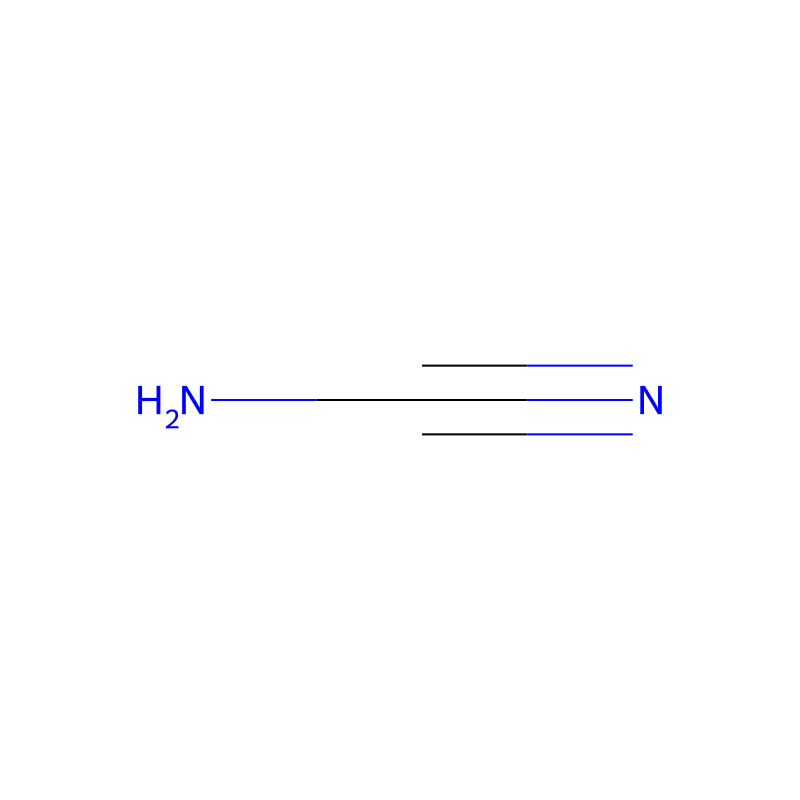
識別子と物理属性
| CAS No. | 20890-10-2 |
|---|---|
| 分子式 | CH2N2 |
| 平均分子量 | 42.04 g/mol |
| 単同位体質量 | 42.02179806 g/mol |
| SMILES | N#CN |
| InChIKey | XZMCDFZZKTWFGF-UHFFFAOYSA-N |
| PubChem CID | 9864 |
| ChEMBL | CHEMBL56279 |
| ChEBI | CHEBI:16698 |
| EC No. | 206-992-3 |
| DTXSID | DTXSID9034490 |
| 現地名 | シアナミド |
化学・物理的性質
| XLogP | -0.3 |
|---|---|
| 極性表面積 | 49.8 |
| 水素結合供与体数 | 1 |
| 水素結合受容体数 | 2 |
| 回転可能結合数 | 0 |
| 重原子数 | 3 |
| 形式電荷 | 0 |
| 複雑度 | 29.3 |
| 物質分類 | Nitrogen Compounds -> CyanamidesFlammable agents - 3rd degree |
| SpringerMaterials Properties | 15N nuclear magnetic resonance spectrum |
| 農薬 | Herbicides, Plant Growth RegulatorsActive substance -> EU Pesticides database: Not approvedEnvironmental transformation -> Pesticides (parent, predecessor) |
| LogP(分配係数) | log Kow = -0.82 (20 °C) |
| 密度 | 1.28 (NIOSH, 2024) - Denser than waterwill sink1.282 g/cu cm at 20 °CRelative density (water = 1): 1.281.282 @ 20°C1,282 g/cm3 |
| Color/Form | Orthorhombic, elongated, six-sided tablets from dimethyl phthalateCrystallizes from a variety of solvents as somewhat unstable, colorless, orthorhombic, deliquescent crystals.Deliquescent crystalsCyanamide forms colorless, orthorhombic crystals or long transparent needles (from water), large platelike crystals when allowed to crystallize spontaneously from water, and crystals from dimethyl phthalate solution. |
| 溶解度 | 78 % at 59 °F (NIOSH, 2024)In butanol 28.8ethyl acetate 42.4, methyl ethyl ketone 50.5 (all g/100 g at 20 °C)sol in phenols, amines, ethers, ketonesvery sparingly soluble in benzene, halogenated hydrocarbonspractically insoluble in cyclohexane.Slightly soluble in carbon disulfideCyanamide is completely soluble in water at 43 °C and has a minimum solubility at -15 °Chighly soluble in polar organic solvents, such as alcohols, ethers, esters, nitriles and amides, but less soluble in nonpolar solvents like saturated, halogenated, or aromatic hydrocarbons. Ketones are not recommended as solvents for cyanamide, because they tend to react under certain circumstances.In chloroform 2.4 g/kg, 20 °Cエタノール:可溶10%、透明~もや、無色~微黄色775g/リットル |
| Corrosivity | Non-corrosive, as far as known |
| 引火点 | 286 °F (NIOSH, 2024)141 °C (closed cup)>230 °F |
| Endocrine Disruptors | Potential endocrine disrupting compound |
| 沸点 | 500 °F at 760 mmHg (Decomposes) (NIOSH, 2024)140 °C at 19 mm HgBoiling point at 19 mm Hg is 140 °Cat 0.067kPa: 83 °C500 °F (decomposes)83 °C/0.5 mmHg (lit.) |
| Decomposition | When heated to decomposition ... it emits toxic fumes of cyanide and nitroxides.260 °C |
| 融点 | 45-46 °C (lit.) |
| 蒸気圧 | 1Pa at 24.95℃ |
| 屈折率 | 1.405 |
| 貯蔵条件 | 2-8°C |
| pKa(酸解離定数) | 1.1(at 29℃) |
| 外観・状態 | 結晶性固体 |
| 比重 | 1.282 |
| Merck | 14,2684 |
| BRN | 1732569 |
| ヘンリー定数 | 3.7×10⁴ mol/(m3Pa) at 25℃, HSDB (2015) |
| 安定性 | 不安定 - 熱に弱い。強力な酸化剤、強力な還元剤、アルカリ、酸、鉄およびその塩、鋼、真鍮、鉛、湿気とは相容れない。酸と反応し、非常に有毒なガスを生成します。 |
| InChI | 1S/CH2N2/c2-1-3/h2H2 |
| InChIKey | XZMCDFZZKTWFGF-UHFFFAOYSA-N |
| SMILES | NC#N |
| LogP(分配係数) | -0.72 at 20℃ |
| CAS データベース | 420-04-2(CAS DataBase Reference) |
| NISTの化学物質情報 | Cyanamide(420-04-2) |
| EPAの化学物質情報 | Cyanamide (420-04-2) |
化学的特性
Cyanamide is a combustible crystalline solid, but it is usually found as a 25% liquid solution.
安全性と法規制
| GHS 分類 | DangerH301: Toxic if swallowed [Danger Acute toxicity, oral]P203, P260, P261, P262, P264, P264+P265, P270, P272, P273, P280, P301+P316, P301+P330+P331, P302+P352, P302+P361+P354, P304+P340, P305+P354+P338, P316, P317, P318, P319, P321, P330, P333+P317, P361+P364, P362+P364, P363, P405, and P501 (click each P-code to see the statement)H301+H311 (53.2%): Toxic if swallowed or in contact with skin [Danger Acute toxicity, oralacute toxicity, dermal]P203, P260, P261, P262, P264, P264+P265, P270, P272, P273, P280, P301+P316, P301+P330+P331, P302+P352, P302+P361+P354, P304+P340, P305+P351+P338, P305+P354+P338, P316, P317, P318, P319, P321, P330, P332+P317, P333+P317, P337+P317, P361+P364, P362+P364, P363, P405, and P501 (click each P-code to see the statement) |
|---|---|
| 規制情報 | Chemical: CyanamideCommission Regulation (EC) No 33/2008Cyanamide is listed on the EPA's Chemical Data Reporting (CDR) system. Manufacturers and importers of Cyanamide are required to report information about their production and use of this chemical to the EPA under the Toxic Substances Control Act (TSCA). (40 eCFR Part 711)Hydrogen cyanamide (Cyanamide) is listed in the dataset of EPA Human Health Benchmarks for Pesticides under the Safe Drinking Water Act (40 eCFR 141)2008/745Status: Active Update: 03-11-2022 https://echa.europa.eu/registration-dossier/-/registered-dossier/15823 |
| 輸送ラベル(DOT) | Poison |
| 火災危険 | Excerpt from ERG Guide 154 [Substances - Toxic and/or Corrosive (Non-Combustible)]:Combustible only at increased temperature. Gives off irritating or toxic fumes (or gases) in a fire. |
| 火災の可能性 | Cyanamide may burn, but does not readily ignite. |
| 健康有害性 | Excerpt from NIOSH Pocket Guide for Cyanamide: |
| 有害性の概要 | The TLV basis for cyanamide is skin and eye irritationMay cause antabuse-like effect in exposed workers who ingest alcohol[ACGIH] Allergic contact dermatitis has been reported. [Allergic contact dermatitis from cyanamide: report of 3 cases. Goday Bujan JJ, et al. Contact Dermatitis. 1994 Nov31(5):331-2. No abstract available. Abstract in NIOSHTIC # 192164] Can cause liver injury after ingestion |
用途
解説
CH2N2(42.04).H2N-C≡N.シアンのアミド化物で、シアンアミドともいう。アンモニアとクロロシアンCNClとの反応、カルシウムシアナミド(石灰窒素の主成分)CaCN2と酢酸との反応、チオ尿素と酸化水銀(Ⅱ)との反応などによって得られる。互変異性体のカルボジイミドHN=C=NHは,仮想化合物であり単離できない.カルシウムシアナミドに硫酸を作用させるか,塩化シアンとアンモニアからつくる.無色の潮解性針状晶.融点45~46 ℃.d420"1.282.水,エタノール,エーテルに易溶,二硫化炭素,クロロホルムに難溶.熱または弱アルカリ性では二分子重合してジシアンジアミドとなり,水酸化ナトリウム水溶液ではNaHCN2なる化合物を生じる.Na,K,Ca,Ba,Mg,Ag,Hg,Cu,Pbなどと安定な塩をつくる.シアナミドは強塩基または強酸中で加水分解されて尿素になる.硫化水素と弱塩基性で反応させればチオ尿素に,アンモニウム塩とではグアニジン塩になる.CNNH2 + NH4NO3 → H2NC(=NH)NH2HNO3Ca塩は肥料として使われる.森北出版「化学辞典(第2版)
用途
有機合成原料、チオ尿素原料、農薬(植物成長調整剤)、医薬
説明
Cyanamide and its salts are used on various occasions, such as in chemistry, in anti-rust solutions or in drugs for treating alcoholism (Come).
使用
In Europe, cyanamide is used as a fertilizer, weed killer, and defoliant. In North America, these applications have been practically discontinued. It is also used to produce cationic starch and calcium cyanide, dicyandiamide, and melamine. New uses include intermediates for pesticides; detergents; medicines such as antihistamines, hypertension, sedatives, and contraceptives; photography industry; additive for fuels and lubricants; paper preservative; and cement additive. Dormex is a common rest-breaking agent applied in spring to stimulate uniform opening of buds. Cyanamide has been tested as an effective and welltolerated pharmacological adjunct to treat alcohol-dependent patients. It is a potent aldehyde dehydrogenase inhibitor, and alters cholinergic function in the frontal cortex and hippocampus of rats exposed to ethanol.
一般的な説明
Colorless deliquescent crystals. Mp: 45°C; bp: 260°C. Density: 1.282 g cm-3. Quite soluble in water (77 g / 100 g solution at 15°C). Soluble in butanol, methyl ethyl ketone, ethyl acetate, alcohols, phenols, amines, ethers. Note: The term "Cyanamide" is also used to refer to the important compound calcium Cyanamide, which is a different chemical.
使用用途
シアナミドの塩は、農業分野で農薬や肥料として用いられます。殺虫・殺菌・除草作用を持つことに加え、散布されると徐々に、最終的にアンモニア態窒素や硝酸態窒素へ変換され、農作物の肥料成分になります。
製法・合成法
調製方法
The basic process for the manufacture of cyanamide comprises four steps. The first three steps produce calcium cyanamide: lime is made from high grade limestone; (2) calcium carbide is manufactured from lime and coal or coke; calcium cyanamide is produced by passing gaseous nitrogen through a bed of calcium carbide with 1% calcium fluorspar, which is heated to 1000–1100°C to start the reaction—the heat source is then removed and the reaction continues because of its strong exothermic character; and cyanamide is manufactured from calcium cyanamide by continuous carbonation in an aqueous medium.
純化方法
Purify it by placing ca 15g in a Soxhlet thimble and extracting exhaustively (2-3hours) with two successive portions of Et2O (400mL, saturated with H2O by shaking before use) containing two drops of 1N acetic acid. Two successive portions of Et2O are used so that the NH2CN is not heated for too long. Each extract is dried over Na2SO4 (30g), then combined and evaporated under reduced pressure. The NH2CN may be stored unchanged at 0o in Et2O solution in the presence of a trace of AcOH. Extracts from several runs may be combined and evaporated together. The residue from evaporation of an Et2O solution is a colourless viscous oil which sets to a solid and can be recrystallised from a mixture of 2 parts of *C6H6 and 1 part of Et2O. Concentrating an aqueous solution of NH2CN at high temperatures causes EXPLOSIVE polymerisation. [Kurzer & Lawson Org Synth Coll Vol IV 645 1963, Pinck & Salissbury Inorg Synth III 39 1950, Soloway & Lipschitz J Org Chem 23 613 1958.] Hygroscopic.[Beilstein 3 IV 145.]