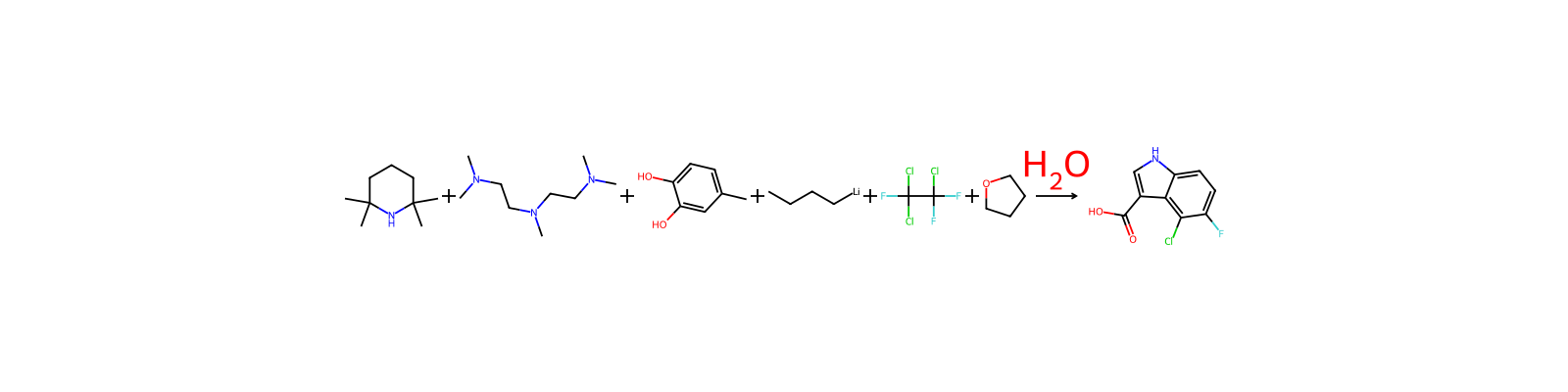

基本情報
- 標準SMILES
Cc1ccc(O)c(O)c1- InChIKey
ZBCATMYQYDCTIZ-UHFFFAOYSA-N- 分子式
- C7H8O2
- 平均分子量
- 124.14 g/mol
- 単同位体質量
- 124.05242949
名称と識別子
- 優先名称
- 4-Methylcatechol
- IUPAC
- 4-methylbenzene-1,2-diol
- 現地名
- 4-メチルカテコール
- 英語名
- 4-Methylcatechol
- 分子式
- C7H8O2
- 分子量
- 124.14
名称と別名
4-Methylcatechol452-86-84-methylbenzene-1,2-diol3,4-DihydroxytolueneHomocatechol4-Methyl-1,2-benzenediolHomopyrocatecholp-Methylcatechol1,2-Benzenediol, 4-methyl-Toluene-3,4-diol1,2-Dihydroxy-4-methylbenzenep-Methylpyrocatechol
名称をさらに表示
4-メチルカテコール5-メチル-1,2-ベンゼンジオール5-メチルピロカテコール3,4-トルエンジオール3,4-ジヒドロキシトルエンホモカテコール4-メチル-1,2-ジヒドロキシベンゼン4-メチルベンゼン-1,2-ジオール4-メチルピロカテコール4-メチル-1,2-ベンゼンジオール5-メチルカテコールホモピロカテコール1,2-ジヒドロキシ-4-メチルベンゼンホモブレンツカテキン4‐メチルピロカテコールメチルカテコール, 4-4-メチルカテコール, 96%4-METHYLPYROCATECHOL4-Methycatechol4-Methylcatehol
4-Methyl-1,2-dihydroxybenzenePyrocatechol, 4-methyl-2-Hydroxy-4-methylphenolDTXSID5020861CHEBI:1725412GLI7JGB3DTXCID30861NSC-17489
データベース識別子
- CAS
452-86-8- PubChem CID
- 9958
- DTXSID
DTXSID5020861- ChEMBL
CHEMBL158766- ChEBI
CHEBI:17254- UNII
- 12GLI7JGB3
- EC Number
- 207-214-5
- Nikkaji
- J5.755J
物性
構造計算による物性
- XLogP
- 1.4
- 極性表面積
- 40.5 Ų
- 水素結合供与体数
- 2
- 水素結合受容体数
- 2
- 回転可能結合数
- 0
- 重原子数
- 9
- 形式電荷
- 0
- 複雑度
- 92
実験および物理化学的性質
LogP
1.37
1.37
Boiling Point251
Melting Point
65
65 °C
Vapor Pressure0.0028 [mmHg]
Physical Description
White or light brown solid; [Alfa Aesar MSDS]
Solid
Ionization Efficiency
Positive
-0.28
2.7
Agilent XCT
Electrospray ionization
formic acid (5.3nM)
Kovats Retention Index
1246.1
1295.1;1293.6;1293;1293.4;1294
2727
Collision Cross Section
121 Ų [M-H]- [CCS Type: DT; Method: single field calibrated with ESI Low Concentration Tuning Mix (Agilent)]
121.5 Ų [M-H]-
物理化学的性質
- 融点
- 67 · 67-69 °C (lit.)
- 沸点
- 251 °C · 251 °C (lit.)
- 比重(密度)
- 1.129 g/mL · 1.129 g/mL at 25 °C (lit.)
- 屈折率
- 1.5425 · 1.5425 (estimate)
- 闪点
- 140 °C · 140 °C
- 貯蔵温度
- Keep in dark place,Inert atmosphere,Room temperature
- 溶解性
- クロロホルム(微量)、メタノール(微量)
- 酸解離定数(Pka)
- 9.91 · 9.91±0.10(Predicted)
- 外見
- 粉末またはチャンク
- 色
- 白から茶色
- 比重
- 1.129 · 1.129
- 水溶解度
- 溶ける
- BRN
- 636512 · 636512
- InChI
- 1S/C7H8O2/c1-5-2-3-6(8)7(9)4-5/h2-4,8-9H,1H3
- InChIKey
- ZBCATMYQYDCTIZ-UHFFFAOYSA-N
- SMILES
- Cc1ccc(O)c(O)c1
- LogP
- 1.34 · 1.340 (est)
- CAS データベース
- 452 · 452-86-8(CAS DataBase Reference)
- NISTの化学物質情報
- 1 · 1,2-Benzenediol, 4-methyl-(452-86-8)
- EPAの化学物質情報
- 1 · 1,2-Benzenediol, 4-methyl- (452-86-8)
化学的性質
化学的特性white to brown powder or chunks
安全と法規制
GHS分類
GHS Classification
Warning
H302 (11.9%): Harmful if swallowed [Warning Acute toxicity, oral];H312 (10.2%): Harmful in contact with skin [Warning Acute toxicity, dermal];H315 (100%): Causes skin irritation [Warning Skin corrosion/irritation];H319 (100%): Causes serious eye irritation [Warning Serious eye damage/eye irritation];H335 (98.3%): May cause respiratory irritation [Warning Specific target organ toxicity, single exposure; Respiratory tract irritation]
P261, P264, P264+P265, P270, P271, P280, P301+P317, P302+P352, P304+P340, P305+P351+P338, P317, P319, P321, P330, P332+P317, P337+P317, P362+P364, P403+P233, P405, and P501 (click each P-code to see the statement)
Aggregated GHS information provided per 59 reports by companies from 9 notifications to the ECHA C&L Inventory. Each notification may be associated with multiple companies.;Information may vary between notifications depending on impurities, additives, and other factors. The percentage value in parenthesis indicates the notified classification ratio from companies that provide hazard codes. Only hazard codes with percentage values above 10% are shown. For more detailed information, please visit ECHA C&L website.
危険有害性情報
Regulatory Information4-Methylcatechol: Does not have an individual approval but may be used under an appropriate group standard
Hazards SummaryA skin and strong eye irritant; Harmful by inhalation; Toxic by ingestion and skin absorption; [Alfa Aesar MSDS] See Catechol.
Hazard Classes and CategoriesAcute Tox. 4 (11.9%);Acute Tox. 4 (10.2%);Skin Irrit. 2 (100%);Eye Irrit. 2A (100%);STOT SE 3 (98.3%)
法規制情報
Regulatory Information4-Methylcatechol: Does not have an individual approval but may be used under an appropriate group standard
安全データ
- wgk
- 3
- rtecs
- UX1915000
- ridadr
- 2811
- hs_code
- 29072990
- risk_code
- 36/37/38
- 化審法
- (4)-57
- hazard_code
- Xi
- safety_code
- 26-36
- hazard_class
- 6.1(b)
- packing_group
- III
- ストレージクラス
- 11 - Combustible Solids
化学と産業
薬理情報
Metabolism/Metabolites4-methyl-hydroquinone is a known human metabolite of 4-Methylphenol.
MeSH Pharmacological Classification
Naturally occurring or synthetic substances that inhibit or retard oxidation reactions. They counteract the damaging effects of oxidation in animal tissues.
Substances that increase the risk of NEOPLASMS in humans or animals. Both genotoxic chemicals, which affect DNA directly, and nongenotoxic chemicals, which induce neoplasms by other mechanism, are included.
Drugs intended to prevent damage to the brain or spinal cord from ischemia, stroke, convulsions, or trauma. Some must be administered before the event, but others may be effective for some time after. They act by a variety of mechanisms, but often directly or indirectly minimize the damage produced by endogenous excitatory amino acids.
応用分野
用途有機合成原料。
使用4-Methylcatechol is used to synthesize antimicrobial, antioxidant. It also acts as effective inhibitor. It can be used to produce 4-bromo-5-methyl-pyrocatechol. It Increases Brain-Derived Neurotrophic Factor Content and mRNA Expression in Cultured Brain Cells and in Rat Brain In Vivo.
調製方法
純化方法Crystallise the catechol from *C6H6. The purity is checked by TLC. Crystallise it from high-boiling pet ether and distil it in a vacuum. [Beilstein 6 IV 5878.]
上流・下流製品情報
上流原料
下流製品
サプライヤー50 社
国药集团化学试剂有限公司86-21-63210123 · [email protected]
北京华美互利生物化工010-56205725 · [email protected]
梯希爱(上海)化成工业发展有限公司021-67121386 · [email protected]
上海阿拉丁生化科技股份有限公司400-6206333 13167063860 · [email protected]
宁波君龙新材料有限公司0574 88552216 19032109277 · [email protected]
科瑞迪化学400-821-5857 021-64326257 · [email protected]
上海将来实业股份有限公司400-0066400 13621662912 · [email protected]
阿法埃莎(中国)化学有限公司400-6106006 · [email protected]
太原市瑞和丰科贸有限公司+86 351 7031519 · [email protected]
安耐吉化学&3A(安徽泽升科技股份有限公司)400-0056266 · [email protected]
上海瀚鸿科技股份有限公司021-54306202 13764082696 · [email protected]
济南君合药业有限公司+86-13053355392 +86-13053355392
Pure Chemistry Scientific Inc.001-857-928-2050 or 1-888-588-9418 · [email protected]
合肥天健化工有限公司551-65418679 15856988503;15837135945 · [email protected]
武汉丰泰威远科技有限公司027-87465837 19945049750 · [email protected]
孝感深远化工有限公司15527621225; 15527621225 · [email protected]
山东西亚化学有限公司13355009207 13355009207 · [email protected]
玛雅试剂+86 (573) 82222445 (0)18006601000 452520369 · [email protected]
天津希恩思生化科技有限公司400 638 7771 · [email protected]
河南多贝化工有限公司0370-2785118 17550508557 · [email protected]
斯百全化学(上海)有限公司021-021-021-67601398-809-809-809 15221380277 · [email protected]
艾科试剂4008-755-333 18080918076 · [email protected]
上海思域化工科技有限公司86-21-34053660 · [email protected]
赛默飞世尔科技(中国)有限公司800-810-5118 · [email protected]
北京伊诺凯科技有限公司400-810-7969 010-59572699 · [email protected]
江苏艾康生物医药研发有限公司025-66113011 13913916777 · [email protected]
上海健超生物科技有限公司150-2103-5486 18017383231 · [email protected]
TCI AMERICA800-4238616 · [email protected]
TOKYO CHEMICAL INDUSTRY CO., LTD.03-36680489 · [email protected]
TCI Europe320-37350700 · [email protected]
上海灏云化工科技有限公司021-68367562 · [email protected]
上海将来实业股份有限公司400-0066400 13621662912 · [email protected]
上海将来实业股份有限公司021-61552785 · [email protected]
安徽科迪达化工有限公司0554-2106669 · [email protected]
上海石洋化工有限公司021-56795766 · [email protected]
四川省维克奇生物科技有限公司028-81700200 18116577057 · [email protected]
成都零六生物科技有限公司400-1166-196 13458535857 · [email protected]
雷丁试剂0510-85629785 18013409632 · [email protected]
上海麦克林生化科技股份有限公司15221275939 15221275939 · [email protected]
杭州杰恒化工有限公司0571-87396432 · [email protected]
上海有朋化工有限公司021-69005955 13701776567 · [email protected]
北京海力扬化学科技有限公司13718199399 · [email protected]
北京欣赛维化学科技有限公司010-56218822 13717722232 · [email protected]
四川海诺威科技有限公司13708085536 13708085536 · [email protected]
上海凯赛化工有限公司021-33516722 13701817765 · [email protected]
上海彤源化工有限公司021-021-69182866 13701855675 · [email protected]
上海孚一生物科技有限公司+86 (21) 61124340
凯试(上海)科技有限公司021-50135380 · [email protected]
北京华扬致成科技有限公司13716033033 · [email protected]
上海蓝润化学有限公司021-69515658 ; 69515628 13701998368 · [email protected]
補足説明
定義ChEBI: A methylcatechol having a single methyl substituent at the 4-position. It has been isolated from Picea abies.
関連反応
43 件


関連ノート
読み込み中…