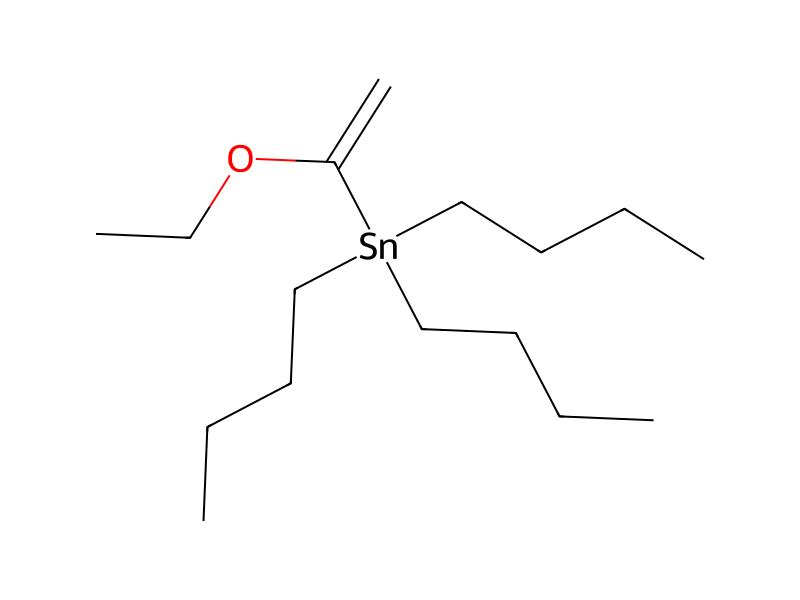
A 1-L, three-necked round-bottomed flask equipped with a mechanical stirrer, reflux condenser, nitrogen gas inlet, and a temperature probe was charged with 5-bromo-3-fluoro-2-methylquinoxaline (30 g, 124 mmol), Pd(PPh3)4 (4.31 g, 3.73 mmol), toluene (300 mL), and tributyl(1-ethoxyvinyl)tin (Synthonix, Wake Forest, N.C.; 46.2 mL, 137 mmol), and the resulting mixture was heated under N2 atmosphere at 90° C. for 18 hours. The mixture was cooled to RT, HCl (6.0 N, aq.; 12.45 mL, 74.7 mmol) was added, and the resulting mixture was stirred at RT for 10 min. The mixture was extracted with EtOAc (500 mL). The organic layer was separated and sequentially washed with brine (2×200 mL) and saturated aq. NaHCO3 (100 mL) and then concentrated in vacuo. Chromatographic purification of the residue (silica gel, 0-100% DCM/heptane followed by repurification with silica gel, 0-75% EtOAc/heptane) furnished 1-(3-fluoro-2-methylquinoxalin-5-yl)ethanone (126 g; 16.0 g, 78.4 mmol, 63% yield) as an orange solid: 1H NMR (400 MHz, CDCl3) δ ppm 8.20 (1H, dd, J=8.3, 1.3 Hz), 8.10 (1H, dd, J=7.3, 1.1 Hz), 7.77 (1H, t, J=7.8 Hz), 2.92 (3H, s), 2.79 (3H, d, J=1.6 Hz). 19F NMR (377 MHz, CDCl3) δ ppm −69.81 (1F, s). m/z (ESI, +ve) 205.1 (M+H)+.