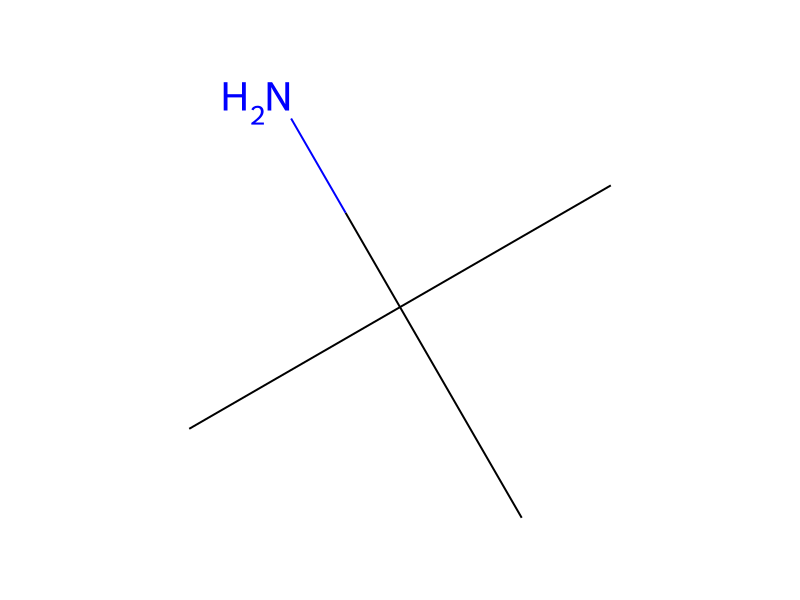
Tert-Butylamine → 8-bromo-N-(tert-butyl)-7-fluoro-3-methylquinoxalin-2-amine
HRID 1056139
反応式

[Br:1][C:2]1[C:3]([F:14])=[CH:4][CH:5]=[C:6]2[C:11]=1[NH:10][C:9](=O)[C:8]([CH3:13])=[N:7]2.[C:15]([NH2:19])([CH3:18])([CH3:17])[CH3:16]>CS(C)=O>[Br:1][C:2]1[C:3]([F:14])=[CH:4][CH:5]=[C:6]2[C:11]=1[N:10]=[C:9]([NH:19][C:15]([CH3:18])([CH3:17])[CH3:16])[C:8]([CH3:13])=[N:7]2参加物
4



反応条件
- 温度
- 100 °C
実験手順
A glass reaction vessel was charged with 5-bromo-3-chloro-6-fluoro-2-methylquinoxaline (600) (9.705 g, 35.2 mmol) in DMSO (58.7 mL). Then tert-butylamine (Alfa Aesar; Ward Hill, Mass.) (18.51 mL, 176 mmol) was added into the mixture. The vial was sealed, then placed into a pre-heated (100° C.) oil bath and stirred 2 h. The vessel was removed from the heat source and cooled to RT. The mixture was poured into water (1100 mL) sat undisturbed 30 min, then stirred. The precipitate was collected by filtration (through a medium fritted-funnel) and the solids were washed with water. The solids were dried in a reduced-pressure oven overnight, to provide 8-bromo-N-(tert-butyl)-7-fluoro-3-methylquinoxalin-2-amine (286a) (8.27 g, 75% yield) as a tan solid. 1H NMR (400 MHz, DMSO-d6) δ ppm 7.75 (dd, J=9.00, 5.87 Hz, 1H) 7.33 (t, J=8.80 Hz, 1H) 6.30 (s, 1H) 2.54 (s, 3H) 1.59 (s, 9H). m/z (ESI, +ve) 311.9 (M+H).