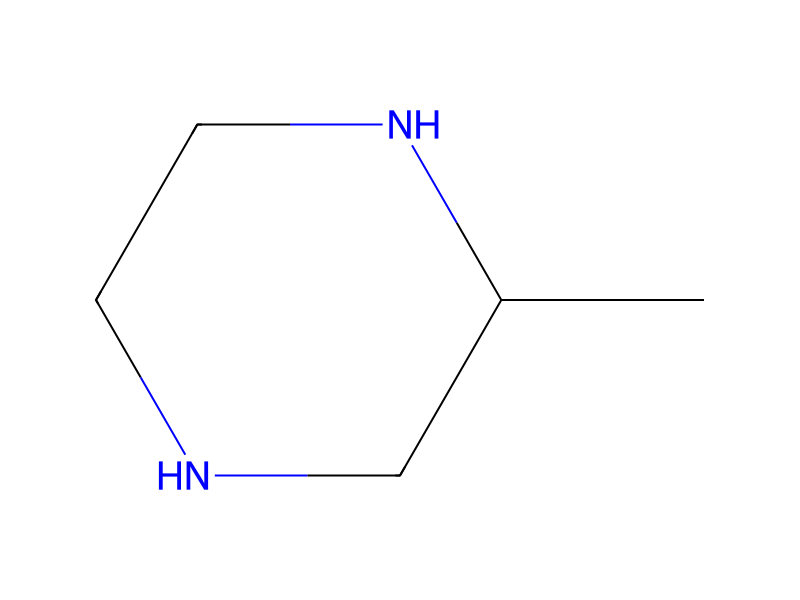
[CH:1]1([N:4]2[C:13]3[C:8](=[C:9]([CH3:16])[C:10]([F:15])=[C:11](Br)[CH:12]=3)[C:7](=[O:17])[C:6]([C:18]([OH:20])=[O:19])=[CH:5]2)[CH2:3][CH2:2]1.[CH3:21][CH:22]1[NH:27][CH2:26][CH2:25][NH:24][CH2:23]1>CN1CCCC1=O>[CH:1]1([N:4]2[C:13]3[C:8](=[C:9]([CH3:16])[C:10]([F:15])=[C:11]([N:24]4[CH2:25][CH2:26][NH:27][CH:22]([CH3:21])[CH2:23]4)[CH:12]=3)[C:7](=[O:17])[C:6]([C:18]([OH:20])=[O:19])=[CH:5]2)[CH2:3][CH2:2]1To a solution of 1-cyclopropyl-6-fluoro-7-bromo-5-methyl-1,4-dihydro-4-oxoquinoline-3-carboxylic acid (0.58 g) in N-methyl-2-pyrrolidone (5 ml) is added 3-methylpiperazine (0.65 g), and the mixture is heated at 90° C. for 20 minutes. After the solvent is distilled off under reduced pressure, ethanol is added to the residue, and the crystals are separated by filtration and are recrystallized from ethyl acetate-ethanol to give 1-cyclopropyl-6-fluoro-7-(3-methyl-1-piperazinyl)-5-methyl-1,4-dihydro-4-oxoquinoline-3-carboxylic acid (310 mg), as white powdery crystals, m.p. 206°-208° C.