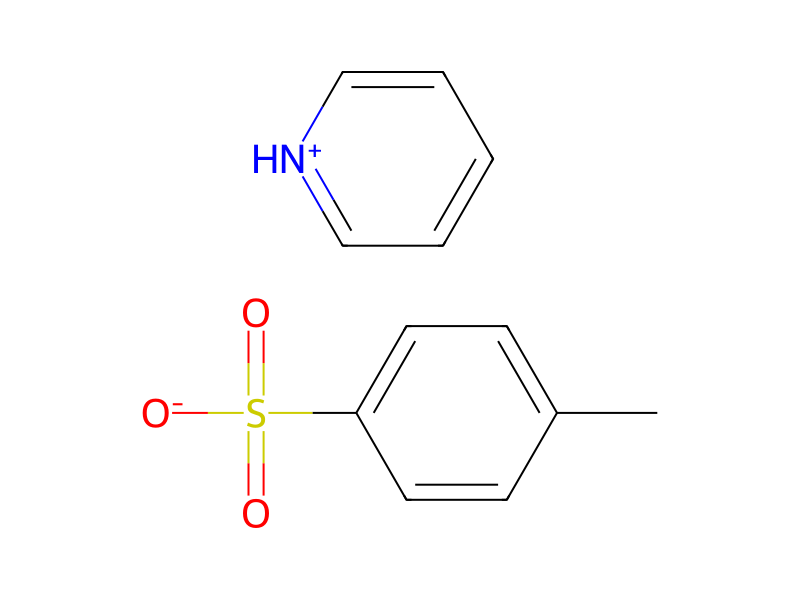
Benzenesulfonic acid, 4-methyl-, compd. with pyridine (1:1) → (2S)-2-[(4-bromophenyl)(cyclohexyl)methoxy]-N-(cyanomethyl)-4-methylpentanamide
HRID 1180412
反応式

ClC(Cl)(Cl)C(=N)O[CH:5]([C:12]1[CH:17]=[CH:16][C:15]([Br:18])=[CH:14][CH:13]=1)[CH:6]1[CH2:11][CH2:10][CH2:9][CH2:8][CH2:7]1.[C:22]([CH2:24][NH:25][C:26](=[O:33])[C@@H:27]([OH:32])[CH2:28][CH:29]([CH3:31])[CH3:30])#[N:23].CC1C=CC(S([O-])(=O)=O)=CC=1.C1C=C[NH+]=CC=1>C(Cl)Cl.CCOC(C)=O>[Br:18][C:15]1[CH:16]=[CH:17][C:12]([CH:5]([CH:6]2[CH2:7][CH2:8][CH2:9][CH2:10][CH2:11]2)[O:32][C@@H:27]([CH2:28][CH:29]([CH3:30])[CH3:31])[C:26]([NH:25][CH2:24][C:22]#[N:23])=[O:33])=[CH:13][CH:14]=1参加物
6
反応物 3


生成物 1

試薬・触媒・溶媒 2

