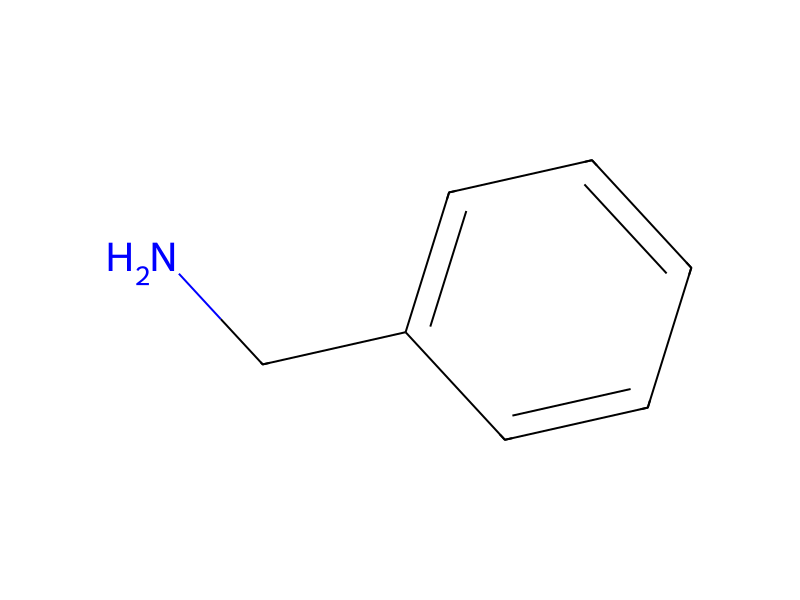
Benzylamine → benzyl(5-bromo-4-nitro-2-propyl-2H-pyrazol-3-yl)amine
反応式

[CH2:1]([N:4]1[C:8]([Br:9])=[C:7]([N+:10]([O-:12])=[O:11])[C:6]([Br:13])=[N:5]1)[CH2:2][CH3:3].[CH2:14]([NH2:21])[C:15]1[CH:20]=[CH:19][CH:18]=[CH:17][CH:16]=1>CCO>[CH2:14]([NH:21][C:8]1[N:4]([CH2:1][CH2:2][CH3:3])[N:5]=[C:6]([Br:13])[C:7]=1[N+:10]([O-:12])=[O:11])[C:15]1[CH:20]=[CH:19][CH:18]=[CH:17][CH:16]=1.[Br:9][C:8]1[C:7]([N+:10]([O-:12])=[O:11])=[C:6]([Br:13])[NH:5][N:4]=1参加物
5



実験手順
A mixture of 1-propyl-3,5-dibromo-4-nitropyrazole (19.4 g, 62 mmol), EtOH (500 ml) and benzylamine (40 g, 373 mmol) was refluxed for 15 hours. The reaction medium was concentrated to the maximum under reduced pressure. The residue was suspended in EtOAc (100 ml ), the insoluble part was separated out by filtration and the filtrate was evaporated to dryness. The black oil obtained was purified by column chromatography (eluent: EtOAc/hexane) to give the benzyl(5-bromo-4-nitro-2-propyl-2H-pyrazol-3-yl)amine in the form of a yellow solid (9 g; 29%) from 3,5-dibromo-4-nitropyrazole.