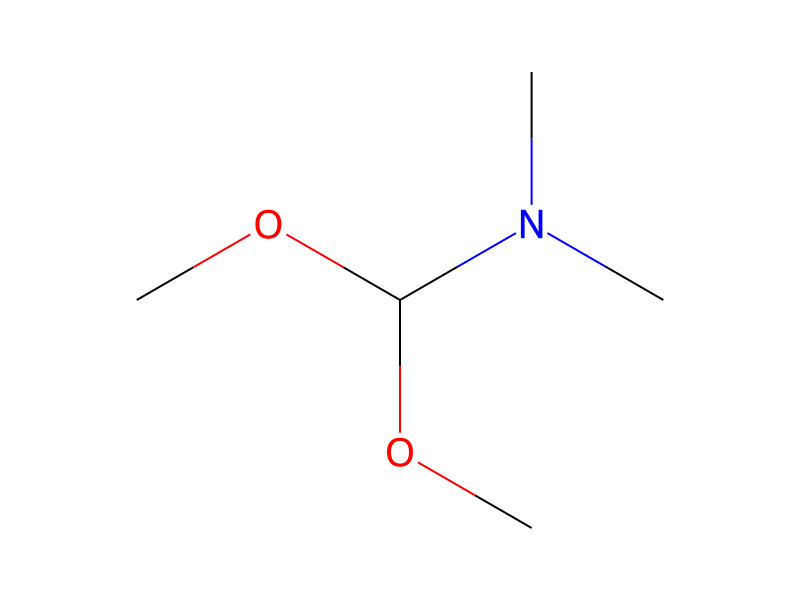
Dimethylformamide dimethyl acetal → 6-Dimethylaminomethylene-4,4-diphenylcyclohex-2-enone
反応式

CO[CH:3](OC)[N:4]([CH3:6])[CH3:5].[C:9]1([C:15]2([C:22]3[CH:27]=[CH:26][CH:25]=[CH:24][CH:23]=3)[CH2:20][CH2:19][C:18](=[O:21])[CH:17]=[CH:16]2)[CH:14]=[CH:13][CH:12]=[CH:11][CH:10]=1>CN(C)C=O>[CH3:6][N:4]([CH:3]=[C:19]1[C:18](=[O:21])[CH:17]=[CH:16][C:15]([C:22]2[CH:27]=[CH:26][CH:25]=[CH:24][CH:23]=2)([C:9]2[CH:10]=[CH:11][CH:12]=[CH:13][CH:14]=2)[CH2:20]1)[CH3:5]参加物
4



反応条件
- 温度
- 20 °C
実験手順
4.77 g of N,N-dimethylformamide dimethyl acetal are added to a solution of 2.48 g of 4,4-diphenylcyclohex-2-enone in 20 Cm3 of N,N-dimethylformamide. The mixture is refluxed for about 4 hours. After cooling to a temperature in the region of 20° C., the solution is concentrated to dryness under reduced pressure (13 kPa). The residue is taken up in 50 cm3 of diisopropyl ether and allowed to precipitate for about 20 hours at a temperature in the region of 20° C. The solid is drained by suction, washed with three times 10 cm3 of diisopropyl ether and then dried under reduced pressure (13 kPa) over potassium hydroxide at a temperature in the region of 20° C. 1.7 g of 6-dimethylaminomethylene-4,4-diphenylcyclohex-2-enone are thus obtained in the form of a cream-coloured powder, the characteristics of which are as follows: