反応式
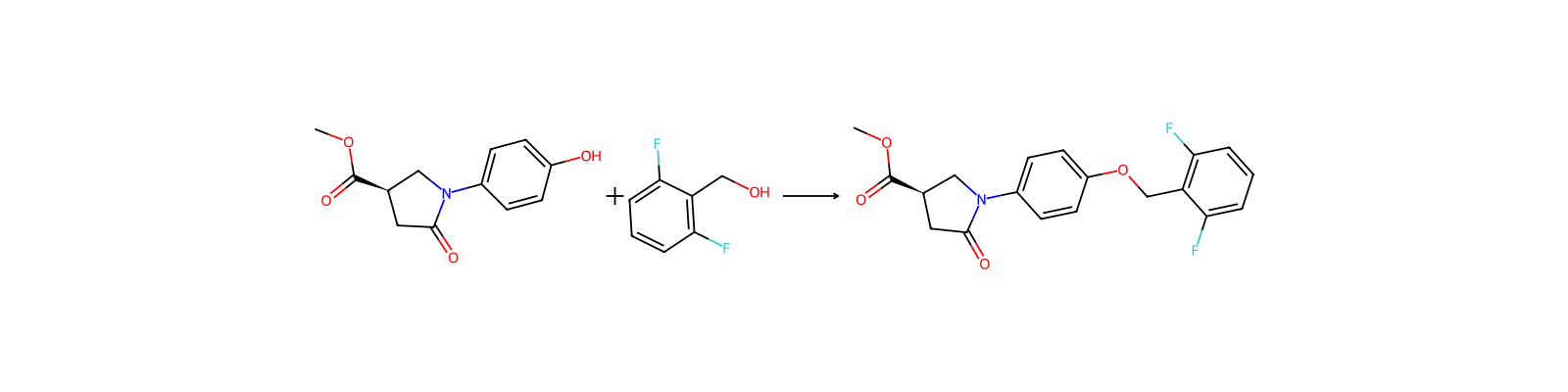
[CH3:1][O:2][C:3]([C@@H:5]1[CH2:9][C:8](=[O:10])[N:7]([C:11]2[CH:16]=[CH:15][C:14]([OH:17])=[CH:13][CH:12]=2)[CH2:6]1)=[O:4].[F:18][C:19]1[CH:26]=[CH:25][CH:24]=[C:23]([F:27])[C:20]=1[CH2:21]O>>[CH3:1][O:2][C:3]([C@@H:5]1[CH2:9][C:8](=[O:10])[N:7]([C:11]2[CH:12]=[CH:13][C:14]([O:17][CH2:21][C:20]3[C:19]([F:18])=[CH:26][CH:25]=[CH:24][C:23]=3[F:27])=[CH:15][CH:16]=2)[CH2:6]1)=[O:4]参加物
3


実験手順
In an analogous manner to that described in Example 28b), the alkylation of the (R)-1-(4-hydroxy-phenyl)-5-oxo-pyrrolidine-3-carboxylic acid methyl ester [Example 28a)] with 2,6-difluorobenzylalcohol yields the (R)-1-[4-(2,6-difluoro-benzyloxy)-phenyl]-5-oxo-pyrrolidine-3-carboxylic acid methyl ester as a white solid. MS: m/e=362 (M+H)+.
出典と根拠
- ORDレコード
- ord-1d681942938a438d8b42569689877243
- 出典データセット
- uspto-grants-2006_10
- 特許番号
- US07122562B2
関連ノート
読み込み中…