Sodium Methoxide → 1-tert-butyl-5-methoxymethyl-1H-pyrazole-4-carboxylic acid
反応式

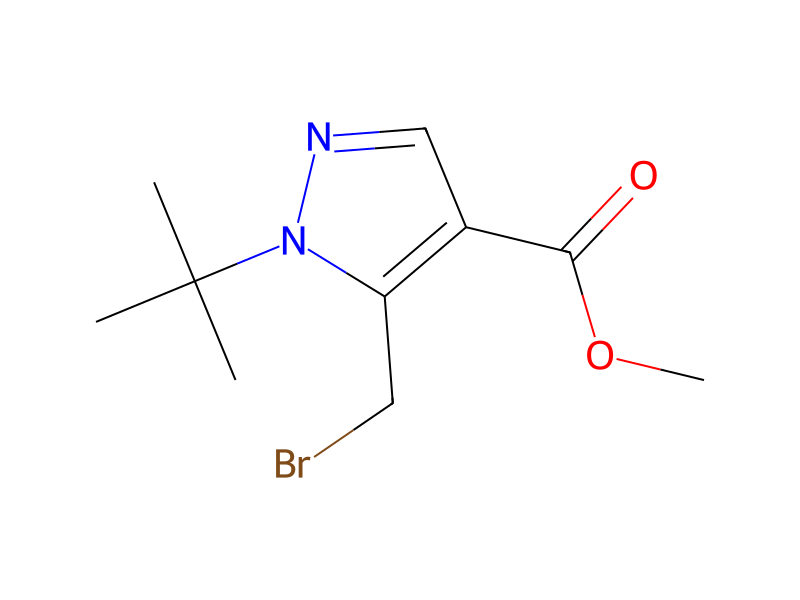
C[O:2][C:3]([C:5]1[CH:6]=[N:7][N:8]([C:12]([CH3:15])([CH3:14])[CH3:13])[C:9]=1[CH2:10]Br)=[O:4].[CH3:16][O-:17].[Na+]>>[C:12]([N:8]1[C:9]([CH2:10][O:17][CH3:16])=[C:5]([C:3]([OH:2])=[O:4])[CH:6]=[N:7]1)([CH3:15])([CH3:14])[CH3:13]参加物
3


実験手順
A solution of 5-bromomethyl-1-tert-butyl-1H-pyrazole-4-carboxylic acid methyl ester (1.51 g, 5.48 mmol) (as prepared in Example 55, Step 1) in sodium methoxide (23.8 mL, 11.9 mmol, 0.5M solution in methanol) was warmed to 90° C. where it was stirred for 2.5 h. At this time, the reaction was concentrated in vacuo. The resulting white solids were taken up in water (100 mL) and extracted with ethyl acetate (1×150 mL). The organics were then washed with a saturated aqueous sodium bicarbonate solution (1×100 mL), water (1×100 mL) and a saturated aqueous sodium chloride solution (1×100 mL), dried over magnesium sulfate, filtered and concentrated in vacuo. When it was discovered that the product was not in the organic extracts, the aqueous layers were combined and were acidified to pH=1 with concentrated aqueous hydrochloric acid and then were extracted with dichloromethane (1×150 mL). These organics were dried over magnesium sulfate, filtered and concentrated in vacuo to afford 1-tert-butyl-5-methoxymethyl-1H-pyrazole-4-carboxylic acid (1.03 g, 88%) as a white solid. The material was used without further purification.