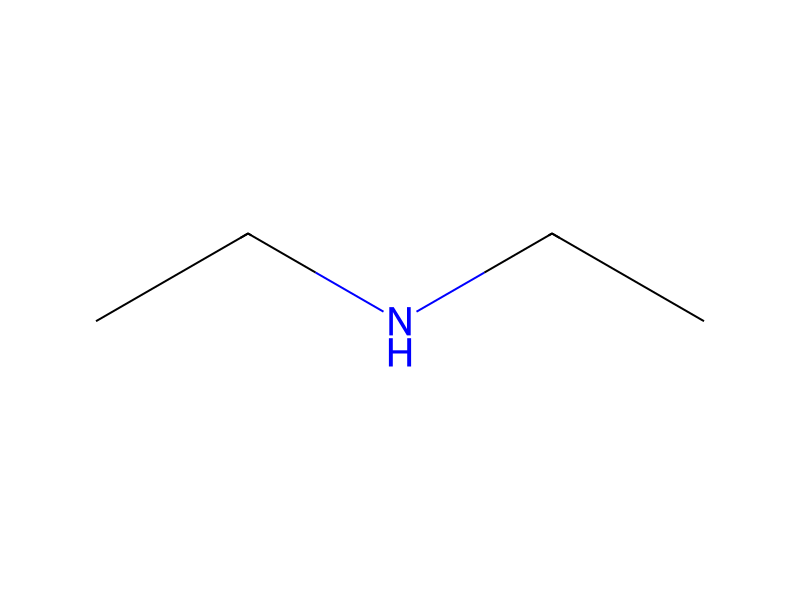
Diethylamine → HCID 18924852、化合物
HRID 1288822
反応式

Cl[CH2:2][C:3]1[N:8]=[C:7]2[S:9][C:10]([CH3:13])=[C:11]([CH3:12])[C:6]2=[C:5]([C:14]2[CH:19]=[CH:18][C:17]3[O:20][CH2:21][O:22][C:16]=3[CH:15]=2)[C:4]=1[C:23]([O:25][CH2:26][CH3:27])=[O:24].[CH2:28]([NH:30][CH2:31][CH3:32])[CH3:29]>ClCCl>[CH2:28]([N:30]([CH2:2][C:3]1[N:8]=[C:7]2[S:9][C:10]([CH3:13])=[C:11]([CH3:12])[C:6]2=[C:5]([C:14]2[CH:19]=[CH:18][C:17]3[O:20][CH2:21][O:22][C:16]=3[CH:15]=2)[C:4]=1[C:23]([O:25][CH2:26][CH3:27])=[O:24])[CH2:31][CH3:32])[CH3:29]参加物
4



実験手順
A mixture of ethyl 6-chloromethyl-4-(3,4-methylenedioxyphenyl)-2,3-dimethylthieno[2,3-b]pyridine-5-carboxylate (1.5 g), diethylamine (1.36 g) and dichloromethane (35 ml) was stirred for 14 hours under reflux. The reaction mixture was washed with water and dried (MgSO4), then the solvent was distilled off. The residue was subjected to column chromatography on silica gel. From the fraction eluted with chloroform, was obtained ethyl 6-(N,N-diethylaminomethyl)-4-(3,4-methylenedioxyphenyl)-2,3-dimethylthieno[2,3-b]pyridine-5-carboxylate as an oily product. This oily product was dissolved in ethanol (35 ml), to which was added ethanolic hydrogen chloride (23%, 1.2 g). The mixture was stirred for 15 minutes at room temperature, which was concentrated under reduced pressure to leave hydrochloride of ethyl 6-(N,N-diethylaminomethyl)-4-(3,4-methylenedioxyphenyl)-2,3-dimethylthieno[2,3-b]pyridine-5-carboxylate (0.8 g, 44%) as an amorphous solid product.