Tyramine → 4-Vinylacetamidoethyl phenol
反応式

[NH2:1][CH2:2][CH2:3][C:4]1[CH:9]=[CH:8][C:7]([OH:10])=[CH:6][CH:5]=1.C(N(CC)CC)C.[CH:18]([CH2:20][C:21](Cl)=[O:22])=[CH2:19]>C(Cl)Cl>[CH:18]([CH2:20][C:21]([NH:1][CH2:2][CH2:3][C:4]1[CH:9]=[CH:8][C:7]([OH:10])=[CH:6][CH:5]=1)=[O:22])=[CH2:19]参加物
5
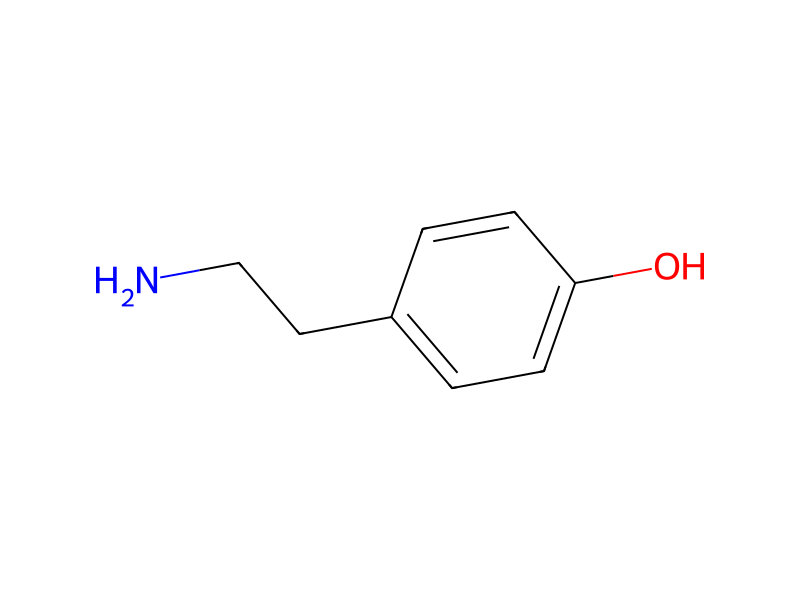

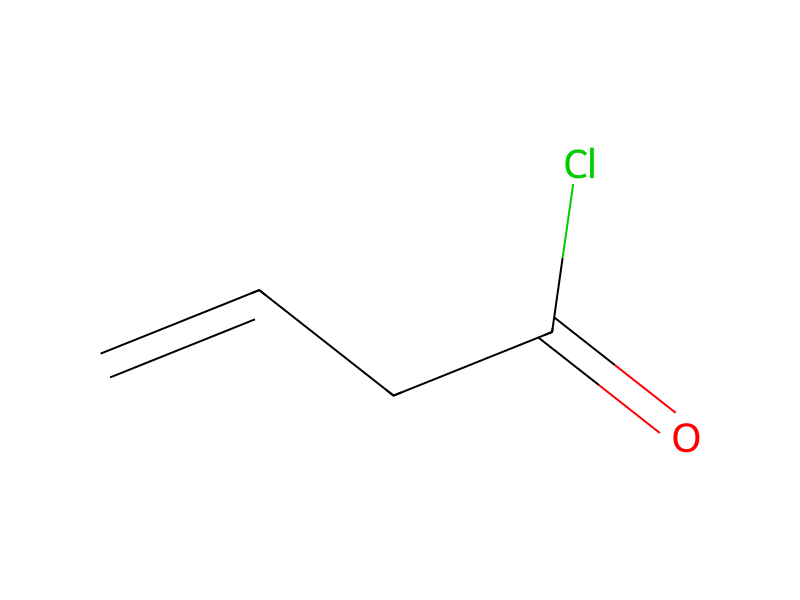
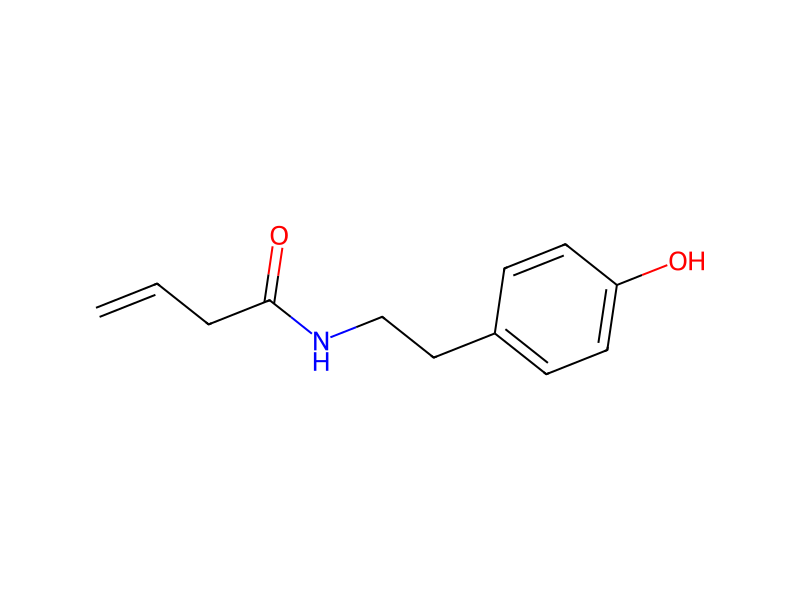

実験手順
A 1000-mL 3-neck, round bottom flask connected with a reflux condenser and a drying tube, is charged with 250 mL of methylene chloride, 5.48 grams (0.04 mole) 4-aminoethylphenol and 4.04 grams (0.04 mole) triethylamine. The contents are chilled with an ice bath. Through a dropping funnel, 4.18 g (0.04 mole) of vinylacetyl chloride is added into the flask over a period of 30 minutes. The ice bath is then removed and the contents are continuously stirred overnight. The mixture is then filtered and then condensed using a rotavapor. High performance liquid chromatography (HPLC) analysis indicates only one major product. The product is then passed through silica gel chromatography to give a final purified product with a yield of at least 80 percent. The product is identified by NMR and Mass Spectroscopy.