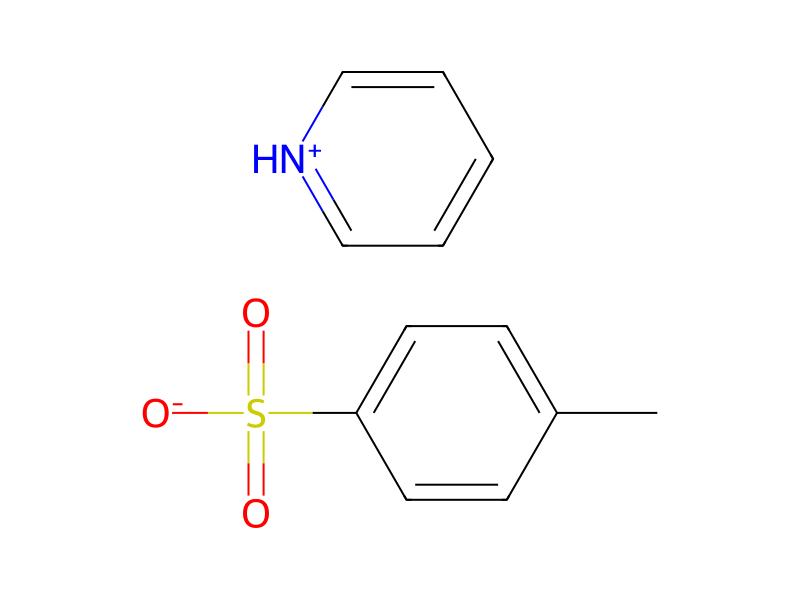
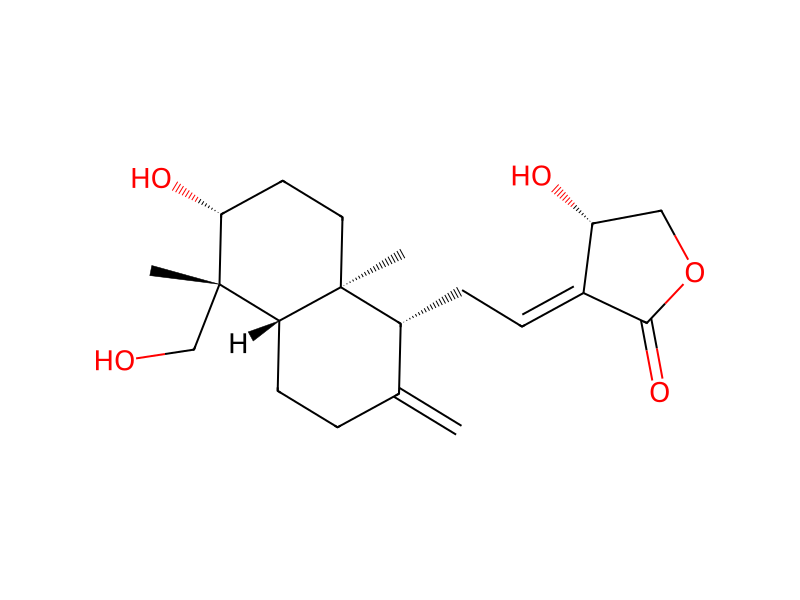
A mixture of andrographolide (15 g), 2,2-dimethoxypropane (20 ml) and catalytic amount of pyridinium p-toluene sulphonate (few crystals) in a solution of benzene/dimethyl suiphoxide (300 ml/40 ml) was refluxed for 30 min. After completion of the reaction (checked by TLC), the contents were cooled to room temperature and basified with excess triethylamine (10 ml) to quench the remaining catalyst. The mixture was diluted with benzene (200 ml) and washed with water (3×300 ml). The organic layer was dried over Na2SO4 and concentrated to obtain a yellow solid which on maceration with diethyl ether gave 3,19-isopropylidene andrographolide as a pale yellow product (15 g). m.p. 194.5° C.