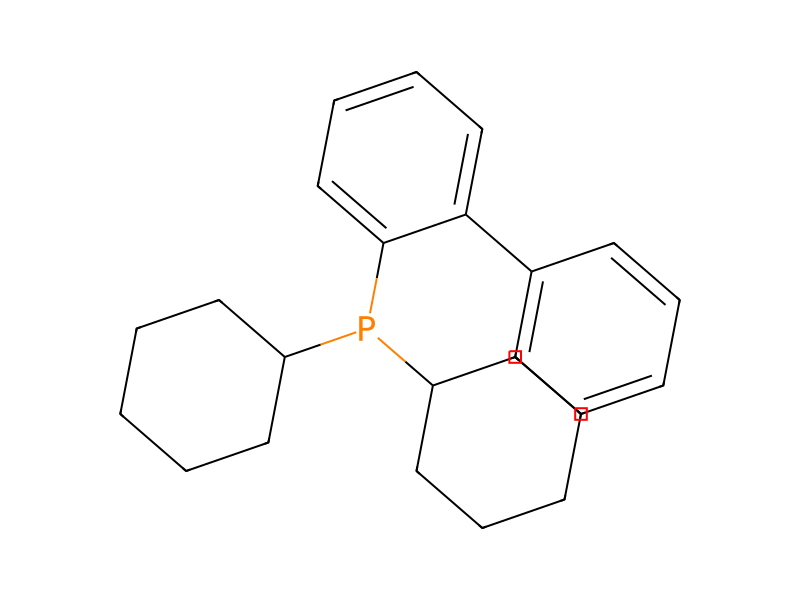
A third intermediate compound, 1-Isochroman-5-yl-piperazine, was produced as follows: To a mixture of 5-bromo-isochroman (1 g, 4.69 mmol), 1-boc-piperazine (1.05 g, 5.6 mmol), 2-dicyclohexylphosphino biphenyl (0.066 g, 0.19 mmol), and Pd(OAc)2 (0.42 g, 0.19 mmol) in 10 mL of dry degassed C6H5CH3 was added NaOtBu (0.63 g, 6.6 mmol) at room temperature. The resulting mixture was stirred at 80–90° C. for 1 h, cooled and passed through a pad of celite and the filtrate was concentrated under vacuum. The residue was purified by chromatography (25–50% EtOAc/hexanes) to give 4-isochroman-5-yl-piperazine-1-carboxylic acid tert-butyl ester (0.89 g, 60%). MS (ES) m/z: 319.19 [M+1]. 1H NMR (400 MHz, CDCl3) δ 7.16 (t, J=7.8 Hz, 1H), 6.88 (d, J=7.8 Hz, 1H), 6.75 (d, J=7.8 Hz, 1H), 4.79 (s, 2H), 3.94 (t, J=5.9 Hz, 2H), 3.55 (br s, 4H), 2.86–2.80 (m, 4H), 1.49 (s, 9H).