Ethanol → 2-(2-(O-tolylamino)benzo[d]oxazol-6-yl)acetic acid
HRID 1375074
反応式

[C:1]1([CH3:40])[CH:6]=[CH:5][CH:4]=[CH:3][C:2]=1[NH:7][C:8]1[O:9][C:10]2[CH:16]=[C:15]([CH2:17][C:18](NC3C=CC(C4(CC(O)=O)CC5C(=CC=CC=5)C4)=CC=3)=[O:19])[CH:14]=[CH:13][C:11]=2[N:12]=1.C1(C)C(N=C=S)=CC=CC=1.C1(N=C=NC2CCCCC2)CCCCC1.C([OH:68])C>>[C:1]1([CH3:40])[CH:6]=[CH:5][CH:4]=[CH:3][C:2]=1[NH:7][C:8]1[O:9][C:10]2[CH:16]=[C:15]([CH2:17][C:18]([OH:19])=[O:68])[CH:14]=[CH:13][C:11]=2[N:12]=1参加物
5



実験手順
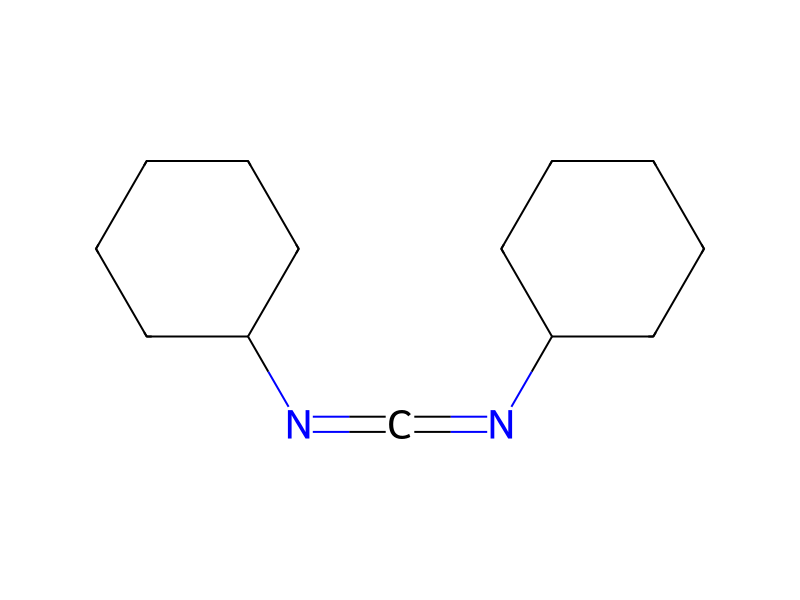
A mixture of (4-amino-3-hydroxy-phenyl)-acetic acid ethyl ester (3.3 g, Reference Example 3) and o-tolylisothiocyanate (2.5 mL) in ethanol (150 mL) was stirred at room temperature for about 2 hours. After standing at room temperature overnight the mixture was evaporated and the residue was subjected to flash chromatography on silica eluting with a mixture of pentane and ethyl acetate (7:3, v/v) to give a yellow foam. A solution of this material in ethanol (150 mL) was treated with dicyclohexylcarbodiimide (3.0 g) and the mixture was heated at reflux temperature for 2 hours. The mixture was evaporated and the residue subjected to short column chromatography (on silica eluting with a mixture of tert-butyl methyl ether and dichloromethane, 1:19 to 1:9 v/v). The resulting light yellow oil was dissolved in ethanol (100 mL) and the solution was treated with sodium hydroxide solution (15 mL, 1M) then heated at reflux temperature for 2 hours. The reaction mixture was evaporated and the residue was dissolved in water. The solution was washed with ethyl acetate and the aqueous layer was acidified to pH 1 by addition of concentrated hydrochloric acid. The resulting white precipitate was collected by filtration, then washed thoroughly with water, and then dried to give the title compound (1.8 g) as a white solid.