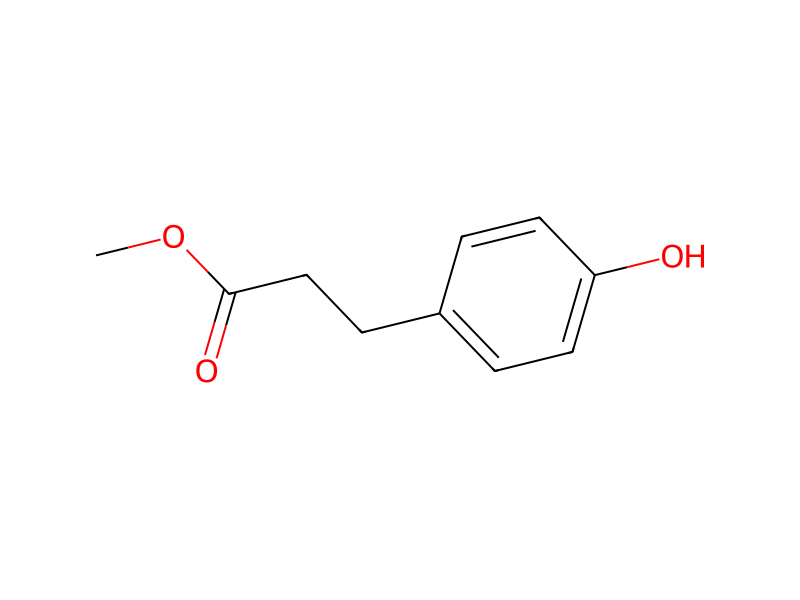
[OH:1][C:2]1[CH:7]=[CH:6][C:5]([CH2:8][CH2:9][C:10]([O:12][CH3:13])=[O:11])=[CH:4][CH:3]=1.[CH2:14]([S:26][CH2:27][CH2:28]O)[CH2:15][CH2:16][CH2:17][CH2:18][CH2:19][CH2:20][CH2:21][CH2:22][CH2:23][CH2:24][CH3:25].C1(P(C2C=CC=CC=2)C2C=CC=CC=2)C=CC=CC=1.N(C(OCC)=O)=NC(OCC)=O>C1C=CC=CC=1.C(OCC)(=O)C>[CH3:13][O:12][C:10](=[O:11])[CH2:9][CH2:8][C:5]1[CH:4]=[CH:3][C:2]([O:1][CH2:28][CH2:27][S:26][CH2:14][CH2:15][CH2:16][CH2:17][CH2:18][CH2:19][CH2:20][CH2:21][CH2:22][CH2:23][CH2:24][CH3:25])=[CH:7][CH:6]=1A solution of methyl 3-[4-hydroxyphenyl)propionate (2.46 g, 13.6 mmol), 2-(dodecylthio)ethanol (3.40 g, 13.7 mmol) and triphenylphosphine (3.60 g, 13.8 mmol) in dry benzene (50 ml) was treated at 22° C. with diethyl azodicarboxylate (2.43 g, 13.9 mmol) added dropwise over 10 min. After 3 h at 22° C., the reaction mixture was diluted with ethyl acetate, washed with water, brine and dried (magnesium sulfate). Evaporation under reduced pressure gave an oil which was triturated with hexane to precipitate the triphenylphosphine oxide and the hydrazine side products. The filtrate was chromatographed on silica gel using a gradient of ethyl acetate (0-5%) in hexane as eluent to give 4.70 g(84%) of 3-[4-[2-(dodecylthio)ethoxy]phenyl]propanoic acid methyl ester as a white solid. Recrystallization from methanol gives white leaflets: m.p. 48° C.