Diethyl Oxalate → Ethyl 2,3-dioxo-1,2,3,4-tetrahydroquinoxaline-6-carboxylate
HRID 1405491
反応式

[NH2:1][C:2]1[CH:3]=[C:4]([CH:10]=[CH:11][C:12]=1[NH2:13])[C:5]([O:7][CH2:8][CH3:9])=[O:6].[C:14](OCC)(=[O:20])[C:15](OCC)=[O:16]>>[O:16]=[C:15]1[C:14](=[O:20])[NH:1][C:2]2[C:12](=[CH:11][CH:10]=[C:4]([C:5]([O:7][CH2:8][CH3:9])=[O:6])[CH:3]=2)[NH:13]1参加物
3

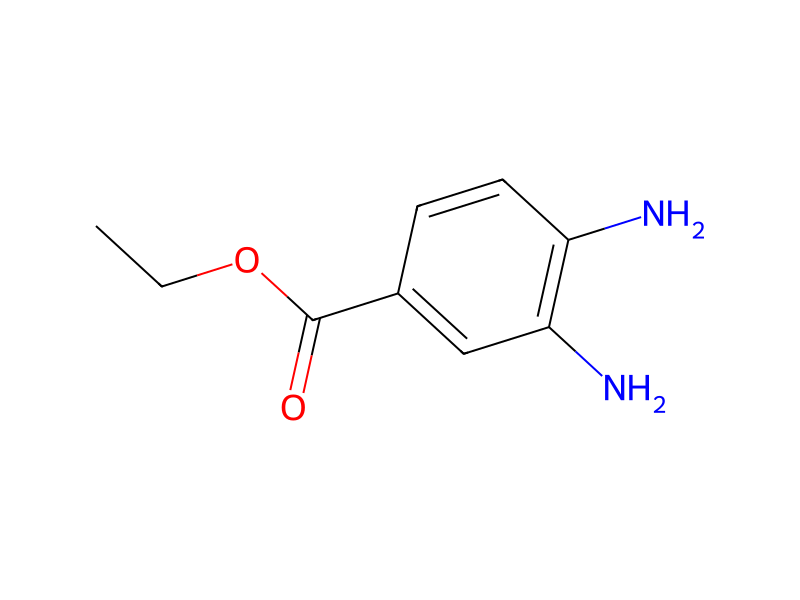

反応条件
- 温度
- 140 °C
実験手順
Into a 250-mL round-bottom flask, was placed a solution of ethyl 3,4-diaminobenzoate (5 g, 27.75 mmol, 1.00 equiv) in diethyl oxalate (100 mL). The resulting solution was stirred overnight at 140° C. in an oil bath. Then the resulting solution was cooled to room temperature. The solids were collected by filtration. The solid was dried in an oven under reduced pressure. This resulted in 3.5 g (54%) of ethyl 2,3-dioxo-1,2,3,4-tetrahydroquinoxaline-6-carboxylate as a brown solid.