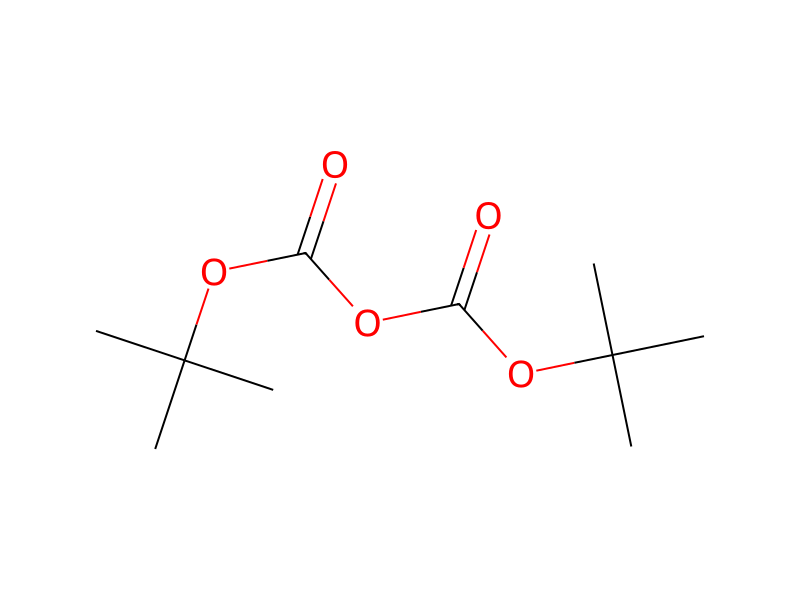
In a 350-mL resealable vessel the (S)-2′-bromo-7′-iodo-5H-spiro[oxazole-4,9′-xanthen]-2-amine (11.5 g, 25.2 mmol) was taken up in AcOH (125 mL) and water (31 mL). The vessel was sealed and heated in a 140° C. oil bath for 14 h. The reaction was concentrated to remove most of the AcOH. The reaction residue was neutralized with 1M aqueous Na2CO3 (250 mL). The residue was filtered through Celite, rinsing with 5% MeOH-DCM (800 mL). The filtrate's organic layer was separated, dried over sodium sulfate and concentrated. The crude (S)-2′-bromo-7′-iodospiro[oxazolidine-4,9′-xanthen]-2-one was used in the next step without further purification. Step 2: In a 350-mL resealable vessel, the (S)-2′-bromo-7′-iodospiro[oxazolidine-4,9′-xanthen]-2-one (11 g, 24.02 mmol) was dissolved in 1:1 MeOH-dioxane (160 mL). Aqueous KOH (5 M, 48.0 mL, 240 mmol) was added. The vessel was sealed and placed in a 105° C. oil bath. After 24 h, the reaction was concentrated to remove the MeOH and most of the dioxane. The residue was diluted with water (200 mL) and the aqueous phase was extracted with 5% MeOH-DCM (4×200 mL). The organics were combined, washed with dilute brine (35 mL), dried over sodium sulfate and concentrated. The residue was purified by chromatography (1.5% MeOH/DCM) to afford (S)-(9-amino-2-bromo-7-iodo-9H-xanthen-9-yl)methanol (3.84 g, 8.89 mmol). Step 3: The (S)-(9-amino-2-bromo-7-iodo-9H-xanthen-9-yl)methanol (3.84 g, 8.89 mmol) was dissolved in THF (200 mL). The solution was cooled to 0° C., and TEA (1.425 mL, 10.22 mmol) and 2-chloroacetyl chloride (0.707 mL, 9.07 mmol) were added. The reaction was allowed to warm naturally to RT. After 14 h, the reaction was concentrated. The residue was taken up in aqueous 1 M Na2CO3 (50 mL) and the aqueous phase was extracted with 7.5% MeOH-DCM (3×133 mL). The organics were combined, washed with aqueous 1 M Na2CO3 (30 mL), dried over sodium sulfate and concentrated. The residue was dissolved in THF (100 mL) and aqueous 1 M Na2CO3 (15 mL) was added. The reaction was concentrated. The residue was taken up in 5% MeOH-dcm (400 mL) and the organic phase was washed with dilute brine (40 mL), dried over sodium sulfate and concentrated to afford crude (S)—N-(2-bromo-9-(hydroxymethyl)-7-iodo-9H-xanthen-9-yl)-2-chloroacetamide, which was used in the next step without further purification. Step 4: In a 500-mL flask (S)—N-(2-bromo-9-(hydroxymethyl)-7-iodo-9H-xanthen-9-yl)-2-chloroacetamide (4.52 g, 8.89 mmol) was dissolved in t-amyl alcohol (125 mL). Potassium t-butoxide (2.244 g, 20.00 mmol) was added. After 14 h, the reaction was concentrated. The residue was taken up in dilute aqueous NH4Cl (50 mL) and the aqueous phase was extracted with 5% MeOH-DCM (3×133 mL). The organics were combined, washed with dilute brine (25 mL), dried over sodium sulfate and concentrated. The material was purified through silica gel (500 mL) using 30% EtOAc-hexane to afford (S)-2′-bromo-7′-iodospiro[morpholine-3,9′-xanthen]-5-one (1.92 g, 4.07 mmol). Step 5: In a 250-mL flask, the (S)-2′-bromo-7′-iodospiro[morpholine-3,9′-xanthen]-5-one (1.483 g, 3.14 mmol) was suspended in toluene (30 mL). Lawesson's reagent (0.794 g, 1.963 mmol) was added. An air-cooled condenser was affixed, and the reaction vessel was placed in a 90° C. oil bath After 7 h, the reaction was concentrated. Without working it up, the residue was purified by chromatography (15% EtOAc/hexanes) to afford (S)-2′-bromo-7′-iodospiro[morpholine-3,9′-xanthene]-5-thione (1.25 g, 2.56 mmol). Step 6: In a 350-mL resealable vessel, the (S)-2′-bromo-7′-iodospiro[morpholine-3,9′-xanthene]-5-thione (1.25 g, 2.56 mmol) was dissolved in a dioxane solution of ammonia (0.5 M, 61.5 mL, 30.7 mmol). After the solid had dissolved, mercury(II) chloride (1.043 g, 3.84 mmol) was added. The vessel was sealed and placed in a 55° C. oil bath overnight. The reaction was filtered through Celite, rinsing with DCM (50 mL). The mixture was concentrated to remove the DCM, and Boc2O (0.84 g, 3.84 mmol) and Et3N (0.535 mL, 3.84 mmol) were added. After 1.5 h, the mixture was concentrated, and the residue was purified by chromatography (15% EtOAc/hexanes) to afford impure (S)-tert-butyl 2′-bromo-7′-iodo-2,6-dihydrospiro[[1,4]oxazine-3,9′-xanthene]-5-ylcarbamate. Step 7: In a 150-mL resealable vessel, the (S)-tert-butyl 2′-bromo-7′-iodo-2,6-dihydrospiro[[1,4]oxazine-3,9′-xanthene]-5-ylcarbamate (1.475 g, 2.58 mmol) was dissolved in dcm (10 mL), and 2,2,2-trifluoroacetic acid (1.989 mL, 25.8 mmol) was added. The vessel was sealed and placed in a 50° C. oil bath. After 2 h, the reaction was concentrated and the mixture was neutralized with 0.5 M aqueous Na2CO3 (15 mL) and the aqueous phase was extracted with 5% MeOH-dcm (3×33 mL). The organics were combined, washed with dilute brine (10 mL), dried over sodium sulfate and concentrated. The residue was purified by chromatography (5.5% MeOH/DCM) to afford (S)-2′-bromo-7′-iodo-2,6-dihydrospiro[[1,4]oxazine-3,9′-xanthen]-5-amine (151 mg, 0.321 mmol). MS (m/z) 471/473 (M+H)+.