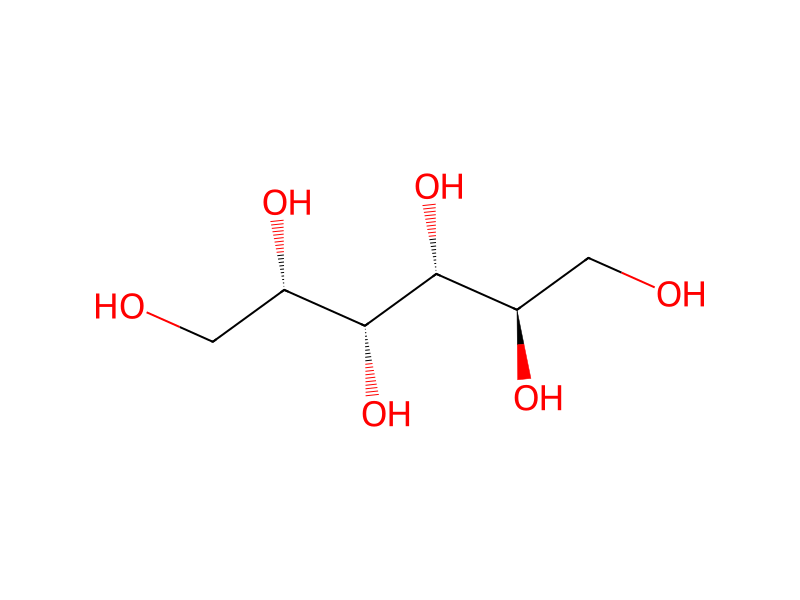
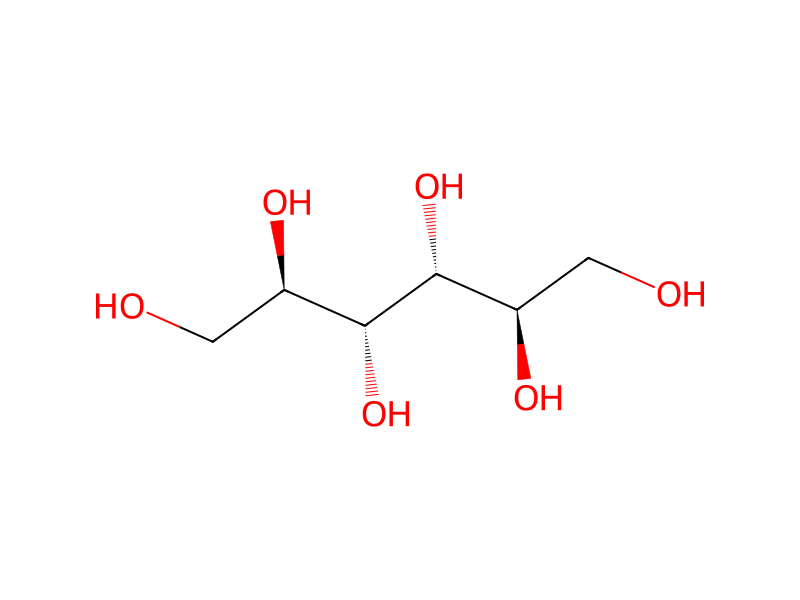
Isohexide starting materials can be obtained by known methods of making respectively isosorbide, isomannide, or isoidide. Isosorbide and isomannide can be derived from the dehydration of the corresponding sugar alcohols, D-sorbitol and D mannitol. As a commercial product, isosorbide is also available easily from a manufacturer. The third isomer, isoidide, can be produced from L-idose, which rarely exists in nature and cannot be extracted from vegetal biomass. For this reason, researchers have been actively exploring different synthesis methodologies for isoidide. For example, the isoidide starting material can be prepared by epimerization from isosorbide. In L. W. Wright, J. D. Brandner, J. Org. Chem., 1964, 29 (10), pp. 2979-2982, epimerization is induced by means of Ni catalysis, using nickel supported on diatomaceous earth. The reaction is conducted under relatively severe conditions, such as a temperature of 220° C. to 240° C. at a pressure of 150 atmosphere. The reaction reaches a steady state after about two hours, with an equilibrium mixture containing isoidide (57-60%), isosorbide (30-36%) and isomannide (5-7-8%). Comparable results were obtained when starting from isoidide or isomannide. Increasing the pH to 10-11 was found to have an accelerating effect, as well as increasing the temperature and nickel catalyst concentration. A similar disclosure can be found in U.S. Pat. No. 3,023,223, which proposes to isomerize isosorbide or isomannide. More recently, P. Fuertes proposed a method for obtaining L-iditol (precursor for isoidide), by chromatographic fractionation of mixtures of L-iditol and L-sorbose (U.S. Patent Publication No. 2006/0096588; U.S. Pat. No. 7,674,381 B2). L-iditol is prepared starting from sorbitol. In a first step sorbitol is converted by fermentation into L-sorbose, which is subsequently hydrogenated into a mixture of D-sorbitol and L-iditol. This mixture is then converted into a mixture of L-iditol and L-sorbose. After separation from the L-sorbose, the L-iditol can be converted into isoidide. Thus, sorbitol is converted into isoidide in a four-step reaction, in a yield of about 50%. (The contents of the cited references are incorporated herein by reference.)