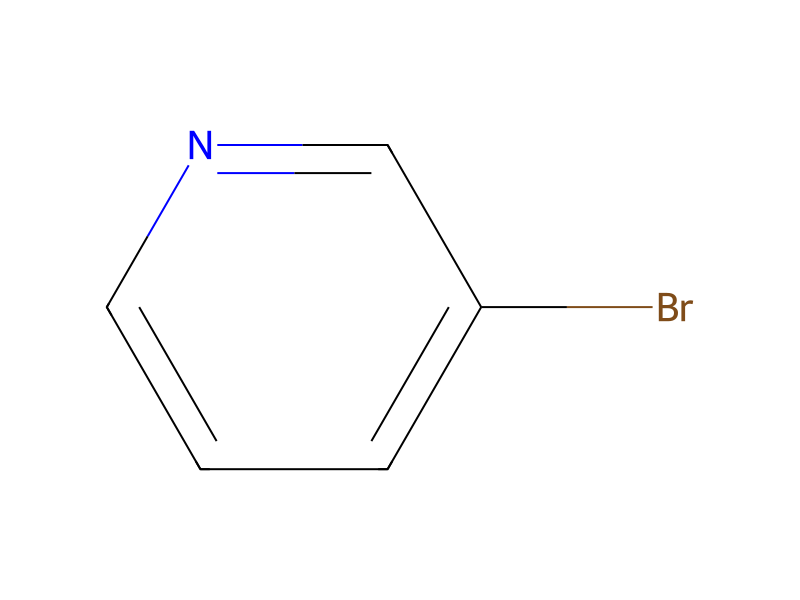
Argon was passed through a solution of 45 ml of 3-bromopyridine and 49.61 g of 5-hexynenitrile in 500 ml of dichloromethane and 150 ml of dry triethylamine for 15 minutes and 3.0 g of bis(triphenylphosphine)palladium dichloride and 0.45 g of cuprous iodide were added. The reaction flask was evacuated and refilled with argon and was heated to reflux for 12 hours. The resulting mixture was diluted with 1 L of dichloromethane and washed with 2×300 ml of water, 1×300 ml brine, dried over potassium carbonate and concentrated. The residue was distilled to afford 62.82 g (79%) of 6-(3-pyridinyl)-5-hexynenitrile as a yellow oil, bp 140°-170° C./0.2 mm., suitable for use in the next step. A portion was purified by chromatography over silica gel eluting with 1:1 ethyl acetate-hexane containing 1% triethylamine and was redistilled to give an analytical sample of 6-(3-pyridinyl)-5-hexynenitrile.