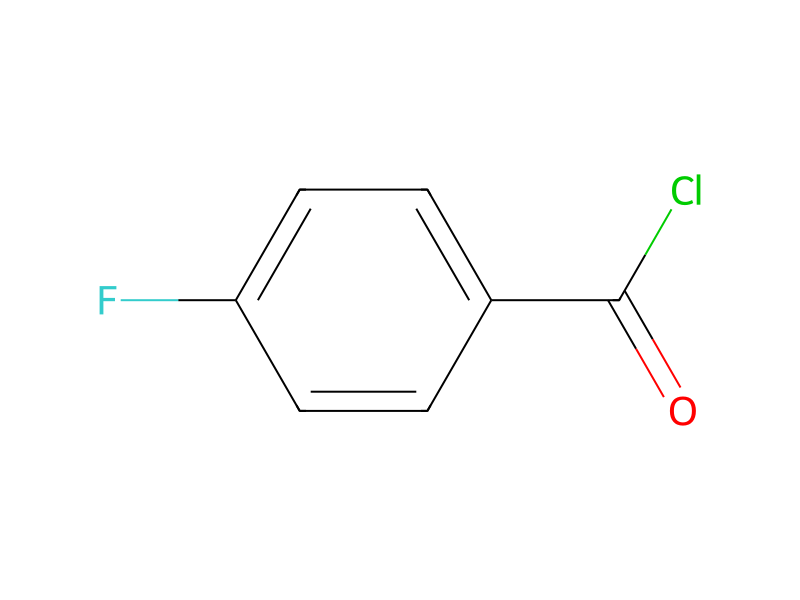
To a stirred solution of biphenyl (96.02 g, 0.632 mol) in trichlorobenzene (640 mL) was added aluminium chloride (91 g, 0.174 mol) in two portions. 4-Fluorobenzoyl chloride (70 mL, 0.593 mol) was then added dropwise from a dropping funnel over 1 h to the solution at 40° C., and the temperature was then raised to 100° C. for 6 h until HCl ceased to evolve. The mixture was allowed to cool to room temperature and poured into an ice/HCl mixture (ca. 2 L), and left stirring overnight. The water was decanted and the white sludge was stirred vigorously with methanol. The crude product was recovered by filtration, washed with methanol, and then dried under vacuum at 80° C. overnight This product (110 g) was recrystallised twice from toluene to give white crystals of 4-(4′-fluorobenzoyl)biphenyl (77 g, 47%); m.p. 149° C. (lit. 148.5-149° C.).