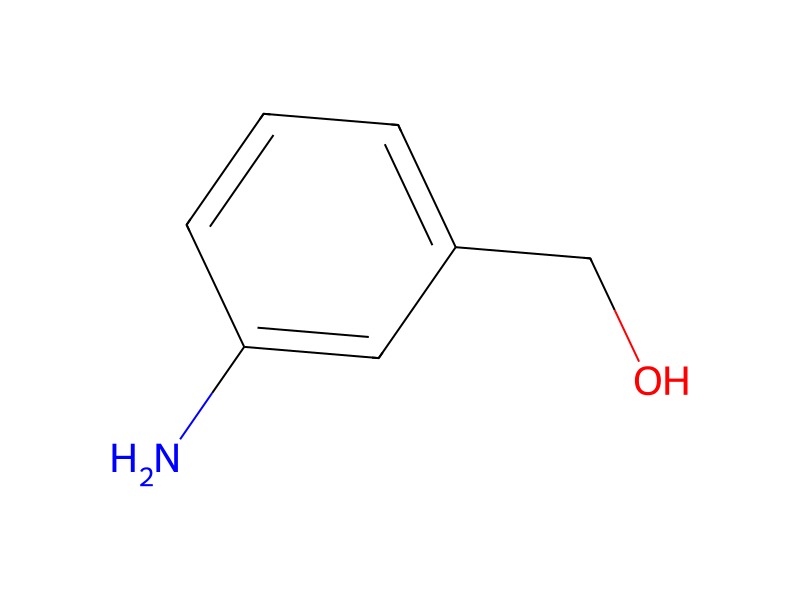
3-Aminobenzyl alcohol → {3-[(5-Chloro-4-{[(1S)-1-(3-methoxyphenyl)ethyl]amino}pyrimidin-2-yl)amino]phenyl}methanol
HRID 1614957
反応式

Cl[C:2]1[N:7]=[C:6]([NH:8][C@H:9]([C:11]2[CH:16]=[CH:15][CH:14]=[C:13]([O:17][CH3:18])[CH:12]=2)[CH3:10])[C:5]([Cl:19])=[CH:4][N:3]=1.[NH2:20][C:21]1[CH:22]=[C:23]([CH:26]=[CH:27][CH:28]=1)[CH2:24][OH:25].O.C1(C)C=CC(S(O)(=O)=O)=CC=1.C([O-])(O)=O.[Na+]>O1CCOCC1>[Cl:19][C:5]1[C:6]([NH:8][C@H:9]([C:11]2[CH:16]=[CH:15][CH:14]=[C:13]([O:17][CH3:18])[CH:12]=2)[CH3:10])=[N:7][C:2]([NH:20][C:21]2[CH:22]=[C:23]([CH2:24][OH:25])[CH:26]=[CH:27][CH:28]=2)=[N:3][CH:4]=1参加物
6