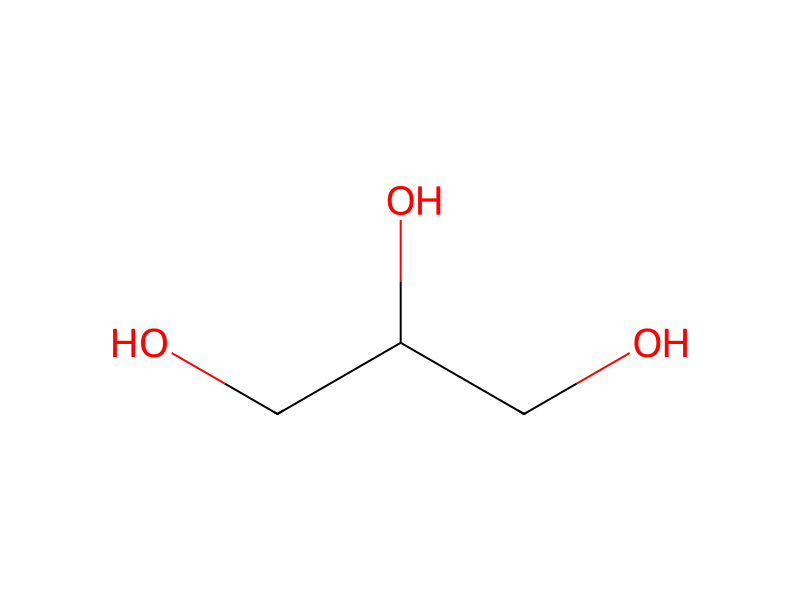
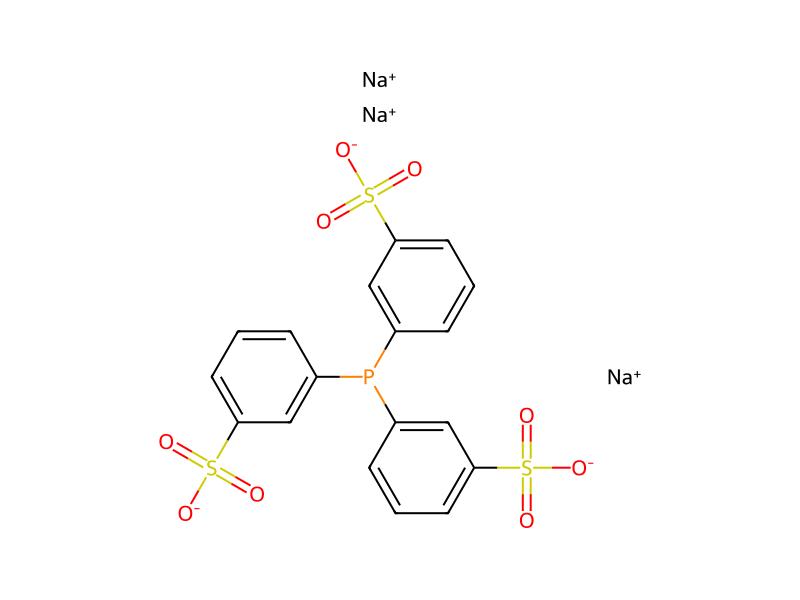
In a 500-mL autoclave, charged were 70 g (0.76 mol) of glycerin, 0.7 g (2.3 mmol) of bis(acetylacetonato)palladium (II), 3.0 g (5.3 mmol) of triphenylphosphine-3,3′,3″-trisulfonic acid trisodium salt and 35 g of water. The mixture was heated to 80° C., whereby a water-soluble liquid phase was obtained. After cooling, 180 g (3.3 mol) of 1,3-butadiene was introduced at a time into the autoclave as a hydrocarbon solvent phase. While stirring, the mixture was heated to 80° C. again. The initial pressure in the autoclave showed 1.0 MPa. After stirring at 80° C. for 10 hours, the water phase and unreacted butadiene were removed, followed by washing with water, whereby 111 g of octadienyl glyceryl ether was obtained as a pale yellow transparent oil.