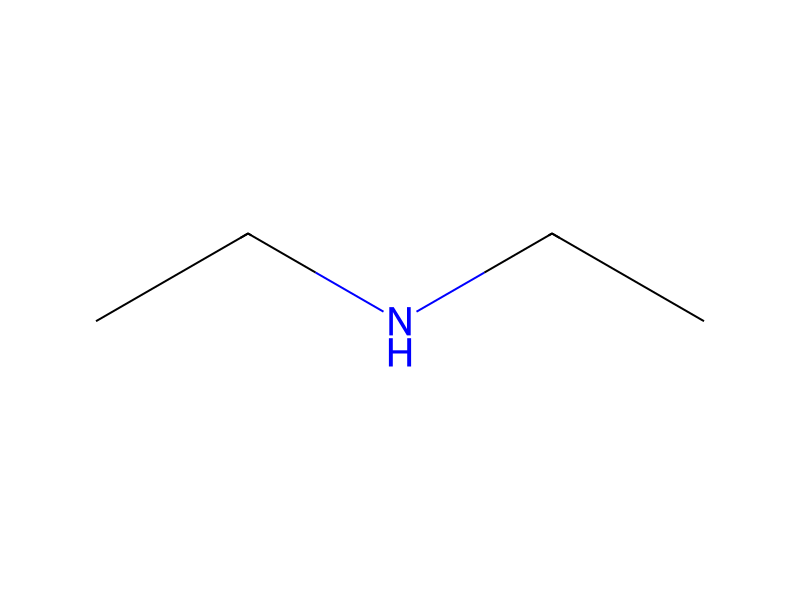
Diethylamine → alpha-[(3-Pyridinyl)ethynyl]-benzenemethanol
HRID 1654767
反応式

Cl.Br[C:3]1[CH:4]=[N:5][CH:6]=[CH:7][CH:8]=1.[C:9]([CH:11]([C:13]1[CH:18]=[CH:17][CH:16]=[CH:15][CH:14]=1)[OH:12])#[CH:10].C(NCC)C>Cl[Pd](Cl)([P](C1C=CC=CC=1)(C1C=CC=CC=1)C1C=CC=CC=1)[P](C1C=CC=CC=1)(C1C=CC=CC=1)C1C=CC=CC=1.[Cu]I>[N:5]1[CH:6]=[CH:7][CH:8]=[C:3]([C:10]#[C:9][CH:11]([C:13]2[CH:18]=[CH:17][CH:16]=[CH:15][CH:14]=2)[OH:12])[CH:4]=1