3,4-Biphenyldiol → Ethyl 2,3-dihydro-6-phenyl-1,4-benzodioxin-2-carboxylate
HRID 1706692
反応式

Br[CH:2]([CH2:8]Br)[C:3]([O:5][CH2:6][CH3:7])=[O:4].[C:10]1([C:16]2[CH:17]=[C:18]([OH:23])[C:19](=[CH:21][CH:22]=2)[OH:20])[CH:15]=[CH:14][CH:13]=[CH:12][CH:11]=1.C(=O)([O-])[O-].[K+].[K+]>CC(C)=O>[C:10]1([C:16]2[CH:22]=[CH:21][C:19]3[O:20][CH:2]([C:3]([O:5][CH2:6][CH3:7])=[O:4])[CH2:8][O:23][C:18]=3[CH:17]=2)[CH:11]=[CH:12][CH:13]=[CH:14][CH:15]=1参加物
5


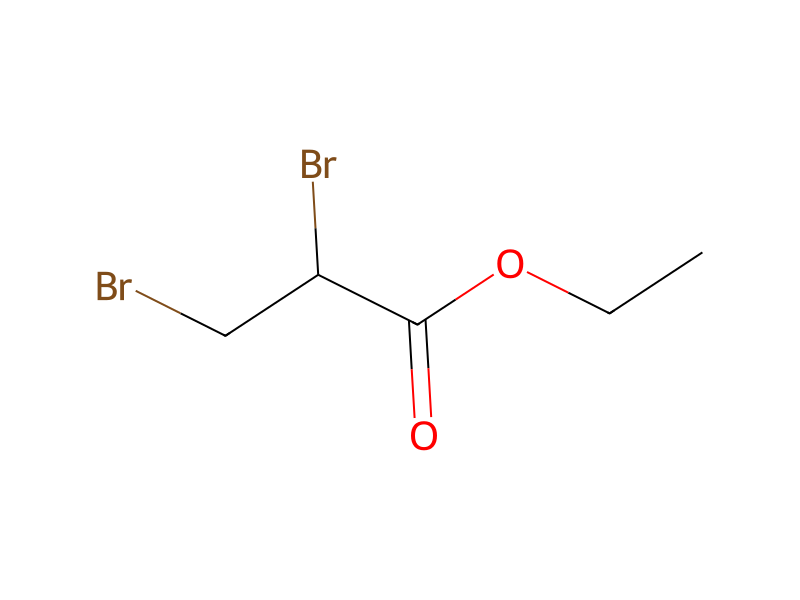


実験手順
46.1 g of ethyl 2,3-dibromopropionate was added slowly to a mixture of 30 g of 4-phenylcatechol, 66.2 g of potassium carbonate, and 250 ml of acetone. The mixture was refluxed for 18 hours, cooled and filtered. The solvent was evaporated from the filtrate under reduced pressure. The residue was extracted with hot cyclohexane. The extract was dried (MgSO4) and filtered. The solvent was evaporated from the filtrate under reduced pressure. The residue was taken up in hexane/methylene chloride. The solution was cooled. The resulting solid (7A) was separated and recrystallized from cyclohexane to give 7, mp: 103°-105° C.