反応式

[CH3:1][C:2]1[CH2:7][CH2:6][CH2:5][C:4]([CH3:9])([CH3:8])[C:3]=1/[CH:10]=[CH:11]/[C:12](/[CH3:33])=[CH:13]\[CH:14]=[CH:15]\[C:16](\[CH3:32])=[CH:17]/[CH2:18][O:19][C@@H:20]1[O:25][C@H](C(O)=O)[C@@H](O)[C@H](O)[C@H:21]1O.CC1CCCC(C)(C)C=1/C=C/C(/C)=C/C=C/C(/C)=C/CO>>[CH3:1][C:2]1[CH2:7][CH2:6][CH2:5][C:4]([CH3:8])([CH3:9])[C:3]=1/[CH:10]=[CH:11]/[C:12](/[CH3:33])=[CH:13]/[CH:14]=[CH:15]/[C:16](/[CH3:32])=[CH:17]/[CH2:18][O:19][C:20]([CH3:21])=[O:25]参加物


実験手順
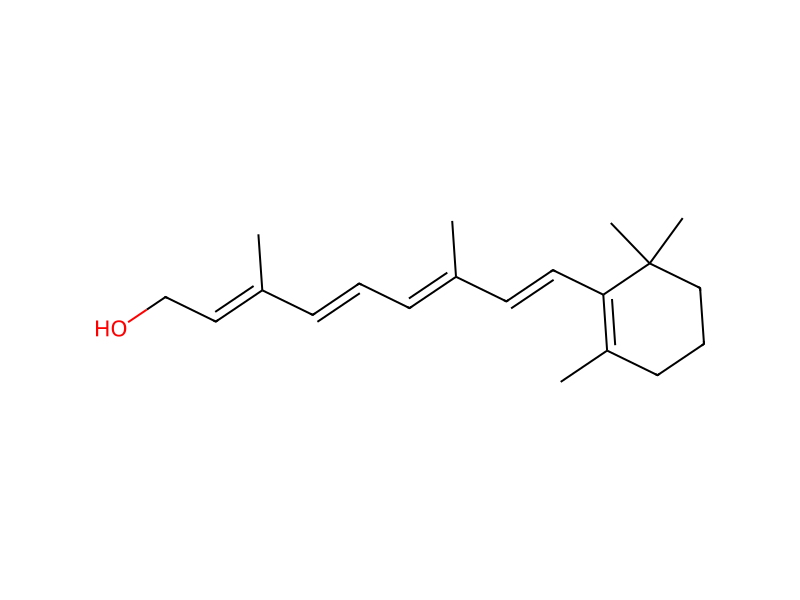
The starting materials for the preparation of retinyl β-glucuronide include retinol that can be obtained as an oil by saponification of commercially available retinyl acetate, and methyl (2,3,4-tri-O-acetyl glucopyranosyl bromide)-uronate that can be synthesized from commercially available 6,3-glucuronolactone by known procedures (Bollenback et al. J. Amer. Chem. Soc. 77: 3310-3315, 1955). The reaction is carried out in the presence of silver carbonate by stirring at room temperature for 20-24 hours. The resulting product is a mixture of unconverted retinol and the fully protected glucuronide of retinol. To obtain the free glucuronide, the crude mixture is saponified without separating the other products and then the products are separated by a combination of column chromatography and HPLC.
出典と根拠
- ORDレコード
- ord-aea6f7adb78f4a1a9863e494d7517693
- 出典データセット
- uspto-grants-1989_08
- 特許番号
- US04855463
関連ノート
読み込み中…