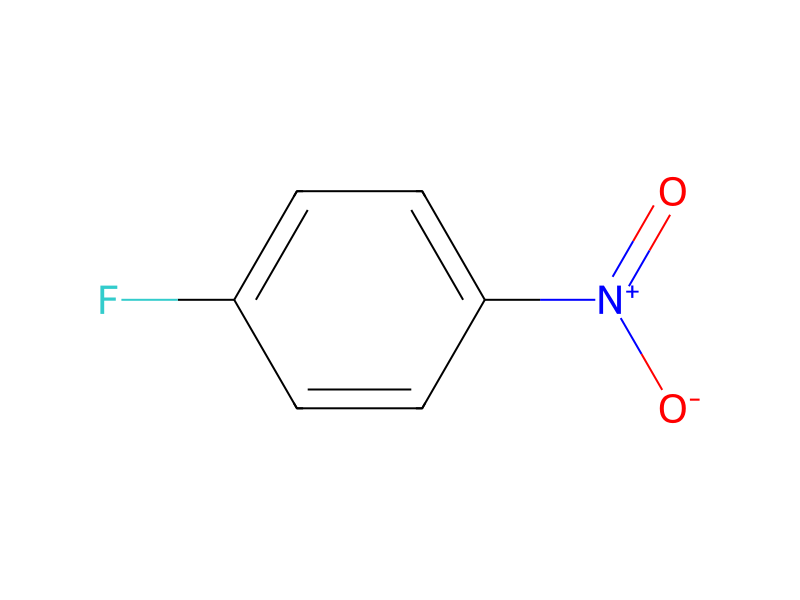
To a solution of 4-hydroxypyridine (4.42 g, 45.8 mmol) and 1-fluoro-4-nitrobenzene (4.89 mL, 45.8 mmol) in anhydrous DMF (50 mL) was added anhydrous K2CO3 (13.0 g, 91.6 mmol) in one portion. The mixture was heated at the reflux temperature with stirring for 24 h, cooled to room temperature and poured in water (300 mL). The solid that separated was filtered, washed with water and dried well under high vacuum to yield 8.9 g (90%) of desired product, 4-(4-pyridinyloxy)-1-nitrobenzene. 1H NMR (CDCl3, 300 MHz): δ 8.36 (d, 2H, J=9.0 Hz), 8.11 (d, 2H, J=8.1 Hz), 7.83 (d, 2H, J=9.0 Hz), 6.27 (d, 2H, J=7.8 Hz); LCMS (m/z): 217 (MH+).