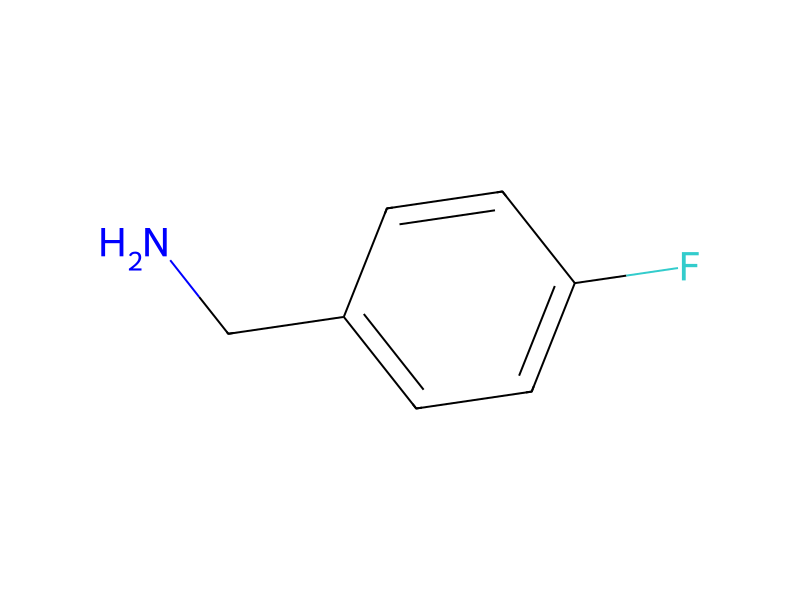
[OH:1][C:2]1[C:11](=[O:12])[N:10]2[C:5]([C:6]([CH3:14])([CH3:13])[O:7][CH2:8][CH2:9]2)=[N:4][C:3]=1[C:15]([O:17]CC)=O.C(N(CC)CC)C.[F:27][C:28]1[CH:35]=[CH:34][C:31]([CH2:32][NH2:33])=[CH:30][CH:29]=1>C(O)C>[F:27][C:28]1[CH:35]=[CH:34][C:31]([CH2:32][NH:33][C:15]([C:3]2[N:4]=[C:5]3[N:10]([C:11](=[O:12])[C:2]=2[OH:1])[CH2:9][CH2:8][O:7][C:6]3([CH3:13])[CH3:14])=[O:17])=[CH:30][CH:29]=1Additional procedure. Ethyl 3-hydroxy-9,9-dimethyl-4-oxo-4,6,7,9-tetrahydropyrimido[2,1-c][1,4]oxazine-2-carboxylate (50 g, 0.186 mol) and ethanol SDA3A (500 mL) was added to a 1 L round bottom flask equipped with a mechanical stirrer, nitrogen inlet-outlet, temperature probe, and condenser. Triethylamine (18.86 g, 0.186 mol) was added to the slurry. The resulting solution was heated to 35° C. followed by slow addition of 4-fluorobenzylamine (35.0 g, 0.279 mol). The thick slurry was heated at 78° C. with stirring for 6 h. The reaction mixture was polish filtered and the filtrate reheated to 70° C. The pH was adjusted to about 1.0 by slow addition of 1N HCl (405 mL). The thick slurry was cooled to 20-25° C., the solids filtered off, washed twice with ethanol SDA 3A (each 250 mL) and twice with water (each 500 mL). The white solid was dried in vacuo at 50-55° C. to afford N-[(4-fluorophenyl)methyl]-4,6,7,9-tetrahydro-3-hydroxy-9,9-dimethyl-4-oxo-pyrimido[2,1-c][1,4]oxazine-2-carboxamide (58.9 g).