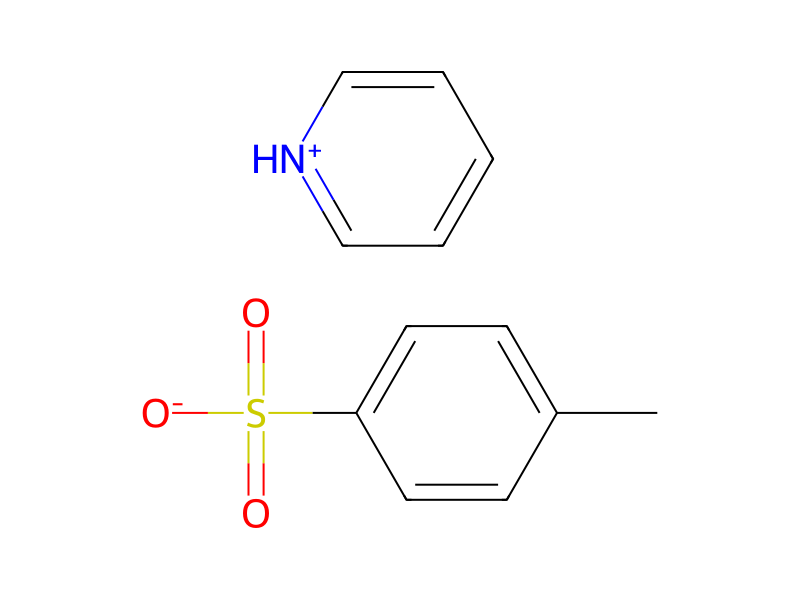
[Br:1][C:2]1[C:7]([F:8])=[C:6](O)[C:5]([NH:10][C:11](=[O:17])[C:12]([CH3:16])([CH3:15])[CH2:13][OH:14])=[C:4]([C:18]#[N:19])[C:3]=1[CH3:20].C1(C)C=CC(S([O-])(=O)=O)=CC=1.[NH+]1C=CC=CC=1>C1(C)C=CC=CC=1.C(OCC)(=O)C>[Br:1][C:2]1[C:7]([F:8])=[C:6]2[O:17][C:11]([C:12]([CH3:16])([CH3:15])[CH2:13][OH:14])=[N:10][C:5]2=[C:4]([C:18]#[N:19])[C:3]=1[CH3:20]N-(4-Bromo-2-cyano-5-fluoro-6-hydroxy-3-methylphenyl)-3-hydroxy-2,2-dimethyl-1-propanamide (I-107) (1.80 g, 5.21 mmol) was dissolved in toluene (36 ml), pyridinium p-toluenesulfonate (262 mg, 1.04 mmol) was added, followed by heating under reflux for 28 hours. After cooling to room temperature, this was diluted with ethyl acetate, and washed with aqueous sodium hydrogencarbonate solution and saturated brine. The obtained organic layer was dried over anhydrous sodium sulfate, the solvent was evaporated away under reduced pressure. The resulting residue was recrystallized and purified with n-hexane/ethyl acetate to obtain the entitled compound (912.6 mg, 54%) as a white solid. The filtrate was concentrated under reduced pressure to obtain a crude form (514.3 mg, 30%) as a pale yellow oily substance.