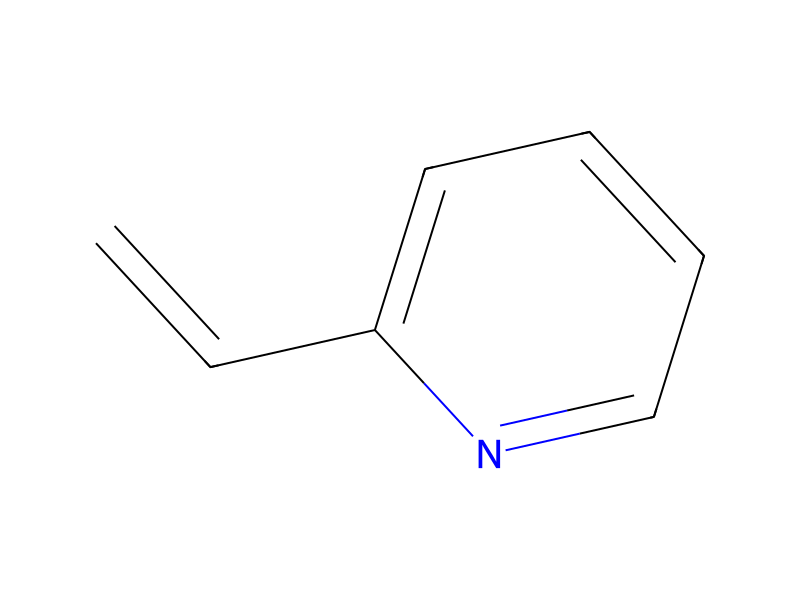
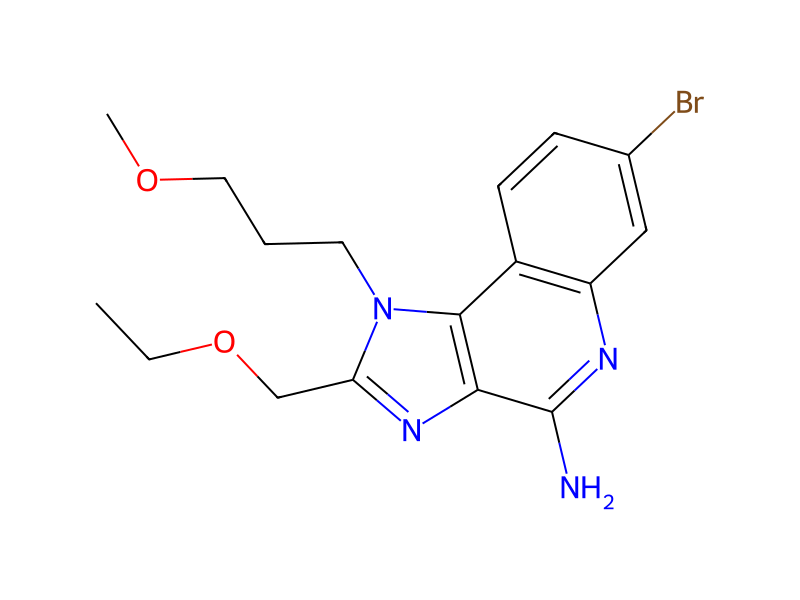
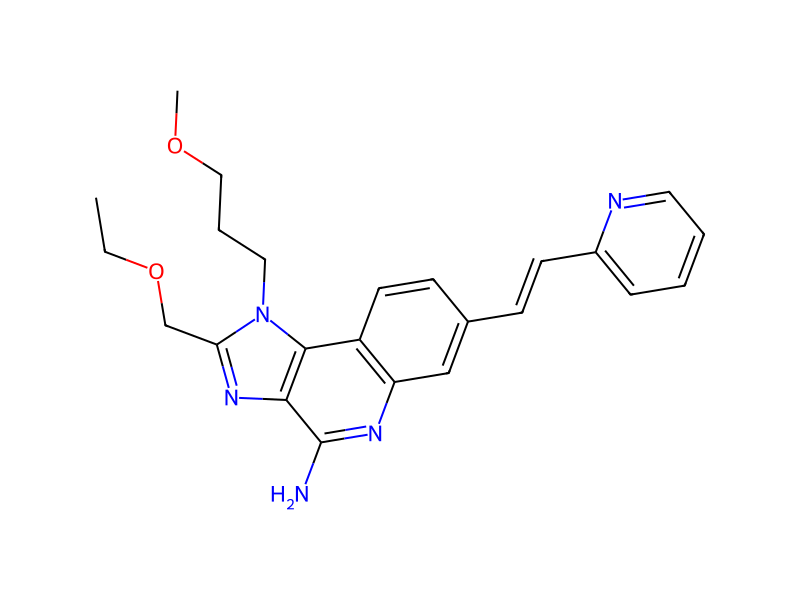
A thick walled glass tube, equipped with magnetic stir-bar, was charged with toluene (20 mL/g), palladium (II) acetate (0.1 equivalents), tri-ortho-tolylphosphine (0.3 equivalents), triethylamine (3.0 equivalents), 2-vinylpyridine (1.0 equivalent), and 7-bromo-2-ethoxymethyl-1-(3-methoxypropyl)-1H-imidazo[4,5-c]quinolin-4-amine (1.0 eq.). The tube was purged with nitrogen and sealed. The reaction mixture was heated at 120° C. for 24-48 hours. The reaction mixture was allowed to cool and then concentrated under reduced pressure. The solid residue was partitioned between dichloromethane and water, and the mixture was adjusted to pH 12 with the addition of 10% aqueous sodium hydroxide. The organic layer was separated and purified by flash chromatography on silica gel (eluting with chloroform:methanol in a gradient from 100:0 to 90:10) followed by recrystallization from acetonitrile to provide (E)-2-ethoxymethyl-1-(3-methoxypropyl)-7-(2-pyridin-2-ylvinyl)-1H-imidazo[4,5-c]quinolin-4-amine as an off-white solid.