反応式

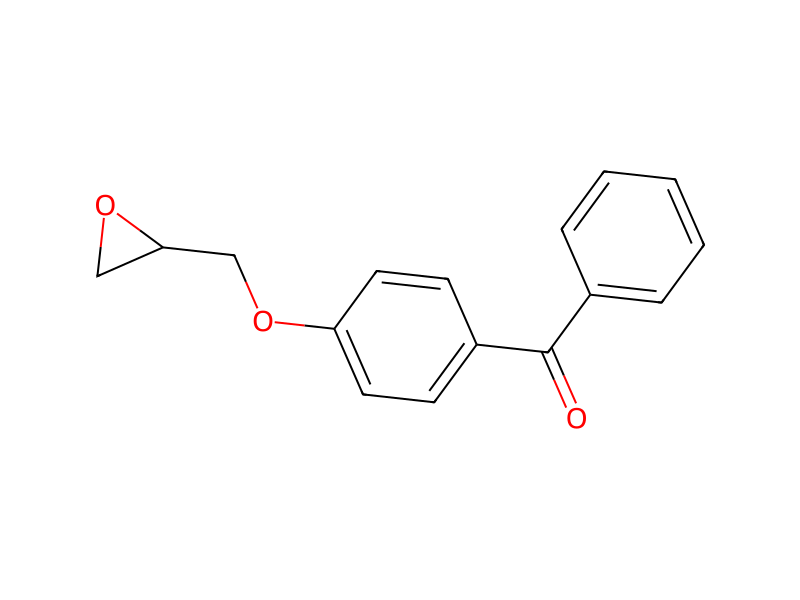
[OH:1][C:2]1[CH:15]=[CH:14][C:5]([C:6]([C:8]2[CH:13]=[CH:12][CH:11]=[CH:10][CH:9]=2)=[O:7])=[CH:4][CH:3]=1.[CH2:16]([CH:18]1[O:20][CH2:19]1)Cl.C(=O)([O-])[O-].[K+].[K+]>CC(C)=O>[CH2:16]([O:1][C:2]1[CH:3]=[CH:4][C:5]([C:6]([C:8]2[CH:13]=[CH:12][CH:11]=[CH:10][CH:9]=2)=[O:7])=[CH:14][CH:15]=1)[CH:18]1[O:20][CH2:19]1参加物
5




実験手順
As illustrated in FIG. 6, 100 mL of dried acetone were added to a dry, 250-mL round bottom flask, equipped with a magnetic stirrer, along with 15.05 grams of 4-hydroxybenzophenone, 32.1 grams of epichlorohydrin, and 6.2 grams of potassium carbonate. The solution was heated to reflux for 6 hours and then cooled to room temperature. The precipitated potassium chloride was filtered off, and the solution was evaporated to remove excess epichlorohydrin. The crude product was recrystallized from methanol. 1H NMR data confirmed the formation of the desired product.
後処理
- additionwere added to a dry, 250-mL round bottom flask
- temperatureThe solution was heated
- temperatureto reflux for 6 hours
- filtrationThe precipitated potassium chloride was filtered off
- customthe solution was evaporated
- customto remove excess epichlorohydrin
- customThe crude product was recrystallized from methanol
出典と根拠
- ORDレコード
- ord-11abb5634ed142ee9bd12b16b8fc0da6
- 出典データセット
- uspto-grants-2006_05
- 特許番号
- US07045366B2
関連ノート
読み込み中…