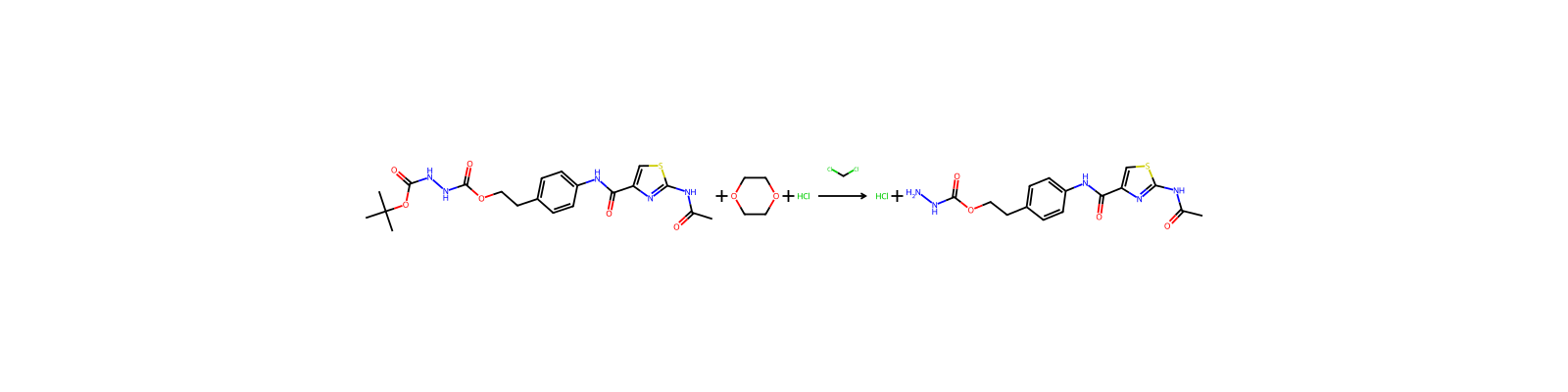
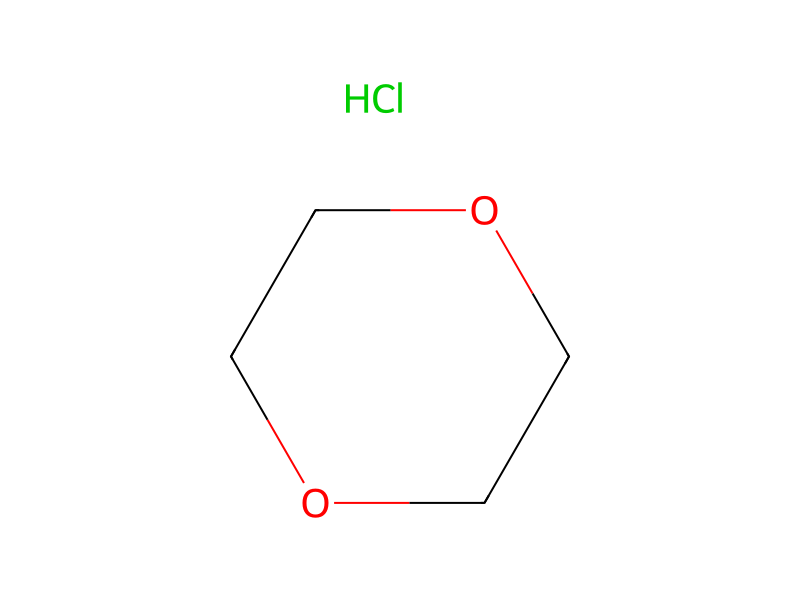
[NH:1]([C:10]([O:12][CH2:13][CH2:14][C:15]1[CH:20]=[CH:19][C:18]([NH:21][C:22]([C:24]2[N:25]=[C:26]([NH:29][C:30](=[O:32])[CH3:31])[S:27][CH:28]=2)=[O:23])=[CH:17][CH:16]=1)=[O:11])[NH:2]C(OC(C)(C)C)=O.O1CCOCC1.[ClH:39]>ClCCl>[ClH:39].[NH:1]([C:10]([O:12][CH2:13][CH2:14][C:15]1[CH:16]=[CH:17][C:18]([NH:21][C:22]([C:24]2[N:25]=[C:26]([NH:29][C:30](=[O:32])[CH3:31])[S:27][CH:28]=2)=[O:23])=[CH:19][CH:20]=1)=[O:11])[NH2:2]To a suspension of 2-[4-({[2-(acetylamino)-1,3-thiazol-4-yl]carbonyl}amino)phenyl]ethyl tert-butyl hydrazine-1,2-dicarboxylate (370.8 mg, 0.800 mmol) in anhydrous dichloromethane (4 ml) was added 4M hydrogen chloride dioxane solution (4 ml), and the mixture was stirred at room temperature for 18 hr. The reaction mixture was concentrated under reduced pressure. Ethyl acetate was added to the concentrated residue, and the mixture was concentrated again under reduced pressure. The operation was performed twice to remove hydrogen chloride gas azeotropically. The residue was suspended in ethyl acetate, filtered, washed 3 times with ethyl acetate and 3 times with methanol, and dried under reduced pressure to give 2-[4-({[2-(acetylamino)-1,3-thiazol-4-yl]carbonyl}amino)phenyl]ethyl hydrazinecarboxylate hydrochloride (280.8 mg, 0.702 mmol, yield 87.8%) as a white solid.